Kirjojen hintavertailu – 12 859 819 kirjaa ja 27 kauppaa

Kirjailija

Robert W. McChesney

Kirjat ja teokset yhdessä paikassa: 18 kirjaa, julkaisuja vuosilta 1997–2017, suosituimpiin kuuluu People Get Ready. Vertaile teosten hintoja ja tarkista saatavuus suomalaisista kirjakaupoista.

Nimi esiintyy myös muodoissa: Robert W McChesney

18 kirjaa

Kirjojen julkaisuvuodet: 1997–2017.

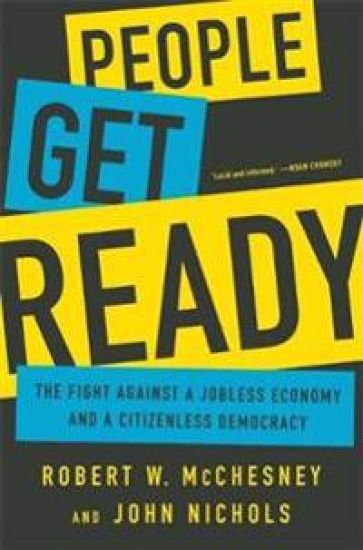
People Get Ready

People Get Ready

John Nichols; Robert W McChesney

Nation Books
2016
sidottu
Humanity is on the verge of its darkest hour- or its greatest momentThe consequences of the technological revolution are about to hit hard: unemployment will spike as new technologies replace labour in the manufacturing, service, and professional sectors of an economy that is already struggling. The end of work as we know it will hit at the worst moment imaginable: as capitalism fosters permanent stagnation, when the labour market is in decrepit shape, with declining wages, expanding poverty, and scorching inequality. Only the dramatic democratization of our economy can address the existential challenges we now face. Yet, the US political process is so dominated by billionaires and corporate special interests, by corruption and monopoly, that it stymies not just democracy but progress. The great challenge of these times is to ensure that the tremendous benefits of technological progress are employed to serve the whole of humanity, rather than to enrich the wealthy few. Robert W. McChesney and John Nichols argue that the United States needs a new economy in which revolutionary technologies are applied to effectively address environmental and social problems and used to rejuvenate and extend democratic institutions. Based on intense reporting, rich historical analysis, and deep understanding of the technological and social changes that are unfolding, they propose a bold strategy for democratizing our digital destiny,before it's too late- and unleashing the real power of the Internet, and of humanity.
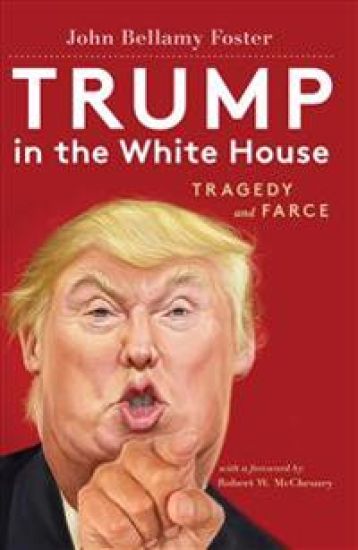
Trump in the White House

Trump in the White House

Robert W McChesney; John Bellamy Foster

Monthly Review Press,U.S.
2017
sidottu
Remember that metaphor about the frog that slowly cooks to death in the pot of increasingly warm water? Leftists have used it for years to describe how people can accept dwindling health care, fading job opportunities, eroding racial and gender equality--as long as the loss occurs gradually. Now, with Donald Trump having slouched off to Washington, most of the mainstream media are working overtime to convince us that we can still stand the heat. Leave it to John Bellamy Foster, one of the world's outstanding radical scholars, to expose Trump for who and what he is: a neo-fascist. Just at the boiling point, Foster offers us cool logic to comprehend the system that created Trump's moral and political emergency--and to resist it. In Trump in the White House, John Bellamy Foster does what no other Trump analyst has done before: he places the president and his administration in full historical context. Foster reveals that Trump is merely the endpoint of a stagnating economic system whose liberal democratic sheen has begun to wear thin. Beneath a veneer of democracy, we see the authoritarian rule that oversees decreasing wages, anti-science and climate-change denialism, a dying public education system, and expanding prisons and military--all powered by a phony populism seething with centuries of racism that never went away. But Foster refuses to end his book in despair. Inside his analysis is a clarion call to fight back. Protests, popular demands, coalitions: everyone is needed. Change can't happen without radical, anti-capitalist politics, and Foster demonstrates that--even now, with the waters ever warming--it may yet be possible to stop the desecration of the Earth; to end endless war; to create global solidarity with all oppressed people. Could a frog do that?
Trump in the White House

Trump in the White House

Robert W McChesney; John Bellamy Foster

Monthly Review Press,U.S.
2017
pokkari

Halvin toimitettuna 19,40 €

Remember that metaphor about the frog that slowly cooks to death in the pot of increasingly warm water? Leftists have used it for years to describe how people can accept dwindling health care, fading job opportunities, eroding racial and gender equality--as long as the loss occurs gradually. Now, with Donald Trump having slouched off to Washington, most of the mainstream media are working overtime to convince us that we can still stand the heat. Leave it to John Bellamy Foster, one of the world's outstanding radical scholars, to expose Trump for who and what he is: a neo-fascist. Just at the boiling point, Foster offers us cool logic to comprehend the system that created Trump's moral and political emergency--and to resist it. In Trump in the White House, John Bellamy Foster does what no other Trump analyst has done before: he places the president and his administration in full historical context. Foster reveals that Trump is merely the endpoint of a stagnating economic system whose liberal democratic sheen has begun to wear thin. Beneath a veneer of democracy, we see the authoritarian rule that oversees decreasing wages, anti-science and climate-change denialism, a dying public education system, and expanding prisons and military--all powered by a phony populism seething with centuries of racism that never went away. But Foster refuses to end his book in despair. Inside his analysis is a clarion call to fight back. Protests, popular demands, coalitions: everyone is needed. Change can't happen without radical, anti-capitalist politics, and Foster demonstrates that--even now, with the waters ever warming--it may yet be possible to stop the desecration of the Earth; to end endless war; to create global solidarity with all oppressed people. Could a frog do that?
The Endless Crisis

The Endless Crisis

Robert W. McChesney

Monthly Review Press,U.S.
2017
nidottu
The days of boom and bubble are over, and the time has come to understand the long-term economic reality. Although the Great Recession officially ended in 2009, hopes for a new phase of economic expansion were quickly dashed. Instead, growth has been slow, unemployment has remained high, wages and benefits have seen little improvement, poverty has increased, and the trend toward more inequality of incomes and wealth has continued. It appears that the Great Recession has given way to a period of long-term anaemic growth, which Foster and McChesney aptly term the Great Stagnation. This incisive and timely book traces the origins of economic stagnation and explains what it means for a clear understanding of our current situation. The authors point out that increasing monopolization of the economy-when a handful of large firms dominate one or several industries-leads to an over-abundance of capital and too few profitable investment opportunities, with economic stagnation as the result. Absent powerful stimuli to investment, such as historic innovations like the automobile or major government spending, modern capitalist economies have become increasingly dependent on the financial sector to realize profits. And while financialisation may have provided a respite from stagnation, it is a solution that cannot last indefinitely, as instability in financial markets over the last half-decade has made clear.
Strategies for Media Reform

Strategies for Media Reform

Jonathan A. Obar; Cheryl Martens; Robert W. McChesney

Fordham University Press
2016
pokkari
Media reform plays an increasingly important role in the struggle for social justice. As battles are fought over the future of investigative journalism, media ownership, spectrum management, speech rights, broadband access, network neutrality, the surveillance apparatus, and digital literacy, what effective strategies can be used in the pursuit of effective media reform? Prepared by thirty-three scholars and activists from more than twenty-five countries, Strategies for Media Reform focuses on theorizing media democratization and evaluating specific projects for media reform. This edited collection of articles offers readers the opportunity to reflect on the prospects for and challenges facing campaigns for media reform and gathers significant examples of theory, advocacy, and activism from multinational perspectives.
Strategies for Media Reform

Strategies for Media Reform

Jonathan A. Obar; Cheryl Martens; Robert W. McChesney

Fordham University Press
2016
sidottu
Media reform plays an increasingly important role in the struggle for social justice. As battles are fought over the future of investigative journalism, media ownership, spectrum management, speech rights, broadband access, network neutrality, the surveillance apparatus, and digital literacy, what effective strategies can be used in the pursuit of effective media reform? Prepared by thirty-three scholars and activists from more than twenty-five countries, Strategies for Media Reform focuses on theorizing media democratization and evaluating specific projects for media reform. This edited collection of articles offers readers the opportunity to reflect on the prospects for and challenges facing campaigns for media reform and gathers significant examples of theory, advocacy, and activism from multinational perspectives.
Rebel Reporting

Rebel Reporting

Robert W. McChesney

Hamilton Books
2015
nidottu
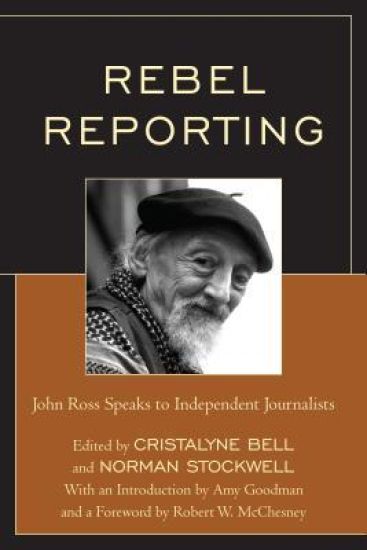
John Ross believed that journalism is not a profession, but rather a moral obligation. His bottom up investigative reporting made him an ally to the underrepresented and an enemy to the overrepresented. This book outlines the basic responsibilities of a journalist and provides instructions on how to document injustices and poetically pitch stories to audiences in order to create change in society. When Ross passed away many said he was the last of a dying breed, but this book passes on his creative knowledge as a poet, and journalist to inspire a new generation of reporters.
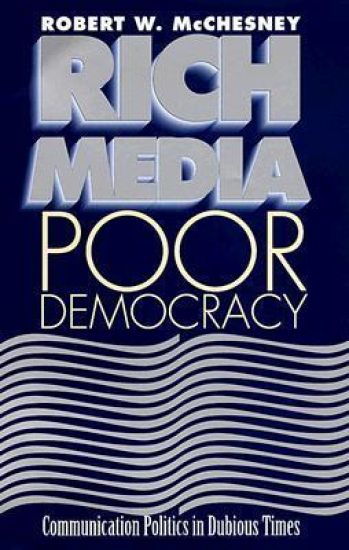
Rich Media, Poor Democracy

Rich Media, Poor Democracy

Robert W. McChesney

The New Press
2015
nidottu
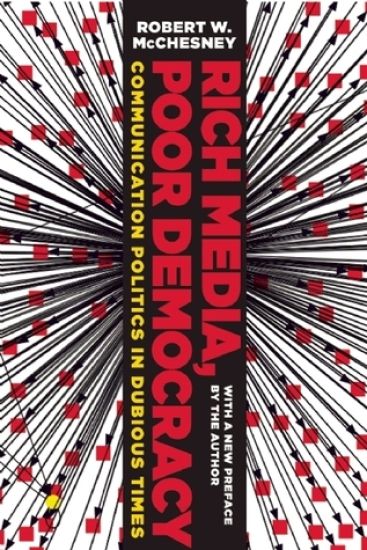
First published to great acclaim in 2000, Rich Media, Poor Democracy is Robert W. McChesney's magnum opus. Called 'a rich, penetrating study' by Noam Chomsky, the book is a meticulously researched exposition of how media and communication empires are threatening effective democratic governance. McChesney lays out his vision for what a truly democratic society might look like, offering compelling suggestions for how the media can be reformed as part of a broader program of democratic renewal. This new edition includes a major new preface by McChesney.
Blowing the Roof off the Twenty-First Century

Blowing the Roof off the Twenty-First Century

Robert W. McChesney

Monthly Review Press,U.S.
2014
nidottu
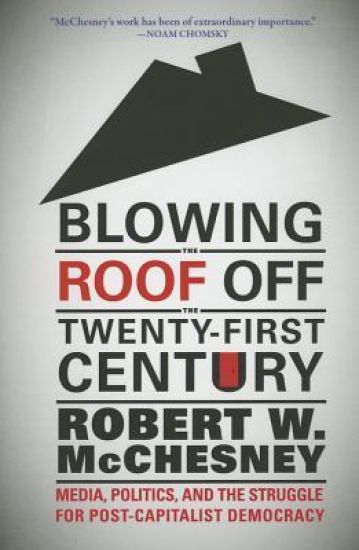
In the United States and much of the world there is a palpable depression about the prospect of overcoming the downward spiral created by the tyranny of wealth and privilege and establishing a truly democratic and sustainable society. It threatens to become self-fulfilling. In this trailblazing new book, award-winning author Robert W. McChesney argues that the weight of the present is blinding people to the changing nature and the tremendous possibilities of the historical moment we inhabit. In Blowing the Roof Off the Twenty-First Century, he uses a sophisticated political economic analysis to delineate the recent trajectory of capitalism and its ongoing degeneration. In exciting new research McChesney reveals how notions of democratic media are becoming central to activists around the world seeking to establish post-capitalist democracies. Blowing the Roof Off the Twenty-First Century also takes a fresh look at recent progressive political campaigns in the United States. While conveying complex ideas in a lively and accessible manner, McChesney demonstrates a very different and far superior world is not only necessary, but possible.
Dollarocracy

Dollarocracy

Robert W McChesney; Bernie Sanders; John Nichols

Nation Books
2014
pokkari
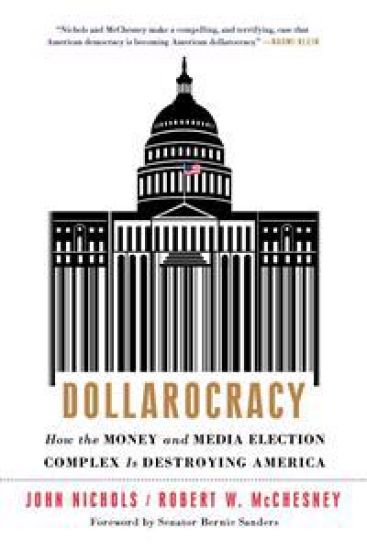
Foreword by Senator Bernie SandersFresh from the first 10 billion election campaign, two award-winning authors show how unbridled campaign spending defines our politics and, failing a dramatic intervention, signals the end of our democracy. Blending vivid reporting from the 2012 campaign trail and deep perspective from decades covering American and international media and politics, political journalist John Nichols and media critic Robert W. McChesney explain how US elections are becoming controlled, predictable enterprises that are managed by a new class of consultants who wield millions of dollars and define our politics as never before. As the money gets bigger,especially after the Citizens United ruling,and journalism, a core check and balance on the government, declines, American citizens are in danger of becoming less informed and more open to manipulation. With ground-breaking behind-the-scenes reporting and staggering new research on the money power," Dollarocracy shows that this new power does not just endanger electoral politics it is a challenge to the DNA of American democracy itself.
The Endless Crisis

The Endless Crisis

John Bellamy Foster; Robert W. McChesney

Monthly Review Press,U.S.
2012
nidottu
The days of boom and bubble are over, and the time has come to understand the long-term economic reality. Although the Great Recession officially ended in June 2009, hopes for a new phase of rapid economic expansion were quickly dashed. Instead, growth has been slow, unemployment has remained high, wages and benefits have seen little improvement, poverty has increased, and the trend toward more inequality of incomes and wealth has continued. It appears that the Great Recession has given way to a period of long-term anemic growth, which Foster and McChesney aptly term the Great Stagnation. This incisive and timely book traces the origins of economic stagnation and explains what it means for a clear understanding of our current situation. The authors point out that increasing monopolization of the economy--when a handful of large firms dominate one or several industries--leads to an over-abundance of capital and too few profitable investment opportunities, with economic stagnation as the result. Absent powerful stimuli to investment, such as historic innovations like the automobile or major government spending, modern capitalist economies have become increasingly dependent on the financial sector to realize profits. And while financialization may have provided a temporary respite from stagnation, it is a solution that cannot last indefinitely, as instability in financial markets over the last half-decade has made clear.
The Death and Life of American Journalism

The Death and Life of American Journalism

John Nichols; Robert W McChesney

Nation Books
2011
pokkari
American journalism is collapsing as newspapers and magazines fail and scores of reporters are laid off across the country. Conventional wisdom says the Internet is to blame, but veteran journalists and media critics Robert W. McChesney and John Nichols disagree. The crisis of American journalism predates the Great Recession and digital media boom. What we are witnessing now is the end of the commercial news model and the opportune moment for the creation of a new system of independent journalism, one subsidized by the public and capable of safeguarding our democracy.
Will The Last Reporter Please Turn Out The Lights

Will The Last Reporter Please Turn Out The Lights

Robert W McChesney; Victor Pickard

The New Press
2011
nidottu
The sudden meltdown of the news media has sparked one of the liveliest debates in recent memory, with an outpouring of opinion and analysis crackling across journals, the blogosphere and academic publications. Yet, until now, a comprehensive and accessible introduction to this new terrain has been noticeably missing. Celebrated media analysts Robert W. McChesney and Victor Pickard have assembled twelve seminal pieces on the crisis in journalism, revised and updated for this volume. Influential commentators provide a comprehensive portrait.
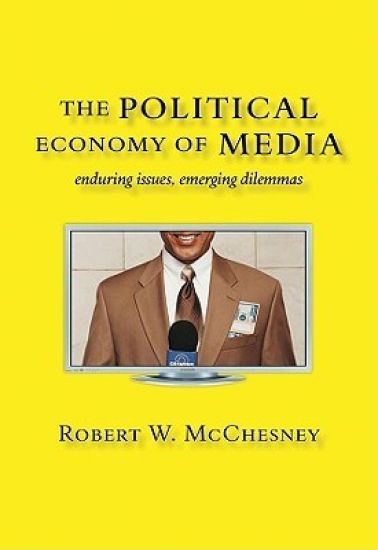
The Political Economy of Media

The Political Economy of Media

Robert W. McChesney

Monthly Review Press,U.S.
2008
pokkari
More than any other work, The Political Economy of Media demonstrates the incompatibility of the corporate media system with a viable democratic public sphere, and the corrupt policymaking process that brings the system into existence. Among the most acclaimed communication scholars in the world, Robert W. McChesney has brought together all the major themes of his two decades of research. Rich in detail, evidence, and thoughtful arguments, The Political Economy of Media provides a comprehensive critique of the degradation of journalism, the hyper-commercialization of culture, the Internet, and the emergence of the contemporary media reform movement. The Political Economy of Media is mandatory reading for anyone wishing to understand and change media, and the political economy, in the world today.
The Political Economy of Media

The Political Economy of Media

Robert W. McChesney

Monthly Review Press,U.S.
2008
sidottu
The influence of media on society is unquestioned. Its reach penetrates nearly every corner of the world and every aspect of life. But it has also been a contested realm, embodying class politics and the interests of monopoly capital. In "The Political Economy of Media", one of the foremost media critics of our time, Robert W. McChesney, provides a comprehensive analysis of the economic and political powers that are being mobilized to consolidate private control of media with increasing profit - all at the expense of democracy. In this elegant and lucid collection, McChesney examines the monopolistic competition that has created a global media that is ever more concentrated and centralized. McChesney reveals why questions about the ownership of commercial U. S. media remain off limits within the political culture; how private ownership of media leads to the degradation of journalism and suppression of genuine debate; and why corporate rule threatens democracy by failing to provide the means for an educated and informed citizenry. "The Political Economy of Media" also highlights resistance to corporate media over the last century, including the battle between broadcasters and the public in the 1920s and 1930s and the ongoing media reform movement today. "The Political Economy of Media" makes it clear that the struggle over the ownership and the role of media is of utmost importance to everyone.
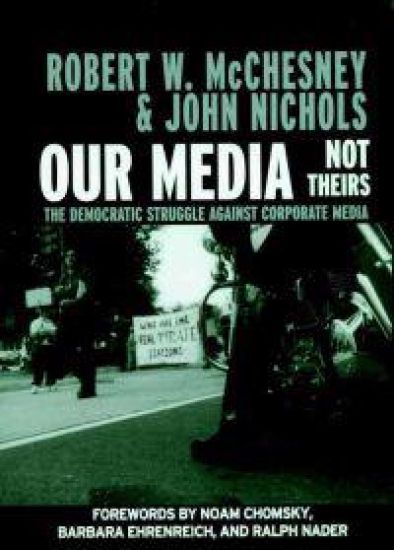
Our Media, Not Theirs

Our Media, Not Theirs

Robert W McChesney; John Nichols

Seven Stories Press,U.S.
2002
nidottu
A revised, updated, and expanded edition of McChesney and Nichols's bestselling "It's the Media, Stupid "The authors critique the U. S. media system, examine alternatives at work in other countries, and conclude with a proposal for meaningful reform.