Kirjojen hintavertailu – 12 903 725 kirjaa ja 27 kauppaa

Kirjailija

Robert W. Oliver

Kirjat ja teokset yhdessä paikassa: 3 kirjaa, julkaisuja vuosilta 1996–2019, suosituimpiin kuuluu Kiffen, Knollys, and Keach. Vertaile teosten hintoja ja tarkista saatavuus suomalaisista kirjakaupoista.

Nimi esiintyy myös muodoissa: Robert W Oliver

3 kirjaa

Kirjojen julkaisuvuodet: 1996–2019.

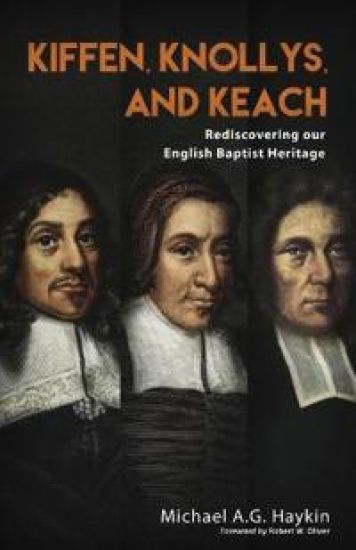
Kiffen, Knollys, and Keach

Kiffen, Knollys, and Keach

Michael A G Haykin; Robert W Oliver

Hesed and Emet Publishing
2019
pokkari
Among the various Baptist groups that emerged from the religious turmoil of seventeenth-century England, the Particular Baptists proved to be the most influential in terms of long-term legacy. There is a sense in which all English-speaking Baptists, whatever their current theological orientation, can ultimately be traced back to this community. And at the heart of this community were three key leaders: William Kiffen, Hanserd Knollys, and Benjamin Keach. This new edition introduces the lives and thought of each of these men along with their times, other Baptist figures with whom they interacted, and two vital confessions that were published respectively in 1644 and 1688.
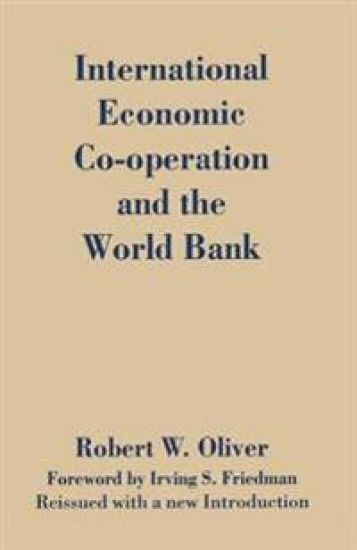
International Economic Co-Operation and the World Bank
On December 14, 1945, the House of Commons voted 314 to 50 to ratify the Agreements negotiated at Bretton Woods, New Hampshire, nearly a year and a half earlier. Lord Keynes had returned from Washington to defend the Fund and the Bank, of which he and Harry White were the principal authors, as well as to justify an American loan to Britain - following President Harry S. Truman's abrupt postwar decision to terminate all land-lease assistance to its wartime allies, an event which induced the Conservative MP Robert Boothby, to declare: 'This is our economic Munich'. Today, fifty years later, virtually all the governments of the world have become members, and the capital subscriptions have increased many fold. But questions have arisen. Perhaps the Fund and the Bank should be merged. Some argue that fifty years are enough, at least for the Bank. Others believe that, while expansion should continue, the emphasis should be redirected toward the alleviation of poverty in Africa and southern Asia. This is an account of the historic events of the interwar years and after. It is also a story about the liberal philosophies of the political economists, primarily British and American, who produced two of the great international institutions of our time.
International Economic Co-Operation and the World Bank
On December 14, 1945, the House of Commons voted 314 to 50 to ratify the Agreements negotiated at Bretton Woods, New Hampshire, nearly a year and a half earlier. Lord Keynes had returned from Washington to defend the Fund and the Bank, of which he and Harry White were the principal authors, as well as to justify an American loan to Britain - following President Harry S. Truman's abrupt postwar decision to terminate all land-lease assistance to its wartime allies, an event which induced the Conservative MP Robert Boothby, to declare: 'This is our economic Munich'. Today, fifty years later, virtually all the governments of the world have become members, and the capital subscriptions have increased many fold. But questions have arisen. Perhaps the Fund and the Bank should be merged. Some argue that fifty years are enough, at least for the Bank. Others believe that, while expansion should continue, the emphasis should be redirected toward the alleviation of poverty in Africa and southern Asia. This is an account of the historic events of the interwar years and after. It is also a story about the liberal philosophies of the political economists, primarily British and American, who produced two of the great international institutions of our time.