Rhymes of a Rolling Stone
Robert W. Service
Createspace Independent Publishing Platform
2015
nidottu
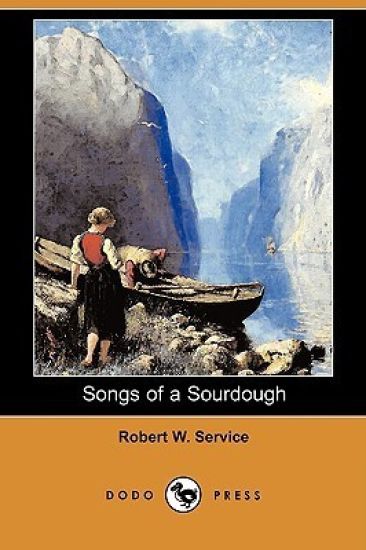
Rhymes of a Rolling Stone is a classic collection of Canadian poems by Robert W. Service. I sing no idle songs of dalliance days, No dreams Elysian inspire my rhyming; I have no Celia to enchant my lays, No pipes of Pan have set my heart to chiming. Robert William Service (January 16, 1874 - September 11, 1958) was a British-Canadian poet and writer who has often been called "the Bard of the Yukon". He is best known for his poems "The Shooting of Dan McGrew" and "The Cremation of Sam McGee", from his first book, Songs of a Sourdough (1907; also published as The Spell of the Yukon and Other Verses). His vivid descriptions of the Yukon and its people made it seem that he was a veteran of the Klondike Gold Rush, instead of the late-arriving bank clerk he actually was. Although his work remains popular, Service's poems were initially received as being crudely comical works. Service was born in Preston, Lancashire, England, the third of ten children. His father, also Robert Service, was a banker from Kilwinning, Scotland, who had been transferred to England. When he was five, Service was sent to live in Kilwinning with his three maiden aunts and his paternal grandfather, the town's postmaster. There he is said to have composed his first verse, a grace, on his sixth birthday: Commemorative Plaque in Preston, England At nine, Service re-joined his parents who had moved to Glasgow. He attended Glasgow's Hillhead High School. After leaving school, Service joined the Commercial Bank of Scotland which would later become the Royal Bank of Scotland. He was writing at this time and reportedly already "selling his verses". citation needed] He was also reading poetry: Browning, Keats, Tennyson, and Thackeray. When he was 21, Service travelled to Vancouver Island, British Columbia, with his Buffalo Bill outfit and dreams of becoming a cowboy. He drifted around western North America, "wandering from California to British Columbia," taking and quitting a series of jobs: "Starving in Mexico, residing in a California bordello, farming on Vancouver Island and pursuing unrequited love in Vancouver." This sometimes required him to leech off his parents' Scottish neighbours and friends who had previously emigrated to Canada. In 1899, Service was a store clerk in Cowichan Bay, British Columbia. He mentioned to a customer (Charles H. Gibbons, editor of the Victoria Daily Colonist) that he wrote verses, with the result that six poems by "R. S." on the Boer Wars had appeared in the Colonist by July 1900 9] - including "The March of the Dead" that would later appear in his first book. (Service's brother, Alick, was a prisoner of the Boers at the time. He had been captured on November 15, 1899, alongside Winston Churchill.) The Colonist also published Service's "Music in the Bush" on September 18, 1901, and "The Little Old Log Cabin" on March 16, 1902. In her 2006 biography, Under the Spell of the Yukon, Enid Mallory revealed that Service had fallen in love during this period. He was working as a "farm labourer and store clerk when he first met Constance MacLean at a dance in Duncan B. C., where she was visiting her uncle." MacLean lived in Vancouver, on the mainland, so he courted her by mail. Though he was smitten, "MacLean was looking for a man of education and means to support her" so was not that interested. To please her, he took courses at McGill University's Victoria College, but failed. In 1903, down on his luck, Service was hired by a Canadian Bank of Commerce branch in Victoria, British Columbia, using his Commercial Bank letter of reference. The bank "watched him, gave him a raise, and sent him to Kamloops in the middle of British Columbia. In Victoria he lived over the bank with a hired piano, and dressed for dinner. In Kamloops, horse country, he played polo. In the fall of 1904, the bank sent him to their Whitehorse branch in Yukon. With the expense money he bought himself a raccoon coat."