Kirjojen hintavertailu – 12 903 724 kirjaa ja 27 kauppaa

Kirjailija

Robert W Wall

Kirjat ja teokset yhdessä paikassa: 16 kirjaa, julkaisuja vuosilta 1993–2024, suosituimpiin kuuluu On the (Divine) Origin of Our Species. Vertaile teosten hintoja ja tarkista saatavuus suomalaisista kirjakaupoista.

Nimi esiintyy myös muodoissa: Robert W. Wall

16 kirjaa

Kirjojen julkaisuvuodet: 1993–2024.

On the (Divine) Origin of Our Species

On the (Divine) Origin of Our Species

Darrel R Falk; Philip Batterham; Cara Wall-Scheffler; Robert W Wall

Cascade Books
2023
pokkari
The Bible's opening chapter includes these words: "So God created humans in his image, in the image of God he created them; male and female he created them." We are created beings, with a unique status in creation. Nothing is more fundamental to Christian faith. Yet biologists present extensive data and provide a picture of how our species came to be, but there is no Creator in the intricate details of the painting they provide. If the scientific evidence for the evolution picture is reasonable--and, in general, it is--and if humans were indeed created from a common ancestor of the great apes, then what can be said about the Artist who Christians believe was at work? Vague answers are not satisfactory anymore--not in this scientific age. Recent mainstream data from paleoanthropology and genetics suggest that the basis of our species' success was not that they were superior fighters. Rather, the reason our ancestors thrived was likely their ability to function cooperatively in groups--to respect each other and to get along. This reframes the question about the nature of the hovering Spirit's activity in bringing our species into being. And that is the subject of this book.

On the (Divine) Origin of Our Species

On the (Divine) Origin of Our Species

Darrel R Falk; Philip Batterham; Cara Wall-Scheffler; Robert W Wall

Cascade Books
2023
sidottu
The Bible's opening chapter includes these words: "So God created humans in his image, in the image of God he created them; male and female he created them." We are created beings, with a unique status in creation. Nothing is more fundamental to Christian faith. Yet biologists present extensive data and provide a picture of how our species came to be, but there is no Creator in the intricate details of the painting they provide. If the scientific evidence for the evolution picture is reasonable--and, in general, it is--and if humans were indeed created from a common ancestor of the great apes, then what can be said about the Artist who Christians believe was at work? Vague answers are not satisfactory anymore--not in this scientific age. Recent mainstream data from paleoanthropology and genetics suggest that the basis of our species' success was not that they were superior fighters. Rather, the reason our ancestors thrived was likely their ability to function cooperatively in groups--to respect each other and to get along. This reframes the question about the nature of the hovering Spirit's activity in bringing our species into being. And that is the subject of this book.
Called to Lead

Called to Lead

Anthony B. Robinson; Robert W. Wall

William B Eerdmans Publishing Co
2012
nidottu
Following up on their previous volume, Called to Be Church: The Book of Acts for a New Day, biblical scholar Robert Wall and pastoral leader Anthony Robinson here join forces again. Featuring both exegetical study and dynamic contemporary exposition, each chapter of Called to Lead first interprets the text of 1 and 2 Timothy as Scripture and then engages 1 and 2 Timothy for today's church leaders. The book covers many vexing issues faced by church leaders then and now -- such issues as the use of money, leadership succession, pastoral authority, and the role of Scripture. Through it all, Called to Lead shows how Timothy remains a text of great value for the church today
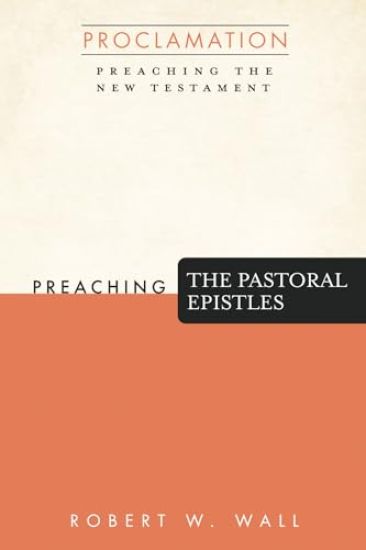
Preaching the Pastoral Epistles

Preaching the Pastoral Epistles

Robert W Wall

Cascade Books
2024
sidottu
Since the second century, 1-2 Timothy and Titus, often referred to as the "Pastoral Epistles," have been read and practiced together to help order a Christian congregation's life and mission. These three letters were likely recognized early on as divinely inspired scripture and were added to the Pauline collection to help train the spiritual leaders of earliest Christianity. However, they are rarely taught in most congregations and seminaries today. Admittedly, the genre of these letters (paraenesis) is hard to preach. The primary reason for their neglect, however, is modern criticism's silencing of them because most scholars think they were not written by Paul and are not aligned with either his gospel or mission. Moreover, they include instructions that are widely received today as out of sync with our modern social worlds. This Proclamation Commentary on these Pauline letters presumes both their apostolic authority as divinely inspired and human-inspiring scripture and their contemporary relevance in encouraging clergy and teachers to reimagine their roles as ministers of the gospel and spiritual leaders for today's global church.
Preaching the Pastoral Epistles

Preaching the Pastoral Epistles

Robert W Wall

Cascade Books
2024
pokkari
Since the second century, 1-2 Timothy and Titus, often referred to as the "Pastoral Epistles," have been read and practiced together to help order a Christian congregation's life and mission. These three letters were likely recognized early on as divinely inspired scripture and were added to the Pauline collection to help train the spiritual leaders of earliest Christianity. However, they are rarely taught in most congregations and seminaries today. Admittedly, the genre of these letters (paraenesis) is hard to preach. The primary reason for their neglect, however, is modern criticism's silencing of them because most scholars think they were not written by Paul and are not aligned with either his gospel or mission. Moreover, they include instructions that are widely received today as out of sync with our modern social worlds. This Proclamation Commentary on these Pauline letters presumes both their apostolic authority as divinely inspired and human-inspiring scripture and their contemporary relevance in encouraging clergy and teachers to reimagine their roles as ministers of the gospel and spiritual leaders for today's global church.
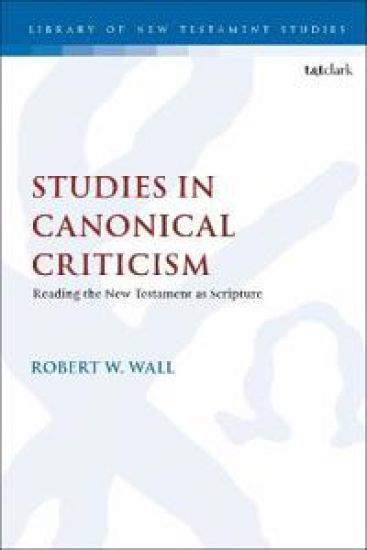
Studies in Canonical Criticism

Studies in Canonical Criticism

Robert W. Wall

BLOOMSBURY PUBLISHING PLC
2021
nidottu
As one of the leading figures in New Testament studies, Robert W. Wall has continually focused on the function of the New Testament as a "canonical” or authoritative collection of writings, reflecting not only the content and essence of the Church’s emerging faith, but also the life to that community of followers of Jesus who eventually became widely known as “Christians.” In the vein of his defining work, The New Testament as Canon: A Reader in Canonical Criticism, Wall now reflects upon his more recent body of study. Always emphasizing 'canonical conversation', Wall had collected and revised some of his most important essays of the last two decades, including Unity of Luke and Acts (2010), The Unifying Theology of the Catholic Epistles (2003-13) and Images of Church in John’s Revelation (2015). Completed by a new essay on the canonical approach to the Paratext of Hebrews, and with vital "introductory notes" for each chapter that highlight both Wall's revisions and his response to critical reception, this book is yet one more asset in Wall's continuing pursuit of the canonical function of the church’s Scriptures.
Studies in Canonical Criticism

Studies in Canonical Criticism

Robert W. Wall

T. T.Clark Ltd
2020
sidottu
As one of the leading figures in New Testament studies, Robert W. Wall has continually focused on the function of the New Testament as a "canonical” or authoritative collection of writings, reflecting not only the content and essence of the Church’s emerging faith, but also the life to that community of followers of Jesus who eventually became widely known as “Christians.” In the vein of his defining work, The New Testament as Canon: A Reader in Canonical Criticism, Wall now reflects upon his more recent body of study. Always emphasizing 'canonical conversation', Wall had collected and revised some of his most important essays of the last two decades, including Unity of Luke and Acts (2010), The Unifying Theology of the Catholic Epistles (2003-13) and Images of Church in John’s Revelation (2015). Completed by a new essay on the canonical approach to the Paratext of Hebrews, and with vital "introductory notes" for each chapter that highlight both Wall's revisions and his response to critical reception, this book is yet one more asset in Wall's continuing pursuit of the canonical function of the church’s Scriptures.
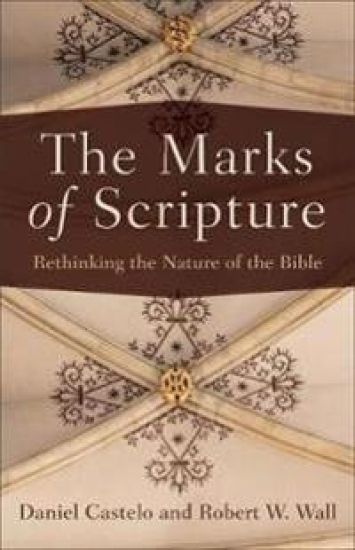
The Marks of Scripture – Rethinking the Nature of the Bible

The Marks of Scripture – Rethinking the Nature of the Bible

Daniel Castelo; Robert W. Wall

Baker Academic, Div of Baker Publishing Group
2019
nidottu
This volume written by a theologian and a biblical scholar offers a fresh model for understanding Scripture as God's Word. The authors work out the four Nicene marks of the church--one, holy, catholic, and apostolic--as marks of Scripture, offering a new way of thinking about the Bible that bridges theology and interpretation. Their ecclesial analogy invites us to think of Scripture in similar terms to how we think of the church, countering the incarnational model propagated by Peter Enns and others.
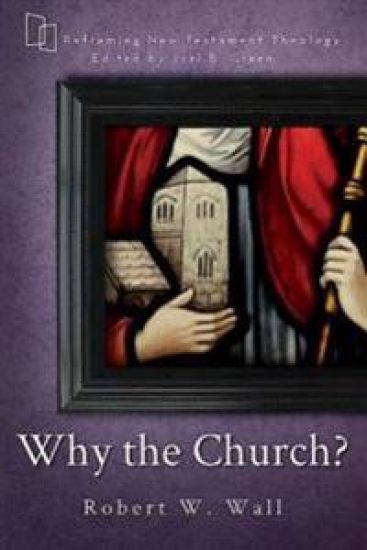
Why the Church?

Why the Church?

Robert W Wall

Abingdon Press
2015
pokkari
Given the way many in the West have read the New Testament in the last century, the church might be regarded as an afterthought at best. But at the worst, it can be viewed as an unnecessary, perhaps even problematic, institutionalization of genuine faith especially in our post-denominational context. These perspectives fly in the face of the robust ecclesiological concerns and commitments of the New Testament documents when read as witnesses from, to, and for congregations of God's people. For Wall, the problem is spiritual because fewer go to find God in church. Why the church? Because this peculiar fellowship of saints, whose loving communion is with the risen One, has been appointed by the triune God as God's herald. With its sacred vocation, every demonstration of the church's oneness, holiness, catholicity, and apostolicity--each eschatological mark enabled and brought to maturity by God's grace--is the concrete means to address our theological crisis. This book will contribute to New Testament studies but also serve related discussions in theology and church history. Reframing New Testament Theology is a series that fulfills the need for brief, substantive, yet highly accessible introductions to central questions and themes raised by New Testament study.
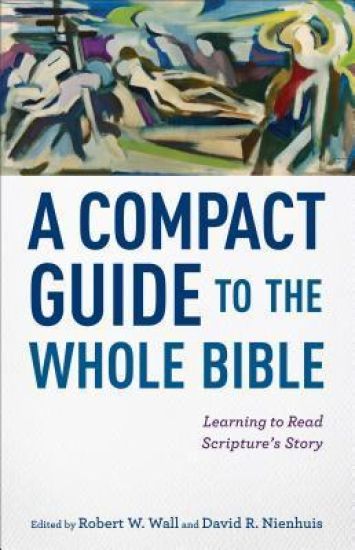
A Compact Guide to the Whole Bible – Learning to Read Scripture`s Story

A Compact Guide to the Whole Bible – Learning to Read Scripture`s Story

Robert W. Wall; David R. Nienhuis

Baker Academic, Div of Baker Publishing Group
2015
nidottu
This compact, one-semester introduction to the Bible prepares students to begin reading the biblical text as Christian Scripture, focusing on the meaning of Scripture for the church. The editors and contributors--experienced teachers with expertise in different parts of the Bible--orient students to the whole of Scripture so that they may read the biblical text for themselves. The book first explains what Christians believe about Scripture and gives a bird's-eye survey of the whole biblical story. Chapters then introduce the story, arrangement, style, and key ideas of each division of the Old and New Testament, helping readers see how the books of the Bible make a coherent whole.
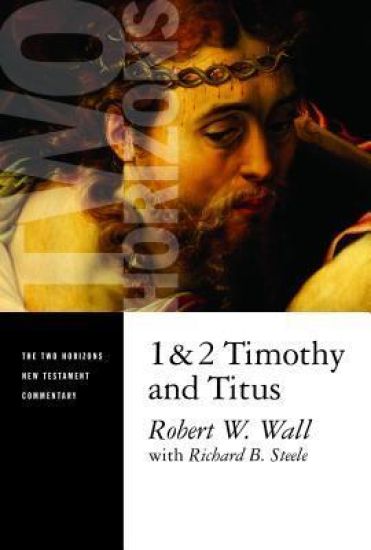
1 and 2 Timothy and Titus

1 and 2 Timothy and Titus

Robert W. Wall

William B Eerdmans Publishing Co
2012
nidottu
This theological commentary on 1 & 2 Timothy and Titus by Robert Wall powerfully demonstrates the ongoing relevance and authority of the Pastoral Epistles for the church today. Wall uniquely employs an apostolic "Rule of Faith" methodology for interpreting these texts as sacred Scripture. Three successive historical case studies by Richard Steele vividly instantiate key themes of the Pastorals. This innovative yet reverent volume will help revive the interest of students, pastors, and other Christian leaders in the Pastoral Epistles.
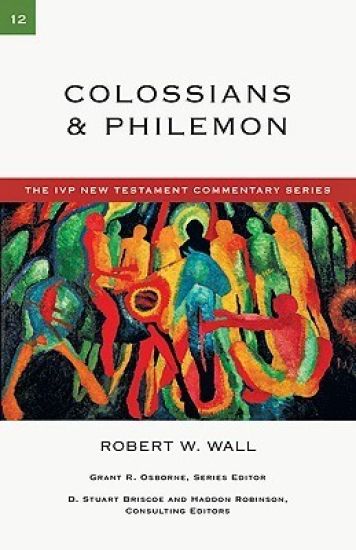
Colossians  Philemon

Colossians Philemon

Robert W. Wall

INTERVARSITY PRESS
2010
nidottu
To the Colossians, preoccupied with legal codes and intellectual disputes, Paul wrote a letter stressing not only the centrality of Christ but also the need for Christians to live out their faith in genuine community. Paul's antidote to a privatized and intellectualized faith will provide relief to many Christians today. To Philemon, a powerful church leader, Paul wrote a strong personal letter asking him to embark on a new relationship with his slave Onesimus. As a model for conflict resolution and mutual relations within the Christian community, Paul's letter has much to offer the church today. Throughout this commentary, Robert W. Wall explains what each letter meant to its original hearers and its application for us today.
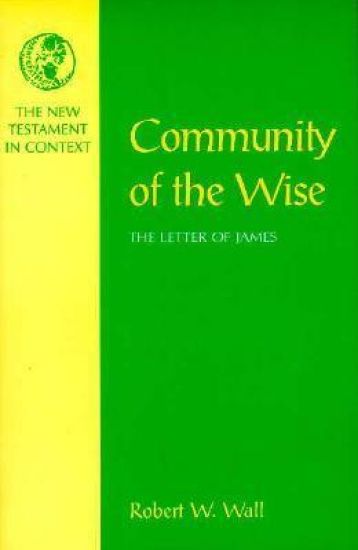
Community of the Wise

Community of the Wise

Robert W. Wall

Continuum International Publishing Group - Trinity
1997
pokkari
Using a variation of reader-response criticism, Melchert engages thewisdom texts in an effort to determine why the sages said and taught asthey did. He also explores what contemporary teachers and learnersmight pick up from the wisdom texts about teaching, learning, and beingwisely religious in a postmodern world. Melchert argues that the wisdomtexts presumably embody not only what these teachers wanted readers tolearn but also how it was to be learned.
Colossians & Philemon

Colossians & Philemon

Robert W Wall

Inter-Varsity Press
1993
pokkari
To the Colossians, preoccupied with legal codes and intellectual disputes, Paul wrote a letter stressing not only the centrality of Christ but also the need for Christians to live out their faith in genuine community. Paul's antidote to a privatized and intellectualized faith will provide relief to many Christians today. To Philemon, a powerful church leader, Paul wrote a strong personal letter asking him to embark on a new relationship with his slave Onesimus. As a model for conflict resolution and mutual relations within the Christian community, Paul's letter has much to offer the church today. Throughout this commentary, Robert W. Wall explains what each letter meant to its original hearers and its application for us today.