Kirjojen hintavertailu – 12 903 725 kirjaa ja 27 kauppaa

Kirjailija

Robert Warrior

Kirjat ja teokset yhdessä paikassa: 6 kirjaa, julkaisuja vuosilta 2005–2022, suosituimpiin kuuluu Speaking of Indigenous Politics. Vertaile teosten hintoja ja tarkista saatavuus suomalaisista kirjakaupoista.

6 kirjaa

Kirjojen julkaisuvuodet: 2005–2022.

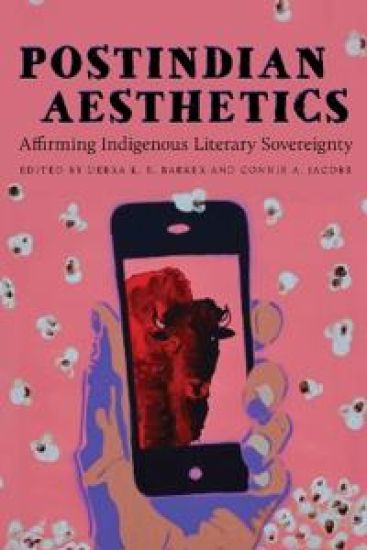
Postindian Aesthetics

Postindian Aesthetics

Robert Warrior

University of Arizona Press
2022
sidottu
Postindian Aesthetics is a collection of critical, cutting-edge essays on Indigenous writers who are creatively and powerfully contributing to a thriving Indigenous literary aesthetic. This book argues for a literary canon that includes Indigenous literature that resists colonizing stereotypes of what has been and often still is expected in art produced by American Indians. The works featured are inventive and current, and the writers covered are visionaries who are boldly redefining Indigenous literary aesthetics. The artists covered include Orlando White, LeAnne Howe, Stephen Graham Jones, Deborah Miranda, Heid E. Erdrich, Sherwin Bitsui, and many others. Postindian Aesthetics is expansive and comprehensive with essays by many of today’s leading Indigenous studies scholars. Organized thematically into four sections, the topics in this book include working-class and labor politics, queer embodiment, national and tribal narratives, and new directions in Indigenous literatures. By urging readers to think beyond the more popularized Indigenous literary canon, the essays in this book open up a new world of possibilities for understanding the contemporary Indigenous experience. The volume showcases thought-provoking scholarship about literature written by important contemporary Indigenous authors who are inspiring critical acclaim and offers new ways to think about the Indigenous literary canon and encourages instructors to broaden the scope of works taught in literature courses more broadly. Contributors:Eric Gary Anderson, Ellen L. Arnold, Debra K. S. Barker, Laura J. Beard, Esther G. Belin, Jeff Berglund, Sherwin Bitsui, Jeremy M. Carnes, Gabriel S. Estrada, Stephanie Fitzgerald, Jane Haladay, Connie A. Jacobs, Daniel Heath Justice, Virginia Kennedy, Denise Low, Molly McGlennen, Dean Rader, Kenneth M. Roemer, Susan Scarberry-García, Siobhan Senier
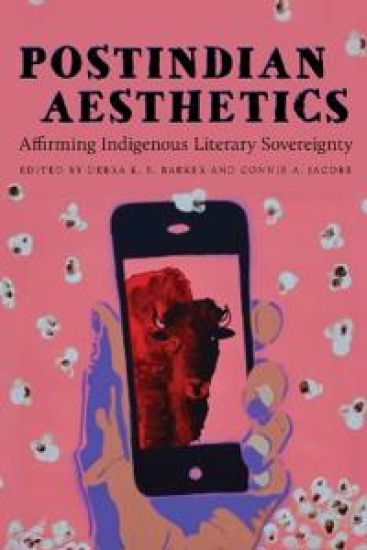
Postindian Aesthetics

Postindian Aesthetics

Robert Warrior

University of Arizona Press
2022
nidottu
Postindian Aesthetics is a collection of critical, cutting-edge essays on Indigenous writers who are creatively and powerfully contributing to a thriving Indigenous literary aesthetic. This book argues for a literary canon that includes Indigenous literature that resists colonizing stereotypes of what has been and often still is expected in art produced by American Indians. The works featured are inventive and current, and the writers covered are visionaries who are boldly redefining Indigenous literary aesthetics. The artists covered include Orlando White, LeAnne Howe, Stephen Graham Jones, Deborah Miranda, Heid E. Erdrich, Sherwin Bitsui, and many others. Postindian Aesthetics is expansive and comprehensive with essays by many of today’s leading Indigenous studies scholars. Organized thematically into four sections, the topics in this book include working-class and labor politics, queer embodiment, national and tribal narratives, and new directions in Indigenous literatures. By urging readers to think beyond the more popularized Indigenous literary canon, the essays in this book open up a new world of possibilities for understanding the contemporary Indigenous experience. The volume showcases thought-provoking scholarship about literature written by important contemporary Indigenous authors who are inspiring critical acclaim and offers new ways to think about the Indigenous literary canon and encourages instructors to broaden the scope of works taught in literature courses more broadly. Contributors:Eric Gary Anderson, Ellen L. Arnold, Debra K. S. Barker, Laura J. Beard, Esther G. Belin, Jeff Berglund, Sherwin Bitsui, Jeremy M. Carnes, Gabriel S. Estrada, Stephanie Fitzgerald, Jane Haladay, Connie A. Jacobs, Daniel Heath Justice, Virginia Kennedy, Denise Low, Molly McGlennen, Dean Rader, Kenneth M. Roemer, Susan Scarberry-Garcí, Siobhan Senier
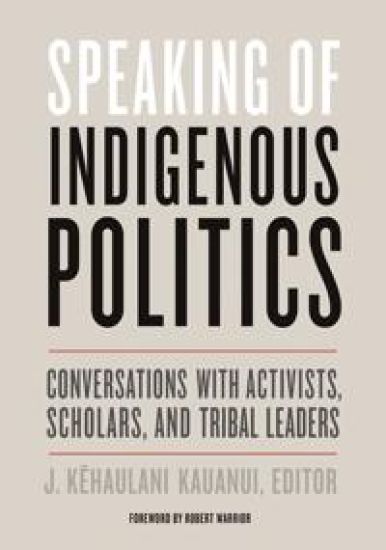
Speaking of Indigenous Politics

Speaking of Indigenous Politics

Robert Warrior

University of Minnesota Press
2018
nidottu
“A lesson in how to practice recognizing the fundamental truth that every inch of the Americas is Indigenous territory” -Robert Warrior, from the Foreword Many people learn about Indigenous politics only through the most controversial and confrontational news: the Standing Rock Sioux Tribe’s efforts to block the Dakota Access Pipeline, for instance, or the battle to protect Bears Ears National Monument in Utah, a site sacred to Native peoples. But most Indigenous activism remains unseen in the mainstream-and so, of course, does its significance. J. Kehaulani Kauanui set out to change that with her radio program Indigenous Politics. Issue by issue, she interviewed people who talked candidly and in an engaging way about how settler colonialism depends on erasing Native peoples and about how Native peoples can and do resist. Collected here, these conversations speak with clear and compelling voices about a range of Indigenous politics that shape everyday life. Land desecration, treaty rights, political status, cultural revitalization: these are among the themes taken up by a broad cross-section of interviewees from across the United States and from Canada, Mexico, Chile, Bolivia, Peru, Australia, and New Zealand. Some speak from the thick of political action, some from a historical perspective, others from the reaches of Indigenous culture near and far. Writers, like Comanche Paul Chaat Smith, author of Everything You Know about Indians Is Wrong, expand on their work-about gaming and sovereignty, for example, or protecting Native graves, the reclamation of land, or the erasure of Indian identity. These conversations both inform and engage at a moment when their messages could not be more urgent. Contributors: Jessie Little Doe Baird (Mashpee Wampanoag), Omar Barghouti, Lisa Brooks (Abenaki), Kathleen A. Brown-PÉrez (Brothertown Indian Nation), Margaret “Marge” Bruchac (Abenaki), Jessica Cattelino, David Cornsilk (Cherokee Nation), Sarah Deer (Muskogee Creek Nation), Philip J. Deloria (Dakota), Tonya Gonnella Frichner (Onondaga Nation), Hone Harawira (Ngapuhi Nui Tonu), Suzan Shown Harjo (Cheyenne and Hodulgee Muscogee), Rashid Khalidi, Winona LaDuke (White Earth Ojibwe), Maria LaHood, James Luna (LuiseÑo), Aileen Moreton-Robinson (Quandamooka), Chief MutÁwi MutÁhash (Many Hearts) Marilynn “Lynn” Malerba (Mohegan), Steven Newcomb (Shawnee/Lenape), Jean M. O’Brien (White Earth Ojibwe), Jonathan Kamakawiwo‘ole Osorio (Kanaka Maoli), Steven Salaita, Paul Chaat Smith (Comanche), Circe Sturm (Mississippi Choctaw descendant), Margo TamÉz (Lipan Apache), Chief Richard Velky (Schaghticoke), Patrick Wolfe.
Speaking of Indigenous Politics

Speaking of Indigenous Politics

Robert Warrior

University of Minnesota Press
2018
sidottu
“A lesson in how to practice recognizing the fundamental truth that every inch of the Americas is Indigenous territory” -Robert Warrior, from the Foreword Many people learn about Indigenous politics only through the most controversial and confrontational news: the Standing Rock Sioux Tribe’s efforts to block the Dakota Access Pipeline, for instance, or the battle to protect Bears Ears National Monument in Utah, a site sacred to Native peoples. But most Indigenous activism remains unseen in the mainstream-and so, of course, does its significance. J. Kehaulani Kauanui set out to change that with her radio program Indigenous Politics. Issue by issue, she interviewed people who talked candidly and in an engaging way about how settler colonialism depends on erasing Native peoples and about how Native peoples can and do resist. Collected here, these conversations speak with clear and compelling voices about a range of Indigenous politics that shape everyday life. Land desecration, treaty rights, political status, cultural revitalization: these are among the themes taken up by a broad cross-section of interviewees from across the United States and from Canada, Mexico, Chile, Bolivia, Peru, Australia, and New Zealand. Some speak from the thick of political action, some from a historical perspective, others from the reaches of Indigenous culture near and far. Writers, like Comanche Paul Chaat Smith, author of Everything You Know about Indians Is Wrong, expand on their work-about gaming and sovereignty, for example, or protecting Native graves, the reclamation of land, or the erasure of Indian identity. These conversations both inform and engage at a moment when their messages could not be more urgent. Contributors: Jessie Little Doe Baird (Mashpee Wampanoag), Omar Barghouti, Lisa Brooks (Abenaki), Kathleen A. Brown-PÉrez (Brothertown Indian Nation), Margaret “Marge” Bruchac (Abenaki), Jessica Cattelino, David Cornsilk (Cherokee Nation), Sarah Deer (Muskogee Creek Nation), Philip J. Deloria (Dakota), Tonya Gonnella Frichner (Onondaga Nation), Hone Harawira (Ngapuhi Nui Tonu), Suzan Shown Harjo (Cheyenne and Hodulgee Muscogee), Rashid Khalidi, Winona LaDuke (White Earth Ojibwe), Maria LaHood, James Luna (LuiseÑo), Aileen Moreton-Robinson (Quandamooka), Chief MutÁwi MutÁhash (Many Hearts) Marilynn “Lynn” Malerba (Mohegan), Steven Newcomb (Shawnee/Lenape), Jean M. O’Brien (White Earth Ojibwe), Jonathan Kamakawiwo‘ole Osorio (Kanaka Maoli), Steven Salaita, Paul Chaat Smith (Comanche), Circe Sturm (Mississippi Choctaw descendant), Margo TamÉz (Lipan Apache), Chief Richard Velky (Schaghticoke), Patrick Wolfe.
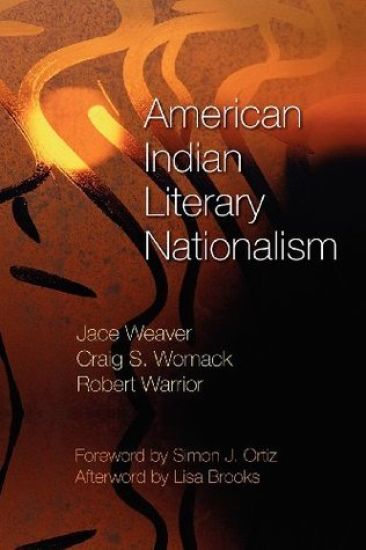
American Indian Literary Nationalism

American Indian Literary Nationalism

Jace Weaver; Craig S. Womack; Robert Warrior

University of New Mexico Press
2006
nidottu
In a contentious field characterised by divergence of opinion, ""American Indian Literary Nationalism"" intervenes in recent controversial debates on the role of hybridity, suggesting common sense strategies rooted in the material realities of various communities. These essays deal with issues the authors have been wrestling with throughout their careers. Jace Weaver, Craig Womack, and Robert Warrior, assert being a 'nationalist' is a legitimate perspective from which to approach Native American literature and criticism. They consider such a methodology not only defensible but also crucial to supporting Native national sovereignty and self-determination, an important goal of Native American studies, generally. However, the authors do not believe the nationalism suggested in ""American Indian Literary Nationalism"" is the only possible approach to Native literature. Each invites Natives and non-Native allies who support tribal national sovereignty and nationalist readings of Native literature to join the discussion. With this writing, each author acknowledges and honours the foundational contribution of Simon Ortiz in his 1981 'MELUS' essay, 'Towards a National Indian Literature: Cultural Authenticity in Nationalism'. It has been over thirty-five years since academe has accepted the legitimacy of American Indian literature. Weaver, Warrior, and Womack now call for more Native voices to articulate literary criticism and for clearer thinking about what links the literature to Native communities.
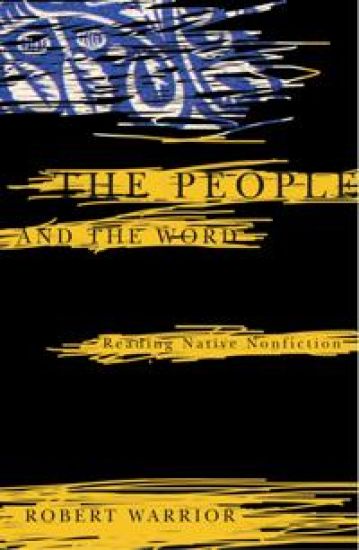
The People and the Word

The People and the Word

Robert Warrior

University of Minnesota Press
2005
nidottu
Much literary scholarship has been devoted to the flowering of Native American fiction and poetry in the mid-twentieth century. Yet, Robert Warrior argues, nonfiction has been the primary form used by American Indians in developing a relationship with the written word, one that reaches back much further in Native history and culture. Focusing on autobiographical writings and critical essays, as well as communally authored and political documents, The People and the Word explores how the Native tradition of nonfiction has both encompassed and dissected Native experiences. Warrior begins by tracing a history of American Indian writing from the eighteenth century to the late twentieth century, then considers four particular moments: Pequot intellectual William Apess's autobiographical writings from the 1820s and 1830s; the Osage Constitution of 1881; narratives from American Indian student experiences, including accounts of boarding school in the late 1880s; and modern Kiowa writer N. Scott Momaday's essay "The Man Made of Words," penned during the politically charged 1970s. Warrior's discussion of Apess's work looks unflinchingly at his unconventional life and death; he recognizes resistance to assimilation in the products of the student print shop at the Santee Normal Training School; and in the Osage Constitution, as well as in Momaday's writing, Warrior sees reflections of their turbulent times as well as guidance for our own. Taking a cue from Momaday's essay, which gives voice to an imaginary female ancestor, Ko-Sahn, Warrior applies both critical skills and literary imagination to the texts. In doing so, The People and the Word provides a rich foundation for Native intellectuals' critical work, deeply entwined with their unique experiences. Robert Warrior is professor of English and Native American studies at the University of Oklahoma. He is author of Tribal Secrets: Recovering American Indian Intellectual Traditions (Minnesota, 1994) and coauthor, with Paul Chaat Smith, of Like a Hurricane: The Indian Movement from Alcatraz to Wounded Knee.