Kirjojen hintavertailu – 12 903 724 kirjaa ja 27 kauppaa
Kirjailija
Robert Watson
Kirjat ja teokset yhdessä paikassa: 66 kirjaa, julkaisuja vuosilta 1990–2026, suosituimpiin kuuluu DEW DROPS From HEAVEN. Vertaile teosten hintoja ja tarkista saatavuus suomalaisista kirjakaupoista.
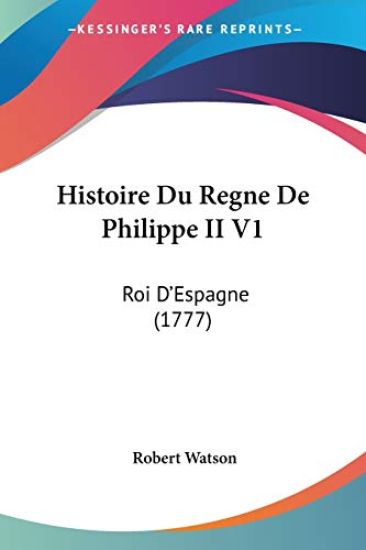
Geschichte der Regierung Philipps des Zweiten, K nigs von Spanien ist ein unver nderter, hochwertiger Nachdruck der Originalausgabe aus dem Jahr 1778. Hansebooks ist Herausgeber von Literatur zu unterschiedlichen Themengebieten wie Forschung und Wissenschaft, Reisen und Expeditionen, Kochen und Ern hrung, Medizin und weiteren Genres. Der Schwerpunkt des Verlages liegt auf dem Erhalt historischer Literatur. Viele Werke historischer Schriftsteller und Wissenschaftler sind heute nur noch als Antiquit ten erh ltlich. Hansebooks verlegt diese B cher neu und tr gt damit zum Erhalt selten gewordener Literatur und historischem Wissen auch f r die Zukunft bei.
Geschichte der Regierung Philipps des Zweiten, K nigs von Spanien ist ein unver nderter, hochwertiger Nachdruck der Originalausgabe aus dem Jahr 1778. Hansebooks ist Herausgeber von Literatur zu unterschiedlichen Themengebieten wie Forschung und Wissenschaft, Reisen und Expeditionen, Kochen und Ern hrung, Medizin und weiteren Genres. Der Schwerpunkt des Verlages liegt auf dem Erhalt historischer Literatur. Viele Werke historischer Schriftsteller und Wissenschaftler sind heute nur noch als Antiquit ten erh ltlich. Hansebooks verlegt diese B cher neu und tr gt damit zum Erhalt selten gewordener Literatur und historischem Wissen auch f r die Zukunft bei.
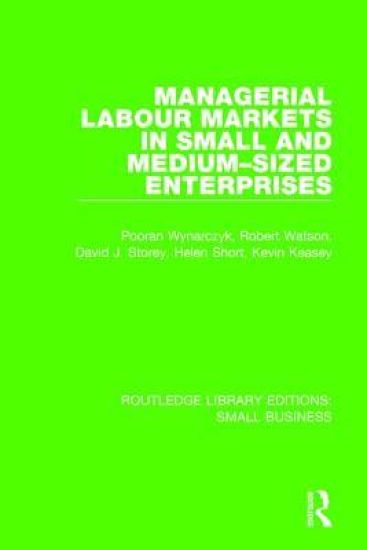
Focussing on the relatively few small firms which grew rapidly, this book, originally published in 1993 uses face-to-face interviews as well as published records to identify and analyse the managerial factors most closely associated with successful small firms. The volume concentrates on the following key managerial issues: In what respects do the managerial backgrounds and aspirations of the founders of fast-growth small firms differ from those of non-fast-growth small firms? How is the process of growth managed? What incentives, remuneration packages and communication systems are instituted? How do these characteristics and experiences differ in fast-growth small firms from both the traditional small firm and large-firm sector? To what extent is it possible to explain the relative economic performance of small firms in terms of differences in their ownership, organizational and management structures.
This study, originally published in 1987, addresses the question of small firm performance. Drawing on an extensive database containing financial, employment and ownership data for several thousand small firms, the book examines whether small firms do actually provide jobs, whether they grow and why small firms fail. Guidance is given on how to spot the signs of impending failure in a small business, which is of use to accountants small business PR actioners and government grant providers.
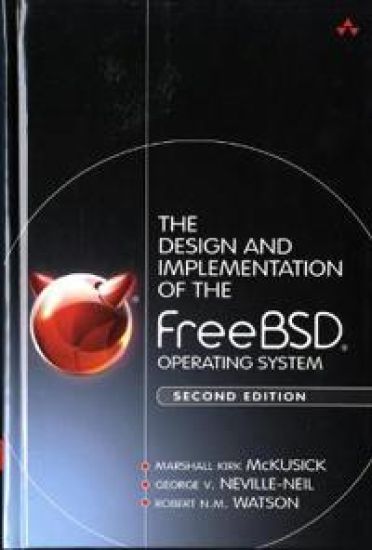
The most complete, authoritative technical guide to the FreeBSD kernel’s internal structure has now been extensively updated to cover all major improvements between Versions 5 and 11. Approximately one-third of this edition’s content is completely new, and another one-third has been extensively rewritten. Three long-time FreeBSD project leaders begin with a concise overview of the FreeBSD kernel’s current design and implementation. Next, they cover the FreeBSD kernel from the system-call level down–from the interface to the kernel to the hardware. Explaining key design decisions, they detail the concepts, data structures, and algorithms used in implementing each significant system facility, including process management, security, virtual memory, the I/O system, filesystems, socket IPC, and networking. This Second Edition • Explains highly scalable and lightweight virtualization using FreeBSD jails, and virtual-machine acceleration with Xen and Virtio device paravirtualization • Describes new security features such as Capsicum sandboxing and GELI cryptographic disk protection • Fully covers NFSv4 and Open Solaris ZFS support • Introduces FreeBSD’s enhanced volume management and new journaled soft updates • Explains DTrace’s fine-grained process debugging/profiling • Reflects major improvements to networking, wireless, and USB support Readers can use this guide as both a working reference and an in-depth study of a leading contemporary, portable, open source operating system. Technical and sales support professionals will discover both FreeBSD’s capabilities and its limitations. Applications developers will learn how to effectively and efficiently interface with it; system administrators will learn how to maintain, tune, and configure it; and systems programmers will learn how to extend, enhance, and interface with it. Marshall Kirk McKusick writes, consults, and teaches classes on UNIX- and BSD-related subjects. While at the University of California, Berkeley, he implemented the 4.2BSD fast filesystem. He was research computer scientist at the Berkeley Computer Systems Research Group (CSRG), overseeing development and release of 4.3BSD and 4.4BSD. He is a FreeBSD Foundation board member and a long-time FreeBSD committer. Twice president of the Usenix Association, he is also a member of ACM, IEEE, and AAAS. George V. Neville-Neil hacks, writes, teaches, and consults on security, networking, and operating systems. A FreeBSD Foundation board member, he served on the FreeBSD Core Team for four years. Since 2004, he has written the “Kode Vicious” column for Queue and Communications of the ACM. He is vice chair of ACM’s Practitioner Board and a member of Usenix Association, ACM, IEEE, and AAAS. Robert N. M. Watson is a University Lecturer in systems, security, and architecture in the Security Research Group at the University of Cambridge Computer Laboratory. He supervises advanced research in computer architecture, compilers, program analysis, operating systems, networking, and security. A FreeBSD Foundation board member, he served on the Core Team for ten years and has been a committer for fifteen years. He is a member of Usenix Association and ACM.