Kirjojen hintavertailu – 12 903 725 kirjaa ja 27 kauppaa

Kirjailija

Robert Wokler

Kirjat ja teokset yhdessä paikassa: 6 kirjaa, julkaisuja vuosilta 1999–2016, suosituimpiin kuuluu Enlightenment and Modernity. Vertaile teosten hintoja ja tarkista saatavuus suomalaisista kirjakaupoista.

6 kirjaa

Kirjojen julkaisuvuodet: 1999–2016.

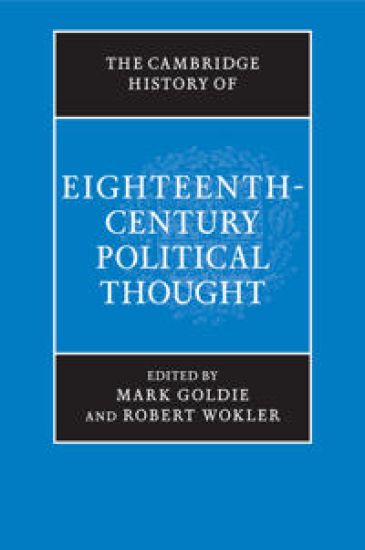
The Cambridge History of Eighteenth-Century Political Thought

The Cambridge History of Eighteenth-Century Political Thought

Mark Goldie; Robert Wokler

Cambridge University Press
2016
pokkari

Halvin toimitettuna 52,20 €

This major work of academic reference provides a comprehensive overview of the development of western political thought during the European enlightenment. Written by a distinguished team of international contributors, this Cambridge History is the latest in a sequence of volumes that is now firmly established as the principal reference source for the history of political thought. Every major theme in eighteenth-century political thought is covered in a series of essays at once scholarly and accessible, and the essays are complemented by extensive guides for further reading, and brief biographical notes of the major characters in the text, including Rousseau, Montesquieu and David Hume. Of interest and relevance to students and scholars of politics and history at all levels from beginning undergraduate upwards, this volume chronicles one of the most exciting and rewarding of all periods in the development of western thinking about politics, man (and increasingly woman), and society.
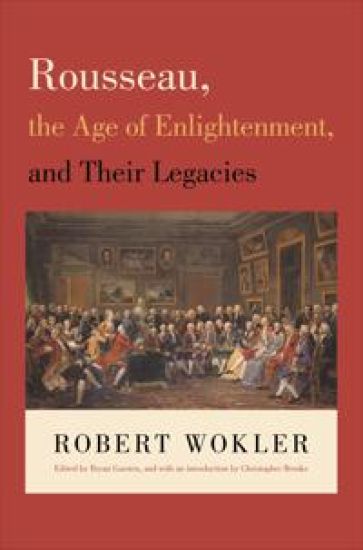
Rousseau, the Age of Enlightenment, and Their Legacies

Rousseau, the Age of Enlightenment, and Their Legacies

Robert Wokler

Princeton University Press
2012
pokkari
Robert Wokler was one of the world's leading experts on Rousseau and the Enlightenment, but some of his best work was published in the form of widely scattered and difficult-to-find essays. This book collects for the first time a representative selection of his most important essays on Rousseau and the legacy of Enlightenment political thought. These essays concern many of the great themes of the age, including liberty, equality and the origins of revolution. But they also address a number of less prominent debates, including those over cosmopolitanism, the nature and social role of music and the origins of the human sciences in the Enlightenment controversy over the relationship between humans and the great apes. These essays also explore Rousseau's relationships to Rameau, Pufendorf, Voltaire and Marx; reflect on the work of important earlier scholars of the Enlightenment, including Ernst Cassirer and Isaiah Berlin; and examine the influence of the Enlightenment on the twentieth century. One of the central themes of the book is a defense of the Enlightenment against the common charge that it bears responsibility for the Terror of the French Revolution, the totalitarian regimes of the twentieth-century and the Holocaust.
The Cambridge History of Eighteenth-Century Political Thought

The Cambridge History of Eighteenth-Century Political Thought

Mark Goldie; Robert Wokler

Cambridge University Press
2006
sidottu
This major work of academic reference provides a comprehensive overview of the development of western political thought during the European Enlightenment. Written by a distinguished team of international contributors, this Cambridge History is the latest in a sequence of volumes that is now firmly established as the principal reference source for the history of political thought. Every major theme in eighteenth-century political thought is covered in a series of essays at once scholarly and accessible, and the essays are complemented by extensive guides for further reading, and brief biographical notes of the major characters in the text, including Rousseau, Montesquieu and David Hume. Of interest and relevance to students and scholars of politics and history at all levels from beginning undergraduate upwards, this volume chronicles one of the most exciting and rewarding of all periods in the development of western thinking about politics, man (and increasingly woman), and society.
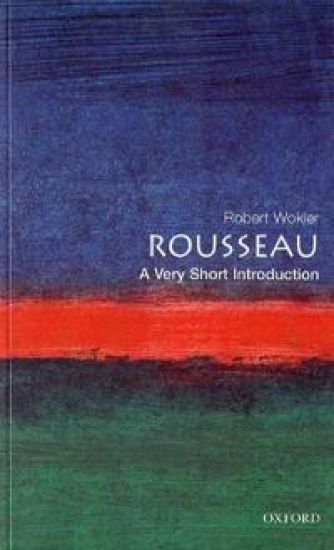
Rousseau

Rousseau

Robert Wokler

Oxford University Press
2001
nidottu
One of the most profound thinkers of modern history, Jean-Jacques Rousseau (1712-78) was a central figure of the European Enlightenment. He was also its most formidable critic, condemning the political, economic, theological, and sexual trappings of civilization along lines that would excite the enthusiasm of romantic individualists and radical revolutionaries alike. In this study of Rousseau's life and works Robert Wokler shows how his philosophy of history, his theories of music and politics, his fiction, educational and religious writings, and even his botany, were all inspired by visionary ideals of mankind's self-realization in a condition of unfettered freedom. He explains how, in regressing to classical republicanism, ancient mythology, direct communion with God, and solitude, Rousseau anticipated some post-modernist rejections of the Enlightenment as well. ABOUT THE SERIES: The Very Short Introductions series from Oxford University Press contains hundreds of titles in almost every subject area. These pocket-sized books are the perfect way to get ahead in a new subject quickly. Our expert authors combine facts, analysis, perspective, new ideas, and enthusiasm to make interesting and challenging topics highly readable.
Enlightenment and Modernity

Enlightenment and Modernity

Robert Wokler

Palgrave Macmillan
2000
nidottu
This collection of essays is addressed to the legacy of Enlightenment thought, with respect to eighteenth-century notions of human nature, human rights, representative democracy or the nation-state, and with regard to the barbarism, including the Holocaust, allegedly unleashed by eighteenth-century ideals of civilization.
Enlightenment and Modernity

Enlightenment and Modernity

Robert Wokler

Palgrave Macmillan
1999
sidottu
This collection of essays is addressed to the legacy of Enlightenment thought, with respect to eighteenth-century notions of human nature, human rights, representative democracy or the nation-state, and with regard to the barbarism, including the Holocaust, allegedly unleashed by eighteenth-century ideals of civilization.