Kirjojen hintavertailu – 12 859 828 kirjaa ja 27 kauppaa

Kirjailija

Robert Wolfe

Kirjat ja teokset yhdessä paikassa: 11 kirjaa, julkaisuja vuosilta 1999–2022, suosituimpiin kuuluu Ajata. Vertaile teosten hintoja ja tarkista saatavuus suomalaisista kirjakaupoista.

11 kirjaa

Kirjojen julkaisuvuodet: 1999–2022.

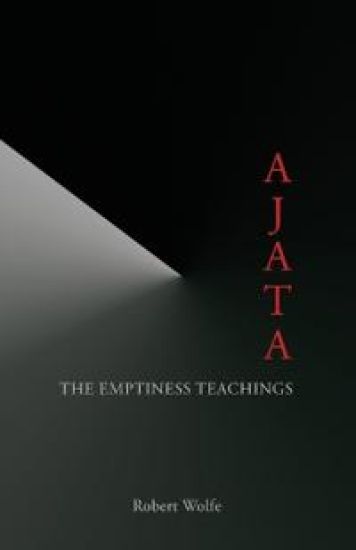
Ajata

Ajata

Robert Wolfe

Karina Library Press
2022
pokkari
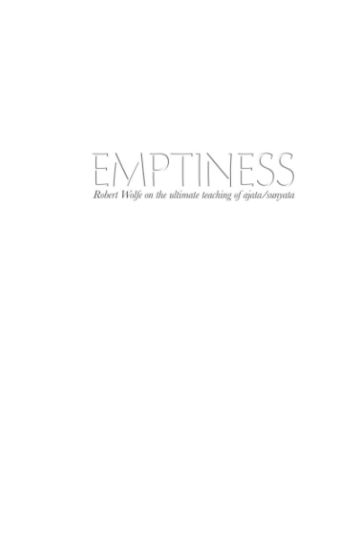
Ajata is to walk into a dead-end canyon holding onto your ideas of "life" and "death"; make a complete turnaround, and walk back out, now fearless. At twilight, a piece of rope might be mistaken for a snake. You look again and recognize that it is actually a piece of rope. Yet neither object is real in the ultimate sense. Both are merely unreal worldly objects, appearing to have reality. Reasoning itself is a phenomenon within the "worldly" dream, as are all that could be reasoned about, and the reasoner too. In other words, logic as well is not real, but then none of the things it supposedly applies to are real either. The fact of emptiness shows that logic too is empty, so it cannot answer any "why" or "how" questions one might expect to pose. There is an approach that can lead us to the fact of the emptiness of the world: investigating its reality is its negation. The emptiness of the world presents that opportunity. Emptiness has no intention for us to discover it; it is the world of forms that points the way to the "why?" Why is the world an "illusion"?; because it is empty of reality. Emptiness renders the world illusory; the illusion and its "why" question lead us into the ultimate truth. Appearance of form causes us to assume that we are perceiving "reality". But paradoxically, reality is actually the lack of "reality". What we think of as real things, we think of as arising with their reality. But ultimate Reality does not "arise". Anything which arises also departs; meanwhile it is changeable. Ultimate reality, being changeless, does not "depart"; neither does it arise, being "without beginning or end". Though true reality is permanent, it does not disallow impermanent appearances, phenomena or forms. However, illusory forms cannot lay claim to ultimate reality, "arising" and "departing" as we suppose they do. That all things are empty means that they are all the same. Even from this standpoint, "co-dependence" can be seen to be problematic because there are not really "co's". The point of ajata is that all things are empty of reality, since every "form is emptiness" from its formation. Dependent arising, therefore, is a roundabout analogy for the means of explaining emptiness to those unwilling to accept that no forms have ever actually been formed, from the start. All "things"-form, phenomena-can be seen to be co-dependent, and as such are impermanent; "things" change. Ultimate reality cannot be something which changes. It is the changelessness of ultimate reality that makes it really Real. "Things", then, are empty of reality. Ajata shows us that both nonexistence and seeming existence are elements of all of the universal objects. Emptiness and phenomena (objects, actions, events) are two names for the same presentation. Excerpted from the book]
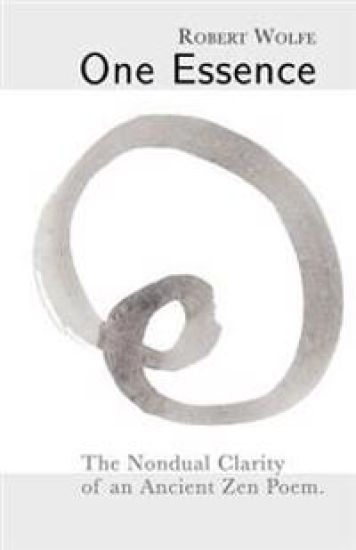
One Essence: The Nondual Clarity of an Ancient Zen Poem
One Essence is a modern commentary on the nondual teachings of a classical Zen text. It is also a collection of Zen wisdom and poetry, containing the 67 stanzas of the Hsin Hsin Ming (with multiple alternative translations), plus many other succinct spiritual verses from ancient and contemporary Zen sources. The concise, powerful verses of the Hsin Hsin Ming have been translated repeatedly over the ages, and been the subject of many commentaries in the attempt to understand its simplicity and subtlety. Here, Robert Wolfe, the author of Living Nonduality: Enlightenment Teachings of Self-Realization provides a modern, nondual look at this ancient Zen-Taoist poem. All thirty of its quatrains are provided along with a contemporary nondual interpretation as well as selections from other Zen and Taoist teaching poems. Also included is a short story by Robert Wolfe, "In Death as in Life", envisioning the last days of the Buddha and his nondual teachings. According to Robert Wolfe, One Essence represents his best essential summary of the nondual perception. "In this day, when the teachings of nonduality are being scrutinized by a growing public, the Hsin Hsin Ming again casts its reflective light on another generation privileged to contemplate its clarity and directness." (from the Introduction by the author.) From Chapter 16 of One Essence, a verse from the Hsin Hsin Ming: The all contains each, And each is the essence of the all. To live in this understanding Is the essence of the Tao.
U.S. Intelligence and the Nazis

U.S. Intelligence and the Nazis

Richard Breitman; Norman J. W. Goda; Timothy Naftali; Robert Wolfe

Cambridge University Press
2005
sidottu
This book is a direct result of the 1998 Nazi War Crimes Disclosure Act. Drawing upon many documents declassified under this law, the authors demonstrate what US intelligence agencies learned about Nazi crimes during World War II and about the nature of Nazi intelligence agencies' role in the Holocaust. It examines how some US corporations found ways to profit from Nazi Germany's expropriation of the property of German Jews. This book also reveals startling new details on the Cold War connections between the US government and Hitler's former officers. At a time when intelligence successes and failures are at the center of public discussion, US Intelligence and the Nazis also provides an unprecedented inside look at how intelligence agencies function during war and peacetime.
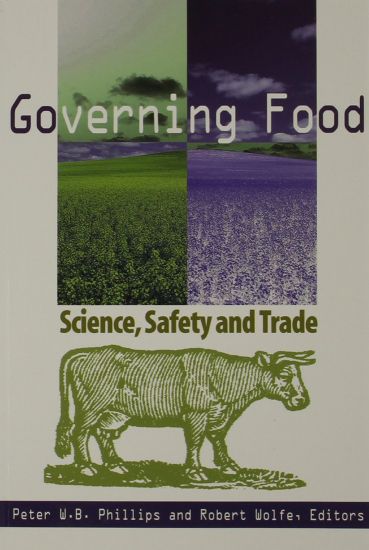
Governing Food

Governing Food

Peter W.B. Phillips; Robert Wolfe

Queen's University
2001
nidottu
Governing food creates friction in transatlantic relations, complicates Britain's relations with its EU partners, and poses challenges to Canada's relations with the United States. The essays in Governing Food, written by distinguished public officials, academics, and industry and civil society commentators, examine the three pillars of food safety - science, regulation, and industry - to highlight the pressures on government. Contributors include Charles Cockbill, chairman of the European Food Law Association of the UK; Neville Craddock, group regulatory affairs manager, Nestle UK; Lorne Hepworth, president, Crop Protection Institute (Canada); Catherine Humphries, director of Scientific Services, Co-operative Wholesale Society (UK); Anne A. MacKenzie, associate vice-president of Science Evaluation, Canadian Food Inspection Agency; Peter Phillips, University of Saskatchewan; Robert Wolfe, Queen's University; William Leiss, president, Royal Society of Canada.
Diplomatic Missions

Diplomatic Missions

Robert Wolfe

Queen's University
1999
nidottu
The collection addresses expectations placed on ambassadors, the role of provincial representatives, the history of foreign service recruitment, diplomatic change in Washington, the challenges of small missions, the contrasts between representing Canada in a G-7 capital and in a populous developing country, civil society organizations and diplomacy, the promotion of Canadian exports, and the perspective of domestic departments. Both diplomats and students will find that this book makes an important contribution to their understanding of the practice of foreign policy. Contributors include Andrew F. Cooper (Waterloo), Louis Delvoie (Queen's and Royal Military College), Lucie Edwards (Foreign Affairs and International Trade), Anthony T. Eyton (ARA Consulting Group), Paul Frazer (Foreign Affairs and International Trade), Janet L. Graham (Foreign Affairs and International Trade), Peter Hancock (Toronto), Paul Heinbecker (Foreign Affairs and International Trade), Richard Kohler (Foreign Affairs and International Trade), Hector Mackenzie (Foreign Affairs and International Trade), Kim Richard Nossal (McMaster), Alison Van Rooy (North-South Institute), and Robert Wolfe (Queen's).
Diplomatic Missions

Diplomatic Missions

Robert Wolfe

Queen's University
1999
sidottu
The collection addresses expectations placed on ambassadors, the role of provincial representatives, the history of foreign service recruitment, diplomatic change in Washington, the challenges of small missions, the contrasts between representing Canada in a G-7 capital and in a populous developing country, civil society organizations and diplomacy, the promotion of Canadian exports, and the perspective of domestic departments. Both diplomats and students will find that this book makes an important contribution to their understanding of the practice of foreign policy. Contributors include Andrew F. Cooper (Waterloo), Louis Delvoie (Queen's and Royal Military College), Lucie Edwards (Foreign Affairs and International Trade), Anthony T. Eyton (ARA Consulting Group), Paul Frazer (Foreign Affairs and International Trade), Janet L. Graham (Foreign Affairs and International Trade), Peter Hancock (Toronto), Paul Heinbecker (Foreign Affairs and International Trade), Richard Kohler (Foreign Affairs and International Trade), Hector Mackenzie (Foreign Affairs and International Trade), Kim Richard Nossal (McMaster), Alison Van Rooy (North-South Institute), and Robert Wolfe (Queen's).