Kirjojen hintavertailu – 12 859 828 kirjaa ja 27 kauppaa
Kirjailija
Robert Woods
Kirjat ja teokset yhdessä paikassa: 15 kirjaa, julkaisuja vuosilta 1995–2025, suosituimpiin kuuluu The Long Climb: A Memoir of the Journey from Addiction to Victory with God. Vertaile teosten hintoja ja tarkista saatavuus suomalaisista kirjakaupoista.
In 1906, Sir George Newman's 'Infant Mortality: A Social Problem', one of the most important health studies of the twentieth century, was published. To commemorate this anniversary, this volume brings together an interdisciplinary team of leading academics to evaluate Newman's critical contribution, to review current understandings of the history of infant and early childhood mortality, especially in Britain, and to discuss modern approaches to infant health as a continuing social problem. The volume argues that, even after 100 years of health programmes, scientific advances and medical interventions, early childhood mortality is still a significant social problem and it also proposes new ways of defining and tracking the problem of persistent mortality differentials.
In 1906, Sir George Newman's 'Infant Mortality: A Social Problem', one of the most important health studies of the twentieth century, was published. To commemorate this anniversary, this volume brings together an interdisciplinary team of leading academics to evaluate Newman's critical contribution, to review current understandings of the history of infant and early childhood mortality, especially in Britain, and to discuss modern approaches to infant health as a continuing social problem. The volume argues that, even after 100 years of health programmes, scientific advances and medical interventions, early childhood mortality is still a significant social problem and it also proposes new ways of defining and tracking the problem of persistent mortality differentials.
Grizzly Lake is the story of a young boy that ran away from home, troubled by poor grades at school and not allowed to spend his summer vacation with other kids. He, with the help of another boy, used every trick they could and joined a group of YMCA boys going to Mount St. Helens. They make it to the camp at Spirit Lake and meet the legendary Harry S. Truman. Grizzly Lake has numerous twists and turns that reveal some of the many beauties of Mount St. Helens. Lost and alone on a moonless night and high up the mountain, he learns, no matter how far he runs, his troubles follow.
How did midwives deliver women in the past? What was their understanding of anatomy and physiology? How did they cope with unnatural presentations, haemorrhage, miscarriage and stillbirths, constipation? Were lives being prolonged and risks diminished? Midwifery case notes offer a considerable source of evidence, which, when used with care and imagination, help to tackle these questions. Mrs Stone & Dr Smellie demonstrates this in a fascinating way by analysing the work of two well-known midwives. Sarah Stone’s A Complete Practice of Midwifery was published in London in 1737. Mrs Stone had been a midwife in Bridgwater, Taunton and Bristol before moving to London in the late 1730s. Her book collects 43 case notes mainly from her Somerset practice. It is probably unique in providing a female midwife’s perspective on childbirth in provincial England in the eighteenth century. Although often mentioned by medical historians, literary scholars have given it most attention by reading it as a feminist text. But A Complete Practice reproduced in full within this book, is a detailed, albeit selective, account of the problems faced by midwifes, what they could do for their women, and how likely they were to succeed. William Smellie (1697-1763) occupies a pivotal position in the history of midwifery, not only in Britain, but also in the wider international community. He published a textbook in 1751 and two collections of case notes in 1754 and 1764. an analysis of the 278 London cases. Woods and Galley offer a ‘thick description’ of Smellie’s practice, the problems he faced, the people he dealt with, how he combined domiciliary clinical practice with advanced instruction, and the way in which he presented his work to a wider community for their enlightenment. Compulsory reading for those working on the history of medicine and midwifery, demography and social history, Mrs Stone and Dr Smellie is an engaging final study by the late internationally-renowned scholar Professor Robert Woods, FBA.
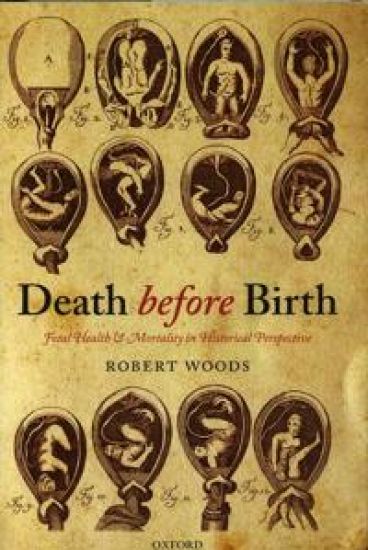
Considering its importance, the history of fetal health and mortality remains a neglected area. Medical historians have tended to focus on maternal mortality and professional conflicts between midwives rather than on the unborn, while among the social scientists demographers and epidemiologists have until recently devoted most of their attention to infants and children. Death before Birth redresses this imbalance, redirecting attention to the fetus. A study of fetal health from the seventeenth century to the present day, it is the first book to offer an historical perspective on the subject and to combine both medical history and epidemiological and demographic research, using long-term and comparative perspectives, including a strong international comparative element, across both Europe and North America. The book not only provides an account of how fetal health and the risks facing the unborn (miscarriages, abortions, stillbirths etc) have changed, it also offers an interpretation of the causes, one that focuses on the role of obstetrics and the epidemiology of maternal infections. Along the way, it pays detailed attention to a host of related themes, such as varying cultural practices in the recognition of stillbirths; the age pattern of mortality risk between conception and live birth; comparative trends in late-fetal mortality and their causes; fetal mortality and obstetric care during the eighteenth, nineteenth, and twentieth centuries; and the contrasting approaches of the pathologists and 'social epidemiologists' to the causes of fetal death. The book concludes with a study of the 'fetus as patient', focusing on issues surrounding the legalization of abortion in many Western countries and the public health challenges of persistently high mortality in less developed countries.
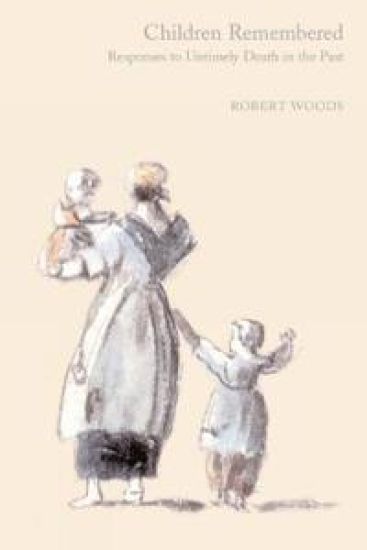
Children Remembered discusses the relationship between parents and children in the past. It focuses on the ways in which adults responded to the untimely deaths of children, whether and how they expressed their grief. The study engages with the hypothesis of 'parental indifference' associated with the French cultural historian Philippe Ari s by analysing the changing risk of mortality since the sixteenth century and assessing its consequences. It uses paintings and poems to describe feelings and emotions in ways that are not only highly original, but also challenge traditional disciplinary conventions. The circumstances of infant and child mortality are considered for France and England, while example portraits and poems are selected from England and America. While the work is firmly grounded in demography, it is especially concerned with current debates in social and cultural history, with the history of childhood, the way pictorial images can be 'read', and the use as historical evidence to which literature may be put. This is a wide- ranging and ambitions multi-disciplinary study that will add significantly to our understanding of demographic structures; the ways in which they have conditioned attitudes and behaviour in the past.
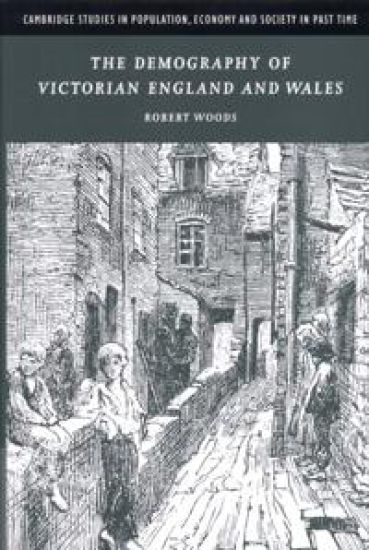
The Demography of Victorian England and Wales uses the full range of nineteenth-century civil registration material to describe in detail for the first time the changing population history of England and Wales between 1837 and 1914. Its principal focus is the great demographic revolution which occurred during those years, especially the secular decline of fertility and the origins of the modern rise in life expectancy. But Robert Woods also considers the variable quality of the Victorian registration system; the changing role of what Robert Malthus termed the preventive check; variations in occupational mortality and the development of the twentieth-century class mortality gradient; and the effects of urbanisation associated with the significance of distinctive disease environments. The volume also illustrates the fundamental importance of geographical variations between urban and rural areas. This invaluable reference tool is lavishly illustrated with numerous tables, figures and maps, many of which are reproduced in full colour.
This book provides a clear interpretation of the causes of demographic change in the nineteenth century. This critical period followed the demise of the old pre-industrial population regime (often associated with Malthus’sPrinciple of Population) and the changes that occurred at this time led to the modern twentieth-century pattern in which both fertility and mortality rates are particularly low. The author combines an examination of migration, marriage patterns, fertility and mortality with a guide to the sources of population data available to historians and demographers. Illustrated with tables and figures, this book is the only available summary of this field for students. It includes a detailed bibliography for those wishing to pursue the subject further.
This book provides a clear interpretation of the causes of demographic change in the nineteenth century. This critical period followed the demise of the old pre-industrial population regime (often associated with Malthus’sPrinciple of Population) and the changes that occurred at this time led to the modern twentieth-century pattern in which both fertility and mortality rates are particularly low. The author combines an examination of migration, marriage patterns, fertility and mortality with a guide to the sources of population data available to historians and demographers. Illustrated with tables and figures, this book is the only available summary of this field for students. It includes a detailed bibliography for those wishing to pursue the subject further.