Kirjojen hintavertailu – 12 903 725 kirjaa ja 27 kauppaa

Kirjailija

Roberta Greene

Kirjat ja teokset yhdessä paikassa: 4 kirjaa, julkaisuja vuosilta 1994–2023, suosituimpiin kuuluu A Resilience-Enhancing Stress Model. Vertaile teosten hintoja ja tarkista saatavuus suomalaisista kirjakaupoista.

4 kirjaa

Kirjojen julkaisuvuodet: 1994–2023.

A Resilience-Enhancing Stress Model

A Resilience-Enhancing Stress Model

Roberta Greene; Nicole Dubus; Nancy Greene

Springer International Publishing AG
2023
nidottu
Social work practice has evolved to meet the needs of the time, the problems that are present, and the knowledge and skills available. Given the more recent rapidly changing stressful environments, political, economic, demographic, sociocultural, and ideological change has affected how practice is defined. Now it is even more essential for there to be innovative theoretical concepts and intervention strategies to support current practice. This textbook addresses today’s context of social work practice that needs to deal with the complexity of personal and social relationships, the continuing historical flux of the times, and the constant anxiety or "threats and pulls" of daily life. The text is based on the idea that social work practice requires a research and theoretical base that allows practitioners to build on a client's ability to persist in the face of life's challenges and to proceed positively with life events. The Resilience-Enhancing Stress Model (RESM) is an outgrowth of the profession’s interest in strength-based person-environment approaches — grounded in generalist social work practice that offers a range of intervention practice methods with diverse individuals, families, groups, organizations, and communities. RESM was developed to provide the skill set for working with clients and constituencies across the individual-family-community configuration during times of distress. It also can be a welcomed addition to social work practice with people undertaking life transitions and overcoming disruption to individual, family, and community function. Topics explored include:An Evolving Resilience-Enhancing Stress ModelInterviewing to Promote Resilience Among Marginalized PopulationsCo-creating a Grand Narrative: The Intersection of Individual, Family, and Community PracticeConnecting Communal Living, Ecology, and ResilienceA Resilience-Enhancing Stress Model: A Social Work Multisystemic Practice Approach is a timely text for human behavior and practice methods at the generalist or advanced generalist levels in social work. It can also be used at the doctoral level of social work education depending on the professor’s attention to the depth of theoretical concepts. Practitioners in the field may find the contents useful to their professional enrichment.
A Resilience-Enhancing Stress Model

A Resilience-Enhancing Stress Model

Roberta Greene; Nicole Dubus; Nancy Greene

Springer International Publishing AG
2022
sidottu
Social work practice has evolved to meet the needs of the time, the problems that are present, and the knowledge and skills available. Given the more recent rapidly changing stressful environments, political, economic, demographic, sociocultural, and ideological change has affected how practice is defined. Now it is even more essential for there to be innovative theoretical concepts and intervention strategies to support current practice. This textbook addresses today’s context of social work practice that needs to deal with the complexity of personal and social relationships, the continuing historical flux of the times, and the constant anxiety or "threats and pulls" of daily life. The text is based on the idea that social work practice requires a research and theoretical base that allows practitioners to build on a client's ability to persist in the face of life's challenges and to proceed positively with life events. The Resilience-Enhancing Stress Model (RESM) is an outgrowth of the profession’s interest in strength-based person-environment approaches — grounded in generalist social work practice that offers a range of intervention practice methods with diverse individuals, families, groups, organizations, and communities. RESM was developed to provide the skill set for working with clients and constituencies across the individual-family-community configuration during times of distress. It also can be a welcomed addition to social work practice with people undertaking life transitions and overcoming disruption to individual, family, and community function. Topics explored include:An Evolving Resilience-Enhancing Stress ModelInterviewing to Promote Resilience Among Marginalized PopulationsCo-creating a Grand Narrative: The Intersection of Individual, Family, and Community PracticeConnecting Communal Living, Ecology, and ResilienceA Resilience-Enhancing Stress Model: A Social Work Multisystemic Practice Approach is a timely text for human behavior and practice methods at the generalist or advanced generalist levels in social work. It can also be used at the doctoral level of social work education depending on the professor’s attention to the depth of theoretical concepts. Practitioners in the field may find the contents useful to their professional enrichment.
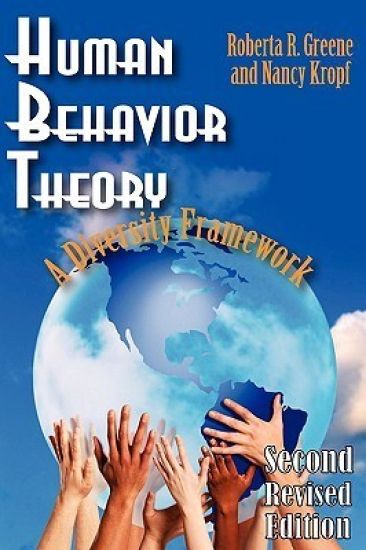
Human Behavior Theory

Human Behavior Theory

Roberta Greene

AldineTransaction
1994
sidottu
In recent years, advocates for civil rights for minorities, women, and gays and lesbians have become more informed consumers of mental health services. As a result, social work practitioners need to prepare themselves to serve diverse constituencies for who previously held behavioral and cultural assumptions have proven not to be universally applicable. The purpose of Greene's book is to help students and practitioners better understand how social workers have used human behavior theories to more competently address variations in group and community membership within the social worker-client encounter. The book's approach is largely thematic. Most of the chapters explore how particular assumptions of a human behavior theory--psychoanalytic theory, psychodynamic/ego psychology theory, systems theory, behavioral theory, symbolic interaction theory, feminist theory, constructionist theory, small group theory, and an ecological perspective --have been used to answer issues related to cultural diversity. The challenges and limitations of each theory's applications across varying client constituencies are discussed throughout. What sorts of new conceptual issues for the practitioner of family services are raised in work with minority families, for example, or with lesbian families? How does a specific theory help, or not help, in group-specific interventions and evaluations? Intended as a companion volume to the widely adopted human behavior text by Greene and Ephross, Greene's new book fills the need for a wide, synthetic reading of the recent literature.
Human Behavior Theory

Human Behavior Theory

Roberta Greene

AldineTransaction
1994
nidottu
In recent years, advocates for civil rights for minorities, women, and gays and lesbians have become more informed consumers of mental health services. As a result, social work practitioners need to prepare themselves to serve diverse constituencies for who previously held behavioral and cultural assumptions have proven not to be universally applicable. The purpose of Greene's book is to help students and practitioners better understand how social workers have used human behavior theories to more competently address variations in group and community membership within the social worker-client encounter. The book's approach is largely thematic. Most of the chapters explore how particular assumptions of a human behavior theory--psychoanalytic theory, psychodynamic/ego psychology theory, systems theory, behavioral theory, symbolic interaction theory, feminist theory, constructionist theory, small group theory, and an ecological perspective --have been used to answer issues related to cultural diversity. The challenges and limitations of each theory's applications across varying client constituencies are discussed throughout. What sorts of new conceptual issues for the practitioner of family services are raised in work with minority families, for example, or with lesbian families? How does a specific theory help, or not help, in group-specific interventions and evaluations? Intended as a companion volume to the widely adopted human behavior text by Greene and Ephross, Greene's new book fills the need for a wide, synthetic reading of the recent literature.