Kirjojen hintavertailu – 12 903 725 kirjaa ja 27 kauppaa

Kirjailija

Robin Blackburn

Kirjat ja teokset yhdessä paikassa: 10 kirjaa, julkaisuja vuosilta 2004–2024, suosituimpiin kuuluu Class, sex and revolutions : Göran Therborn - a critical appraisal. Vertaile teosten hintoja ja tarkista saatavuus suomalaisista kirjakaupoista.

10 kirjaa

Kirjojen julkaisuvuodet: 2004–2024.

Class, sex and revolutions : Göran Therborn - a critical appraisal

Class, sex and revolutions : Göran Therborn - a critical appraisal

Risto Alapuro; Perry Anderson; Robin Blackburn; Chang Kyung-sup; Gabriella Elgenius; Anita Göransson; Eric Hobsbawm; Sven Hort; Per H. Jensen; Habibul Haque Khondker; Lisa Kings; Zhanna Kravchenko; Aliaksei Lastouski; Åsa Cristina Laurell; Lena Lavinas; Gunnar Olofsson; Bo Rothstein; Anders Stephanson

Arkiv förlag/A-Z förlag
2016
nidottu
Soon, Cities of Power: The Urban, the National, the Popular, and the Global by Göran Therborn will be on the market. In between Science, Class and Society (1976) and The Killing Fields of Inequality (2013, Swedish translation: Ojämlikhet dödar, 2016) Göran has consistently challenged received wisdom in politics and the social sciences. His Between Sex and Power (2004) is the current global map of family relations and gender equality. With the 1968 article "From Petrograd to Saigon" he laid the foundation for his worldwide reputation as an innovative public intellectual. His critique of the Frankfurt School had repercussions around Europe. Today his work is spread across six continents, Latin America in particular, and has been translated into more than twenty languages. This book is a critical appraisal of the themes Göran Therborn has pursued up till now, and is introduced by Robin Blackburn, for almost twenty years his editor at New Left Review." Göran's continual alertness to different paths to or through modernity, and to varieties of capitalism, will very soon be tested in a dramatic way." - Ian Gough, London School of Economics"This is a very important project and Göran richly deserves it." - Michael Burawoy, UC BerkeleyCONTENTS: INTRODUCTIONS Robin Blackburn, Göran Therborn and the Old Mole Sven Hort & Gunnar Olofsson, A Portrait of the Sociologist as a Young Rebel SECTION I. Class, Politics and Revolutions Anders Stephanson, On Geopolitics in Therbornism, Early and Late Risto Alapuro, Finnish Demonstrations as Confrontations Per H. Jensen, Origins of Danish Flexicurity Robin Blackburn, From Miliband to Corbyn Aliaksei Lastouski, Nikolay Zakharov & Sven Hort, Belarus - Another "Iceberg Society"? Elisabeth Özdalga, Islam-Oriented Trajectories and Turkey's Fluctuating Encounters with European Modernity Åsa Cristina Laurell, Structural Adjustment, Social Exclusion and Violence Lena Lavinas, The Untold Battlefields Against Inequality in Latin America Chang Kyung-sup, Post-Socialist Class Politics with Chinese Characteristics SECTION II. Sex, Gender and Power Anita Göransson & Karin Widerberg, Göran between Sex and Power Eric Hobsbawm, Retreat of the Male Perry Anderson, Atlas of the Family SECTION III. Global Modernities Immanuel Wallerstein, Empire: Dangerous Slippage of a Concept Habibul Haque Khondker, Entangled Globality Gabriella Elgenius, The Principles and Products of the Identity Market Zhanna Kravchenko, Lisa Kings & Sven Hort, Power Ideology and Transformations of Space Bo Rothstein, Manufacturing Social Solidarity Erik Olin Wright, The Capitalist State and the Possibility of SocialismSamtidigt med denna engelska vänbok till Göran Therborn publiceras en svensk pendang i form av en "festskriftsavdelning" i Arkiv. Tidskrift för samhällsanalys nr 6. Numret finns fritt tillgängligt, gratis att läsa och ladda ned, på www.tidskriftenarkiv.se. Det kan också beställas som tryckt utgåva i de vanliga bokhandelskanalerna och direkt från förlaget.
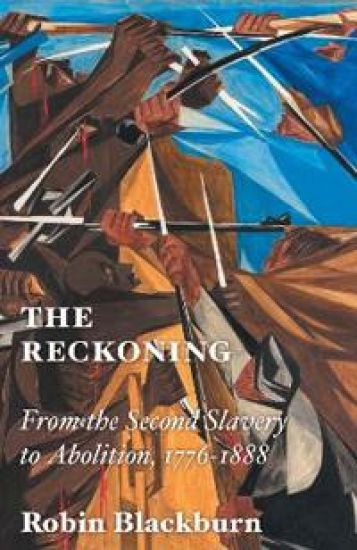
The Reckoning

The Reckoning

Robin Blackburn

Verso Books
2024
sidottu
The Age of Revolution (1776-1848) destroyed the main slave regimes of the Caribbean but a 'Second Slavery' surged in the US South, Cuba and Brazil, powered by demand for plantation produce and a system of financial credit that leveraged the value of the slaves. By 1860, more than 6 million captives of African descent toiled to produce the cotton, sugar and coffee craved by global consumers. This 'Second Slavery' mimicked capitalist disciplines, intensified slavery's racial character and launched half a century of headlong economic growth. On the eve of the American Civil War, the Slave Power seemed invincible. The slaveholding elite entrenched their 'peculiar institution' in the fabric of the Union only to risk everything on secession. Nobody solicited the slaves' wishes until it became clear that, wherever they could, they were deserting the plantations and joining the Union forces. Abolition radicals destroyed the Second Slavery and victory for the North also spelled defeat for slavery in Cuba and Brazil. But in each of these societies racial oppression was to be reconfigured by 'Black Codes', Jim Crow and toxic doctrines of racial destiny. Slavery leaves an indelible mark on many Atlantic nations. The Reckoning charts the historic impact of slavery and anti-slavery, of black and white activists, of fugitive slaves, feminists, writers, clerics and soldiers. Notwithstanding much unfinished business, the anti-slavery struggle retains its capacity to illuminate and inspire.
Capitalism, Socialism and Democracy: From 1917 to the Present
Authoritative account of heterodox economic ideas by one of the leading lights of New Left Review The tentative revival of socialist movements on either side of the Atlantic has posed anew the question of alternative economic regimes: Modern Monetary Theory, 'digital socialism', public-utility banking and Universal Basic Services are just some of the ideas in play. Thinking Socialist Economic Policy provides the historical and theoretical scaffolding for these vital and ongoing debates. It surveys a century of radical-left theorisation and experimentation, beginning with the early Bolshevik experience and the socialist calculation debate with Mises and Hayek, before taking in the Meidner Plan in social-democratic Sweden and the prospects for a 'socialised market' amid the ruins of the Soviet bloc. The middle section traces the accelerating financialization of the major capitalist economies leading up to the crash of 2008, the end-point of post-Cold War Western self-congratulation. The book closes with a survey of possible left exits from our era of economic stagnation and austerity, and of measures to overhaul the UK economy - the most unequal and neoliberalized order in western Europe.
The American Crucible

The American Crucible

Robin Blackburn

Verso Books
2013
nidottu
For over three centuries, slavery in the Americas fuelled the growth of capitalism. But the stirrings of a revolutionary age in the late eighteenth century challenged this "peculiar institution" and set the scene for great acts of emancipation in Haiti in 1804, in the United States in the 1860s and Brazil in the 1880s. Blackburn argues that the anti-slavery movement helped forge the political and social ideals we live by today.
The Overthrow of Colonial Slavery

The Overthrow of Colonial Slavery

Robin Blackburn

Verso Books
2013
sidottu
This series provides attractive new editions of classic works of history, making landmark texts available to a new generation of readers. Covering a timespan stretching from Ancient Greece and Rome to the twentieth century, and with a global geographical range, the series will also include thematic volumes providing insights into such topics as the spread of print cultures and the history of money.
Age Shock

Age Shock

Robin Blackburn

Verso Books
2012
nidottu
Most countries face the future with an ageing population, yet most governments are cutting back on pensions and the care services needed by the elderly. Robin Blackburn exposes the perverse reasoning and special interests which have combined to produce this nonsensical state of affairs. This updated paperback edition of Age Shock includes a new preface explaining why the credit crunch and eurozone crisis have had such a devastating impact and outlining a way to guarantee decent pensions and care provision.
An Unfinished Revolution

An Unfinished Revolution

Robin Blackburn

Verso Books
2011
nidottu
Karl Marx and Abraham Lincoln exchanged letters at the end of the Civil War. Although they were divided by far more than the Atlantic Ocean, they agreed on the cause of "free labor" and the urgent need to end slavery. In his introduction, Robin Blackburn argues that Lincoln's response signaled the importance of the German American community and the role of the international communists in opposing European recognition of the Confederacy. The ideals of communism, voiced through the International Working Men's Association, attracted many thousands of supporters throughout the US, and helped spread the demand for an eight-hour day. Blackburn shows how the IWA in America-born out of the Civil War-sought to radicalize Lincoln's unfinished revolution and to advance the rights of labor, uniting black and white, men and women, native and foreign-born. The International contributed to a profound critique of the capitalist robber barons who enriched themselves during and after the war, and it inspired an extraordinary series of strikes and class struggles in the postwar decades. In addition to a range of key texts and letters by both Lincoln and Marx, this book includes articles from the radical New York-based journal Woodhull and Claflin's Weekly, an extract from Thomas Fortune's classic work on racism Black and White, Frederick Engels on the progress of US labor in the 1880s, and Lucy Parson's speech at the founding of the Industrial Workers of the World.
The Overthrow of Colonial Slavery

The Overthrow of Colonial Slavery

Robin Blackburn

Verso Books
2011
nidottu
In 1770 a handful of European nations ruled the Americas, drawing from them a stream of products, both everyday and exotic. Some two and a half million black slaves, imprisoned in plantation colonies, toiled to produce the sugar, coffee, cotton, ginger and indigo craved by Europeans. By 1848 the major systems of colonial slavery had been swept away either by independence movements, slave revolts, abolitionists or some combination of all three. How did this happen? Robin Blackburn's history captures the complexity of a revolutionary age in a compelling narrative. In some cases colonial rule fell while slavery flourished, as happened in the South of the United States and in Brazil; elsewhere slavery ended but colonial rule remained, as in the British West Indies and French Windwards. But in French St. Domingue, the future Haiti, and in Spanish South and Central America both colonialism and slavery were defeated. This story of slave liberation and American independence highlights the pivotal role of the "first emancipation" in the French Antilles in the 1790s, the parallel actions of slave resistance and metropolitan abolitionism, and the contradictory implications of slaveholder patriotism. The dramatic events of this epoch are examined from an unexpected vantage point, showing how the torch of anti-slavery passed from the medieval communes to dissident Quakers, from African maroons to radical pirates, from Granville Sharp and Ottabah Cuguano to Toussaint L'Ouverture, from the black Jacobins to the Liberators of South America, and from the African Baptists in Jamaica to the Revolutionaries of 1848 in Europe and the Caribbean.
The Making of New World Slavery

The Making of New World Slavery

Robin Blackburn

Verso Books
2010
nidottu
The Making of New World Slavery argues that independent commerce, geared to burgeoning consumer markets, was the driving force behind the rise of plantation slavery. The baroque state sought-successfully-to feed upon this commerce and-with markedly less success-to regulate slavery and racial relations. To illustrate this thesis, Blackburn examines the deployment of slaves in the colonial possessions of the Portuguese, the Spanish, the Dutch, the English and the French. Plantation slavery is shown to have emerged from the impulses of civil society, not from the strategies of individual states. Robin Blackburn argues that the organization of slave plantations placed the West on a destructive path to modernity and that greatly preferable alternatives were both proposed and rejected. Finally, he shows that the surge of Atlantic trade, predicated on the murderous toil of the plantations, made a decisive contribution to both the Industrial Revolution and the rise of the West.
Banking on Death

Banking on Death

Robin Blackburn

Verso Books
2004
nidottu
Banking on Death offers a panoramic view of the history and future of pension provision. A work of unique scope, it traces the origins and development of the pension idea, from the days of the French Revolution to the troubles of the modern welfare state. As we live longer, employers are closing their pension schemes and many claim that public treasuries will not be able to cope with the retirement of the babyboomers. Banking on Death analyses the challenge facing public schemes and the malfunctioning of private retirement provision, concluding with a bold proposal for how to pay for decent pensions for all. Robin Blackburn argues that pension funds have been depleted by wasteful promotion and used as gambling chips by ruthless and overpaid top executives. This is the world of 'grey capitalism,' where employees' savings are sequestrated from them and pressed into the service of corporate aggrandisement. Even the best companies find it hard to run a business and a pension fund at the same time-especially when the latter is larger than the former. The fund managers' notorious short-termism and herd instinct, and their failure to curb the greed and irresponsibility of the corporate elite, lead to obscene inequalities and a blighted social landscape. The pension privatisation lobby, Blackburn shows, has lost major battles in France and Germany, the United States and Italy, because of the popular fears it evokes. And the case for privatisation looks intellectually threadbare after withering critiques from such notable theorists as Joseph Stiglitz and Pierre Bourdieu. Banking on Death shows that pensions are political dynamite, and have undone governments from France and Italy to Argentina. Popular outcries led Reagan, Clinton, and Blair to change tack: will this happen to George W. Bush too? Blackburn argues that the ageing society will generate increased costs but, so long as the new life course is properly financed, all age groups will gain. He proposes a public regime of asset-based welfare, drawing on the ideas of John Maynard Keynes and Rudolf Meidner, that could ensure secondary pensions for all and foster a more responsible, egalitarian and humane pattern of economic development.