Kirjojen hintavertailu – 12 903 725 kirjaa ja 27 kauppaa
Kirjailija
Robin Downie
Kirjat ja teokset yhdessä paikassa: 6 kirjaa, julkaisuja vuosilta 1999–2021, suosituimpiin kuuluu Bioethics and the Humanities. Vertaile teosten hintoja ja tarkista saatavuus suomalaisista kirjakaupoista.
The Covid-19 pandemic has shown the need for a fresh look at health and health care. This book offers a philosophical critique of medicine as applied science, but more positively it stresses the social causes of disease and argues for greater equity in the distribution of resources and the benefits of a wider evidence-base for medical treatments. The suggested approach requires a new direction for medical ethics, one which uses the arts and humanities and leads to a revised idea of medical education and medical professionalism. The suggested approach implies a move away from the individualistic philosophy of medicine towards a new aim — community-based quality of life. The achievement of this aim certainly requires an expansion of public health medicine and health promotion but it also requires medical co-operation with the many arts and other community agencies concerned with our health and well-being. Doctors and other health professionals must work through the community rather than on it.
A book for nurses, doctors and all who provide end of life care, this essential volume guides readers through the ethical complexities of such care, including current policy initiatives, and encourages debate and discussion on their controversial aspects. dived into two parts, it introduces and explains clinical decision making-processes about which there is broad consensus, in line with guidance documents issued by WHO, BMA, GMC, and similar bodies. The changing political and social context where 'patient choice' has become a central idea, and the broadened scope of potients' best interests, have added to the complexity of decision-making in end of life care. The authors discuss issues widely encountered by GPs, nurses, and hospital clinicians. These include patient choice, consent, life-prolonging treatment, and symptom relief including sedation. Part rwo explores the more controversial current end of life care initiatives, such as advance care planning preferred place of care and death, euthanais and assited suicide, extended ideas of 'best interests', and the view that there are therapeutic duties to the relatives of Throughout their discussion the authors draw attention to loose ends and contradictions in some of the proposals. Examining the current policy of comsumerist choice, they reject its place in the health service, proposing a a realistic, fair, humane and widely adoptable system of end of life care. As knowledge of ethical theories is required in training courses, and the vocabulary of ethical theory is widespread in current discussions a substantial appendix on ethical theories and terms is available online. Written by the same authors as The Philosophy of Palliative Care: Critique and Reconstruction, which won the Medical Journalists' Association Specialits Book Award 2007, this new book for non-specialists is essential reading for all health care professionals involved in providing end of life care.
Critiquing many areas of medical practice and research whilst making constructive suggestions about medical education, this book extends the scope of medical ethics beyond sole concern with regulation. Illustrating some humanistic ways of understanding patients, this volume explores the connections between medical ethics, healthcare and subjects, such as philosophy, literature, creative writing and medical history and how they can affect the attitudes of doctors towards patients and the perceptions of medicine, health and disease which have become part of contemporary culture. The authors examine a range of ideas in medical practice and research, including: the idea that patient status or the doctor/patient relationship can be understood via quantitative scalesthe illusion fostered by medical ethics that doctors, unlike those in other professions, are uniquely beneficent and indeed altruistic. An excellent text for undergraduate and postgraduate students of law, medical ethics and medical healthcare law, Bioethics and the Humanities shows the real ethical achievements, problems and half-truths of contemporary medicine.
Critiquing many areas of medical practice and research whilst making constructive suggestions about medical education, this book extends the scope of medical ethics beyond sole concern with regulation. Illustrating some humanistic ways of understanding patients, this volume explores the connections between medical ethics, healthcare and subjects, such as philosophy, literature, creative writing and medical history and how they can affect the attitudes of doctors towards patients and the perceptions of medicine, health and disease which have become part of contemporary culture. The authors examine a range of ideas in medical practice and research, including: the idea that patient status or the doctor/patient relationship can be understood via quantitative scalesthe illusion fostered by medical ethics that doctors, unlike those in other professions, are uniquely beneficent and indeed altruistic. An excellent text for undergraduate and postgraduate students of law, medical ethics and medical healthcare law, Bioethics and the Humanities shows the real ethical achievements, problems and half-truths of contemporary medicine.
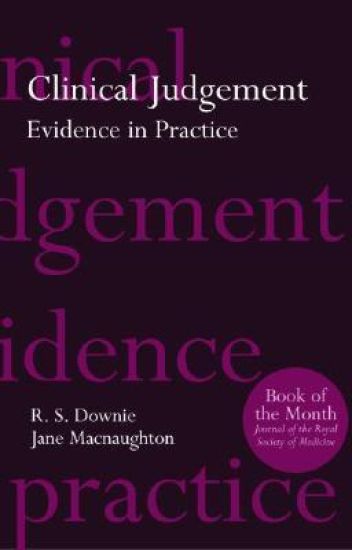
There is a widespread view that modern medicine is primarily a scientific enterprise and that the decisions of clinicians follow from evidence-based science. In terms of this view the need for clinical judgement is minimal. The aims of this book are to make a case for the centrality and irreplaceability of clinical judgement, to identify the elements of good clinical judgement, and to suggest how these might be developed by using the humanities in medical undergraduate and postgraduate education. The authors argue that good clinical judgement requires both technical evidence and a humane attitude. But technical evidence is not always quantifiable or even scientific; it can be like that of the detective or the literary scholar. A humane attitude involves ethical sensitivity, but also a broad educated perspective which can be derived from the arts. The authors illustrate their argument by examining decisions made by doctors in clinical situations, in public health, and (in a chapter contributed by a hospital consultant) in resource management. About the authors: Robert S. Downie is Professor of Moral Philosophy at Glasgow University since 1969. He is a member of the BMA Ethics Committee and co-editor of the Journal of Medical Ethics. He has published extensively in the field of medical ethics. Jane MacNaughton has recently taken the position of Director of Centre for Arts, Humanities, Health and Medicine at the University of Durham. Previously she was Clinical Lecturer in General Practice at Glasgow University and a part-time GP.
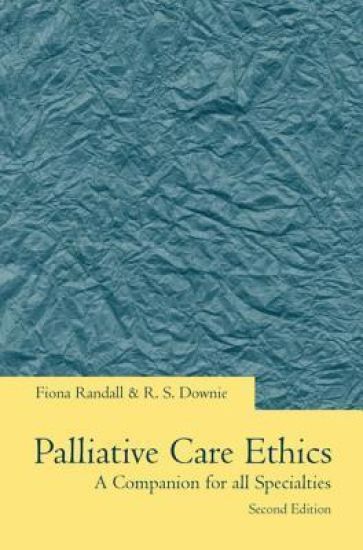
A book for nurses, doctors and all who provide end of life care, this essential volume guides readers through the ethical complexities of such care, including current policy initiatives, and encourages debate and discussion on their controversial aspects. Divided into tow parts, it introduces Divided into two parts, it introduces and explains clinical decision-making processes about which there is broad consensus, in line with guidance documents issued by WHO, BMA, GMC, and similar bodies. The changing political and social context where 'patient choice' has become a central idea, and the broadened scope of patients' best interests, have added to the complexity of decision-making in end of life care. The authors discuss issues widely encountered by GPs, nurses, and hospital clinicians. These include patient choice, consent, life-prolonging treatment, and symptom relief including sedation. Part tow explores the more controversial current end of life care initiatives, such as advance care planning, preferred place of care and death, euthanasia and assisted suicide, extended ideas of 'best interests', and the view that there are therapeutic duties to the relatives of patients. Throughout their discussion the authors draw attention to loose ends and contradictions in some of the proposals. Examining the current policy of consumerist choice, they reject its place in the health service, proposing a realistic, fair, humane and widely adoptable system of end of life care. As knowledge of ethical theories is required in training courses, and the vocabulary of ethical theory is widespread in current discussions, a substantial appendix on ethical theories and terms is available online. Written by the same authors as The Philosophy of Palliative Care: Critique and reconstruction, which won the Medical Journalists' Association Specalist Book Award 2007, this new new book for non-specialists is essential reading for all health care professionals involved in providing end of life care.