Kirjojen hintavertailu – 12 903 724 kirjaa ja 27 kauppaa

Kirjailija

Robin Hahnel

Kirjat ja teokset yhdessä paikassa: 21 kirjaa, julkaisuja vuosilta 1991–2025, suosituimpiin kuuluu Kilpailusta yhteistyöhön. Vertaile teosten hintoja ja tarkista saatavuus suomalaisista kirjakaupoista.

21 kirjaa

Kirjojen julkaisuvuodet: 1991–2025.

Climate Change Policy

Climate Change Policy

Robin Hahnel

Springer International Publishing AG
2025
sidottu
The threat of climate change increases with each passing moment, and it’s time for economists, policymakers, and climate scientists to work together to address this. In this Palgrave Pivot, political economist Robin Hahnel offers useful ways to make a difference when it comes to climate policy. The book begins by making clear that not enough is being done to slow the impact of climate change. Hahnel breaks down what is being done in some states and cities in the US and provides expert insights into important initiatives at the national level which began under the Biden–Harris Administration. Chapters explore international climate negotiations—the good, the bad, and the ugly—offering a realistic and understandable approach to policies that impact our environment. The book ends with a nod to action, optimism, and strength. Hahnel explains not just whether but also why there is still reason to push for international climate action before it is too late. Written for individuals working within and interested in policy, climate, and political economy, the book will inspire creative responses to climate change.
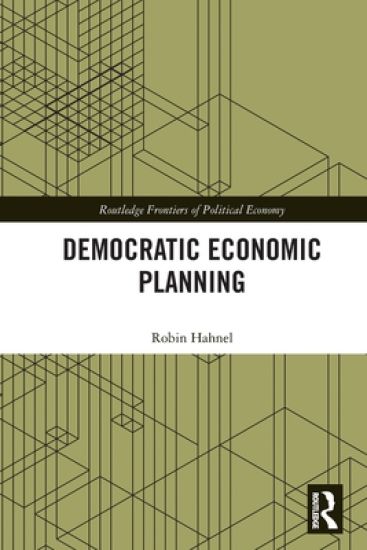
Democratic Economic Planning

Democratic Economic Planning

Robin Hahnel

Routledge
2021
sidottu
Democratic Economic Planning presents a concrete proposal for how to organize, carry out, and integrate comprehensive annual economic planning, investment planning, and long-run development planning so as to maximize popular participation, distribute the burdens and benefits of economic activity fairly, achieve environmental sustainability, and use scarce productive resources efficiently. The participatory planning procedures proposed provide workers in self-managed councils and consumers in neighbourhood councils with autonomy over their own activities while ensuring that they use scarce productive resources in socially responsible ways without subjecting them to competitive market forces. Certain mathematical and economic skills are required to fully understand and evaluate the planning procedures discussed and evaluated in technical sections in a number of chapters. These sections are necessary to advance the theory of democratic planning, and should be of primary interest to readers who have those skills. However, the book is written so that the main argument can be followed without fully digesting the more technical sections. Democratic Economic Planning is written for dreamers who are disenamored with the economics of competition and greed want to know how a system of equitable cooperation can be organized; and also for sceptics who demand "hard proof" that an economy without markets and private enterprise is possible.
Democratic Economic Planning

Democratic Economic Planning

Robin Hahnel

Taylor Francis Ltd
2021
nidottu
Democratic Economic Planning presents a concrete proposal for how to organize, carry out, and integrate comprehensive annual economic planning, investment planning, and long-run development planning so as to maximize popular participation, distribute the burdens and benefits of economic activity fairly, achieve environmental sustainability, and use scarce productive resources efficiently. The participatory planning procedures proposed provide workers in self-managed councils and consumers in neighbourhood councils with autonomy over their own activities while ensuring that they use scarce productive resources in socially responsible ways without subjecting them to competitive market forces. Certain mathematical and economic skills are required to fully understand and evaluate the planning procedures discussed and evaluated in technical sections in a number of chapters. These sections are necessary to advance the theory of democratic planning, and should be of primary interest to readers who have those skills. However, the book is written so that the main argument can be followed without fully digesting the more technical sections. Democratic Economic Planning is written for dreamers who are disenamored with the economics of competition and greed want to know how a system of equitable cooperation can be organized; and also for sceptics who demand "hard proof" that an economy without markets and private enterprise is possible.
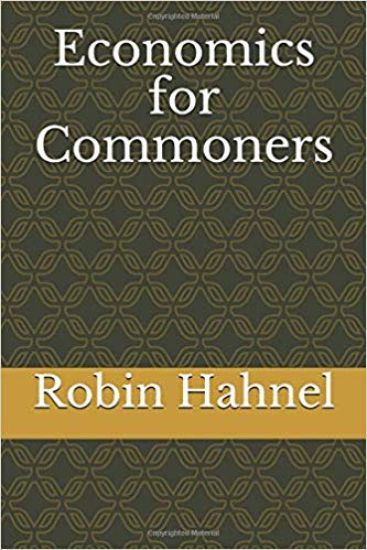
Economics for Commoners

Economics for Commoners

Robin Hahnel

Independently Published
2019
nidottu
In a world where so many obfuscate, distort, and misrepresent economic argument for venal purposes, citizens are wise to arm themselves with basic economic literacy to avoid being cowed or misled. This short book, written by an economics professor who taught for forty years at universities in the United States, Europe, and Latin America, provides a relatively painless immunization. Economics for Commoners distills economic wisdom down to its most essential insights, requires no prior economic training, and no math beyond high school algebra. Six chapters in part one explain how prices, wages, profits, and rents are determined, how government fiscal and monetary policy work, and what money, banks, and finance are all about. Three chapters in part two explain how to evaluate economic performance: Is our labor being used efficiently? Are we adequately protecting the natural environment? Are the burdens and benefits of economic activity being distributed fairly?
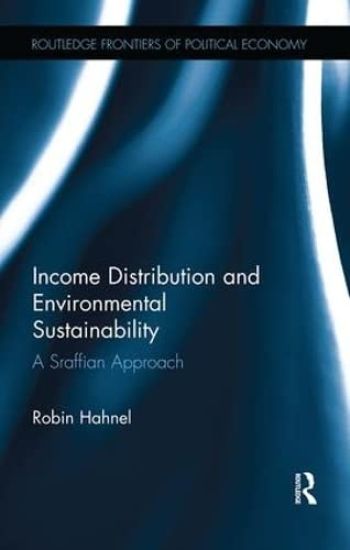
Income Distribution and Environmental Sustainability
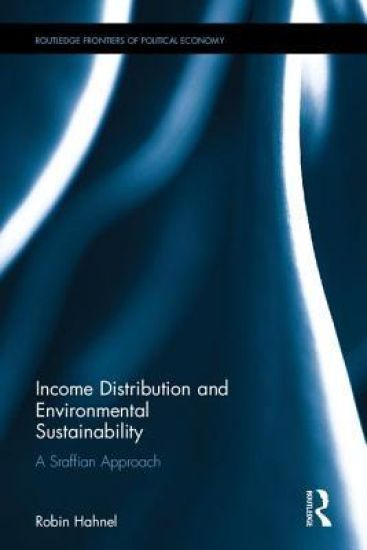
Any economics that does not deal forthrightly with economic inequality is no longer suitable for the twenty-first century. Similarly, any economics which does not provide a coherent way to integrate environmental sustainability into economic analysis will fail to command allegiance in the century ahead. This book demonstrates how the Sraffian framework provides important advantages in both areas. Divided into three chapters, Income Distribution and Environmental Sustainability provides a rigorous exposition of Sraffian theory emphasizing what it means for the economy to be productive, extends Sraffian theory to address environmental sustainability, and adds a normative theory of income distribution to Sraffa’s positive theory. In Chapter 1, a rigorous version of the basic Sraffa model is presented which focuses on what it means for the economy to be capable of producing a physical surplus, explains the origin of profits, and shows how to measure changes in overall labor productivity resulting from any technical change. In Chapter 2, the basic model is extended to incorporate primary inputs from the natural environment, rigorously measure changes in environmental throughput efficiency, and establish sufficient conditions for environmental sustainability. In Chapter 3, an explicit "normative" theory of economic justice is elaborated which is a natural extension of Sraffa’s "positive" theory of income determination and consistent with modern egalitarian literature on distributive justice. This book is of interest to academics and students who study political economy, economic theory, and philosophy, as well as those interested in the work of Piero Sraffa.
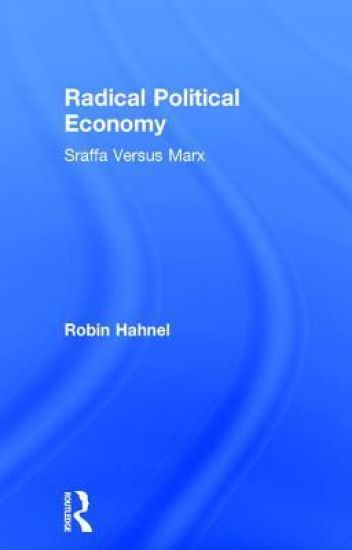
Radical Political Economy

Radical Political Economy

Robin Hahnel

Routledge
2017
sidottu
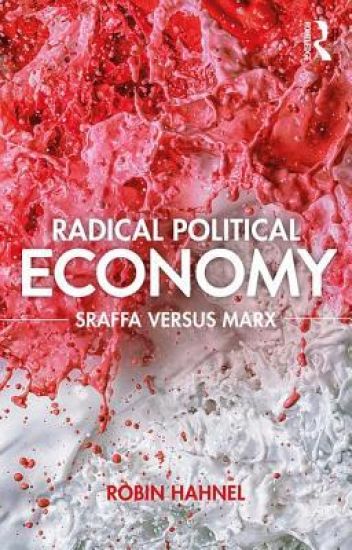
For too long radical political economy has suffered for lack of a coherent alternative to formal Marxian economic theory. People have had to choose between (1) continuing to use a formal model based on the labor theory of value as Marx developed in Capital to justify and retain one’s opposition to capitalism, or (2) abandoning the formal Marxian framework as outdated, and risk losing a critical evaluation of capitalism. Radical Political Economy: Sraffa Versus Marx provides readers with a third choice. A point-by-point comparison of Sraffian and Marxian treatments of prices, profits, technological change, economic crises, environmental sustainability, and the moral case against capitalism, are presented in six core chapters. They explain how the Sraffian treatment surpasses the formal Marxian treatment in every case. Both Marxian and Sraffian theories are presented in a highly accessible way, while large professional literatures are thoroughly referenced throughout. Marx was not the first, but remains the greatest, critic of capitalism, and richly deserves his place in history. However it is time to use intellectual tools unavailable to Marx in the nineteenth century to improve upon his formal analysis. This book is of great importance to those who study Sraffa and Marx, as well as academics and students who are interested in political economy, the history of economic thought, and economic and philosophical theory.
Radical Political Economy

Radical Political Economy

Robin Hahnel

Routledge
2017
nidottu
For too long radical political economy has suffered for lack of a coherent alternative to formal Marxian economic theory. People have had to choose between (1) continuing to use a formal model based on the labor theory of value as Marx developed in Capital to justify and retain one’s opposition to capitalism, or (2) abandoning the formal Marxian framework as outdated, and risk losing a critical evaluation of capitalism. Radical Political Economy: Sraffa Versus Marx provides readers with a third choice. A point-by-point comparison of Sraffian and Marxian treatments of prices, profits, technological change, economic crises, environmental sustainability, and the moral case against capitalism, are presented in six core chapters. They explain how the Sraffian treatment surpasses the formal Marxian treatment in every case. Both Marxian and Sraffian theories are presented in a highly accessible way, while large professional literatures are thoroughly referenced throughout. Marx was not the first, but remains the greatest, critic of capitalism, and richly deserves his place in history. However it is time to use intellectual tools unavailable to Marx in the nineteenth century to improve upon his formal analysis. This book is of great importance to those who study Sraffa and Marx, as well as academics and students who are interested in political economy, the history of economic thought, and economic and philosophical theory.
Quiet Revolution in Welfare Economics

Quiet Revolution in Welfare Economics

Michael Albert; Robin Hahnel

Princeton University Press
2017
pokkari
This ambitious work presents a critique of traditional welfare theory and proposes a new approach to it. Radical economists Robin Hahnel and Michael Albert argue that an improved theory of social welfare can consolidate and extend recent advances in microeconomic theory, and generate exciting new results as well. The authors show that once the traditional "welfare paradigm" is appropriately modified, a revitalized welfare theory can clarify the relationship between individual and social rationalitya task that continues to be of interest to mainstream and nonmainstream economists alike. Hahnel and Albert show how recent work in the theory of the labor process, externalities, public goods, and endogenous preferences can advance research in welfare theory. In a series of important theorems, the authors extend the concept of Pareto optimality to dynamic contexts with changing preferences and thus highlight the importance of institutional bias. This discussion provides the basis for further analysis of the properties and consequences of private and public enterprise and of markets and central planning. Not surprisingly, Hahnel and Albert reach a number of conclusions at odds with conventional wisdom. Originally published in 1990. The Princeton Legacy Library uses the latest print-on-demand technology to again make available previously out-of-print books from the distinguished backlist of Princeton University Press. These editions preserve the original texts of these important books while presenting them in durable paperback and hardcover editions. The goal of the Princeton Legacy Library is to vastly increase access to the rich scholarly heritage found in the thousands of books published by Princeton University Press since its founding in 1905.
Quiet Revolution in Welfare Economics

Quiet Revolution in Welfare Economics

Michael Albert; Robin Hahnel

Princeton University Press
2017
sidottu
This ambitious work presents a critique of traditional welfare theory and proposes a new approach to it. Radical economists Robin Hahnel and Michael Albert argue that an improved theory of social welfare can consolidate and extend recent advances in microeconomic theory, and generate exciting new results as well. The authors show that once the traditional "welfare paradigm" is appropriately modified, a revitalized welfare theory can clarify the relationship between individual and social rationalitya task that continues to be of interest to mainstream and nonmainstream economists alike. Hahnel and Albert show how recent work in the theory of the labor process, externalities, public goods, and endogenous preferences can advance research in welfare theory. In a series of important theorems, the authors extend the concept of Pareto optimality to dynamic contexts with changing preferences and thus highlight the importance of institutional bias. This discussion provides the basis for further analysis of the properties and consequences of private and public enterprise and of markets and central planning. Not surprisingly, Hahnel and Albert reach a number of conclusions at odds with conventional wisdom. Originally published in 1990. The Princeton Legacy Library uses the latest print-on-demand technology to again make available previously out-of-print books from the distinguished backlist of Princeton University Press. These editions preserve the original texts of these important books while presenting them in durable paperback and hardcover editions. The goal of the Princeton Legacy Library is to vastly increase access to the rich scholarly heritage found in the thousands of books published by Princeton University Press since its founding in 1905.
Income Distribution and Environmental Sustainability
Any economics that does not deal forthrightly with economic inequality is no longer suitable for the twenty-first century. Similarly, any economics which does not provide a coherent way to integrate environmental sustainability into economic analysis will fail to command allegiance in the century ahead. This book demonstrates how the Sraffian framework provides important advantages in both areas. Divided into three chapters, Income Distribution and Environmental Sustainability provides a rigorous exposition of Sraffian theory emphasizing what it means for the economy to be productive, extends Sraffian theory to address environmental sustainability, and adds a normative theory of income distribution to Sraffa’s positive theory. In Chapter 1, a rigorous version of the basic Sraffa model is presented which focuses on what it means for the economy to be capable of producing a physical surplus, explains the origin of profits, and shows how to measure changes in overall labor productivity resulting from any technical change. In Chapter 2, the basic model is extended to incorporate primary inputs from the natural environment, rigorously measure changes in environmental throughput efficiency, and establish sufficient conditions for environmental sustainability. In Chapter 3, an explicit "normative" theory of economic justice is elaborated which is a natural extension of Sraffa’s "positive" theory of income determination and consistent with modern egalitarian literature on distributive justice. This book is of interest to academics and students who study political economy, economic theory, and philosophy, as well as those interested in the work of Piero Sraffa.
Alternatives to Capitalism

Alternatives to Capitalism

Erik Olin Wright; Robin Hahnel

Verso Books
2016
nidottu

Halvin toimitettuna 23,90 €

What would a viable free and democratic society look like? Poverty, exploitation, instability, hierarchy, subordination, environmental exhaustion, radical inequalities of wealth and power-it is not difficult to list capitalism's myriad injustices. But is there a preferable and workable alternative? Alternatives to Capitalism: Proposals for a Democratic Economy presents a debate between two such possibilities: Robin Hahnel's "participatory economics" and Erik Olin Wright's "real utopian" socialism. It is a detailed and rewarding discussion that illuminates a range of issues and dilemmas of crucial importance to any serious effort to build a better world.
The ABCs of Political Economy

The ABCs of Political Economy

Robin Hahnel

Pluto Press
2014
pokkari
This revised edition of ABCs is a lively and accessible introduction to modern political economy. Informed by the work of Marx, Veblen, Kalecki, Robinson, Minsky and other great political economists, Robin Hahnel provides the essential tools needed to understand economic issues today. Dispelling myths about financial liberalisation, fiscal austerity, globalisation and free markets, ABCs offers a critical perspective on our present system and outlines clear alternatives for the future. This second edition applies the analytical tools developed to help readers understand the origins of the financial crisis of 2007, the ensuing 'Great Recession', and why government policies in Europe and North America over the past six years have failed to improve matters for the majority of their citizens. The second edition also helps explain what is causing climate change and what will be required if it is to be resolved effectively and fairly.
The ABCs of Political Economy

The ABCs of Political Economy

Robin Hahnel

Pluto Press
2014
sidottu
This revised edition of ABCs is a lively and accessible introduction to modern political economy. Informed by the work of Marx, Veblen, Kalecki, Robinson, Minsky and other great political economists, Robin Hahnel provides the essential tools needed to understand economic issues today. Dispelling myths about financial liberalisation, fiscal austerity, globalisation and free markets, ABCs offers a critical perspective on our present system and outlines clear alternatives for the future. This second edition applies the analytical tools developed to help readers understand the origins of the financial crisis of 2007, the ensuing 'Great Recession', and why government policies in Europe and North America over the past six years have failed to improve matters for the majority of their citizens. The second edition also helps explain what is causing climate change and what will be required if it is to be resolved effectively and fairly.
Osallisuustalouden aakkoset

Osallisuustalouden aakkoset

Robin Hahnel

LIKE
2014
Pehmeäkantinen

Halvin toimitettuna 14,90 €

Mitä jos ympäristöystävälliset tuotteet olisivat halvempia, työajat itse päätettävissä ja ahkeruudesta todella palkittaisiin? Osallisuustalouden aakkoset esittelee ehdotuksia tulevaisuuden oikeudenmukaiselle ja ekologisesti kestävälle taloudelle.
Kilpailusta yhteistyöhön

Kilpailusta yhteistyöhön

Robin Hahnel

LIKE
2012
Pehmeäkantinen

Halvin toimitettuna 14,90 €

Vaihtoehto nykyiselle talousjärjestelmälleHyvinvointivaltiot ovat taanneet ennennäkemättömän tasavertaista kehitystä ja hyvinvointia kansalaisilleen, mutta hyvinvointirakenteita ollaan vauhdilla purkamassa. On pohdittava uudestaan, miten ymmärrämme taloudellisen oikeudenmukaisuuden, vapauden ja demokratian. Taloustieteen emeritusprofessori Robin Hahnel käy laajaa tunnustusta saaneessa teoksessaan läpi hyvinvointivaltioiden taloushistoriaa ja rakentaa havainnollisesti kuvaa siitä, millaisten valintojen kautta nykytilanteeseen on päädytty. Hahnel esittelee teoksessa myös yhteiskuntafilosofi Michael Albertin kanssa kehittämänsä osallisuustalouden idean suuntaviivat tarjotakseen hyödyllisiä työkaluja nykytalouden ongelmien tarkempaan tunnistamiseen ja korjaamiseen. Kirja haastaa pohtimaan nykytalouden polttavia kysymyksiä: Miksi hyvinvointivaltion kehitys pysähtyi? Tarjoaako nykyinen talous kaikille vapautta? Minkälaisilla lyhyen ja pitkän aikavälin uudistuksilla taloudesta voitaisiin tehdä oikeudenmukaisempi ja demokraattisempi? Emeritusprofessori Robin Hahnelin (s. 1946) teos Kilpailusta yhteistyöhön on kriittisen kansantaloustieteen klassikko, joka on erittäin ajankohtainen nykyistä talouskriisiä ajatellen. Hahnelilta on aiemmin julkaistu suomeksi hieman teoreettisempi Poliittisen taloustieteen aakkoset, jossa hän analysoi ja opettaa lukemaan taloutta osana poliittista ja yhteiskunnallista toimintaa. Suomessakin on Parecon Finland ry, joka toimii osallisuustalousvision ajajana.
Green Economics

Green Economics

Robin Hahnel

Routledge
2011
nidottu
This book's pluralistic, non-dogmatic, and committed investigation of the values of ecological sustainability, economic justice, and human dignity provides balanced analysis of environmental problems and their potential solutions.
Green Economics

Green Economics

Robin Hahnel

Routledge
2011
sidottu
This book's pluralistic, non-dogmatic, and committed investigation of the values of ecological sustainability, economic justice, and human dignity provides balanced analysis of environmental problems and their potential solutions.
Economic Justice and Democracy

Economic Justice and Democracy

Robin Hahnel

Routledge
2005
sidottu
In Economic Justice and Democracy Robin Hahnel argues that progressives need to go back to the drawing board and rethink how they conceive of economic justice and economic democracy. He presents a coherent set of economic institutions and procedures that can deliver economic justice and democracy through a "participatory economy." But this is a long-run goal; he also explores how to promote the economics of equitable cooperation in the here and now by emphasizing ways to broaden the base of existing economic reform movements while deepening their commitment to more far reaching change.
Economic Justice and Democracy

Economic Justice and Democracy

Robin Hahnel

Routledge
2005
nidottu
In Economic Justice and Democracy Robin Hahnel argues that progressives need to go back to the drawing board and rethink how they conceive of economic justice and economic democracy. He presents a coherent set of economic institutions and procedures that can deliver economic justice and democracy through a "participatory economy." But this is a long-run goal; he also explores how to promote the economics of equitable cooperation in the here and now by emphasizing ways to broaden the base of existing economic reform movements while deepening their commitment to more far reaching change.