Kirjojen hintavertailu – 12 903 725 kirjaa ja 27 kauppaa
Kirjailija
Robin Jeffrey
Kirjat ja teokset yhdessä paikassa: 13 kirjaa, julkaisuja vuosilta 1992–2025, suosituimpiin kuuluu R.A.T.. Vertaile teosten hintoja ja tarkista saatavuus suomalaisista kirjakaupoista.
The system is falling apart. Political turmoil leaves no one's life untouched, including captain of industry Chance Hale and detective-story-obsessed android Cadence Turing. Recently reunited after successfully solving the murder of Chance's father, the pair struggle to find their footing in a rapidly changing world. The death of an android rights activist puts them in the path of a desperate killer with everything to lose. As they navigate the planet Arrhidaeus' seedy underworld in search of clues, they strive to answer a single question: does the past ever stay buried?
This book tells the story of how a longstanding matrilineal society, in which women provided the reference point for the control of property, began to crumble in the late nineteenth century, eaten away by the demands of a modernized state and ridiculed by foreign missionaries and Hindu critics from elsewhere. When the book begins in 1847, high-caste families, mostly Nairs, still held slaves, controlled most of the land in the southern princely state of Travancore and demanded humiliating deference from lower castes. When the book ends at the time of the First World War, land and wealth seem to be passing into the hands of Christians and lower castes, the latter are protesting against social discrimination and Nair critics are calling for reforms of matrilineal practices and even for the abolition of matriliny itself. The book introduces intriguing characters, among them the longtime British Resident, General William Cullen, ‘ruin of many ladies of caste and respectability’, according to disapproving missionaries.
Chance Hale is more interested in running around with fascinating women than following in his father's footsteps as head of the billion-dollar tech company Halcyon Enterprises. Called home for an important announcement, Chance seeks to liven up the weekend retreat by bringing along the first interesting woman he finds: an alluring young lady named Cadence Turing, who claims to be visiting his home planet Arrhidaeus from the planet Paraesepe. But when someone turns up murdered, all evidence points to Chance and all ideas of a future for him are erased. Of all the house's guests, his weekend companion seems to believe she can prove his innocence, though she's hesitant to admit how. Can the two help each other before it's too late?
In India, you can still find the kabaadiwala, the rag-and-bone man. He wanders from house to house buying old newspapers, broken utensils, plastic bottles—anything for which he can get a little cash. This custom persists and recreates itself alongside the new economies and ecologies of consumer capitalism. Waste of a Nation offers an anthropological and historical account of India’s complex relationship with garbage. Countries around the world struggle to achieve sustainable futures. Assa Doron and Robin Jeffrey argue that in India the removal of waste and efforts to reuse it also lay waste to the lives of human beings. At the bottom of the pyramid, people who work with waste are injured and stigmatized as they deal with sewage, toxic chemicals, and rotting garbage. Terrifying events, such as atmospheric pollution and childhood stunting, that touch even the wealthy and powerful may lead to substantial changes in practices and attitudes toward sanitation. And innovative technology along with more effective local government may bring about limited improvements. But if a clean new India is to emerge as a model for other parts of the world, a “binding morality” that reaches beyond the current environmental crisis will be required. Empathy for marginalized underclasses—Dalits, poor Muslims, landless migrants—who live, almost invisibly, amid waste produced predominantly for the comfort of the better-off will be the critical element in India’s relationship with waste. Solutions will arise at the intersection of the traditional and the cutting edge, policy and practice, science and spirituality.
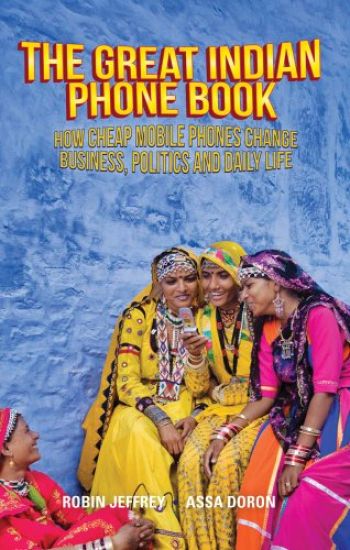
The cheap mobile phone is arguably the most significant personal communications device in history. In India, where caste hierarchy has reinforced power for generations, the disruptive potential of the mobile phone is even more striking than elsewhere. In 2001, India had 35 million telephones, only four million of them mobiles. Ten years later, it had more than 800 million phone subscribers; more than 95 per cent were mobile phones. In a decade, communications in India have been transformed by a device that can be shared by fisherfolk in Kerala, boatmen in Banaras, great capitalists in Mumbai and power-wielding politicians and bureaucrats in New Delhi. Village councils banned unmarried girls from having mobile phones. Families debated whether new brides should surrender them. Cheap mobile phones became photo albums, music machines and radios. Religious images and uplifting messages flooded tens of millions of phones each day. Pornographers and criminals found a tantalising new tool. In politics, organisations with cadres of true believers exploited a resource infinitely more effective than telegrams, postcards and the printing press for carrying messages to workers, followers and voters. Jeffrey and Doron focus on three groups - controllers: the bureaucrats, politicians and capitalists who wrestle over control of radio frequency spectrum; servants: the marketers, agents, technicians, tower-builders, repairers and second-hand dealers who carry mobile phones to the masses; and users: the politicians, activists, businesses and households that adapt the mobile phone to their needs. The book probes the whole universe of the mobile phone - from the contests of great capitalists and governments to control radio frequency spectrum, to the ways ordinary people build the troublesome and addictive device into their daily lives.
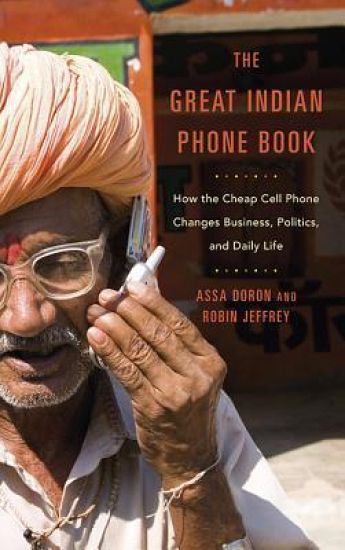
In 2001, India had 4 million cell phone subscribers. Ten years later, that number had exploded to more than 750 million. Over just a decade, the mobile phone was transformed from a rare and unwieldy instrument to a palm-sized, affordable staple, taken for granted by poor fishermen in Kerala and affluent entrepreneurs in Mumbai alike. The Great Indian Phone Book investigates the social revolution ignited by what may be the most significant communications device in history, one which has disrupted more people and relationships than the printing press, wristwatch, automobile, or railways, though it has qualities of all four. In this fast-paced study, Assa Doron and Robin Jeffrey explore the whole ecosystem of the cheap mobile phone. Blending journalistic immediacy with years of field-research experience in India, they portray the capitalists and bureaucrats who control the cellular infrastructure and wrestle over bandwidth rights, the marketers and technicians who bring mobile phones to the masses, and the often poor, village-bound users who adapt these addictive and sometimes troublesome devices to their daily lives. Examining the challenges cell phones pose to a hierarchy-bound country, the authors argue that in India, where caste and gender restrictions have defined power for generations, the disruptive potential of mobile phones is even greater than elsewhere. The Great Indian Phone Book is a rigorously researched, multidimensional tale of what can happen when a powerful and readily available technology is placed in the hands of a large, still predominantly poor population.
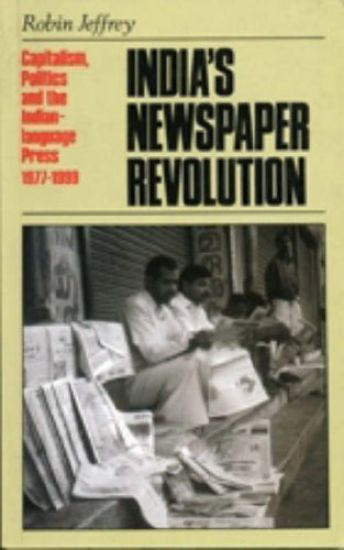
From the late 1970s a revolution in Indian-language newspapers, driven by a marriage of capitalism and technology, has carried the experience of print to millions of new readers in small-town and rural India. This volume analyzes the role of capitalism and technology in shaping identity, "national" or otherwise, and seeks to explain the inner workings of one of the most complex newspaper industry in the world. It pinpoints the role of advertising in propelling a multilingual print boom, and throws light on questions of literacy and the standardization of languages. The India of the 1990s is revealed here from perhaps an unfamiliar angle, and in addition the text seeks to illustrate the global transformation of media, of which India is seen to play a key part.
Updated to cover events between 1986 and 1992, including the destruction of the mosque at Ayodhya in December 1992, the book analyses the secessionist crisis in Punjab which led to Indira Gandhi's murder and examines larger themes of ethnic conflict and threats to Indian unity. The Punjab example sheds light on processes at work in the rest of India, as the introduction to the new edition of the book points out. It also considers the domestic implications for India of a world in which 'socialism' and 'non-alignment' have lost much of their meaning.
Updated to cover events between 1986 and 1992, including the destruction of the mosque at Ayodhya in December 1992, the book analyses the secessionist crisis in Punjab which led to Indira Gandhi's murder and examines larger themes of ethnic conflict and threats to Indian unity. The Punjab example sheds light on processes at work in the rest of India, as the introduction to the new edition of the book points out. It also considers the domestic implications for India of a world in which 'socialism' and 'non-alignment' have lost much of their meaning.
In 1990, Kerala on the southwestern coast has India's lowest infant mortality, longest life expectancy and highest female literacy. India's 'problem state' of the 1950s has become 'the Kerala model'. The collapse of a matrilineal social structure and a rigid caste system contributed to widespread politicization. Women retained a circumscribed but influential position in social life. The result is an instructive analysis for students of politics, development policy and women's issues.