Kirjojen hintavertailu – 12 859 818 kirjaa ja 27 kauppaa

Kirjailija

Robin Jones

Kirjat ja teokset yhdessä paikassa: 27 kirjaa, julkaisuja vuosilta 1986–2025, suosituimpiin kuuluu Sport and Physical Education in China. Vertaile teosten hintoja ja tarkista saatavuus suomalaisista kirjakaupoista.

27 kirjaa

Kirjojen julkaisuvuodet: 1986–2025.

Great Western Railway Pannier Tanks

Great Western Railway Pannier Tanks

Robin Jones

The Crowood Press Ltd
2014
sidottu
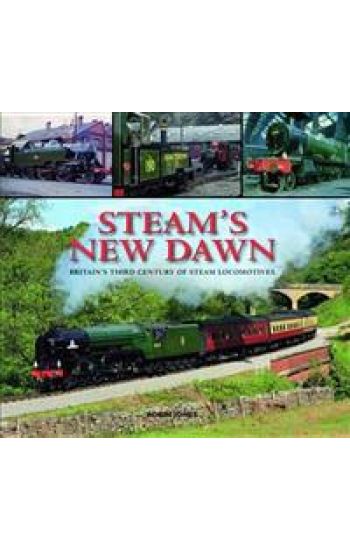
The name 'Great Western Railway' immediately conjures up images of Stars, Castles and Kings, the legendary express passenger locomotives that were the envy of the world in their day. However, the Swindon empire also produced extensive fleets of all-purpose tank engines - everyday reliable workhorses and unsung heroes - which were also standout classics in their own right. The most distinctive and immediately recognizable type in terms of shape, all but unique to the GWR, was the six-coupled pannier tank. With hundreds of photographs throughout, Great Western Railway Pannier Tanks covers: the supremely innovative pannier tank designs of GWR chief mechanical engineer Charles Benjamin Collett and the appearance of the 5700 class in 1929 and the 5400, 6400, 7400 and 9400 classes. The demise of the panniers in British Railways service and the 5700s that marked the end of Western Region steam are discussed along with a second life beneath the streets - 5700 class panniers on London Underground. Finally, there is a section on panniers in preservation, plus cinema and TV roles and even a Royal Train duty.
Interiors of Empire

Interiors of Empire

Robin Jones

Manchester University Press
2007
sidottu
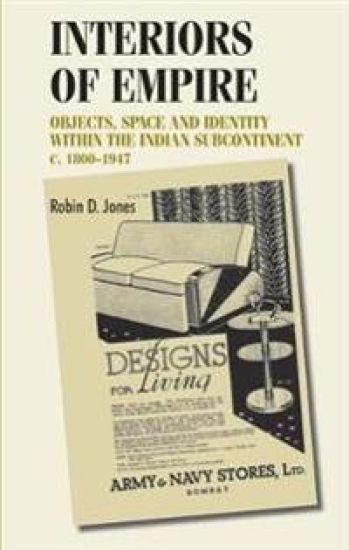
Interiors of Empire uses the methods of design history and material culture studies to analyse the domestic and public interiors of the British and local middle class during the heyday of the British Raj. It contrasts representations of that space within contemporary discourse with analysis of historical evidence, the varying uses of such space, and relevant social practices. Through detailed discussion of these texts, spaces, objects and practices, this study locates the domestic interiors and public spaces of empire in the history of the British colonisation of India. The book discusses the imagined barrier of the domestic against the local environment, the intrusions of the local and the effects of this on the British in India, and assesses the gradual westernisation of domestic and public spaces of empire. This work will be of interest to students and scholars of design history, material culture and colonial history.
The Art of Lisp Programming

The Art of Lisp Programming

Robin Jones; Clive Maynard; Ian Stewart

Springer-Verlag Berlin and Heidelberg GmbH Co. K
1989
nidottu
Many of us already have at least a passing acquaintance with procedural languages such as BASIC or Pascal, but may not have met a functional language like Lisp before. Using the same enjoyable and sometimes quirky style that they employed so successfully in "The Art of C-Programming", Robin Jones and his team explain the fundamentals of Lisp in a way that students from school to postgraduates will find lucid and stimulating. The book is unique in illustrating the use of Lisp through the development of a realistic project: the design and implementation of a Lisp-based interpreter for the language ABC.
The Art of C Programming

The Art of C Programming

Robin Jones; Ian Stewart

Springer-Verlag New York Inc.
1986
nidottu
The programming language C occupies an unusual position midway between conventional high-level and assembly languages, allowing the programmer to combine the best features of both. This book is an introduction to the language itself, and to the special style of thinking that goes with it. Anyone wishing to learn C is likely to have some experience in a high-level language such as BASIC or Pascal, and it seems sensible to make use of that experience. We therefore assume some facility with conventional notation for computer arith­ metic, and simple notions (such as looping and branching) common to most high-level languages. However, that cannot be the whole story. One cannot learn to speak colloquial French by thinking in English and performing a routine translation. No more can one learn to program in colloquial C by thinking in BASIC and performing a routine translation. However, when learning French it is normal to assume familiarity with English, building on that in the early stages, thereby creating the confidence necessary to provide that mot juste to which nothing corresponding exists in English. Our approach to C is similar. In particular we do not introduce at the very beginning some of the features of C which eventually lead to more efficient and elegant code-for example, the ability to do several things, apparently at once. Initially, such constructs can be confusing. Once the reader has acquired some facility with the language it then becomes possible to bring these features into play in a natural manner.