Kirjojen hintavertailu – 12 859 828 kirjaa ja 27 kauppaa

Kirjailija

Robin Osborne

Kirjat ja teokset yhdessä paikassa: 16 kirjaa, julkaisuja vuosilta 1899–2023, suosituimpiin kuuluu Religion : i historia, samtid och framtid. Vertaile teosten hintoja ja tarkista saatavuus suomalaisista kirjakaupoista.

16 kirjaa

Kirjojen julkaisuvuodet: 1899–2023.

Religion : i historia, samtid och framtid

Religion : i historia, samtid och framtid

Janne Haaland Matlary; Daniel T. Potts; Julius J. Lipner; Robin Osborne; John Scheid; Martin Goodman; Diarmaid Macculloch; Elaine Pagels; Reza Aslan; Wouter J. Hanegraaff; Gary Lachman; Malise Ruthven; Marco Pasi; William O’Reilly; Ariel Glucklich; Wolfgang Palaver; Mona Siddiqui; Candida R. Moss; Esther Benbassa; Richard Miles; A.N. Wilson; Jessica Frazier; Simon May; Armin W. Geertz; Harvey Whitehouse; Pär Stenbäck; Benedetta Berti; Göran Rosenberg; Jayne Svenungsson; Adrian Wooldridge; Chakravarthi Ram-Prasad

Bokförlaget Stolpe
2020
sidottu
Tron på en styrande, övergripande, himmelsk princip har följt människan genom historien. Mer än 80 procent av världens befolkning har idag en religiös tillhörighet och även i sekulära stater fortsätter religionen att spela en viktig roll. Det går inte att förstå politik och internationella relationer idag utan att inkludera religionen som en aspekt av det kulturella sammanhanget. Essäerna i denna antologi, som härrör från Engelsbergsseminariet 2014, spänner över en mångfald ämnen i dagens såväl som gårdagens samhällen. De utforskar religionen i relation till människans villkor och skildrar hur den manifesterar sig i individens egna upplevelser. För att förstå oss själva behöver vi också förstå religionen.
The Oxford History of the Archaic Greek World

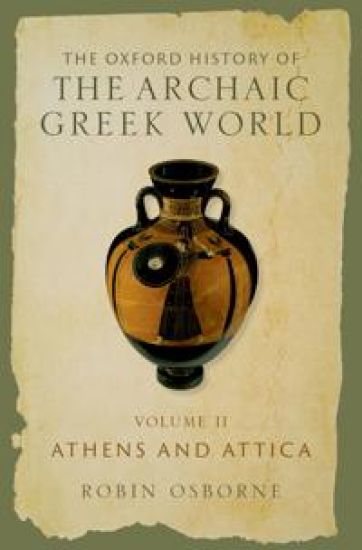
The Oxford History of the Archaic Greek World

Robin Osborne

OXFORD UNIVERSITY PRESS INC
2023
sidottu
This book introduces the history and archaeology of ancient Athens in the period from 800-500 BCE. Following the standard arrangement of the Oxford History of the Archaic Greek World series, author Robin Osborne deals successively with the sources; environmental setting; material culture (settlement pattern, burial customs, ceramic production); political, legal, and diplomatic history; economy and demography; social and religious customs; and cultural history (including history of sculpture) of archaic Athens. He provides not only a full and up-to-date guide to all these various aspects of Athenian history and archaeology, but also an integrated history which shows how all the different aspects intersect. Osborne guides the reader through an exciting story of the way in which the territory of Attica was re-occupied after the collapse of Bronze Age civilization, how Athens emerged as the dominant settlement, how the claims of family, place, and wealth were played out against one another, and how the Athenians came to place themselves both in relation to the wider Greek world and in relation to the gods. The account is illustrated with abundant maps and halftone images that bring the world of Athens to life. The political and cultural achievements of classical Athens (democracy, tragedy, the Parthenon and its sculpture) rested upon the foundations created in the archaic period, but Osborne shows that archaic Athens did not merely provide foundations for what came later but offered a fascinating history and culture of its own.
The Transformation of Athens

The Transformation of Athens

Robin Osborne

PRINCETON UNIVERSITY PRESS
2018
sidottu
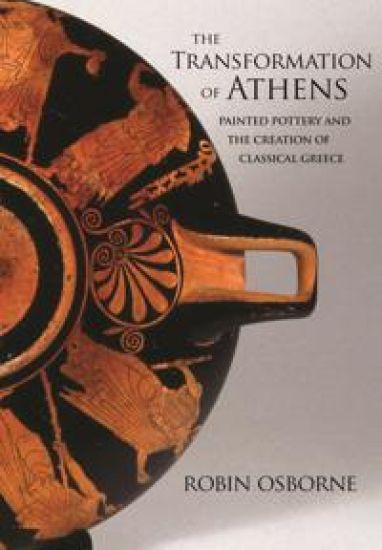
How remarkable changes in ancient Greek pottery reveal the transformation of classical Greek culture Why did soldiers stop fighting, athletes stop competing, and lovers stop having graphic sex in classical Greek art? The scenes depicted on Athenian pottery of the mid-fifth century BC are very different from those of the late sixth century. Did Greek potters have a different world to see--or did they come to see the world differently? In this lavishly illustrated and engagingly written book, Robin Osborne argues that these remarkable changes are the best evidence for the shifting nature of classical Greek culture. Osborne examines the thousands of surviving Athenian red-figure pots painted between 520 and 440 BC and describes the changing depictions of soldiers and athletes, drinking parties and religious occasions, sexual relations, and scenes of daily life. He shows that it was not changes in each activity that determined how the world was shown, but changes in values and aesthetics. By demonstrating that changes in artistic style involve choices about what aspects of the world we decide to represent as well as how to represent them, this book rewrites the history of Greek art. By showing that Greeks came to see the world differently over the span of less than a century, it reassesses the history of classical Greece and of Athenian democracy. And by questioning whether art reflects or produces social and political change, it provokes a fresh examination of the role of images in an ever-evolving world.
Greek History: The Basics

Greek History: The Basics

Robin Osborne

Routledge
2014
sidottu
Greek History: The Basics is a concise and compelling introduction to the study of Ancient Greece from the end of the Bronze Age to rule by Rome. With a chapter on each crucial period of Greece’s ancient history, the book covers the key topics, approaches and issues at the heart of Greek History, including:• The invention of politics and the rise of democracy• The central role played by the Greek city• The insights from cultural, political, demographic and economic history• The benefits and pitfalls of working with different types of sources. Featuring maps, illustrations, a timeline and annotated guides to further reading, this book is an engaging and authoritative introduction for students of Ancient Greek History.
Greek History: The Basics

Greek History: The Basics

Robin Osborne

Routledge
2014
nidottu
Greek History: The Basics is a concise and compelling introduction to the study of Ancient Greece from the end of the Bronze Age to rule by Rome. With a chapter on each crucial period of Greece’s ancient history, the book covers the key topics, approaches and issues at the heart of Greek History, including:• The invention of politics and the rise of democracy• The central role played by the Greek city• The insights from cultural, political, demographic and economic history• The benefits and pitfalls of working with different types of sources. Featuring maps, illustrations, a timeline and annotated guides to further reading, this book is an engaging and authoritative introduction for students of Ancient Greek History.
The History Written on the Classical Greek Body

The History Written on the Classical Greek Body

Robin Osborne

Cambridge University Press
2011
pokkari
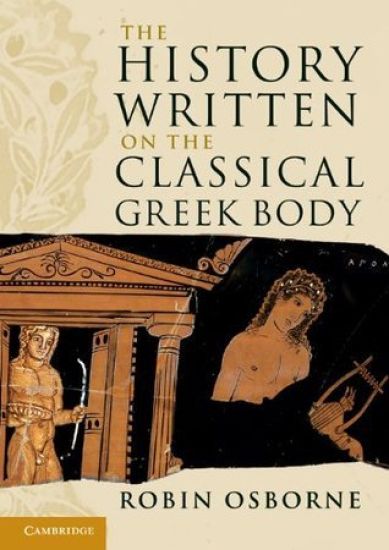
This book challenges historians to come to terms with the distortions that they systematically introduce into their work by their reliance on what has been written on paper without looking at what was and was not written on the body. This book is concerned with the ways in which texts relating to classical Greece, and in particular to classical Athens, classified people and with the extent to which those classifications could be seen by the eye. It compares the qualities distinguished in texts to those distinguished in sculpture and painted pottery, and emphasises the frequent invisibility of the categories upon which historians have laid most stress – the citizen, the free person, the foreigner, even the god. The frequent impossibility of seeing who belonged to which category has major political, social and theological implications which are explored here, as well as potentially revolutionary implications for all future historical writing.
The History Written on the Classical Greek Body

The History Written on the Classical Greek Body

Robin Osborne

Cambridge University Press
2011
sidottu
This book challenges historians to come to terms with the distortions that they systematically introduce into their work by their reliance on what has been written on paper without looking at what was and was not written on the body. This book is concerned with the ways in which texts relating to classical Greece, and in particular to classical Athens, classified people and with the extent to which those classifications could be seen by the eye. It compares the qualities distinguished in texts to those distinguished in sculpture and painted pottery, and emphasises the frequent invisibility of the categories upon which historians have laid most stress – the citizen, the free person, the foreigner, even the god. The frequent impossibility of seeing who belonged to which category has major political, social and theological implications which are explored here, as well as potentially revolutionary implications for all future historical writing.
Athens and Athenian Democracy

Athens and Athenian Democracy

Robin Osborne

Cambridge University Press
2010
sidottu
These collected papers construct a distinctive view of classical Athens and of Athenian democracy, a view which takes seriously the evidence of settlement archaeology and of art history. This evidence both casts new light on traditional questions and enables new questions to be asked, questions concerning the experience of being an Athenian citizen, how the institutions of democracy affected the Athenian economy, and how the rituals of religion related to the rituals of democratic politics. Unlike books on Athenian democracy which focus on the Assembly and Council, this book gives full weight to women as well as men, slave as well as free, and the rural worker as well as the leisured man about town. Robin Osborne's work has been in the forefront of the resurgence of interest in Athenian law and Athenian religion; these essays are each placed in their scholarly context, and point the direction for future research.
Athens and Athenian Democracy

Athens and Athenian Democracy

Robin Osborne

Cambridge University Press
2010
pokkari

Halvin toimitettuna 51,10 €

These collected papers construct a distinctive view of classical Athens and of Athenian democracy, a view which takes seriously the evidence of settlement archaeology and of art history. This evidence both casts new light on traditional questions and enables new questions to be asked, questions concerning the experience of being an Athenian citizen, how the institutions of democracy affected the Athenian economy, and how the rituals of religion related to the rituals of democratic politics. Unlike books on Athenian democracy which focus on the Assembly and Council, this book gives full weight to women as well as men, slave as well as free, and the rural worker as well as the leisured man about town. Robin Osborne's work has been in the forefront of the resurgence of interest in Athenian law and Athenian religion; these essays are each placed in their scholarly context, and point the direction for future research.
Greece in the Making 1200-479 BC

Greece in the Making 1200-479 BC

Robin Osborne

Routledge
2009
sidottu
Greece in the Making 1200–479 BC is an accessible and comprehensive account of Greek history from the end of the Bronze Age to the Classical Period. The first edition of this book broke new ground by acknowledging that, barring a small number of archaic poems and inscriptions, the majority of our literary evidence for archaic Greece reported only what later writers wanted to tell, and so was subject to systematic selection and distortion. This book offers a narrative which acknowledges the later traditions, as traditions, but insists that we must primarily confront the contemporary evidence, which is in large part archaeological and art historical, and must make sense of it in its own terms. In this second edition, as well as updating the text to take account of recent scholarship and re-ordering, Robin Osborne has addressed more explicitly the weaknesses and unsustainable interpretations which the first edition chose merely to pass over. He now spells out why this book features no ‘rise of the polis’ and no ‘colonization’, and why the treatment of Greek settlement abroad is necessarily spread over various chapters. Students and teachers alike will particularly appreciate the enhanced discussion of economic history and the more systematic treatment of issues of gender and sexuality.
Greece in the Making 1200-479 BC

Greece in the Making 1200-479 BC

Robin Osborne

Routledge
2009
nidottu

Halvin toimitettuna 87,50 €

Greece in the Making 1200–479 BC is an accessible and comprehensive account of Greek history from the end of the Bronze Age to the Classical Period. The first edition of this book broke new ground by acknowledging that, barring a small number of archaic poems and inscriptions, the majority of our literary evidence for archaic Greece reported only what later writers wanted to tell, and so was subject to systematic selection and distortion. This book offers a narrative which acknowledges the later traditions, as traditions, but insists that we must primarily confront the contemporary evidence, which is in large part archaeological and art historical, and must make sense of it in its own terms. In this second edition, as well as updating the text to take account of recent scholarship and re-ordering, Robin Osborne has addressed more explicitly the weaknesses and unsustainable interpretations which the first edition chose merely to pass over. He now spells out why this book features no ‘rise of the polis’ and no ‘colonization’, and why the treatment of Greek settlement abroad is necessarily spread over various chapters. Students and teachers alike will particularly appreciate the enhanced discussion of economic history and the more systematic treatment of issues of gender and sexuality.
Demos

Demos

Robin Osborne

Cambridge University Press
2005
pokkari
Demos is a study of a classical city-state. It is the first attempt to provide an integrated account which gives due attention to the countryside as well as the urban areas of a polis. Concentrating on classical Athens, for which the literary and archaeological evidence is richest, Dr Osborne establishes the nature of settlement in the countryside and explores how this relates to the farming of the land, the exploitation of mineral resources, and the nature of political participation in both local and central politics. Further studies reveal the way in which the countryside was structured by religious institutions and cults and by the nature of the family.
Archaic and Classical Greek Art

Archaic and Classical Greek Art

Robin Osborne

Oxford University Press
1998
nidottu

Halvin toimitettuna 32,60 €

This fascinating new account of what happened in Greece from c.800 to 323 bc shows how sculptors and painters responded to the challenges they faced in the extremely formidable and ambitious world of the Greek city-state. The numerous symbols and images employed by their eastern Mediterranean neighbours on the one hand, and the explorations of what it was to be human embodied in the narratives with which Greek poets worked on the other, helped produce the rich diversity of forms apparent in Greek art. The drawings and sculptures of this period referred so intimately to the human form as to lead both ancient and modern theorists to talk in terms of the 'mimetic' role of art. The importance of what occurred still affects the way we see today. Ranging widely over the fields of sculpture, vase painting and the minor arts, this book provides a clear introduction to the art of archaic and classical Greece. By looking closely at the context in which and for which sculptures and paintings were produced, Robin Osborne demonstrates how artistic developments were both a product of, and contributed to, the intensely competitive life of the Greek city. 'brilliantly illustrates the purpose of this new series by focusing on the social and political context of Greek art . . . a different approach suggesting new perspectives and original connections . . . eye-opening and thought-provoking' Professor François Lissarrague, Ecoles des Hautes Etudes en Sciences Sociales, Paris 'brings all that is best in the 'new' Classical art history to this exciting interpretation . . . No reader of Osborne's stimulating and engaging book will come away with their vision of Greek art unchanged' Jeremy Tanner, Institute of Archaeology, University of London
Demos

Demos

Robin Osborne

Cambridge University Press
1985
sidottu
Demos is a study of a classical city-state. It is the first attempt to provide an integrated account which gives due attention to the countryside as well as the urban areas of a polis. Concentrating on classical Athens, for which the literary and archaeological evidence is richest, Dr Osborne establishes the nature of settlement in the countryside and explores how this relates to the farming of the land, the exploitation of mineral resources, and the nature of political participation in both local and central politics. Further studies reveal the way in which the countryside was structured by religious institutions and cults and by the nature of the family.