Kirjojen hintavertailu – 12 903 724 kirjaa ja 27 kauppaa

Kirjailija

Robin Room

Kirjat ja teokset yhdessä paikassa: 7 kirjaa, julkaisuja vuosilta 2005–2022, suosituimpiin kuuluu Setting Limits. Vertaile teosten hintoja ja tarkista saatavuus suomalaisista kirjakaupoista.

7 kirjaa

Kirjojen julkaisuvuodet: 2005–2022.

Setting Limits

Setting Limits

Pekka Sulkunen; Thomas F. Babor; Jenny Cisneros Ornberg; Michael Egerer; Matilda Hellman; Charles Livingstone; Virve Marionneau; Janne Nikkinen; Jim Orford; Robin Room; Ingeborg Rossow

Oxford University Press
2018
nidottu
Commercial gambling is a recent historical phenomenon. It has developed into a profitable industry that supplies a range of recreational activities to its customers, and is a significant way of collecting money from players to distribute to companies, state budgets, and other beneficiaries. Many of these are civil society organizations, using the money for producing services in sports, culture, social work, and health care. However, gambling can also develop into pathological behaviour. Using a public interest framework, this book discusses the policies that will best serve the public good and minimize individual and collective harms. After describing the historical context of the gambling and the current global burden of the activity, available methods of regulating the industry are evaluated using the available scientific evidence. By analysing the effectiveness of gambling policies and their alignment with the public interest, the epidemiological obstacles to successful regulation are considered in detail. There is good evidence for the effectiveness of restrictions on availability and access, but preventing gambling-related harm is not possible without limiting the overall volume of the activity, and hence the profits for the gambling industry and governments. Taking an international approach, this book delivers a comprehensive review of the epidemiological evidence documenting the harmful effects of gambling on individuals, communities, and societies. Essential reading for policymakers, social and behavioural scientists in gambling research, and public health researchers, Setting Limits examines a global view of an emerging epidemic of gambling problems.
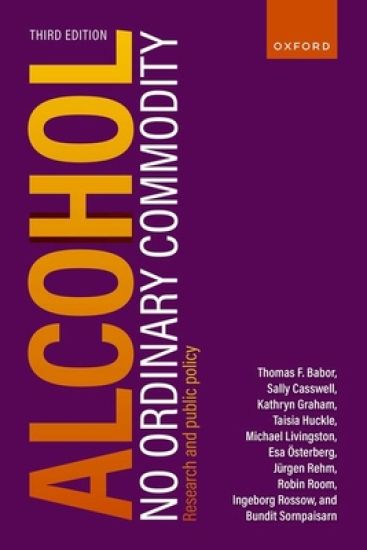
Alcohol: No Ordinary Commodity

Alcohol: No Ordinary Commodity

Thomas F. Babor; Sally Casswell; Kathryn Graham; Taisia Huckle; Michael Livingston; Esa Österberg; Jürgen Rehm; Robin Room; Ingeborg Rossow; Bundit Sornpaisarn

Oxford University Press
2022
nidottu
Alcohol: No Ordinary Commodity is a collaborative effort by an international group of addiction scientists to improve the linkages between addiction science and alcohol policy. It presents, in a comprehensive, practical, and readily accessible form, the accumulated scientific knowledge on alcohol research that has a direct relevance to the development of alcohol policy on local, national, and international levels. It provides an objective basis on which to build relevant policies globally and informs policy makers who have direct responsibility for public health and social welfare. By locating alcohol policy primarily within the realm of public health, this book draws attention to the growing tendency for governments, both national and local, to consider alcohol misuse as a major determinant of ill health, and to organize societal responses accordingly. The scope of the book is comprehensive and global. The authors describe the conceptual basis for a rational alcohol policy and present new epidemiological data on the global dimensions of alcohol misuse. The core of the book is a critical review of the cumulative scientific evidence in seven general areas of alcohol policy: pricing and taxation, regulating the physical availability of alcohol, modifying the environment in which drinking occurs, drinking-driving countermeasures, marketing restrictions, primary prevention programs in schools and other settings, and treatment and early intervention services. The final chapters discuss the current state of alcohol policy in different parts of the world and describe the need for a new approach to alcohol policy that is evidence-based, global, and coordinated. A valuable resource for those involved in addiction science and drug policy, as well as those in the wider fields of public health, health policy, epidemiology, and practising clinicians.
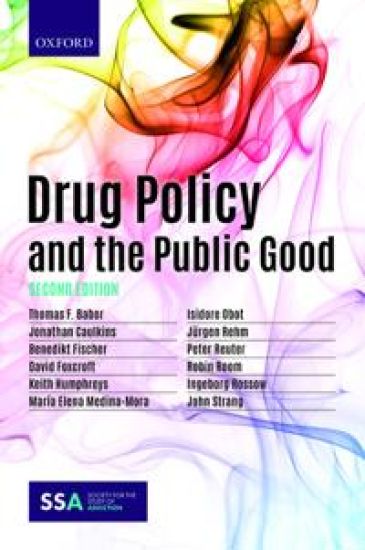
Drug Policy and the Public Good

Drug Policy and the Public Good

Thomas Babor; Jonathan Caulkins; Benedikt Fischer; David Foxcroft; Keith Humphreys; María Elena Medina-Mora; Isidore Obot; Jürgen Rehm; Peter Reuter; Robin Room; Ingeborg Rossow; John Strang

Oxford University Press
2018
nidottu
Illegal psychoactive substances and illicit prescription drugs are currently used on a daily basis all over the world. Affecting public health and social welfare, illicit drug use is linked to disease, disability, and social problems. Faced with an increase in usage, national and global policymakers are turning to addiction science for guidance on how to create evidence-based drug policy. Drug Policy and the Public Good is an objective analytical basis on which to build global drug policies. It presents the accumulated scientific knowledge on drug use in relation to policy development on a national and international level. By also revealing new epidemiological data on the global dimensions of drug misuse, it questions existing regulations and highlights the growing need for evidence-based, realistic, and coordinated drug policy. A critical review of cumulative scientific evidence, Drug Policy and the Public Good discusses four areas of drug policy; primary prevention programs in schools and other settings; supply reduction programs, including legal enforcement and drug interdiction; treatment interventions and harm reduction approaches; and control of the legal market through prescription drug regimes. In addition, it analyses the current state of global drug policy, and advocates improvements in the drafting of public health policy. Drug Policy and the Public Good is a global source of information and inspiration for policymakers involved in public health and social welfare. Presenting new research on illicit and prescription drug use, it is also an essential tool for academics, and a significant contribution to the translation of addiction research into effective drug policy.
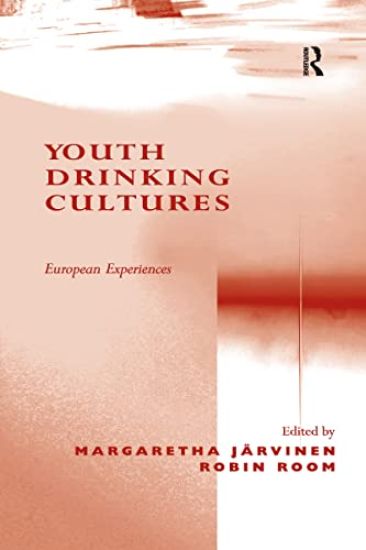
Youth Drinking Cultures

Youth Drinking Cultures

Margaretha Järvinen; Robin Room

Routledge
2016
nidottu
How can 'binge drinking' be explained and understood? Is alcohol consumption related to the particular cultural characteristics of some European countries? Should heavy drinking cultures be seen as a mainstream youth phenomenon or as marginal - and is this different in different countries? A team of leading researchers addresses these questions and more in their analysis of the alcohol consumption patterns of European young people. Alcohol consumption is an important marker of transition from childhood to early adulthood, yet the timing, intensity and purpose of adolescent drinking varies dramatically between countries. The contributors provide cross-national comparisons to investigate how drinking behaviour varies, examining factors such as gender, societal context and family socio-economic backgrounds. Youth Drinking Cultures offers a comprehensive set of perspectives on adolescent drinking in Europe. In linking issues around social identity and the life-course with a highly topical area of media and policy concern, the book will be of great value to sociology and social policy scholars, especially youth researchers, and also to professionals working with young people.
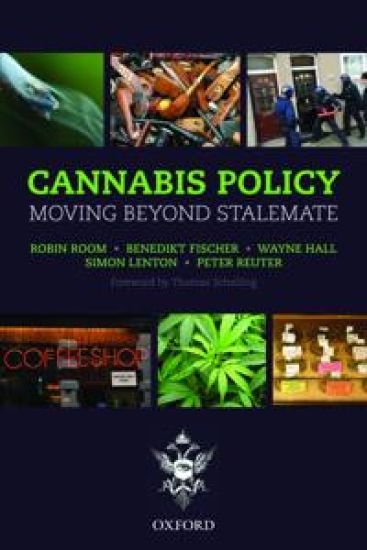
Cannabis Policy

Cannabis Policy

Robin Room; Benedikt Fischer; Wayne Hall; Simon Lenton; Peter Reuter; Covenor: Amanda Feilding

Oxford University Press
2010
nidottu
Cannabis, marijuana, pot, ganja - it goes by many names -- is by far the most widely used illegal substance, and accounts for more arrests than any other drug. Barely a week goes by without this drug appearing in the newpapers, and politicians have famously tied themselve in knots, trying to decide just how to deal with this recreational drug. While there have been many drug policy books on other substances - both legal and illegal, few have focused on this drug. Cannabis Policy: Moving beyond Stalemate is unique in providing the materials needed for deciding on policy about cannabis in its various forms. It reviews the state of knowledge on the health and psychological effects of cannabis, and its dangerousness relative to other drugs. It considers patterns and trends in use, the size and character of illicit markets, and the administration of current policies, including arrests and diversion to treatment, under the global prohibition regime. It looks at the experience of a number of countries which have tried reforming their regimes and softening prohibition, exploring the kinds of changes or penalties for use for possession: including depenalization, decriminalization, medical control, and different types of legalization. It evaluates such changes and draws on them to assess the effects on levels and patterns of use, on the market, and on adverse consequences of prohibition. For policymakers willing to look outside the box of the global prohibition regime, the book examines the options and possibilities for a country or group of countries to bring about change in, or opt out of, the global control system. Throughout, the book examines cannabis within a global frame, and provides in accessible form information which anyone considering reform will need in order to make decisions on cannabis policy (much of which is new or has not been readily available). This book will be essential for those involved in policymaking and be of interest to a wide range of readers interested in drugs and drug policy, as well as being an excellent supplementary text for university courses in criminology, policy science, social science, or public health. Published with the BECKLEY FOUNDATION PRESS
Youth Drinking Cultures

Youth Drinking Cultures

Margaretha Järvinen; Robin Room

Ashgate Publishing Limited
2007
sidottu
How can 'binge drinking' be explained and understood? Is alcohol consumption related to the particular cultural characteristics of some European countries? Should heavy drinking cultures be seen as a mainstream youth phenomenon or as marginal - and is this different in different countries? A team of leading researchers addresses these questions and more in their analysis of the alcohol consumption patterns of European young people. Alcohol consumption is an important marker of transition from childhood to early adulthood, yet the timing, intensity and purpose of adolescent drinking varies dramatically between countries. The contributors provide cross-national comparisons to investigate how drinking behaviour varies, examining factors such as gender, societal context and family socio-economic backgrounds. Youth Drinking Cultures offers a comprehensive set of perspectives on adolescent drinking in Europe. In linking issues around social identity and the life-course with a highly topical area of media and policy concern, the book will be of great value to sociology and social policy scholars, especially youth researchers, and also to professionals working with young people.