Kirjojen hintavertailu – 12 859 818 kirjaa ja 27 kauppaa

Kirjailija

Rocco Gangle

Kirjat ja teokset yhdessä paikassa: 8 kirjaa, julkaisuja vuosilta 2013–2026, suosituimpiin kuuluu Diagrammatic Immanence. Vertaile teosten hintoja ja tarkista saatavuus suomalaisista kirjakaupoista.

8 kirjaa

Kirjojen julkaisuvuodet: 2013–2026.

Diagrammatic Immanence

Diagrammatic Immanence

Rocco Gangle

Edinburgh University Press
2015
sidottu
Spinoza, Peirce and Deleuze are, in different ways, philosophers of immanence. Rocco Gangle addresses the methodological questions raised by a commitment to immanence in terms of how diagrams may be used both as tools and as objects of philosophical investigation. Gangle integrates insights from Spinozist metaphysics, Peircean semiotics and Deleuze's philosophy of difference in conjunction with the formal operations of category theory. He introduces the methods of category theory from a philosophical and diagrammatic perspective in a way that will allow philosophers with little or no mathematical training to come to grips with this important field.
Diagrammatic Immanence

Diagrammatic Immanence

Rocco Gangle

Edinburgh University Press
2020
nidottu
Spinoza, Peirce and Deleuze are, in different ways, philosophers of immanence. Rocco Gangle addresses the methodological questions raised by a commitment to immanence in terms of how diagrams may be used both as tools and as objects of philosophical investigation. Gangle integrates insights from Spinozist metaphysics, Peircean semiotics and Deleuze's philosophy of difference in conjunction with the formal operations of category theory. He introduces the methods of category theory from a philosophical and diagrammatic perspective in a way that will allow philosophers with little or no mathematical training to come to grips with this important field.
Iconicity and Abduction

Iconicity and Abduction

Gianluca Caterina; Rocco Gangle

Springer International Publishing AG
2018
nidottu
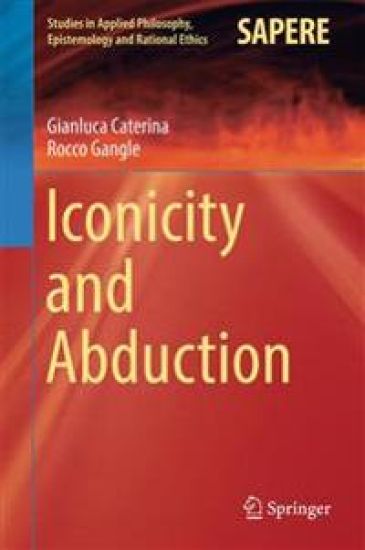
This book consolidates and extends the authors’ work on the connection between iconicity and abductive inference. It emphasizes a pragmatic, experimental and fallibilist view of knowledge without sacrificing formal rigor. Within this context, the book focuses particularly on scientific knowledge and its prevalent use of mathematics. To find an answer to the question “What kind of experimental activity is the scientific employment of mathematics?” the book addresses the problems involved in formalizing abductive cognition. For this, it implements the concept and method of iconicity, modeling this theoretical framework mathematically through category theory and topoi. Peirce's concept of iconic signs is treated in depth, and it is shown how Peirce's diagrammatic logical notation of Existential Graphs makes use of iconicity and how important features of this iconicity are representable within category theory. Alain Badiou’s set-theoretical model of truth procedures and his relational sheaf-based theory of phenomenology are then integrated within the Peircean logical context. Finally, the book opens the path towards a more naturalist interpretation of the abductive models developed in Peirce and Badiou through an analysis of several recent attempts to reformulate quantum mechanics with categorical methods. Overall, the book offers a comprehensive and rigorous overview of past approaches to iconic semiotics and abduction, and it encompasses new extensions of these methods towards an innovative naturalist interpretation of abductive reasoning.
Iconicity and Abduction

Iconicity and Abduction

Gianluca Caterina; Rocco Gangle

Springer International Publishing AG
2016
sidottu
This book consolidates and extends the authors’ work on the connection between iconicity and abductive inference. It emphasizes a pragmatic, experimental and fallibilist view of knowledge without sacrificing formal rigor. Within this context, the book focuses particularly on scientific knowledge and its prevalent use of mathematics. To find an answer to the question “What kind of experimental activity is the scientific employment of mathematics?” the book addresses the problems involved in formalizing abductive cognition. For this, it implements the concept and method of iconicity, modeling this theoretical framework mathematically through category theory and topoi. Peirce's concept of iconic signs is treated in depth, and it is shown how Peirce's diagrammatic logical notation of Existential Graphs makes use of iconicity and how important features of this iconicity are representable within category theory. Alain Badiou’s set-theoretical model of truth procedures and his relational sheaf-based theory of phenomenology are then integrated within the Peircean logical context. Finally, the book opens the path towards a more naturalist interpretation of the abductive models developed in Peirce and Badiou through an analysis of several recent attempts to reformulate quantum mechanics with categorical methods. Overall, the book offers a comprehensive and rigorous overview of past approaches to iconic semiotics and abduction, and it encompasses new extensions of these methods towards an innovative naturalist interpretation of abductive reasoning.
Spinoza for Our Time

Spinoza for Our Time

Antonio Negri; Rocco Gangle

Columbia University Press
2013
sidottu
Antonio Negri, one of the world's leading scholars on Baruch Spinoza (1632-1677) and his contemporary legacy, offers a straightforward explanation of the philosopher's elaborate arguments and a persuasive case for his ongoing relevance. Responding to a resurgent interest in Spinoza's thought and its potential application to contemporary global issues, Negri demonstrates the thinker's special value to politics, philosophy, and related disciplines. Negri's work is both a return to and an advancement of his initial affirmation of Spinozian thought in The Savage Anomaly. He further defends his understanding of the philosopher as a proto-postmodernist, or a thinker who is just now, with the advent of the postmodern, becoming contemporary. Negri also connects Spinoza's theories to recent trends in political philosophy, particularly the reengagement with Carl Schmitt's "political theology," and the history of philosophy, including the argument that Spinoza belongs to a "radical enlightenment." By positioning Spinoza as a contemporary revolutionary intellectual, Negri addresses and effectively defeats twentieth-century critiques of the thinker waged by Jacques Derrida, Alain Badiou, and Giorgio Agamben.
Francois Laruelle's Philosophies of Difference

Francois Laruelle's Philosophies of Difference

Rocco Gangle

Edinburgh University Press
2013
sidottu
Everything you need to understand both Laruelle's critique of difference and his project of non-philosophy. Hailed as a key thinker by important philosophers such as Gilles Deleuze and Ray Brassier, the 2010 translation of Philosophies of Difference has made Francois Laruelle's work accessible to the English-speaking world in time to meet a rising tide of interest. This new guide takes students and academics through Philosophies of Difference, following the development of Laruelle's thought, unpicking the difficult structure, discussing the strengths and weaknesses of the text and evaluating the arguments for and against his ideas. Readers will find everything they need to understand both Laruelle's critique of Difference and his project of non-philosophy: one of the most intriguing avenues in contemporary thought. It critiques philosophical Difference as a whole and the 3 specific models treated by Laruelle: Nietzsche-Deleuze, Heidegger and Derrida. It situates Philosophies of Difference within the rest of Laruelle's work and contemporary European thought. It explains the key shift from philosophy to non-philosophy which makes Laruelle so intriguing to philosophers today. It shows how Laruelle impacted on the work of Deleuze, Badiou and the Speculative Realism movement.
Francois Laruelle's Philosophies of Difference

Francois Laruelle's Philosophies of Difference

Rocco Gangle

Edinburgh University Press
2013
nidottu
Everything you need to understand both Laruelle's critique of difference and his project of non-philosophy. Hailed as a key thinker by important philosophers such as Gilles Deleuze and Ray Brassier, the 2010 translation of Philosophies of Difference has made Francois Laruelle's work accessible to the English-speaking world in time to meet a rising tide of interest. This new guide takes students and academics through Philosophies of Difference, following the development of Laruelle's thought, unpicking the difficult structure, discussing the strengths and weaknesses of the text and evaluating the arguments for and against his ideas. Readers will find everything they need to understand both Laruelle's critique of Difference and his project of non-philosophy: one of the most intriguing avenues in contemporary thought. It critiques philosophical Difference as a whole and the 3 specific models treated by Laruelle: Nietzsche-Deleuze, Heidegger and Derrida. It situates Philosophies of Difference within the rest of Laruelle's work and contemporary European thought. It explains the key shift from philosophy to non-philosophy which makes Laruelle so intriguing to philosophers today. It shows how Laruelle impacted on the work of Deleuze, Badiou and the Speculative Realism movement.
Francois Laruelle''s Philosophies of Difference

Francois Laruelle''s Philosophies of Difference

Rocco Gangle

Manohar Publishers and Distributors
2026
Sidottu
Gilles Deleuze described Laruelle’s thought as ‘one of the most interesting undertakings of contemporary philosophy’. Now, Rocco Gangle – who translated Laruelle’s philosophy into English – takes you through Laruelle’s trailblazing book Philosophies of Difference, helping you to understand both Laruelle’s critique of Difference and his project of non-philosophy, which has become one of the most intriguing avenues in contemporary thought. He explains the context within which Laruelle’s thought developed and takes you through the challenging argument and conceptual scaffolding of ‘Philosophies of Difference’. Key Features: Critiques philosophical Difference as a whole and the 3 specific models treated by Laruelle: Nietzsche-Deleuze.