Kirjojen hintavertailu – 12 859 827 kirjaa ja 27 kauppaa

Kirjailija

Rod Michalko

Kirjat ja teokset yhdessä paikassa: 6 kirjaa, julkaisuja vuosilta 1998–2023, suosituimpiin kuuluu Letters with Smokie: Blindness and More-Than-Human Relations. Vertaile teosten hintoja ja tarkista saatavuus suomalaisista kirjakaupoista.

6 kirjaa

Kirjojen julkaisuvuodet: 1998–2023.

Letters with Smokie

Letters with Smokie

Rod Michalko; Dan Goodley

University of Manitoba Press
2023
pokkari
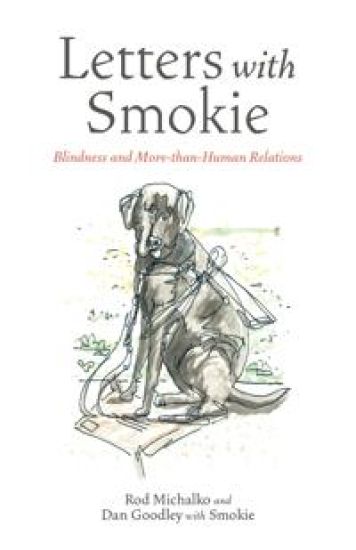
Leave it to a dog to put the “human” back in “humanities” In September 2020, Rod Michalko wrote to friend and colleague Dan Goodley, congratulating him on the release of his latest book, Disability and Other Human Questions. Joking that his late guide dog, Smokie, had taken offense to the suggestion that disability was purely a human question, Michalko shared a few thoughts on behalf of his dog. When Goodley wrote back—to Smokie—so began an epistolic exchange that would continue for the next seven months. As the COVID-19 pandemic swept across the world and the realities of lockdown-imposed isolation set in, the Smokie letters provided the friends a space in which to come together in a lively exploration of human-animal relationships and to interrogate disability as disruption, disturbance, and art. Just as he did in life, Smokie guides. In these pages, he offers wisdom about the world, love, friendship, and even The Beatles. His canine observations of human experience provide an avenue into some of the ways blindness might be reconceptualized and “befriended.” Uninhibited by the trappings of traditional academic inquiry, Michalko and Goodley are unleashed, free to wander, to wonder, and to provoke within the bonds of trust and respect. Funny and thoughtful, the result is a refreshing exploration and re-evaluation of learned cultural misunderstandings of disability.
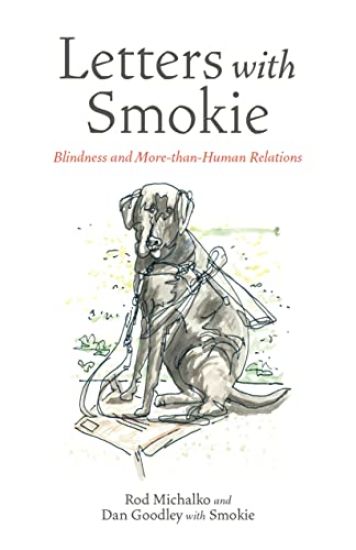
Letters with Smokie: Blindness and More-Than-Human Relations

Letters with Smokie: Blindness and More-Than-Human Relations

Rod Michalko; Dan Goodley

University of Manitoba Press
2023
sidottu
Leave it to a dog to put the "human" back in "humanities" In September 2020, Rod Michalko wrote to friend and colleague Dan Goodley, congratulating him on the release of his latest book, Disability and Other Human Questions. Joking that his late guide dog, Smokie, had taken offense to the suggestion that disability was purely a human question, Michalko shared a few thoughts on behalf of his dog. When Goodley wrote back--to Smokie--so began an epistolic exchange that would continue for the next seven months. As the COVID-19 pandemic swept across the world and the realities of lockdown-imposed isolation set in, the Smokie letters provided the friends a space in which to come together in a lively exploration of human-animal relationships and to interrogate disability as disruption, disturbance, and art. Just as he did in life, Smokie guides. In these pages, he offers wisdom about the world, love, friendship, and even The Beatles. His canine observations of human experience provide an avenue into some of the ways blindness might be reconceptualized and "befriended." Uninhibited by the trappings of traditional academic inquiry, Michalko and Goodley are unleashed, free to wander, to wonder, and to provoke within the bonds of trust and respect. Funny and thoughtful, the result is a refreshing exploration and re-evaluation of learned cultural misunderstandings of disability.
The Difference That Disability Makes

The Difference That Disability Makes

Rod Michalko

Temple University Press,U.S.
2002
pokkari
Rod Michalko launches into this book asking why disabled people are still feared, still regarded as useless or unfit to live, not yet welcome in society? Michalko challenges us to come to grips with the social meanings attached to disability and the body that is not "normal." Michalko's analysis draws from his own understanding of blindness and narratives by other disabled people. Connecting lived experience with social theory, he shows the consistent exclusion of disabled people from the common understandings of humanity and what constitutes the good life. He offers new insight into what suffering a disability means to individuals as well as to the polity as a whole. He shows how disability can teach society about itself, about its determination of what is normal and who belongs. Guiding us to a new understanding of how disability, difference, and suffering are related, this book enables us to choose disability as a social identity and a collective political issue. The difference that disability makes can be valuable and worthwhile, but only if we choose to make it so. Author note: Rod Michalko is Associate Professor of Sociology at St. Francis Xavier University. He is the author of The Mystery of the Eye and the Shadow of Blindness (1998) and The Two- in-One: Walking with Smokie, Walking with Blindness (Temple, 1999).
The Two-in-One

The Two-in-One

Rod Michalko

Temple University Press,U.S.
1998
pokkari
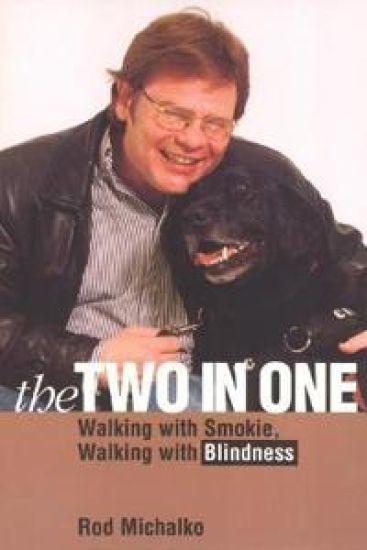
When Rod Michalko's sight finally became so limited that he no longer felt safe on busy city streets or traveling alone, he began a search for a guide. The Two-in-One is his account of how his search ended with Smokie, a guide dog, and a dramatically different sense of blindness. Few people who regularly encountered Michalko in his neighborhood shops and cafes realized that he was technically blind; like many people with physical disabilities, he had found ways of compensating for his impairment. Those who knew about his condition thought of him as a fully realized person who just happened to be blind. He thought so himself. Until Smokie changed all that. In this often moving, always compelling meditations on his relationship with Smokie, Michalko probes into what it means to be at home with blindness. Smokie makes no judgment about Michalko's lack of sight; it simply is the condition within which they work together. Their partnership thus allows Michalko to step outside of the conventional -- and even \u0022enlightened\u0022 -- understanding of blindness; he becomes not simply resigned to it but able to embrace it as an essential part of his being in the world. Drawing on his training as a sociologist and his experience as a disabled person, Michalko joins a still small circle of scholars who examine disability from the inside. More rare still -- and what will resonate with most readers -- is Michalko's remarkable portrayal of Smokie; avoiding sentimentality and pathos, it is a deeply affectionate yet restrained and nuanced appreciation of his behavior and personality. From their first meeting at the dog guide training school, Smokie springs to life in these pages as a highly competent, sure-footed, take-charge, full-speed-ahead, indispensable partner. \u0022Sighties\u0022 are always in awe watching them work; Michalko has even persuaded some of them that the Smokester can locate street addresses -- but has a little difficulty with the odd numbers! Readers of The Two-in-One can easily imagine Rod and Smokie sharing the joke as they continue on their way.
The Mystery of the Eye and the Shadow of Blindness

The Mystery of the Eye and the Shadow of Blindness

Rod Michalko

University of Toronto Press
1998
pokkari
Blindness is commonly considered to be a physical condition with negative consequences for its sufferers. Most research and treatment begin with the assumption that blind persons require adjustment and training to cope with their distorted view of reality. For Rod Michalko, blindness offers a legitimate way of being and a teaching tool - one that presents a unique perspective on aspects of the world that the sighted never experience and that the disciplines of ophthalmology and rehabilitation never consider. This book explores matters of choice and personal fulfilment in the context of blindness. Ophthalmology and rehabilitation use sheer necessity as their guiding principle, but the blind person must grapple with the question of what kind of blind person he or she chooses to be. The story of blindness is retold in the life of every blind person and whenever blindness is thought about, spoken of, or acted upon. Michalko immerses himself in this multiplicity of narration, weaving his own experience of blindness through it, using it as an occasion to think about life, our decisions, our choices, including how we choose to understand each other, and the ways we choose to live collectively in the human community. He wants you to consider what can be produced by thinking of blindness as an essential part of being. This is an important book for anyone who has personal or professional contact with any community of disabled persons, particularly the blind, as well as anyone who simply wants to better understand what it means to be human.
The Mystery of the Eye and the Shadow of Blindness

The Mystery of the Eye and the Shadow of Blindness

Rod Michalko

University of Toronto Press
1998
sidottu
Blindness is commonly considered to be a physical condition with negative consequences for its sufferers. Most research and treatment begin with the assumption that blind persons require adjustment and training to cope with their distorted view of reality. For Rod Michalko, blindness offers a legitimate way of being and a teaching tool - one that presents a unique perspective on aspects of the world that the sighted never experience and that the disciplines of ophthalmology and rehabilitation never consider. This book explores matters of choice and personal fulfilment in the context of blindness. Ophthalmology and rehabilitation use sheer necessity as their guiding principle, but the blind person must grapple with the question of what kind of blind person he or she chooses to be. The story of blindness is retold in the life of every blind person and whenever blindness is thought about, spoken of, or acted upon. Michalko immerses himself in this multiplicity of narration, weaving his own experience of blindness through it, using it as an occasion to think about life, our decisions, our choices, including how we choose to understand each other, and the ways we choose to live collectively in the human community. He wants you to consider what can be produced by thinking of blindness as an essential part of being. This is an important book for anyone who has personal or professional contact with any community of disabled persons, particularly the blind, as well as anyone who simply wants to better understand what it means to be human.