Kirjojen hintavertailu – 12 859 829 kirjaa ja 27 kauppaa

Kirjailija

Roderick MacFarquhar

Kirjat ja teokset yhdessä paikassa: 6 kirjaa, julkaisuja vuosilta 1987–2008, suosituimpiin kuuluu Perspectives on Modern China. Vertaile teosten hintoja ja tarkista saatavuus suomalaisista kirjakaupoista.

6 kirjaa

Kirjojen julkaisuvuodet: 1987–2008.

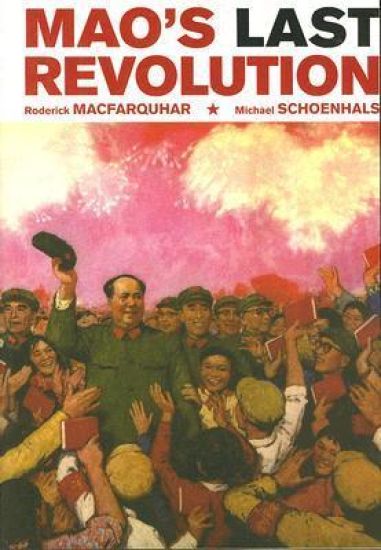
Mao’s Last Revolution

Mao’s Last Revolution

Roderick MacFarquhar; Michael Schoenhals

The Belknap Press
2008
nidottu

Halvin toimitettuna 36,00 €

The Cultural Revolution was a watershed event in the history of the People’s Republic of China, the defining decade of half a century of communist rule. Before 1966, China was a typical communist state, with a command economy and a powerful party able to keep the population under control. But during the Cultural Revolution, in a move unprecedented in any communist country, Mao unleashed the Red Guards against the party. Tens of thousands of officials were humiliated, tortured, and even killed. Order had to be restored by the military, whose methods were often equally brutal. In a masterly book, Roderick MacFarquhar and Michael Schoenhals explain why Mao launched the Cultural Revolution, and show his Machiavellian role in masterminding it (which Chinese publications conceal). In often horrifying detail, they document the Hobbesian state that ensued. The movement veered out of control and terror paralyzed the country. Power struggles raged among Lin Biao, Zhou Enlai, Deng Xiaoping, and Jiang Qing—Mao’s wife and leader of the Gang of Four—while Mao often played one against the other. After Mao’s death, in reaction to the killing and the chaos, Deng Xiaoping led China into a reform era in which capitalism flourishes and the party has lost its former authority. In its invaluable critical analysis of Chairman Mao and its brilliant portrait of a culture in turmoil, Mao’s Last Revolution offers the most authoritative and compelling account to date of this seminal event in the history of China.
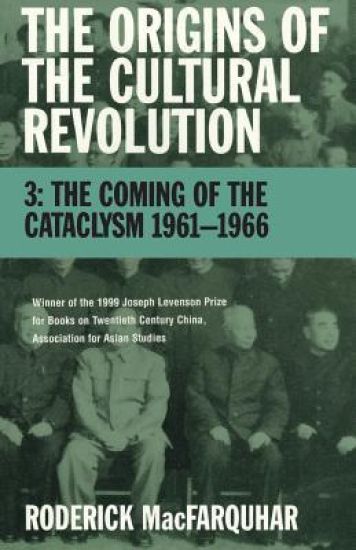
The Origins of the Cultural Revolution

The Origins of the Cultural Revolution

Roderick MacFarquhar

Columbia University Press
1999
pokkari
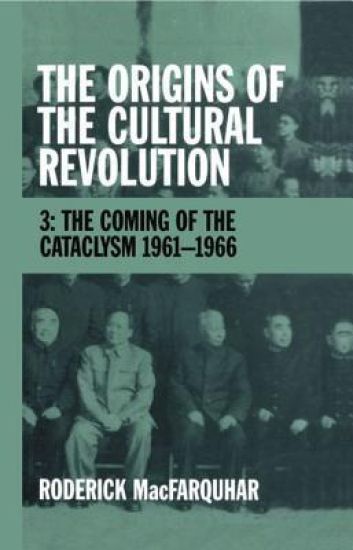
This is the final volume in a trilogy that examines the politics, personalities, economics, culture, and international relations of China from the mid-1950s to the mid-1960s. It seeks to answer the central question: Why did Chairman Mao Zedong launch the Cultural Revolution (1966-76), which plunged China into chaos and almost destroyed its Communist Party? The Coming of the Cataclysm starts with the great famine of the early 1960s, which resulted in tens of millions of deaths and set in train a series of emergency measures that increasingly divided Mao from his comrades-in-arms. His anger that they were prepared to adopt "capitalist" methods to rescue the country was sharpened by his belief that Moscow had actually gone capitalist and sold out to the "imperialist" West. From 1961 to 1966, the period covered by this volume, the increasingly urgent question for Mao was how to prevent a similar revolutionary degeneration in China. The Cultural Revolution was his answer. Drawing upon new evidence from Party documents, personal interviews, books, and journals, MacFarquhar details the growing rift between Mao and his colleagues as they attempted to cope with domestic privation and an increasingly hostile international environment-until the Chairman finally decided to smash the unity of the Yan'an Round Table by unleashing society against the party-state.
The Origins of the Cultural Revolution

The Origins of the Cultural Revolution

Roderick MacFarquhar

Oxford University Press
1997
sidottu
This is the final volume in a trilogy which examines the politics, personalities, economics, culture, and international relations of China from the mid-1950s to the mid-1960s. Roderick MacFarquhar is the first to use a multitude of new Chinese sources to answer the question: Why did Chairman Mao Zedong launch the Cultural Revolution which plunged China into chaos and almost destroyed its Communist Party? Volume 3 begins with the great famine of the early 1960s which resulted in tens of millions of deaths, setting in train a series of emergency measures which increasingly divided Mao from his comrades-in-arms. The Chairman's anger that they were prepared to adopt `capitalist' methods to rescue the country was sharpened by his belief that Moscow was denouncing his revolutionary diplomacy because the Soviet leadership had gone capitalist and sold out to the `imperialist' West. From 1961 to 1966, the increasingly urgent question for Mao was how to prevent a similar revolutionary deterioration in China. The Cultural Revolution, in which tens of thousands of loyal party veterans were publicly disgraced to make way for a supposedly more leftist generation of Red Guards, was his answer. Ironically, after it all ended with Mao's death, one survivor, Deng Xiaoping, was so appalled at the destructiveness of the Chairman's final cataclysm that he actually did turn to capitalism to revive the country. This volume is the first scholarly work for twenty years to focus on the whole gamut of events - political, economic, intellectual, military, and international - in the years leading up to the Cultural Revolution and makes use of a multitude of Chinese documentary, biographical, and historical works that have only appeared in the last decade.
Perspectives on Modern China

Perspectives on Modern China

Kenneth Lieberthal; Joyce Kallgren; Roderick MacFarquhar; Frederic Wakeman

M.E. Sharpe
1991
nidottu
The conveners (the editors of this book) of the September 1989 Four Anniversaries China Conference in Annapolis, asked the contributors to look back from that point in time to consider four major events in modern Chinese history in the perspective of the rapid changes that were shaping the Chinese society, economy, polity, and sense of place in the world in the 1980s, a time when China was making rapid strides toward becoming more integrated with the outside world. With contributions by distinguished scholars in the field, the four anniversaries considered are the High Qing, the May Fourth Movement, forty years of communism in China, and ten years of the Deng era.
Perspectives on Modern China

Perspectives on Modern China

Kenneth Lieberthal; Joyce Kallgren; Roderick MacFarquhar; Frederic Wakeman

M.E. Sharpe
1991
sidottu
The conveners (the editors of this book) of the September 1989 Four Anniversaries China Conference in Annapolis, asked the contributors to look back from that point in time to consider four major events in modern Chinese history in the perspective of the rapid changes that were shaping the Chinese society, economy, polity, and sense of place in the world in the 1980s, a time when China was making rapid strides toward becoming more integrated with the outside world. With contributions by distinguished scholars in the field, the four anniversaries considered are the High Qing, the May Fourth Movement, forty years of communism in China, and ten years of the Deng era.