Kirjojen hintavertailu – 12 859 818 kirjaa ja 27 kauppaa

Kirjailija

Rodney Edvinsson

Kirjat ja teokset yhdessä paikassa: 7 kirjaa, julkaisuja vuosilta 2010–2026, suosituimpiin kuuluu Vad är ekonomisk historia?. Vertaile teosten hintoja ja tarkista saatavuus suomalaisista kirjakaupoista.

7 kirjaa

Kirjojen julkaisuvuodet: 2010–2026.

Vad är ekonomisk historia?

Vad är ekonomisk historia?

Lena Andersson-Skog; Oskar Broberg; Rodney Edvinsson; Kerstin Enflo; Kristina Lilja; Lars Ahnland; Lars Fredrik Andersson; Erik Bengtsson; Martin Dribe; Susanna Fellman; Ellen Hillbom; Ann Ighe; Astrid Kander; Tobias Karlsson; Magnus Lindmark; Malin Nilsson; Jan Ottosson; Svante Prado; Paulina Rytkönen; Klas Rönnbäck; Maria Stanfors; Jonathan Svanlund; Anna Tegunimataka; Daniel Waldenström; Anders Ögren

Studentlitteratur AB
2020
kartonkisidos
Boken är ett unikt nationellt projekt genom dess representation av författare från samtliga svenska lärosäten som undervisar i ekonomisk historia på alla utbildningsnivåer. Bokens 25 författare är också aktiva forskare och bidragen bygger på en stor samlad erfarenhet av aktuell svensk och internationell forskning inom ämnet. Vad är ekonomisk historia? är en introducerande lärobok i ekonomisk historia som syftar till att väcka nyfikenhet för ämnet, samt visa på dess möjligheter som akademisk disciplin och tillämpad samhällsvetenskap. Boken visar hur ekonomisk-historiska perspektiv, teorier och metoder kan användas för att analysera olika utvecklingsförlopp med avgörande betydelse för samhällsutvecklingen då som nu. Genom att använda olika verktyg ur de historiska och ekonomiska verktygslådorna vänder och vrider forskare inom ekonomisk historia på begrepp som tillväxt, industrialisering, resursfördelning, kapital och arbete. På detta sätt bidrar ämnet till vår förståelse av mänsklighetens långa historia, samtidigt som det också bidrar med nya perspektiv på vår egen samtid. Vad är ekonomisk historia? består av 13 kapitel, de tre första kapitlen behandlar ämnets historia, teorier och metoder. De därpå följande kapitlen lyfter ett urval av de frågor som ekonomhistoriker arbetar med. Boken vänder sig främst till universitets- och högskolestudenter på grundläggande nivå och fungerar utmärkt som en introduktion till ämnet.
Vad är ekonomisk historia?

Vad är ekonomisk historia?

Lena Andersson-Skog; Oskar Broberg; Rodney Edvinsson; Kerstin Enflo; Kristina Lilja; Lars Ahnland; Lars Fredrik Andersson; Erik Bengtsson; Martin Dribe; Susanna Fellman; Ellen Hillbom; Ann Ighe; Astrid Kander; Tobias Karlsson; Magnus Lindmark; Malin Nilsson; Jan Ottosson; Svante Prado; Paulina Rytkönen; Klas Rönnbäck; Maria Stanfors; Jonathan Svanlund; Anna Tegunimataka; Daniel Waldenström; Anders Ögren

Studentlitteratur AB
2026
nidottu
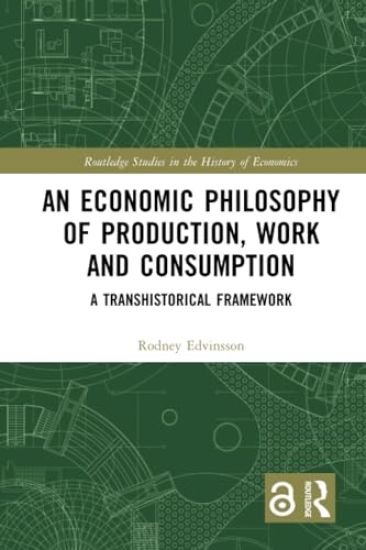
An Economic Philosophy of Production, Work and Consumption
An Economic Philosophy of Production, Work and Consumption presents a new transhistorical framework of defining production, work and consumption. It shows that they all share the common feature of intentional physical transformation of something external to the agent, at some point in time. The book opens with a discussion of various theoretical traditions within economics, spanning mainstream and heterodox perspectives, and problems with production definitions in use today. Next, the author outlines various definitions in a more formal manner and provides a discussion on measurement and the production boundary. Unproductive work is redefined as socially reproductive, i.e. such that would not be performed on a Robinson Crusoe Island. Finally, the volume applies the new conceptual framework to various historical cases and discusses the future of production, work and consumption. This essential volume will be of interest to scholars of economic philosophy and methodology, the history of economic thought, economic history and national accounting. The Open Access version of this book, available at www.taylorfrancis.com, has been made available under a Creative Commons Attribution-Non Commercial-No Derivatives 4.0 license.
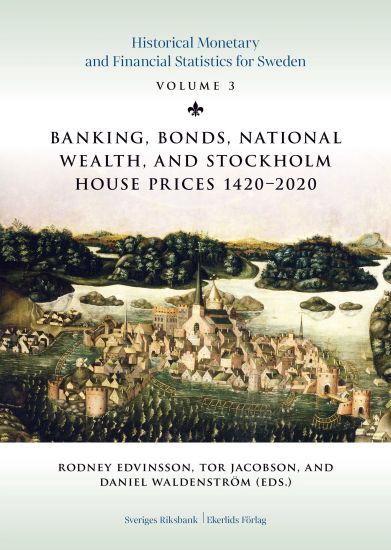
Banking, bonds, national wealth, and Stockholm house prices, 1420-2020

Banking, bonds, national wealth, and Stockholm house prices, 1420-2020

Rodney Edvinsson; Tor Jacobson; Daniel Waldenström; Klas Fregert; Lars Ahnland; Bo Franzén; Johan Söderberg; Lili-Annè Aldman; Emelie Carlsson; Klas Eriksson; Gustav Ingman

Ekerlids
2022
sidottu
This book is the third volume published in the research project run by Sveriges Riksbank concerning Historical Monetary Statistics for Sweden. The current volume includes chapters on the evolution of Swedish banking, historical house prices for Stockholm, the Swedish bond market, and Sweden s national wealth. Sveriges Riksbank is one of the oldest central banks in the world, if not the oldest. In its infancy, in the 17th century, the Riksbank was also the only bank in Sweden. But many more banks, of varying orientation and organisation, emerged in the following centuries. In two chapters, covering an early period from 1770 to 1870 and a modern banking period from 1870 onwards, a broad description of the scope of the Swedish banking industry over time is provided. In four chapters, a new house price index is presented for Stockholm from the Middle Ages to the present. The index shows that the increase in real house prices in the last few decades is matched by similar-sized increases occurring in the 17th and 19th centuries. These two historic episodes were followed by periods of secular stagnation, or even decline. All three long upturns in house prices can be related to periods of strong urbanisation. Sharp downturns have occurred due to various macroeconomic shocks, for example wars or financial crises. During these downturns, nominal prices have tended to decline less than real prices. The Swedish bond market emerged almost two hundred years ago. During the 19th century, private-sector bond loans issued by mortgage institutions and corporations to foreign lenders dominated. In the 20th century, government borrowing has dominated the market and the role of domestic lenders has increased. The national wealth of Sweden has transformed over the past two centuries. Private agrarian estates were the dominant assets in the 19th century, but the 20th century saw the emergence of financial assets and liabilities and also public-sector net wealth.
An Economic Philosophy of Production, Work and Consumption
An Economic Philosophy of Production, Work and Consumption presents a new transhistorical framework of defining production, work and consumption. It shows that they all share the common feature of intentional physical transformation of something external to the agent, at some point in time. The book opens with a discussion of various theoretical traditions within economics, spanning mainstream and heterodox perspectives, and problems with production definitions in use today. Next, the author outlines various definitions in a more formal manner and provides a discussion on measurement and the production boundary. Unproductive work is redefined as socially reproductive, i.e. such that would not be performed on a Robinson Crusoe Island. Finally, the volume applies the new conceptual framework to various historical cases and discusses the future of production, work and consumption. This essential volume will be of interest to scholars of economic philosophy and methodology, the history of economic thought, economic history and national accounting. The Open Access version of this book, available at www.taylorfrancis.com, has been made available under a Creative Commons Attribution-Non Commercial-No Derivatives 4.0 license.
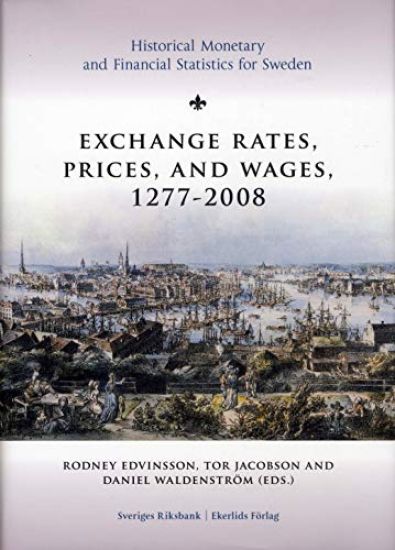
Exchange rates, prices, and wages 1277-2008

Exchange rates, prices, and wages 1277-2008

Jan Bohlin; Rodney Edvinsson; Bo Franzén; Tor Jacobson; Håkan Lobell; Svante Prado; Johan Söderberg; Daniel Waldenström

Ekerlids
2010
sidottu
Boken publicerar ny statistik över det svenska monetära systemets framväxt från medeltiden till idag, med fokus på växelkurser, konsumentpriser och löner. Forskare från Göteborg, Lund och Stockholm diskuterar resultaten i tio kapitel. I boken presenteras ett konsumentprisindex för Sveriges som går tillbaka till 1290. Indexet visar att den genomsnittliga inflationen under perioden 1290-2008 var 2,5 procent per år, vilket ligger förvånansvärt nära Riksbankens nuvarande inflationsmål på två procent. Det århundrade som upplevde högst inflationstakt var 1500-talet, följt av 1900-talet. Reallönen för arbetare var högre i slutet av medeltiden än mitten av 1800-talet. Sedan dess har dock reallönerna stigit mer eller mindre kontinuerligt. Den kraftigaste ökningen ägde rum efter det första världskriget, som en följd av arbetstidsförkortningen. Det sista kapitlet presenterar industrilöner för män och kvinnor. Sedan 1800-talet har lönegapet mellan könen minskat, men från slutet av 1970-talet har skillnaden varit stabil. Boken är en del av ett mer omfattande projekt, som tidigare resulterat i en databas över historisk monetär statistik som finns på Riksbankens hemsida. En andra del beräknas komma ut inom två år. Den kommer att behandla statsskuld, penningmängd, aktieavkastning och ränteutveckling under motsvarande tidsperiod. I framtiden kommer även historiska serier över Riksbankens räkenskaper, fastighetspriser och banksektorn att publiceras.