Kirjojen hintavertailu – 12 859 819 kirjaa ja 27 kauppaa

Kirjailija

Roger Ariew

Kirjat ja teokset yhdessä paikassa: 7 kirjaa, julkaisuja vuosilta 2000–2024, suosituimpiin kuuluu Descartes among the Scholastics. Vertaile teosten hintoja ja tarkista saatavuus suomalaisista kirjakaupoista.

7 kirjaa

Kirjojen julkaisuvuodet: 2000–2024.

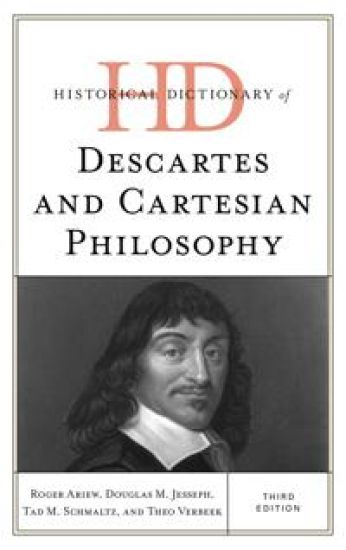
Historical Dictionary of Descartes and Cartesian Philosophy

Historical Dictionary of Descartes and Cartesian Philosophy

Roger Ariew; Douglas M. Jesseph; Tad M. Schmaltz; Theo Verbeek

BLOOMSBURY PUBLISHING PLC
2024
sidottu
The Historical Dictionary of Descartes and Cartesian Philosophy, Third Edition, centers on Descartes’ philosophy (considered broadly to include his science and mathematics) in the context of 17th-century thought, with attention being paid to its reception. This is done through a chronology, an introduction, and an extensive bibliography. The dictionary section has more than 400 cross-referenced entries on various concepts in Descartes’ philosophy, science, and mathematics, as well as biographical entries about the intellectual setting for Descartes’ philosophy and its reception, both with Cartesians and anti-Cartesians. This book is an excellent resource for students, researchers, and anyone wanting to know more about Descartes philosophy.
Historical Dictionary of Descartes and Cartesian Philosophy

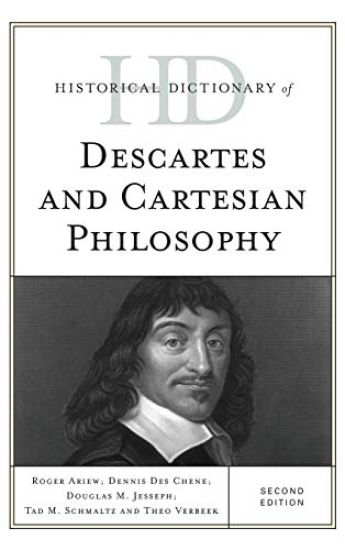
Historical Dictionary of Descartes and Cartesian Philosophy

Roger Ariew; Dennis Des Chene; Douglas M. Jesseph; Tad M. Schmaltz; Theo Verbeek

Rowman Littlefield
2015
sidottu
Descartes is perhaps most closely associated with the title, “the Father of Modern Philosophy.” Generations of students have been introduced to the study of philosophy through a consideration of his Meditations on First Philosophy. His contributions to natural science is shown by the fact that his physics, as promulgated by the Cartesians, played a central role in the debates after his death over Isaac Newton’s theory of gravitation. Descartes also made major contributions to the field of analytic geometry; we still speak today of “Cartesian coordinates” and the “Cartesian product.” This second edition of Historical Dictionary of Descartes and Cartesian Philosophy covers the history through a chronology, an introductory essay, and an extensive bibliography. The dictionary section has over 300 cross-referenced entries on various concepts in Descartes’ philosophy, science, and mathematics, as well as biographical entries about the intellectual setting for Descartes’ philosophy and its reception, both with Cartesians and anti-Cartesians. This book is an excellent access point for students, researchers, and anyone wanting to know more about Descartes.
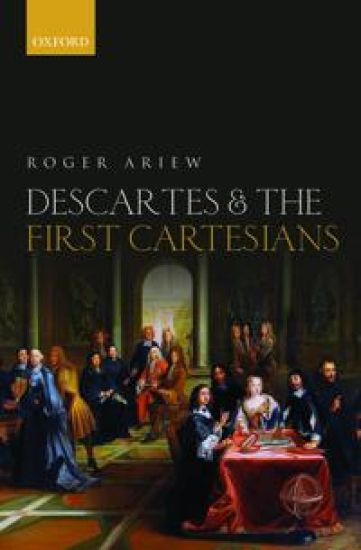
Descartes and the First Cartesians

Descartes and the First Cartesians

Roger Ariew

Oxford University Press
2014
sidottu
Descartes and the First Cartesians adopts the perspective that we should not approach René Descartes as a solitary thinker, but as a philosopher who constructs a dialogue with his contemporaries, so as to engage them and elements of his society into his philosophical enterprise. Roger Ariew argues that an important aspect of this engagement concerns the endeavor to establish Cartesian philosophy in the Schools, that is, to replace Aristotle as the authority there. Descartes wrote the Principles of Philosophy as something of a rival to Scholastic textbooks, initially conceiving the project as a comparison of his philosophy and that of the Scholastics. Still, what Descartes produced was inadequate for the task. The topics of Scholastic textbooks ranged more broadly than those of Descartes; they usually had quadripartite arrangements mirroring the structure of the collegiate curriculum, divided as they typically were into logic, ethics, physics, and metaphysics. But Descartes produced at best only what could be called a general metaphysics and a partial physics. These deficiencies in the Cartesian program and in its aspiration to replace Scholastic philosophy in the schools caused the Cartesians to rush in to fill the voids. The attempt to publish a Cartesian textbook that would mirror what was taught in the schools began in the 1650s with Jacques Du Roure and culminated in the 1690s with Pierre-Sylvain Régis and Antoine Le Grand. Ariew's original account thus considers the reception of Descartes' work, and establishes the significance of his philosophical enterprise in relation to the textbooks of the first Cartesians and in contrast with late Scholastic textbooks.
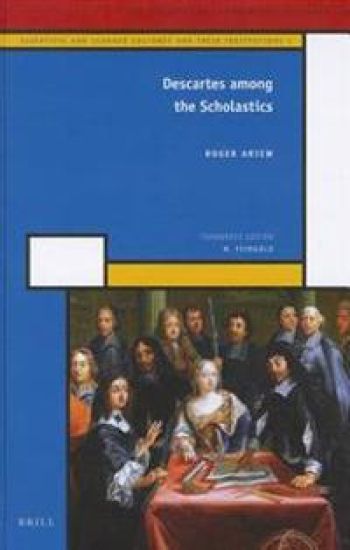
Descartes among the Scholastics
Descartes among the Scholastics takes the position that philosophical systems cannot be studied adequately apart from their intellectual context: philosophers accept, modify, or reject doctrines whose meaning and significance are given in a particular culture. Thus, the volume treats Cartesian philosophy as a reaction against, as well as an indebtedness to, scholastic philosophy and touches on many topics shared by Cartesian and late scholastic philosophy: matter and form, causation, infinity, place, time, void, and motion; the substance of the heavens; principles of metaphysics (such as unity, principle of individuation, truth and falsity). One moves from within Cartesian philosophy and its intellectual context in the seventeenth century, to living philosophical debate between Descartes and his contemporaries, to its first reception.
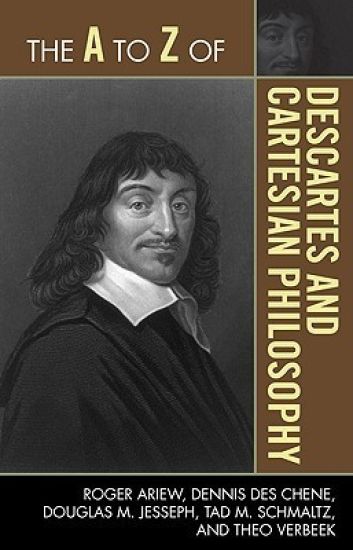
The A to Z of Descartes and Cartesian Philosophy

The A to Z of Descartes and Cartesian Philosophy

Roger Ariew; Dennis Des Chene; Douglas M. Jesseph; Tad M. Schmaltz; Theo Verbeek

Scarecrow Press
2010
nidottu
The A to Z of Descartes and Cartesian Philosophy includes many entries on Descartes's writings, concepts, and findings. Since it is historical, there are other entries on those who supported him, those who criticized him, those who corrected him, and those who together formed one of the major movements in philosophy, Cartesianism. To better understand the period, the authors drew up a brief chronology, and to see how Descartes and Cartesianism fit into the general picture, they have written an introduction and a biography. Since everything cannot be summed up in one volume, a bibliography directs readers to numerous other sources on issues of particular interest.
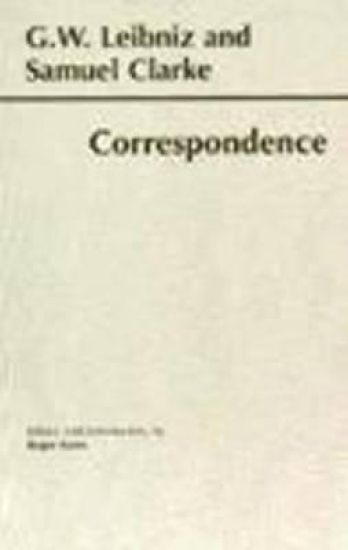
Leibniz and Clarke: Correspondence

Leibniz and Clarke: Correspondence

G. W. Leibniz; Samuel Clarke; Roger Ariew

Hackett Publishing Co, Inc
2000
pokkari
For this new edition, Roger Ariew has adapted Samuel Clarke's edition of 1717, modernizing it to reflect contemporary English usage. Ariew's introduction places the correspondence in historical context and discusses the vibrant philosophical climate of the times. Appendices provide those selections from the works of Newton that Clarke frequently refers to in the correspondence. A bibliography is also included.
Leibniz and Clarke: Correspondence

Leibniz and Clarke: Correspondence

Gottfried Wilhelm Leibniz; Samuel Clarke; Roger Ariew

Hackett Publishing Co, Inc
2000
sidottu
For this new edition, Roger Ariew has adapted Samuel Clarke's edition of 1717, modernizing it to reflect contemporary English usage. Ariew's introduction places the correspondence in historical context and discusses the vibrant philosophical climate of the times. Appendices provide those selections from the works of Newton that Clarke frequently refers to in the correspondence. A bibliography is also included.