Kirjojen hintavertailu – 12 859 819 kirjaa ja 27 kauppaa

Kirjailija

Roger Bacon

Kirjat ja teokset yhdessä paikassa: 53 kirjaa, julkaisuja vuosilta 1928–2026, suosituimpiin kuuluu Roger Bacons Philosophy Of Nature. Vertaile teosten hintoja ja tarkista saatavuus suomalaisista kirjakaupoista.

53 kirjaa

Kirjojen julkaisuvuodet: 1928–2026.

Roger Bacon's Selected Occult Writings

Roger Bacon's Selected Occult Writings

Roger Bacon

Literary Licensing, LLC
2014
sidottu
Roger Bacon's Selected Occult Writings is a collection of writings by the medieval philosopher and scientist Roger Bacon. The book includes a selection of Bacon's works on the occult, including his studies of alchemy, astrology, and magic. The writings provide insight into Bacon's views on the supernatural and his attempts to understand the mysteries of the universe. The book also includes an introduction that provides context for Bacon's life and work, as well as notes on the text to help readers understand the historical and cultural context of the writings. Overall, Roger Bacon's Selected Occult Writings is a fascinating look into the mind of one of the most influential thinkers of the Middle Ages. This Is A New Release Of The Original 1922 Edition. This scarce antiquarian book is a facsimile reprint of the old original and may contain some imperfections such as library marks and notations. Because we believe this work is culturally important, we have made it available as part of our commitment for protecting, preserving, and promoting the world's literature in affordable, high quality, modern editions, that are true to their original work.

On Signs (Opus Maius, Part 3, Chapter 2)

On Signs (Opus Maius, Part 3, Chapter 2)

Roger Bacon

Pontifical Institute of Mediaeval Studies
2013
nidottu
Roger Bacon's Opus maius represents an attempt to create a whole new vision of what Christian education should be, one centered on service to the Church. One chapter of this work, "On Signs," is the most comprehensive and innovative treatise on semiotics in the thirteenth century. To understand the myriad ways in which things and words signify, Bacon says, is "a thing of marvelous usefulness and beauty."
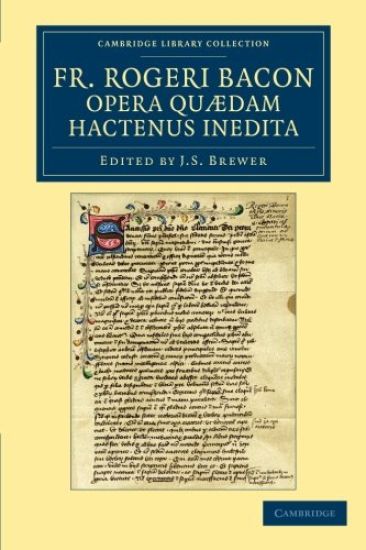
Fr. Rogeri Bacon Opera quædam hactenus inedita

Fr. Rogeri Bacon Opera quædam hactenus inedita

Roger Bacon

Cambridge University Press
2012
pokkari
The Franciscan Roger Bacon (c.1214–92?) was one of the most significant intellectuals of the thirteenth century. His most important work was the Opus Majus of 1267 (also available in this series). The works included in this volume, edited by J. S. Brewer, had not previously been published, and only one volume of the unpublished works ever appeared, because of Brewer's other commitments. The Opus Minus was a précis of the larger work, written at the same time. The Opus Tertium, written the following year, was Bacon's attempt to cover topics which he felt had been omitted, or inadequately explained, in the previous versions; it also includes autobiographical information. Neither the Opus Minus or Opus Tertium survive in their entirety, but Brewer includes all the parts known in 1859. The Compendium Philosophiae deals with Bacon's wide-ranging intellectual interests in all aspects of medieval scholarship.
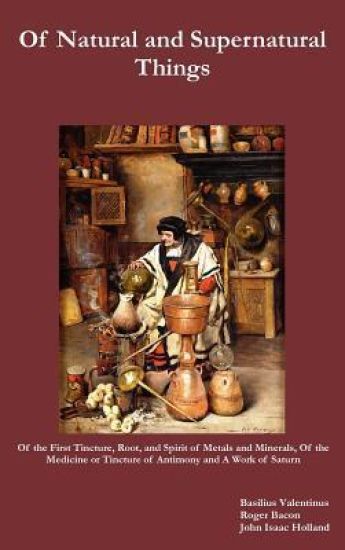
Of Natural and Supernatural Things, Also, Of the First Tincture, Root, and Spirit of Metals and Minerals, Of the Medicine or Tincture of Antimony and A Work of Saturn
Basilius Valentinus (also known under the Anglicised version of his name, Basil Valentine) is shrouded in mystery. It is said that he was a 15th century alchemist and there are also claims that he was the canon of the Benedictine Priory of Saint Peter in Erfurt, Germany - a claim that cannot, so far, be substantiated. All that can be said for certain is that numerous publications on alchemy were published in both Latin and German under the name of Basilius Valentinus, many of which were widely translated into various European languages. What makes this edition so special are the additional treatises by both John Holland and Roger Bacon. John Isaac Holland (active 1572-1610? ) was a Dutch alchemist who is thought to have lived in the 15th century. It was said that he was the first alchemist of Holland. Roger Bacon, (c. 1214-1294), also known as Doctor Mirabilis (Latin: "wonderful teacher"), was an English philosopher and Franciscan friar who placed considerable emphasis on the study of nature through empirical means.
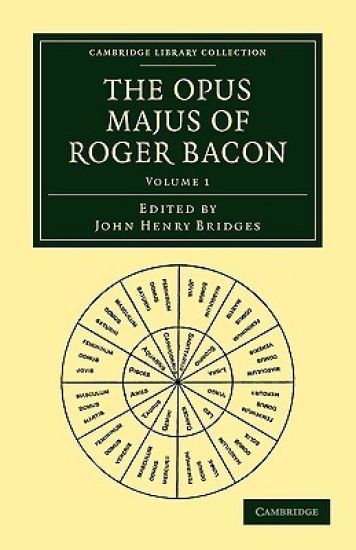
The Opus Majus of Roger Bacon

The Opus Majus of Roger Bacon

Roger Bacon

Cambridge University Press
2010
pokkari
Roger Bacon, the medieval natural philosopher who broke new ground in promoting scientific method, produced the encyclopedic Opus Majus or 'Greater Work' in the mid-thirteenth century. This 1897 publication in two volumes was the first complete edition of the work to appear in print. Written at the request of Pope Clement IV, the Opus Majus is the most significant and most influential of Bacon's works, containing his observations of the natural world and theories on knowledge acquisition. Bacon's text appears in the original Latin, and Bridges includes a substantial introduction and brief analysis of each chapter in English, as well as extensive footnotes and an analytical table to aid the reader. Volume 1 contains the first four parts of Bacon's treatise with sections on 'Wisdom and Truth', 'The connection of Philosophy with Theology', 'The Study of Language', and 'Mathematical Science'.
The Opus Majus of Roger Bacon

The Opus Majus of Roger Bacon

Roger Bacon

Cambridge University Press
2010
pokkari
Roger Bacon, the medieval natural philosopher who broke new ground in promoting scientific method, produced the encyclopedic Opus Majus or 'Greater Work' in the mid-thirteenth century. This 1897 publication in two volumes was the first complete edition of the work to appear in print. Written at the request of Pope Clement IV, the Opus Majus is the most significant and most influential of Bacon's works, containing his observations of the natural world and theories on knowledge acquisition. Bacon's text appears in the original Latin, and Bridges includes a substantial introduction and brief analysis of each chapter in English, as well as extensive footnotes and an analytical table to aid the reader. Volume 2 contains the last three parts of Bacon's treatise, on Optics, Experimental Science, and Moral Philosophy. This volume also incorporates a later supplement containing additional material and corrections.