Kirjojen hintavertailu – 12 859 828 kirjaa ja 27 kauppaa

Kirjailija

Roger Blanpain

Kirjat ja teokset yhdessä paikassa: 38 kirjaa, julkaisuja vuosilta 1975–2016, suosituimpiin kuuluu Institutional Changes and European Social Policies after the Treaty of Amsterdam. Vertaile teosten hintoja ja tarkista saatavuus suomalaisista kirjakaupoista.

38 kirjaa

Kirjojen julkaisuvuodet: 1975–2016.

European Labour Law

European Labour Law

Roger Blanpain

Kluwer Law International
2014
nidottu
The vast single labour market of the European Union continues to manifest an ever-increasing interdependence of economies, companies, trade unions and employees, calling once again for an update of Roger Blanpain's magisterial European Labour Law. This Fourteenth Edition remains the preeminent practice guide in its field, covering the full spectrum - legislation, collective agreements, and more than 400 cases - of both individual and collective labour law and practice from the fundamental freedoms to the significance of the Reform Treaty of Lisbon. Among the abundant new material in the Fourteenth Edition the reader will find incisive commentary and analysis of such issues and trends.
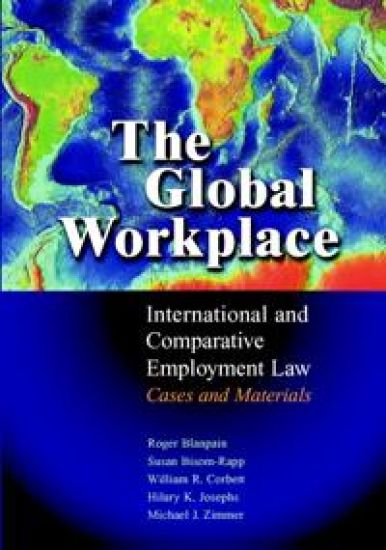
The Global Workplace

The Global Workplace

Roger Blanpain; Susan Bisom-Rapp; William R. Corbett; Hilary K. Josephs; Michael J. Zimmer

Cambridge University Press
2014
pokkari
With the forces of globalization as a backdrop, this casebook develops labor and employment law in the context of the national laws of nine countries important to the global economy - the US, Canada, Mexico, UK, Germany, France, China, Japan and India. These national jurisdictions are highlighted by considering international labor standards promulgated by the International Labor Organization as well as the rulings and standards that emerge from two very different regional trade arrangements - the labor side accord to NAFTA and the European Union. Across all these different sources of law, this book considers the law of individual employment, collective labor law dealing with unionization as well as the laws against discrimination, the laws protecting privacy and the systems used to resolve labor and employment disputes. This is the first set of law school course materials in English covering international and comparative employment and labor law.
The Global Workplace

The Global Workplace

Roger Blanpain; Susan Bisom-Rapp; William R. Corbett; Hilary K. Josephs; Michael J. Zimmer

Cambridge University Press
2007
sidottu
With the forces of globalization as a backdrop, this casebook develops labor and employment law in the context of the national laws of nine countries important to the global economy - the US, Canada, Mexico, UK, Germany, France, China, Japan and India. These national jurisdictions are highlighted by considering international labor standards promulgated by the International Labor Organization as well as the rulings and standards that emerge from two very different regional trade arrangements - the labor side accord to NAFTA and the European Union. Across all these different sources of law, this book considers the law of individual employment, collective labor law dealing with unionization as well as the laws against discrimination, the laws protecting privacy and the systems used to resolve labor and employment disputes. This is the first set of law school course materials in English covering international and comparative employment and labor law.
The Globalization of Labour Standards

The Globalization of Labour Standards

Roger Blanpain

Kluwer Law International
2004
nidottu
Do core labour standards exist in todays global economy? If so, what are they? And most importantly, how effective are they? In this book two outstanding labour law scholars answer these questions in a definitive manner. In deep and convincing detail they demonstrate that, although insufficiently legally binding instruments governing employment and labour exist beyond the national level, a significant body of international soft law has developed that does in fact carry great weight. Blanpain and Colucci identify four major sources of this soft law - the UN Global Compact of 1999, the ILO Tripartite Declaration of Principles, the North American Agreement on Labor Cooperation, and the OECD Guidelines for Multinational Enterprises - and show how the principles these instruments enunciate act as a countervailing power to the international economic decision-making of multinational corporations. The book analyses the entire spectrum of fact and implication encompassed in these influential sources, with close attention to such subject areas as the following: context and drafting history of the instruments; the respective roles of enterprises, governments, employers organisations and trade unions; detailed analysis of specific core standards; the impact of economic zones and industrial sectors; committees, arbitral panels and other procedural details; issues involving reporting, complaints and disputes; and, enterprise responsibilities. The authors cite relevant cases and highlight emerging trends in this important area of labour law. Annexes reprint all four of the instruments.
Collective Bargaining, Discrimination, Social Security and European Integration
Although nominally protected by a plethora of laws, and championed in several well-intentioned declarations and charters, today's worker often feels adrift on an uncharted sea subject to unpredictable currents that have nothing to do with the quality of his or her work. Can we get at the root of this serious problem? We can at least determine if our existing legal systems, especially in the area of collective bargaining, discrimination, social security and European integration are able and ready to tackle the world-of-work challenges that confront us. And if they are not, we can begin to formulate a basis for new and effective labour and social security laws. This was in fact the essential impetus for the European Conference of the International Society of Labour Law and Social Security held in Stockholm in September 2002, a ground-breaking conference of which this book is the written record. In general, the papers stress the European situation, as it is in the EU, both as it exists today and as it is likely to be in the foreseeable future, a community of twenty-five nations, that the major work challenges are felt, and that the legal debate on relevant issues is strongest and most open. However, the twenty-four distinguished authors include representatives from countries as farflung as Belarus and Congo, Korea and Turkey, and with these contributions the analysis extends to a study of fundamental rights as they actually exist under a wide variety of labour and social security law regimes in today's world. Collective Bargaining, Discrimination, Social Security and European Integration should not be overlooked by any policymaker or academic in the fields of labour and industrialrelations law or social security law. It is one of the most detailed and current investigations we have of a situation that threatens to become a crisis in contemporary law and society.
Changing Industrial Relations & Modernisation of Labour Law

Changing Industrial Relations & Modernisation of Labour Law

Roger Blanpain; Manfred Weiss

Kluwer Law International
2003
sidottu
Thirty-three authorities in the field of labour and industrial relations law gather here to enhance and complement the work of the late Marco Biagi, a man who, at the time of his violent and untimely death, had shown himself to be the most insightful and committed international scholar in this complex and controversial - and, as it proved, even dangerous field. The topics covered range over many of Professor Biagi's special interests, including the following: the formulation of a new basis for labour law that could resolve new issues; employee protection in corporate restructuring; the trend toward individual "enterprise bargaining"; a new European employment policy and what it might entail; the growing phenomenon of "flexibilisation" and the effects of an ageing workforce. It also examines: the crucial nexus of free trade, labour and human rights; the promise of EU enlargement; and protection of part-time workers.
Corporate Restructuring and the Role of Labour Law

Corporate Restructuring and the Role of Labour Law

Roger Blanpain

Kluwer Law International
2003
nidottu
This bulletin presents a comparative analysis of the degree of worker protection available in various countries in the event of corporate restructuring. The countries are France, Germany, the United Kingdom, the United States, Australia, China, Japan, Korea, and Taiwan. Each of the papers, presented by a noted industrial relations scholar from the country in question, proceeds from a summary of the national legal framework governing corporate restructuring, through the succession of employment contracts, to an analysis of such major components of the problem as justification of economic dismissals and changes in terms and conditions of employment. Specific topics covered in each analysis include the following: special legislation covering transfer of undertakings; treatment of insolvent corporations; economic dismissals before and after corporate restructuring; transfer of workers in lieu of dismissal; and the role of labour unions and works councils. The authors pay particular attention to the effectiveness of employee protection legislation such as the EC Transfer of Undertaking Directive (and its implementation by Member States) and Japan's Labour Contract Succession Law - and, in the case of the United States, the virtual absence of such legislation. These papers were originally presented at the Sixth Tokyo Seminar (March 2002) of the Japan Institute of Labour.
The Legal Status of Sportsmen and Sportswomen under International, European and Belgian National and Regional Law
Although the European Court of Justice ruled in Bosman (1995) that professional sportsmen and sportswomen are free at the end of their contracts, they are still at the mercy of the clubs that employ them. Such pretexts as the "special nature" of sport publicly urged by such European eminences as Tony Blair and Gerhard Schroder have institutionalized the human trafficking of players, depriving them of basic rights guaranteed under all the laws enjoyed by Europeans. They may be well-paid as long as they are in the limelight, but they have no surety. They can be, and are, bought and sold repeatedly, each time returning profits to those who trade in their athletic prowess. In this searing indictment, Professor Blanpain underscores the demonstrable illegality of the current transfer system imposed by the International Federation of Football Associations (FIFA). He describes in detail the complex ramifications of FIFA's rules in the lives of players, clearly revealing how the fundamental rights of players to free movement and freedom of labour are systematically denied. He calls for the courts, from the European Court of Justice on down, to recognize this illegality and act to enforce the Bosman judgement. Professor Blanpain examines all the crucial legal issues involved. These include the following: the classification of sportsmen and sportswomen as "workers"; the nature of the contract between player and club; the legal capacity of minors to enter into an employment contract; the trade in foreign (frequently African and South American) players with no legal rights in Europe; disciplinary rules; training compensation fees; placement and status of players' agents; dispute resolution; and conflicts with competition law. An extensive array of documents, including the FIFA Transfer Regulations and material leading to the March 2001 agreement between FIFA and the European Commission, is included in a series of annexes.
Employee Rights in Bankruptcy

Employee Rights in Bankruptcy

Roger Blanpain; A.T.J.M. Jacobs

Kluwer Law International
2002
nidottu
In recent years, a number of company bankruptcies in Europe - particularly in the Netherlands - have exposed serious gaps in the securing, by law, of reparations due to employees. As matters stand, employees - who were dependent upon the bankruptcy not only for their income but also for their employment and social security - have little to expect in terms of payment of arrears of pay, protection against dismissal, continued employment in the event of a business transfer, or participation rights. This work opens this far-reaching and hugely important issue by comparing employee rights in bankruptcy among four major European trading partners - the Netherlands, the United Kingdom, Belgium and Germany. It is to be hoped that, armed with the substantive and procedural details that are fully laid out in these pages, company lawyers and bankruptcy lawyers throughout Europe will be enabled to bring the rights of employees in bankruptcy into a light at least as clear as that focused on other creditors. The contributors examine not only the individual fairness issue - the unequal position of the employee as weaker party in the labour market - but also the central policy issue: does an improvement of the position of employees in a bankruptcy give rise to less willingness on the part of lenders to keep the flow of money open, or greater control by lenders over the way in which borrowers run their businesses with, as a result, slower economic growth and hence a lower level of employment? The study was commissioned by the Stichting Ondersteuningsfonds Oud-Werknemers DAF (Benevolent Fund Foundation for Former DAF Employees) in Eindhoven and carried out by researchers of the Faculty of Law of the Katholieke Universiteit Brabant in Tilburg. Its provisional findings, presented at the conference on "Employee Rights in Bankruptcy" held in Tilburg on 8 December 1999, were considered and discussed from a variety of viewpoints by representatives of such relevant parties as trade unions and employers' organizations, receivers in bankruptcy, banks, public authorities, politicians and legal experts. The end result is this report, which should contribute to a better understanding of the difficult issue of employee rights in bankruptcy and to stimulate discussion of remedies that are indispensable to the maintenance of a responsible society.
European Labour Law and Social Security Law: Glossary

European Labour Law and Social Security Law: Glossary

Roger Blanpain; Michele Colucci

Kluwer Law International
2002
sidottu
When we speak of "legal language", we refer to a mode of communication that works hard to convey a degree of precision that clearly establishes the extent and limits of rights and obligations between parties. This endeavour must strive to overcome numerous obstacles - notably societal context and ideology - that are ineluctably present in language itself. And when legal bonds apply internationally, problems of translation add yet another and more complex dimension. It can be said that these problems of language and meaning particularly affect the application of labour law and social security law, as these legal regimes colour the day-to-day lives and livelihoods of virtually everybody. This volume assumes the monumental task of codifying the terminology of European labour law and social security law in English, French, German, Spanish and Italian. The initial classification follows the 15 European legislative acts that cover the field. For each of these acts, all the terms and notions are listed (in alphabetical English order) with their definitions as provided in the legislation itself and the interpretations given to them in the case law of the European Court of Justice - all in five languages. In this way, the full spectrum of potential misunderstanding and contradiction is exposed, and all relevant subtleties come into clear focus. This efficient aggregate of vital material gives both practitioner and academic the means to make as complete a judgement as possible concerning the application of European labour law and social security law in any context.
White Paper on the Labour Market in Italy, the Quality of European Industrial Relations, and Changing Industrial Relations
At the time of his brutal murder in March 2002, Marco Biagi was working with Italian legislators to find ways and means of bringing innovative proposals in his field of expertise, labour and industrial relations, to productive fruition. The White Paper, to a large extent the work of Biagi himself, was commissioned by the Italian Ministry of Labour and Social Policy and first presented to the government in October 2001. The other collaborative work included in this volume, "The "Europeanization" of Industrial Relations and Changing Industrial Relations" are among Professor Biagi's last writings. At the core of these deeply committed studies lies a direct and positive response to the violent clash between the modern European heritage of social security and the unstoppable onset of globalization. That such a response proved fatal is a potent reminder of perhaps the deepest rift in our society, a dangerously widening divide that demands the scrutiny and understanding of all lawyers, policymakers and social scientists. This text clearly demonstrates that, for Biagi and his co-authors, such terms as "employability", "flexibility", "quality" and "security" must become measured legal terms representing social realities for employees as well as employers, and cannot be mere empty words masking "business as usual". The importance of the White Paper cannot be overestimated, especially for Italy. Among the EU member states preparing to meet the standards of sustainable economic growth set out by the European Councils of Lisbon and Stockholm, Italy has the longest road to travel. For that very reason - and because of the seriousness of social unrest in Italy - its travails in this area can be seen as emblematic of an immense global social crisis that lurks in every country. The second study in this volume analyses criteria for the quality of industrial relations in the EU as compared with those prevailing in the US, Japan, Russia and the CEECs. Although each industrialized country has its own particular traditions and pressures to deal with in the world of work, this study finds evidence everywhere of intense change as well as persistent continuity. Furthermore, these commentators find that an overall European model of industrial relations cannot yet be discerned. Their recommendations, scrupulously built on existing realities, provide for a cohesive system including monitoring, incentives, interactions between different levels of policy making, new regulatory processes, and appropriate indicators, all of which will ensure an EU-wide improvement in quality of life both inside and outside work without weakening each member State's responsibility and freedom to define its own policies.

The Impact of the Internet and New Technologies on the Workplace

The Impact of the Internet and New Technologies on the Workplace

Roger Blanpain; Michele Colucci

Kluwer Law International
2002
nidottu
The regulatory architecture available for cyberspace law still seems incapable of conceiving, much less resolving, the new issues of privacy raised by the use of the Internet in the workplace. This analysis of the thorny problems in this area of the law attempts to clarify the nature of the conflicts and disputes that arise and that are likely to continue to arise. It is a detailed comparative treatment of the subject, analysing the relevant law both at the international level and in six major national jurisdictions. The author first examines the international jurisdictional problems related to the Internet and new technologies. Starting from an economic analysis of the law of cyberspace, the author demonstrates that the problem of conflicting legal rules may be solved by adopting new laws, regulations and guidelines governing the Internet. The second part explores the ways in which the Internet and the introduction of new information technologies has dramatically affected the world of work and individual rights. The author analyses the origins, limits and boundaries of these rights, and makes a comparative analysis of the relevant constitutions and statutes in both common law and civil law. Finally, an examination of the legal systems of the USA, the UK, France, Germany, Italy, and Japan, and of their responses to the new Internet-related issues, enable the author to propose effective ways to achieve a better balance between the employee's right to privacy and the responsibilities of the employer in the new electronic environment.
The Impact of Globalisation on Employment Relations

The Impact of Globalisation on Employment Relations

Roger Blanpain; Russell D. Lansbury; Young-Bum Park

Kluwer Law International
2002
nidottu
Although no one disputes that employment relations worldwide have been greatly affected by globalisation, no clear consensus has emerged on the nature and significance of this impact. The seven contributions to this symposium pursue a comparative approach, suggesting that direct analysis of employment relations in distinct industries in two comparably-sized economies since the advent of globalisation leads to a more precise understanding of the interaction of globalisation and employment relations, and sets a pattern for other studies to follow. The economies studied in the symposium are Australia and Korea, and the industries are automobile (and auto parts) manufacturing and retail banking. In both countries, labour unions play a key role in the way in which employers and governments react to political and economic pressures.