
Kirjailija
Roger Caillois
Kirjat ja teokset yhdessä paikassa: 10 kirjaa, julkaisuja vuosilta 1983–2024, suosituimpiin kuuluu The The Sacred Conspiracy. Vertaile teosten hintoja ja tarkista saatavuus suomalaisista kirjakaupoista.
10 kirjaa
Kirjojen julkaisuvuodet: 1983–2024.
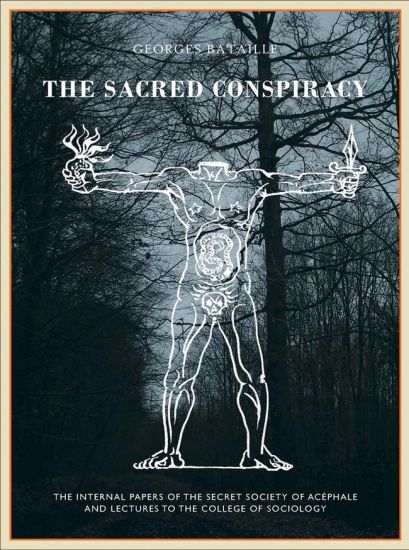
The The Sacred Conspiracy
Georges Bataille; Roger Caillois; Michel Leiris
Atlas Press
2018
sidottu
Halvin toimitettuna 36,20 €
Georges Bataille's secret society, long the stuff of legend, is now revealed in its texts, meditations, rules and prohibitions This book recounts what must be one of the most unusual intellectual journeys of modern times, in which the influential philosopher, cultural theorist and occasional pornographer Georges Bataille (1897-1962), having spent the early 1930s in far-left groups opposing the rise of fascism, abandoned that approach in order to transfer the struggle onto "the mythological plane." In 1937, Bataille founded two groups in order to explore the combinations of power and the "sacred" at work in society. The first group, the College of Sociology, gave lectures that were intended to reveal the hidden undercurrents within a society on the verge of catastrophe. The second group was Ac phale, a genuine secret society and anti-religion whose emblem was a headless figure that, in part, represented the death of God. Until the discovery a few years ago of the group's internal papers (which include theoretical texts, meditations, minutes of meetings, rules and prohibitions and even a membership list), almost nothing was known of its activities. This book is the first to collect a representative selection of the writings of Bataille, and of those close to him, in the years leading up to World War II. The texts published here comprise lectures given to the College of Sociology by Bataille, Roger Caillois and Michel Leiris, essays from the Ac phale journal and a large cache of the internal papers from the secret society. A desperate narrative unfolds, wherein Bataille risked all in a wholly unreasonable quest--with a few fellow travelers, he undertook what he later described as a "journey out of this world."
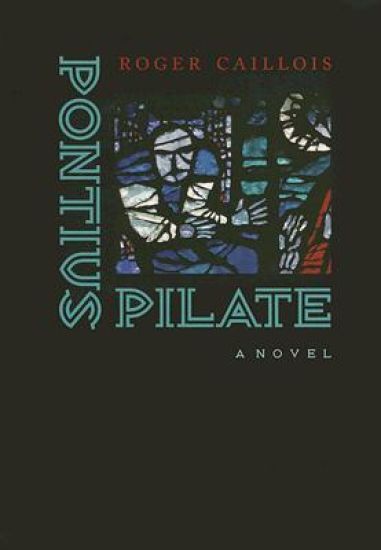
If you thought you knew all there is to know about Pontius Pilate and Jesus, this little book has some surprises for you. In this ""greatest story never told,"" Pontius Pilate finally gets a chance to tell his side of the story, filling in what the Bible left out. For someone who made one of the most momentous decisions of all time, we know almost nothing about him. Who was this man who sentenced Jesus to death? What went through his mind as he weighed the alternatives? Was he a villain or a victim of circumstance? If we can imagine Pilate as our contemporary, what would we have done in his place? Written by one of France's great men of letters of the twentieth century, ""Pontius Pilate"" is a highly provocative and psychologically gripping novel that reconstructs Pilate's state of mind in deciding to convict Jesus. Taking his place alongside the authors of other such ""sacred fantasies"" as Nikos Kazantzakis (""The Last Temptation of Christ"") and Dan Brown (""The Da Vinci Code""), the surrealist Roger Caillois conjures countless plausible dramas of the ""what ifs"" that might have played out inside Pilate's mind during the final twenty-four hours before he decided Jesus's fate. Transgressive, disconcerting, and original, ""Pontius Pilate"" provides a fascinating opportunity to contemplate the mind of a man who, with one decision, arguably changed the course of human history. It explores the interplay of politics and conscience, fundamentalism and cosmopolitanism, and fanaticism and pragmatism - themes even more compelling today than they were forty-some years ago when the book was originally published. With an introduction by the religion scholar Ivan Strenski, this new American edition of Charles Lam Markmann's original English translation (published in 1963 and long since out of print) makes available once again for the English-language reading public a remarkable work of intelligence, wit, and imagination. ""Pontius Pilate"" offers an engaging and climactic read for anyone interested in the interplay of religion and culture and in the mysteries of this pinnacle moment in the biblical narrative.
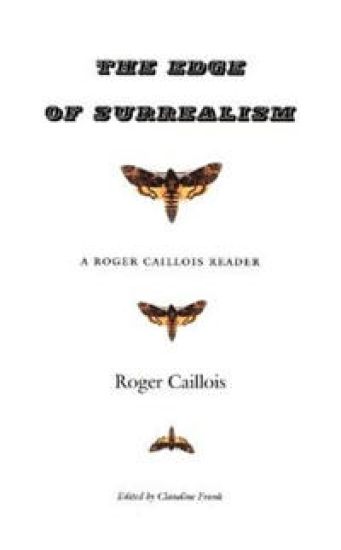
The Edge of Surrealism is an essential introduction to the writing of French social theorist Roger Caillois. Caillois was part of the Surrealist avant-garde and in the 1930s founded the College of Sociology with Georges Bataille and Michel Leiris. He spent his life exploring issues raised by this famous group and by Surrealism itself. Though his subjects were diverse, Caillois focused on concerns crucial to modern intellectual life, and his essays offer a unique perspective on many of twentieth-century France’s most significant intellectual movements and figures. Including a masterful introductory essay by Claudine Frank situating his work in the context of his life and intellectual milieu, this anthology is the first comprehensive introduction to Caillois’s work to appear in any language. These thirty-two essays with commentaries strike a balance between Caillois’s political and theoretical writings and between his better known works, such as the popular essays on the praying mantis, myth, and mimicry, and his lesser-known pieces. Presenting several new pieces and drawing on interviews and unpublished correspondence, this book reveals Caillois’s consistent effort to reconcile intellectual rigor and imaginative adventure. Perhaps most importantly, The Edge of Surrealism provides an overdue look at how Caillois’s intellectual project intersected with the work of Georges Bataille and others including Breton, Bachelard, Benjamin, Lacan, and Lévi-Strauss.
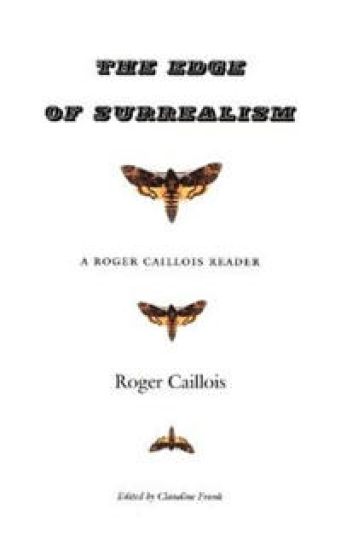
The Edge of Surrealism is an essential introduction to the writing of French social theorist Roger Caillois. Caillois was part of the Surrealist avant-garde and in the 1930s founded the College of Sociology with Georges Bataille and Michel Leiris. He spent his life exploring issues raised by this famous group and by Surrealism itself. Though his subjects were diverse, Caillois focused on concerns crucial to modern intellectual life, and his essays offer a unique perspective on many of twentieth-century France’s most significant intellectual movements and figures. Including a masterful introductory essay by Claudine Frank situating his work in the context of his life and intellectual milieu, this anthology is the first comprehensive introduction to Caillois’s work to appear in any language. These thirty-two essays with commentaries strike a balance between Caillois’s political and theoretical writings and between his better known works, such as the popular essays on the praying mantis, myth, and mimicry, and his lesser-known pieces. Presenting several new pieces and drawing on interviews and unpublished correspondence, this book reveals Caillois’s consistent effort to reconcile intellectual rigor and imaginative adventure. Perhaps most importantly, The Edge of Surrealism provides an overdue look at how Caillois’s intellectual project intersected with the work of Georges Bataille and others including Breton, Bachelard, Benjamin, Lacan, and Lévi-Strauss.
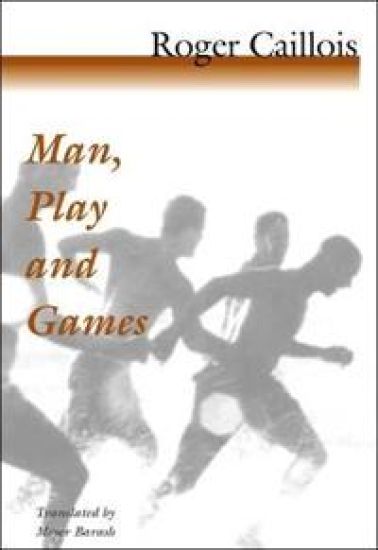
Man, Play and Games
Roger Caillois
University of Illinois Press
2001
nidottu
Halvin toimitettuna 32,50 €
According to Roger Caillois, play is "an occasion of pure waste: waste of time, energy, ingenuity, skill, and often of money." In spite of this--or because of it--play constitutes an essential element of human social and spiritual development. In this classic study, Caillois defines play as a free and voluntary activity that occurs in a pure space, isolated and protected from the rest of life. Play is uncertain, since the outcome may not be foreseen, and it is governed by rules that provide a level playing field for all participants. In its most basic form, play consists of finding a response to the opponent's action--or to the play situation--that is free within the limits set by the rules. Caillois qualifies types of games-- according to whether competition, chance, simulation, or vertigo (being physically out of control) is dominant--and ways of playing, ranging from the unrestricted improvisation characteristic of children's play to the disciplined pursuit of solutions to gratuitously difficult puzzles. Caillois also examines the means by which games become part of daily life and ultimately contribute to various cultures their most characteristic customs and institutions. Presented here in Meyer Barash's superb English translation, Man, Play and Games is a companion volume to Caillois's Man and the Sacred.
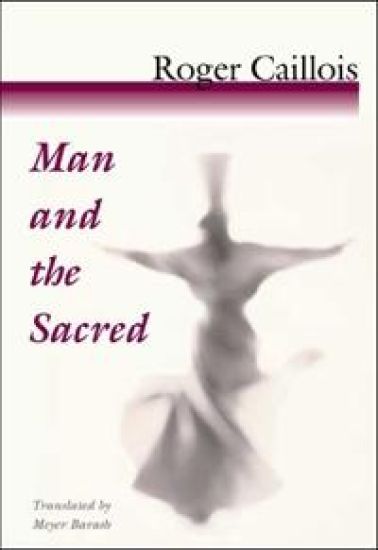
Throughout the world, people believe that much of what they do is accidental, ordinary, and inconsequential, while other acts can bring on divine retribution or earn eternal grace. In Man and the Sacred, Caillois demonstrates how humanity's ambiguous attitude toward the sacred influences behavior and culture. Drawing on a diverse array of ethnographic contexts, including the sexual rituals of the Ba-Thong of South Africa and evidence drawn from aboriginal Australian, Eskimo, and traditional Chinese social systems, Caillois analyzes the role of the forbidden in the social cohesion of the group. He examines the character of the sacred in the light of specific instances of taboos and transgressions, exploring wide differences in attitudes toward diet and sex and extreme behaviors associated with the sacred, such as rapture and paroxysm. He also discusses the festival--an exuberant explosion following a period of strict repression--and compares its functions with those of modern war. A classic study of one of the most fundamental aspects of human social and spiritual life, Man and the Sacred--presented here in Meyer Barash's superb English translation--is a companion volume to Caillois's Man, Play and Games.