Kirjojen hintavertailu – 12 903 733 kirjaa ja 27 kauppaa

Kirjailija

Roger G. Kennedy

Kirjat ja teokset yhdessä paikassa: 7 kirjaa, julkaisuja vuosilta 2002–2013, suosituimpiin kuuluu Public Benefits of Archaeology. Vertaile teosten hintoja ja tarkista saatavuus suomalaisista kirjakaupoista.

7 kirjaa

Kirjojen julkaisuvuodet: 2002–2013.

Cotton and Conquest

Cotton and Conquest

Roger G. Kennedy; William DeBuys

University of Oklahoma Press
2013
sidottu
This sweeping work of history explains the westward spread of cotton agriculture and slave labor across the South and into Texas during the decades before the Civil War. In arguing that the U. S. acquisition of Texas originated with planters' need for new lands to devote to cotton cultivation, celebrated author Roger G. Kennedy takes a long view. Locating the genesis of Southern expansionism in the Jeffersonian era, Cotton and Conquest stretches from 1790 through the end of the Civil War, weaving international commerce, American party politics, technological innovation, Indian-white relations, frontier surveying practices, and various social, economic, and political events into the tapestry of Texas history. The innumerable dots the author deftly connects take the story far beyond Texas. Kennedy begins with a detailed chronicle of the commerce linking British and French textile mills and merchants with Southern cotton plantations. When the cotton states seceded from the Union, they overestimated British and French dependence on Southern cotton. As a result, the Southern plantocracy believed that the British would continue supporting the use of slaves in order to sustain the supply of cotton - a miscalculation with dire consequences for the Confederacy. As cartographers and surveyors located boundaries specified in new international treaties and alliances, they violated earlier agreements with Indian tribes. The Indians were to be displaced yet again, now from Texas cotton lands. The plantation system was thus a prime mover behind Indian removal, Kennedy shows, and it yielded power and riches for planters, bankers, merchants, millers, land speculators, Indian-fighting generals and politicians, and slave traders. In Texas, at the plantation system's farthest geographic reach, cotton scored its last triumphs. No one who seeks to understand the complex history of Texas can overlook this book.
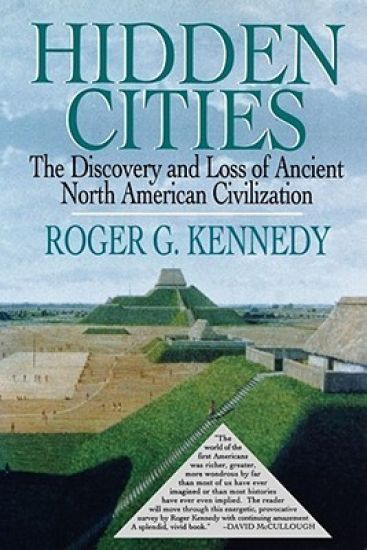
Hidden Cities

Hidden Cities

Roger G. Kennedy

The Free Press
2011
pokkari
Robert Kennedy, director of the National Park Service, analyzes the discovery of North America and the loss of ancient civilization, from the cities, roads, and commerce of the past as the nation evolved into present day. In Hidden Cities, Robert Kennedy sets out on the bold quest of recovering the rich heritage of the North American peoples through a reimagination of the true relations of their modern-day successors and neighbors. From the Spanish and French explorers that discovered the land that would one day make up the United States to present day in the country, very few Euro-Americans have paid attention to the evidence and meaning of the nation’s heritage. As Kennedy shows the magnificence of the mound-building cultures through the sometimes prejudiced eyes of the founding generation, he reveals the astounding history of the North American continent in a way that sheds important light on the credit Native American predecessors deserve but many refuse to give.
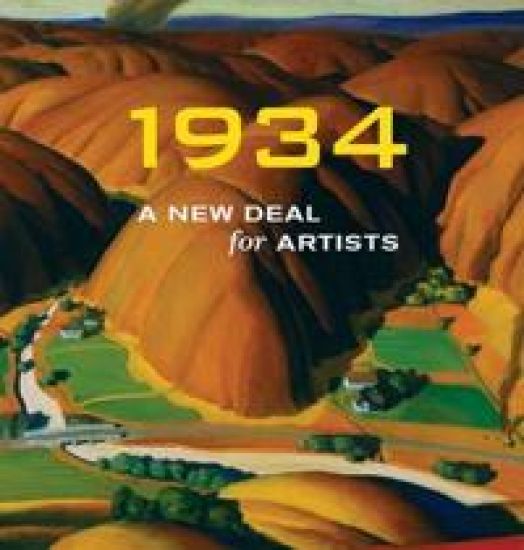
1934: a New Deal for Artists

1934: a New Deal for Artists

Ann K Prentice Wagner; Roger G. Kennedy; Elizabeth Broun

D Giles Ltd
2009
sidottu
"1934: A New Deal for Artists" celebrates the 75th anniversary of the US Public Works of Art Program, drawing on the Smithsonian American Art Museum's unparalleled collection. In 1934, against the backdrop of the Great Depression, the US government created its first program to support the arts. The Public Works of Art Program lasted for six months, from December 1933 to June 1934, and artists from across the US were encouraged to depict the American scene and boost morale through art. The Program paid artists to paint regional, recognisable subjects - portraits, cityscapes and landscapes, images of both city and rural life - that reminded the public of the essential American values of hard work, community and optimism. The 55 paintings in the book are a lasting visual record of America at a specific moment in time; a response to an economic situation all too familiar today.
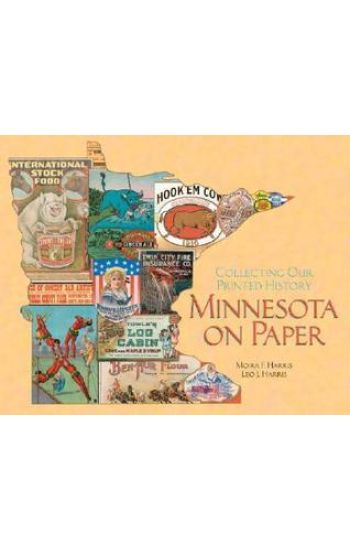
Minnesota on Paper

Minnesota on Paper

Moira F. Harris; Leo J. Harris; Barry Casselman; Roger G. Kennedy

University of Minnesota Press
2006
nidottu
As the influence of popular culture increases, the collection of paper ephemera has emerged as a hobby. From bus tickets and postcards to shopping bags and matchbooks, these collectible memorabilia are usually discarded after their intended use. However, if properly stored and preserved, these items can record and illuminate our history and culture. Using a whimsical and engaging approach, Minnesota on Paper showcases some of the saved treasures that bring Minnesota history to life. With a nostalgic glimpse into the past, Moira and Leo Harris convey the aesthetic, historical, and cultural significance of particular ephemera, including beer labels, circus posters, postcards, and stamps, to name a few. By examining the creation and design of the paper ephemera, Minnesota on Paper also reveals a great deal about the development of Minnesota business, the evolution of printing technology and graphic design, and the history of advertising. In a tribute to these bygone days, the authors investigate ephemera from a variety of different perspectives. Who designed and printed each item and why? How and why did the item change and then cease to be used? Why is the item of interest, and what is its meaning? Who collects this item and why? A collection of treasures from the past, Minnesota on Paper features more than 240 color reproductions. Cultural historians, ephemera scholars, and Minnesotans intrigued by their history will appreciate these visual footnotes of Minnesota's culture. Moira F. Harris and Leo J. Harris are the publishers of Pogo Press, a small press located in St. Paul. Between them they hold six degrees from the University of Minnesota. Moira F. Harris has written numerous articles on art and popular culture for local and national magazines and is the author of several books including The Paws of Refreshment: The Story of Hamm's Beer Advertising, and Fire & Ice: The History of the Saint Paul Winter Carnival.
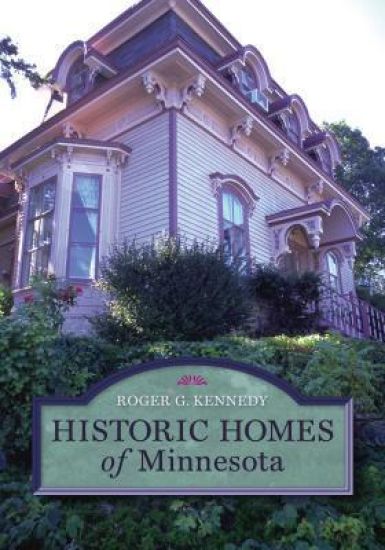
Historic Homes of Minnesota

Historic Homes of Minnesota

Roger G. Kennedy

Minnesota Historical Society Press,U.S.
2006
nidottu
Historic Homes of Minnesota is the engaging story of the evolution of architectural styles in Minnesota from 1830 to 1914 -- from the influence of the early French traders along the Mississippi and St Croix to the emergence of the school of Frank Lloyd Wright. Through photographs and colourfully informative text, internationally known historian Roger Kennedy helps readers understand the unique styles of Minnesota's first homes, including the Mower House in Arcola, the first large house on the St. Croix; Alexander Ramsey's 'Mansion House' in St Paul, influenced by Pennsylvania Dutch virtues; the whimsical Charles C. Clement house in Fergus Falls, clearly Norse in spirit; and the Purcell House in Minneapolis, a fine example of the Prairie School design. On a broad plane these architectural eras reflected social customs, politics, commerce, religion, and literature. On a personal level they often revealed the national origin and character of the families that made the house a home. In short, this is in large measure a history of the people. Kennedy has considered their heritage and traditions as carefully as he has examined the architecture they created, and he offers a fresh, holistic approach to the study of our state's great houses.
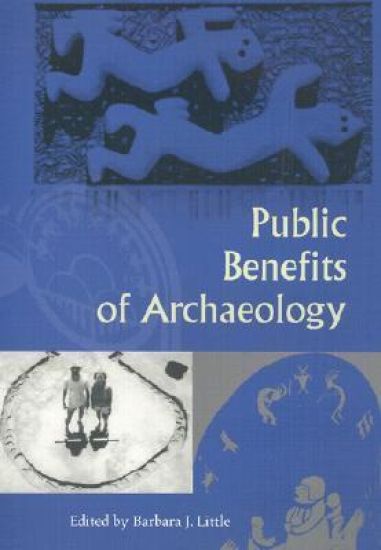
Public Benefits of Archaeology

Public Benefits of Archaeology

Roger G. Kennedy

University Press of Florida
2002
sidottu
Little brings together an unprecedented mix of authors from all aspects of the profession, as well as several non-archaeologists, who address the broad range of contributions that archaeology makes beyond research. Their discussion confronts the issue of exactly who the public is and why it should care about archaeology at all. These authors prove, in exploring diverse cross-sections of the public, that archaeology plays a crucial role in providing an authentic past, opportunities for critical thinking, and multicultural education. The electic nature of the collection allows for a thorough exploration of major issues central to the conduct of archaeological scholarship: museum and site interpretation, site preservation, education, media relations, descendant communities, and politics and public policy.
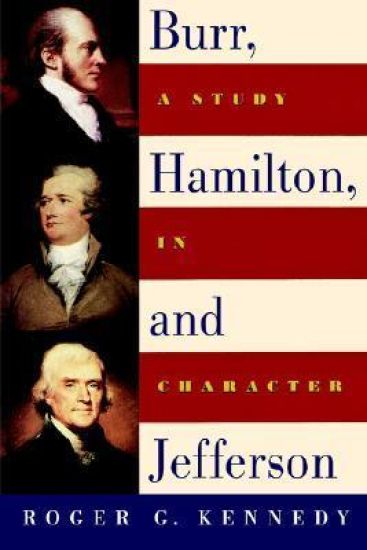
Burr, Hamilton, and Jefferson

Burr, Hamilton, and Jefferson

Roger G. Kennedy

Oxford University Press Inc
2002
nidottu
This book restores Aaron Burr to his place as a central figure in the founding of the American Republic. Abolitionist, proto-feminist, friend to such Indian leaders as Joseph Brant, Burr was personally acquainted with a wider range of Americans, and of the American continent, than any other Founder except George Washington. He contested for power with Hamilton and then with Jefferson on a continental scale. The book does not sentimentalize any of its three protagonists, neither does it derogate their extraordinary qualities. They were all great men, all flawed, and all three failed to achieve their full aspirations. But their struggles make for an epic tale. Written from the perspective of a historian and administrator who, over nearly fifty years in public life, has served six presidents, this book penetrates into the personal qualities of its three central figures. In telling the tale of their shifting power relationships and their antipathies, it reassesses their policies and the consequences of their successes and failures. Fresh information about the careers of Hamilton and Burr is derived from newly-discovered sources, and a supporting cast of secondary figures emerges to give depth and irony to the principal narrative. This is a book for people who know how political life is lived, and who refuse to be confined within preconceptions and prejudices until they have weighed all the evidence, to reach their own conclusions both as to events and character. This is a controversial book, but not a confrontational one, for it is written with sympathy for men of high aspirations, who were disappointed in much, but who succeeded, in all three cases, to a degree not hitherto fully understood.