

Kirjailija
Roger Hart
Kirjat ja teokset yhdessä paikassa: 7 kirjaa, julkaisuja vuosilta 1999–2026, suosituimpiin kuuluu Feather & Sel. Vertaile teosten hintoja ja tarkista saatavuus suomalaisista kirjakaupoista.
7 kirjaa
Kirjojen julkaisuvuodet: 1999–2026.

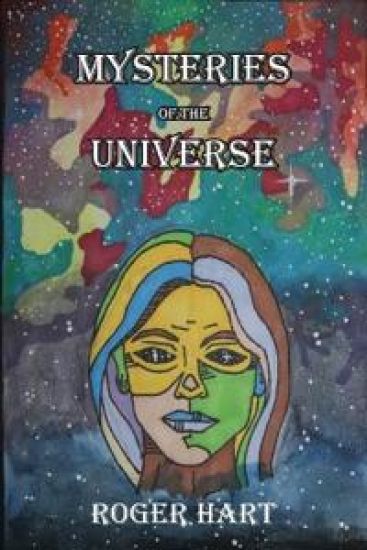
Roger Hart writes with savvy, grace, and abiding tenderness about people in love and in trouble. He's an enchanter casting his spell with impeccable sentences and exquisite details. He knows that characters only truly exist when they interact and entangle with other characters. What ingenuity on these pages, what nerve, and what an exhilarating collection of stories Mysteries of the Universe is. And in this universe, future events can influence the present, characters pop in and out of existence, and premonitions upstage reason. I have a feeling that you'll read this collection in one sitting and that you'll start reading the stories slowly, as I did, so they will not end. This book is a revelation. And now I'm going to read it again.- John Dufresne, No Regrets, Coyote
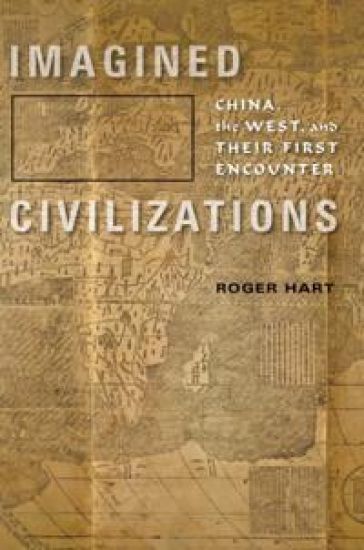
Accounts of the seventeenth-century Jesuit Mission to China have often celebrated it as the great encounter of two civilizations. The Jesuits portrayed themselves as wise men from the West who used mathematics and science in service of their mission. Chinese literati-official Xu Guangqi (1562-1633), who collaborated with the Italian Jesuit Matteo Ricci (1552-1610) to translate Euclid's Elements into Chinese, reportedly recognized the superiority of Western mathematics and science and converted to Christianity. Most narratives relegate Xu and the Chinese to subsidiary roles as the Jesuits' translators, followers, and converts. Imagined Civilizations tells the story from the Chinese point of view. Using Chinese primary sources, Roger Hart focuses in particular on Xu, who was in a position of considerable power over Ricci. The result is a perspective startlingly different from that found in previous studies. Hart analyzes Chinese mathematical treatises of the period, revealing that Xu and his collaborators could not have believed their declaration of the superiority of Western mathematics. Imagined Civilizations explains how Xu's West served as a crucial resource. While the Jesuits claimed Xu as a convert, he presented the Jesuits as men from afar who had traveled from the West to China to serve the emperor.
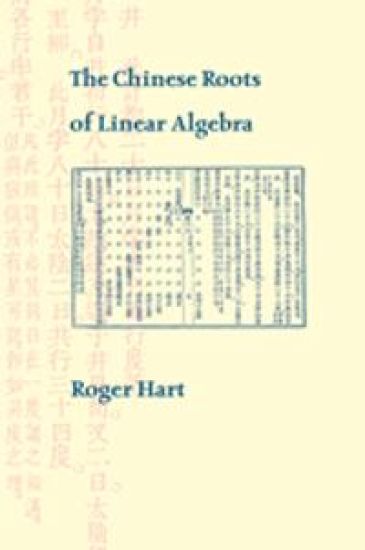
A monumental accomplishment in the history of non-Western mathematics, The Chinese Roots of Linear Algebra explains the fundamentally visual way Chinese mathematicians understood and solved mathematical problems. It argues convincingly that what the West "discovered" in the sixteenth and seventeenth centuries had already been known to the Chinese for 1,000 years. Accomplished historian and Chinese-language scholar Roger Hart examines Nine Chapters of Mathematical Arts-the classic ancient Chinese mathematics text-and the arcane art of fangcheng, one of the most significant branches of mathematics in Imperial China. Practiced between the first and seventeenth centuries by anonymous and most likely illiterate adepts, fangcheng involves manipulating counting rods on a counting board. It is essentially equivalent to the solution of systems of N equations in N unknowns in modern algebra, and its practice, Hart reveals, was visual and algorithmic. Fangcheng practitioners viewed problems in two dimensions as an array of numbers across counting boards. By "cross multiplying" these, they derived solutions of systems of linear equations that are not found in ancient Greek or early European mathematics. Doing so within a column equates to Gaussian elimination, while the same operation among individual entries produces determinantal-style solutions. Mathematicians and historians of mathematics and science will find in The Chinese Roots of Linear Algebra new ways to conceptualize the intellectual development of linear algebra.
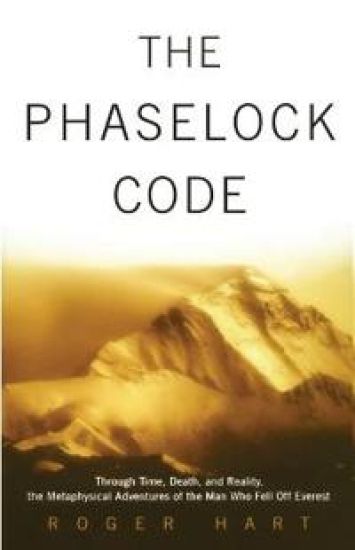
ONE MAN'S REMARKABLE SEARCH FOR THE ULTIMATE TRUTHS OF OUR WORLD For Professor Roger Hart, life truly began after he almost lost his -- in a horrific fall off the slopes of Mount Everest that he miraculously survived. This near-death experience sparked a desire in him to devote his studies to the very nature of human consciousness, in order to unlock the code of reality that binds our world. On an adventure of discovery that would take him around the world, Hart would experience life-altering transcendental events in Tibet, Morocco, and Tierra del Fuego -- opening the door to a true understanding of the nature of man. In this groundbreaking volume, he explores the participation of consciousness in the creation of reality, challenging the traditional scientific view of time, space, and objectivity -- and describing in detail his own metaphysical journey, which has involved synchronicity, precognition, and telekinesis. It is an exploration of the very things that make us human -- and a quest that touches upon the meaning of life itself.

Cities for Children
Sheridan Bartlett; Roger Hart; David Satterthwaite; Ximena de la Barra; Alfredo Missair
Earthscan Ltd
1999
nidottu
Urban authorities and organizations are responsible for providing the basic services that affect the lives of urban children. Cities for Children is intended to help them understand and respond to the rights and requirements of children and adolescents. It looks at the responsibilities that authorities face, and discusses practical measures for meeting their obligations in the context of limited resources and multiple demands. While the book emphasizes the challenges faced by local government, it also contains information that would be useful to any groups working to make urban areas better places for children. Cities for Children begins by introducing the concept, history and content of children's rights and the obligations they create for local authorities. The volume then goes on to look at a variety of contentious issues such as housing, community participation, working children, community health, education and juvenile justice. The final section of the book discusses the challenge of establishing systems of governance that can promote the economic security, social justice and environmental care essential for the realization of children's rights. It follows through the practical implications for the structure, policies and practices of local authorities. Written by the top experts in the field of children's issues, and including a resource section which lists publications and organizations that can provide further information and support, this volume is a must for all involved in planning for, and the protection of, children within the urban environment.