Kirjojen hintavertailu – 12 859 828 kirjaa ja 27 kauppaa
Kirjailija
Roger Hood
Kirjat ja teokset yhdessä paikassa: 6 kirjaa, julkaisuja vuosilta 2005–2015, suosituimpiin kuuluu The Death Penalty in China. Vertaile teosten hintoja ja tarkista saatavuus suomalaisista kirjakaupoista.
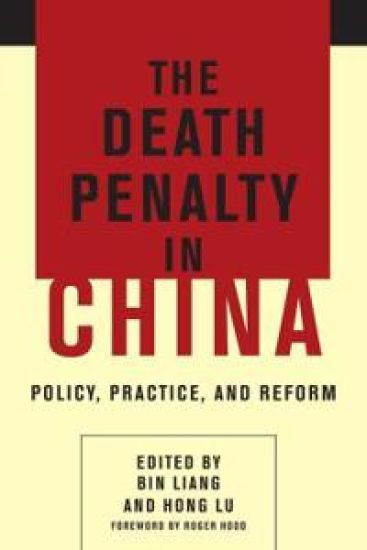
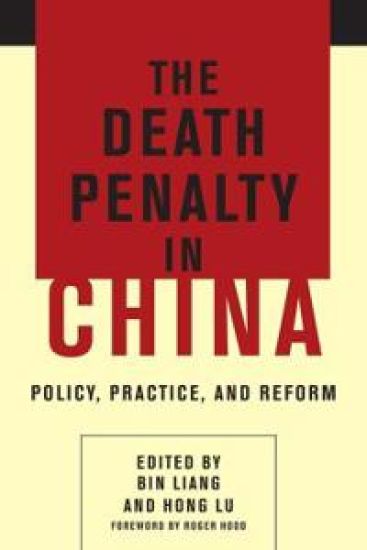
Featuring experts from Europe, Australia, Japan, China, and the United States, this collection of essays follows changes in the theory and policy of China's death penalty from the Mao era (1949-1979) through the Deng era (1980-1997) up to the present day. Using empirical data, such as capital offender and offense profiles, temporal and regional variations in capital punishment, and the impact of social media on public opinion and reform, contributors relay both the character of China's death penalty practices and the incremental changes that indicate reform. They then compare the Chinese experience to other countries throughout Asia and the world, showing how change can be implemented even within a non-democratic and rigid political system, but also the dangers of promoting policies that society may not be ready to embrace.
Featuring experts from Europe, Australia, Japan, China, and the United States, this collection of essays follows changes in the theory and policy of China's death penalty from the Mao era (1949-1979) through the Deng era (1980-1997) up to the present day. Using empirical data, such as capital offender and offense profiles, temporal and regional variations in capital punishment, and the impact of social media on public opinion and reform, contributors relay both the character of China's death penalty practices and the incremental changes that indicate reform. They then compare the Chinese experience to other countries throughout Asia and the world, showing how change can be implemented even within a non-democratic and rigid political system, but also the dangers of promoting policies that society may not be ready to embrace.
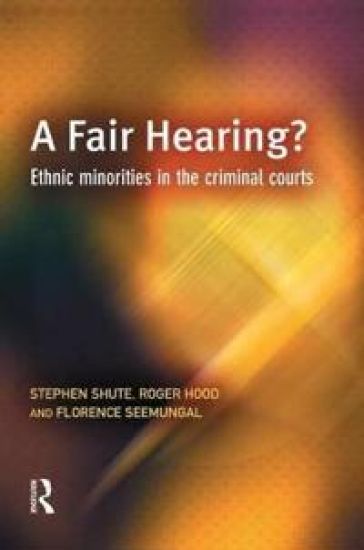
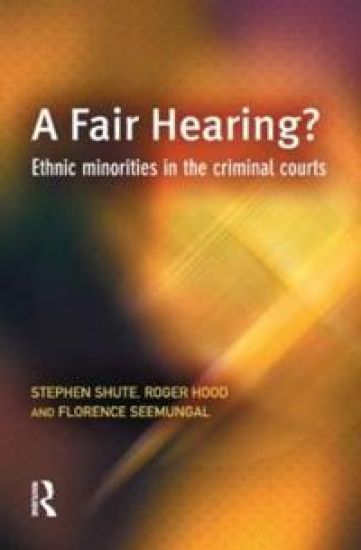
This book reports on research which investigates the perceptions of ethnic minorities concerning their treatment in the criminal courts. It examines the extent to which ethnic minority defendants and witnesses in both the Crown Court and the magistrates' courts perceived their treatment to have been unfair, whether they believed any unfairness to have been the result of ethnic bias, and whether this had affected their confidence in the criminal courts. The study, carried out by the Oxford Centre for Criminological Research in association with the University of Birmingham for the Lord Chancellor's Department, involved observations of cases and interviews with more than a thousand people (defendants, witnesses, barristers, solicitors, judges, magistrates and others), and focused on courts in Manchester, Birmingham and London. A Fair Hearing? Ethnic minorities in the criminal courts begins by showing how widely held the belief has been that ethnic minorities are discriminated against by the courts and by other agencies in the criminal justice system. It discusses the factors that contributed to this belief, including the findings of the Macpherson Report and the notion of 'institutional racism'. The main part of the book then looks at the institutional setting in which the research took place, the experience of defendants and witnesses, their views about how they were treated by the criminal courts, and the views of others involved in the court process. Final chapters in the book address the issue of sensitivity to ethnicity on the part of judges, magistrates and lawyers. It shows that attitudes and practices are perceived to have changed for the better and examines what more needs to be done to increase the confidence that members of ethnic minorities have in the fairness of the criminal courts.
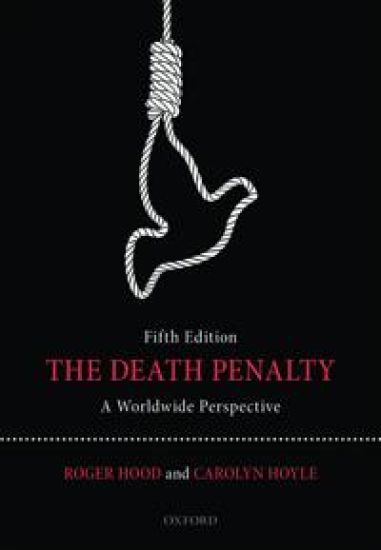
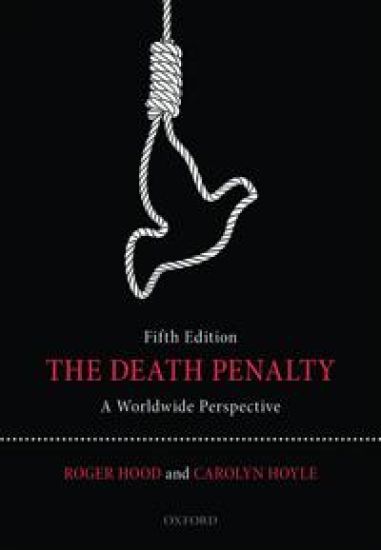
The fifth edition of this highly praised study charts and explains the progress that continues to be made towards the goal of worldwide abolition of the death penalty. The majority of nations have now abolished the death penalty and the number of executions has dropped in almost all countries where abolition has not yet taken place. Emphasising the impact of international human rights principles and evidence of abuse, the authors examine how this has fuelled challenges to the death penalty and they analyse and appraise the likely obstacles, political and cultural, to further abolition. They discuss the cruel realities of the death penalty and the failure of international standards always to ensure fair trials and to avoid arbitrariness, discrimination and conviction of the innocent: all violations of the right to life. They provide further evidence of the lack of a general deterrent effect; shed new light on the influence and limits of public opinion; and argue that substituting for the death penalty life imprisonment without parole raises many similar human rights concerns. This edition provides a strong intellectual and evidential basis for regarding capital punishment as undeniably cruel, inhuman and degrading. Widely relied upon and fully updated to reflect the current state of affairs worldwide, this is an invaluable resource for all those who study the death penalty and work towards its removal as an international goal.
The fifth edition of this highly praised study charts and explains the progress that continues to be made towards the goal of worldwide abolition of the death penalty. The majority of nations have now abolished the death penalty and the number of executions has dropped in almost all countries where abolition has not yet taken place. Emphasising the impact of international human rights principles and evidence of abuse, the authors examine how this has fuelled challenges to the death penalty and they analyse and appraise the likely obstacles, political and cultural, to further abolition. They discuss the cruel realities of the death penalty and the failure of international standards always to ensure fair trials and to avoid arbitrariness, discrimination and conviction of the innocent: all violations of the right to life. They provide further evidence of the lack of a general deterrent effect; shed new light on the influence and limits of public opinion; and argue that substituting for the death penalty life imprisonment without parole raises many similar human rights concerns. This edition provides a strong intellectual and evidential basis for regarding capital punishment as undeniably cruel, inhuman and degrading. Widely relied upon and fully updated to reflect the current state of affairs worldwide, this is an invaluable resource for all those who study the death penalty and work towards its removal as an international goal.
This book reports on research which investigates the perceptions of ethnic minorities concerning their treatment in the criminal courts. It examines the extent to which ethnic minority defendants and witnesses in both the Crown Court and the magistrates' courts perceived their treatment to have been unfair, whether they believed any unfairness to have been the result of ethnic bias, and whether this had affected their confidence in the criminal courts. The study, carried out by the Oxford Centre for Criminological Research in association with the University of Birmingham for the Lord Chancellor's Department, involved observations of cases and interviews with more than a thousand people (defendants, witnesses, barristers, solicitors, judges, magistrates and others), and focused on courts in Manchester, Birmingham and London. A Fair Hearing? Ethnic minorities in the criminal courts begins by showing how widely held the belief has been that ethnic minorities are discriminated against by the courts and by other agencies in the criminal justice system. It discusses the factors that contributed to this belief, including the findings of the Macpherson Report and the notion of 'institutional racism'. The main part of the book then looks at the institutional setting in which the research took place, the experience of defendants and witnesses, their views about how they were treated by the criminal courts, and the views of others involved in the court process. Final chapters in the book address the issue of sensitivity to ethnicity on the part of judges, magistrates and lawyers. It shows that attitudes and practices are perceived to have changed for the better and examines what more needs to be done to increase the confidence that members of ethnic minorities have in the fairness of the criminal courts.