Kirjojen hintavertailu – 12 903 724 kirjaa ja 27 kauppaa

Kirjailija

Roger Kimball

Kirjat ja teokset yhdessä paikassa: 14 kirjaa, julkaisuja vuosilta 2001–2017, suosituimpiin kuuluu Under omprövning : en antologi om konst, kanon och kvalitet. Vertaile teosten hintoja ja tarkista saatavuus suomalaisista kirjakaupoista.

14 kirjaa

Kirjojen julkaisuvuodet: 2001–2017.

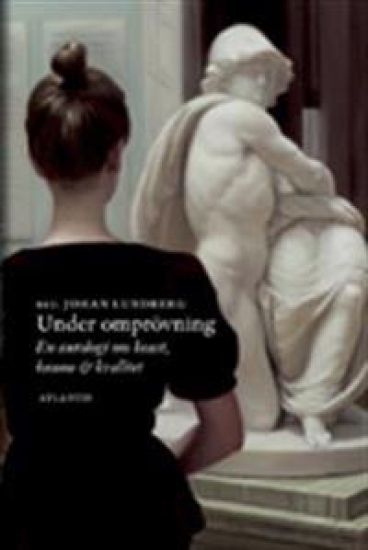
Under omprövning : en antologi om konst, kanon och kvalitet

Under omprövning : en antologi om konst, kanon och kvalitet

Thomas Steinfeld; Peter Luthersson; Theodore Dalrymple; Axel Odelberg; Karin Stensdotter; Roger Kimball; Johan Lundberg; Roger Scruton; James Macmillan; Camilla Lundberg; Pär Sandin; Gunnar Larsson; Hans Henrik Brummer; Therese Bohman; Henry Larsson; Ann-Sofi Ljung-Svensson; Martin Lagerholm; David Andersson; Einar Askestad; Rob Riemen; John Armstrong; Per Bauhn; Torbjörn Elensky; Alain de Botton; Peter Elmlund; Lars Anders Johansson; David Mason; Anna Brodow Inzaina; Christopher Rådlund; Denis Dutton; Brian Boyd; Marcus Nordlund

Bokförlaget Atlantis
2011
sidottu
Under omprövning rymmer ett stort antal bidrag som förenas av att de utifrån ett kritiskt perspektiv diskuterar vår tids mest karakteristiska estetiska hållningar och konstnärliga tendenser. Antologin försöker se framåt, förbi de modernistiska och postmodernistiska strategier som kännetecknat 1900-talets utveckling inom konstarter som litteratur, musik, bildkonst och arkitektur. Detta innebär också en omvärdering av kulturhistorien, där en rad förbisedda författarskap och konstnärskap lyfts fram. Och där kulturhistorien utvärderas med avseende på vad som kan te sig fruktbart och ofruktbart för framtiden.
The Treason of the Intellectuals

The Treason of the Intellectuals

Julien Benda; Roger Kimball

Routledge
2017
sidottu
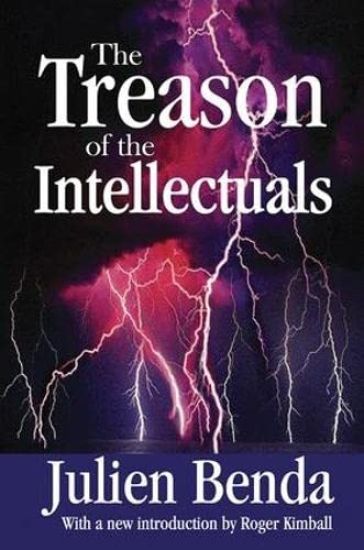
Julien Benda's classic study of 1920s Europe resonates today. The "treason of the intellectuals" is a phrase that evokes much but is inherently ambiguous. The book bearing this title is well known but little understood. This edition is introduced by Roger Kimball. From the time of the pre-Socratics, intellectuals were a breed apart. They were non-materialistic knowledge-seekers who believed in a universal humanism and represented a cornerstone of civilized society. According to Benda, this all began to change in the early twentieth century. In Europe in the 1920s, intellectuals began abandoning their attachment to traditional philosophical and scholarly ideals, and instead glorified particularisms and moral relativism. The "treason" of which Benda writes is the betrayal by the intellectuals of their unique vocation. He criticizes European intellectuals for allowing political commitment to insinuate itself into their understanding of the intellectual vocation, ushering the world into "the age of the intellectual organization of political hatreds." From the savage flowering of ethnic and religious hatreds in the Middle East and throughout Europe today to the mendacious demand for political correctness and multiculturalism on college campuses everywhere in the West, the treason of the intellectuals continues to play out its unedifying drama.
Ideas Have Consequences

Ideas Have Consequences

Richard M. Weaver; Roger Kimball; Ted J. Smith

University of Chicago Press
2013
nidottu
Originally published in 1948, at the height of post-World War II optimism and confidence in collective security, Ideas Have Consequences uses "words hard as cannonballs" to present an unsparing diagnosis of the ills of the modern age. Widely read and debated at the time of its first publication, the book is now seen as one of the foundational texts of the modern conservative movement. In its pages, Richard M. Weaver argues that the decline of Western civilization resulted from the rising acceptance of relativism over absolute reality. In spite of increased knowledge, this retreat from the realist intellectual tradition has weakened the Western capacity to reason, with catastrophic consequences for social order and individual rights. But Weaver also offers a realistic remedy. These difficulties are the product not of necessity but of intelligent choice. And, today, as decades ago, the remedy lies in the renewed acceptance of absolute reality and the recognition that ideas-like actions-have consequences. This expanded edition of the classic work contains a foreword by New Criterion editor Roger Kimball that offers insight into the rich intellectual and historical contexts of Weaver and his work and an afterword by Ted J. Smith III that relates the remarkable story of the book's writing and publication.
The Fortunes of Permanence – Culture and Anarchy in an Age of Amnesia
“Cultural instructions.” Everyone who has handled a package of seedlings has encountered that enigmatic advisory. This much water and that much sun, certain tips about fertilizer, soil, and drainage. Planting one sort of flower nearby keeps the bugs away but proximity to another sort makes bad things happen. Young shoots might need stakes, and watch out for beetles, weeds, and unseasonable frosts. It’s a complicated business. But at least since Cicero introduced the term cultura animi (“cultivation of the mind or spirit”), such “cultural instructions” have applied as much to the realm of civilization as to horticulture. In this wide-ranging investigation into the vicissitudes of culture in the twenty-first century, the distinguished critic Roger Kimball traces the deep filiations between cultivation as a spiritual enterprise and the prerequisites of political freedom. Drawing on figures as various as James Burnham, Richard Weaver, G. K. Chesterton, Rudyard Kipling, John Buchan, Friedrich von Hayek, and Leszek Kolakowski, Kimball traces the interconnections between what he calls the fortunes of permanence and such ambassadors of anarchy as relativism, multiculturalism, and the socialist-utopian imperative. With his signature blend of wit and erudition, Kimball deftly draws on the resources of art, literature, and political philosophy to illuminate some of the wrong turns and dead ends our culture has recently pursued, while also outlining some of the simple if overlooked alternatives to the various tyrannies masquerading as liberation we have again and again fallen prey to. This rich, rewarding, and intelligent volume bristles with insights into what the nineteenth-century novelist Anthony Trollope called “The Way We Live Now.” Partly an exercise in cultural pathology, The Fortunes of Permanence is also a forward-looking effort of cultural recuperation. It promises to be essential reading for anyone concerned about the direction of Western culture in an age of anti-Western animus and destructive multicultural fantasy.
Tenured Radicals

Tenured Radicals

Roger Kimball

Ivan R Dee, Inc
2008
pokkari

Halvin toimitettuna 27,30 €

Since Tenured Radicals first appeared in 1990, it has achieved a stature as the leading critique of the ways in which the humanities are now taught and studied at American universities. Trenchant and witty, it lays bare the sham of what now passes for serious academic pursuit in too many circles. In this new edition, completely reset, Roger Kimball has brought the text up to date and has added a new Introduction. Those who have never read Tenured Radicals are in for a treat; others may find a second reading worth their while. “Mr. Kimball names his enemies precisely…. This book will breed fistfights.”—Roger Rosenblatt, New York Times Book Review. “All persons serious about education should see it.”—Allan Bloom, author of The Closing of the American Mind. “Tenured Radicals is a withering critique.”—Jonathan Yardley, Washington Post Book World. “A bravado performance of critical journalism…a vivid, up-to-the-minute account, alternately amusing and dismaying, of the takeover of the academy by ideology.”—Robert Alter, Newsday. “A stinging account…. The commonsense approach of Tenured Radicals provokes constant reflections and occasional laughter at the squirming victims.”—Roger Shattuck, author of The Banquet Years.
The Treason of the Intellectuals

The Treason of the Intellectuals

Julien Benda; Roger Kimball

AldineTransaction
2006
nidottu
Julien Benda's classic study of 1920s Europe resonates today. The "treason of the intellectuals" is a phrase that evokes much but is inherently ambiguous. The book bearing this title is well known but little understood. This edition is introduced by Roger Kimball. From the time of the pre-Socratics, intellectuals were a breed apart. They were non-materialistic knowledge-seekers who believed in a universal humanism and represented a cornerstone of civilized society. According to Benda, this all began to change in the early twentieth century. In Europe in the 1920s, intellectuals began abandoning their attachment to traditional philosophical and scholarly ideals, and instead glorified particularisms and moral relativism. The "treason" of which Benda writes is the betrayal by the intellectuals of their unique vocation. He criticizes European intellectuals for allowing political commitment to insinuate itself into their understanding of the intellectual vocation, ushering the world into "the age of the intellectual organization of political hatreds." From the savage flowering of ethnic and religious hatreds in the Middle East and throughout Europe today to the mendacious demand for political correctness and multiculturalism on college campuses everywhere in the West, the treason of the intellectuals continues to play out its unedifying drama.
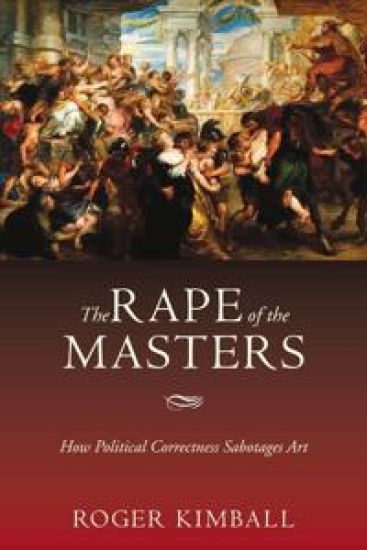
The Rape of the Masters

The Rape of the Masters

Roger Kimball

Encounter Books,USA
2005
pokkari
Colleges and universities used to teach art history to encourage connoisseurship and acquaint students with the riches of our artistic heritage. But now, as Roger Kimball reveals in this witty and provocative book, the student is less likely to learn about the aesthetics of masterworks than to be told, for instance, that Peter Paul Rubens' great painting Drunken Silenus is an allegory about anal rape. Or that Courbet's famous hunting pictures are psychodramas about "castration anxiety." Or that Gauguin's Manao tupapau is an example of the way repression is "written on the bodies of women." Or that Jan van Eyck's masterful Arnolfini Portrait is about "middle-class deceptions ...and the treatment of women." Or that Mark Rothko's abstract White Band (Number 27) "parallels the pictorial structure of a pieta." Or that Winslow Homer's The Gulf Stream is "a visual encoding of racism." In "The Rape of the Masters: How Political Correctness Sabotages Art," Kimball, a noted art critic himself, shows how academic art history is increasingly held hostage to radical cultural politics--feminism, cultural studies, postcolonial studies, the whole armory of academic antihumanism. To make his point, he describes how eight famous works of art (reprinted here as illustrations) have been made over to fit a radical ideological fantasy. Kimball then performs a series of intellectual rescue operations, explaining how these great works should be understood through a series of illuminating readings in which art, not politics, guides the discussion. "The Rape of the Masters" exposes the charlatanry that fuels much academic art history and leaks into the art world generally, affecting galleries, museums and catalogues. It also provides an engaging antidote to the tendentious, politically motivated assaults on our treasured sources of culture and civilization.
Art's Prospect

Art's Prospect

Roger Kimball

Ivan R Dee, Inc
2004
pokkari
Most of the really invigorating action in the art world today is a quiet affair, Mr. Kimball observes. It usually involves not the latest thing but permaneZnt things—they can be new or old, but their relevance is measured not by the buzz they create but by the silences they inspire. With reviews and essays composed over the last twenty years and revised for this book, Art's Prospect illuminates some of the chief spiritual itineraries of modern art. There is much to be learned and enjoyed in these stimulating, provocative, and elegant essays. —Paul Johnson
Art's Prospect

Art's Prospect

Roger Kimball

Ivan R Dee, Inc
2003
sidottu
Observing our contemporary culture, the distinguished critic Roger Kimball sees that the avant-garde assault on tradition has long since degenerated into a sclerotic orthodoxy. He finds that the "cutting edge," as defined by the established tastemakers, turns out time and again to be a stale remainder of past impotence. And he locates a pretense that the traditional is the enemy rather than a springboard to originality. In Art's Prospect, Mr. Kimball observes that most of the really invigorating action in the art world today is a quiet affair. It takes place not at the Tate Modern in London or at the Museum of Modern Art in New York, not in the Chelsea or TriBeCa galleries but off to one side, out of the limelight. It usually involves not the latest thing but permanent things—they can be new or old, but their relevance is measured not by the buzz they create but by silences they inspire. With reviews and essays composed over the last twenty years and revised for this book, Art's Prospect illuminates some of the chief spiritual itineraries of modern art. It provides, in Mr. Kimball's words, "a collage whose elements, when seen from one perspective, add up to a diagnosis of a malady, and, when seen from another perspective, offer hints of where effective remedies can be found."
Lives of the Mind

Lives of the Mind

Roger Kimball

Ivan R Dee, Inc
2003
pokkari
“In the faculty of writing nonsense,” the English critic Walter Bagehot once observed, “stupidity is no match for genius.” In Lives of the Mind, Roger Kimball, one of the best of our cultural critics, offers a lively and penetrating study of genius—and pseudo-genius—at work and investigates the use and abuse of intelligence. When does a love of ideas become a dangerous infatuation? What antidotes are there for the silliness of unanchored intellect? Drawing on figures as various as Plutarch and Hegel, Kierkegaard and P. G. Wodehouse, Elias Canetti and Anthony Trollope, Bagehot and Wittgenstein and Sybille Bedford, Mr. Kimball provides a sharply observed tour of Western intellectual and artistic aspiration. He shows what happens when intellect trumps common sense, and how an affirmation of shared values and ordinary reality can rescue us from the temptations of the higher stupidity. Part cautionary tale, part literary celebration, Lives of the Mind is a witty, deeply engaging guide for the perplexed. The New York Times Book Review has called Mr. Kimball “a scathing critic but one whose tirades are usually justified.... His intellectual rigor is refreshing.” And Gertrude Himmelfarb has written: “His essays reflect a steadiness of mind, a coherence, conviction, and passion that make him one of the most candid and perceptive critics of American culture.”
Lives of the Mind

Lives of the Mind

Roger Kimball

Ivan R Dee, Inc
2002
sidottu
Mr. Kimball, one of the best of our cultural critics, offers a lively and penetrating study of genius—and pseudo-genius—at work, and investigates the use and abuse of intelligence. Drawing on figures as various as Plutarch and Hegel, Kierkegaard and P. G. Wodehouse, Elias Canetti and Anthony Trollope, he provides a sharply observed tour of Western intellectual and artistic aspiration. A master of the genre, as collections of his pieces attest, none more impressively than this set. —Booklist Starred Review
Experiments Against Reality

Experiments Against Reality

Roger Kimball

Ivan R Dee, Inc
2002
pokkari
Experiments Against Reality displays the sophistication, breadth of knowledge, and clarity of argument that have made Mr. Kimball one of the most trenchant critics of our contemporary culture. He begins by considering the influential poet and theorist T. E. Hulme, and shows how the work of Eliot, Auden, Wallace Stevens, Robert Musil, Elias Canetti, and others can be seen as efforts to articulate a convincing alternative to the intellectual and spiritual desolations of the age. Turning to the philosophical tradition, Mr. Kimball suggests how figures from Mill and Nietzsche to Bertrand Russell, Wittgenstein, Sartre, Heidegger, Foucault, and Roger Scruton have addressed—or in many cases evaded—the defining moral imperatives of modernity. Finally he steps back to consider more generally the career of contemporary culture—the trivializing nature of the contemporary art world; the academic attack on historical truth and scientific rationality; the fate of the two cultures controversy. Experiments Against Reality offers continuing evidence of Mr. Kimball's stature as one of our most important cultural critics. Named an International Book of the Year by Mary Lefkowitz, Times Literary Supplement. A scathing critic but one whose tirades are usually justified.... His intellectual rigor is refreshing. Experiments Against Reality demonstrates what criticism can be if you take away all the theoretical scaffolding inherent in, say, a deconstructionist, structuralist or feminist reading. —Catherine Saint Louis, New York Times Book Review
The Long March

The Long March

Roger Kimball

Encounter Books,USA
2001
pokkari
In The Long March, Roger Kimball, the author of Tenured Radicals, shows how the "cultural revolution" of the 1960s and '70s took hold in America, lodging in our hearts and minds, and affecting our innermost assumptions about what counts as the good life. Kimball believes that the counterculture transformed high culture as well as our everyday life in terms of attitudes toward self and country, sex and drugs, and manners and morality. Believing that this dramatic change "cannot be understood apart from the seductive personalities who articulated its goals," he intersperses his argument with incisive portraits of the life and thought of Allen Ginsberg, Norman Mailer, Timothy Leary, Susan Sontag, Eldridge Cleaver and other "cultural revolutionaries" who made their mark. For all that has been written about the counterculture, until now there has not been a chronicle of how this revolutionary movement succeeded and how its ideas helped provoke today's "culture wars." The Long March fills this gap with a compelling and well-informed narrative that is sure to provoke discussion and debate.