Kirjojen hintavertailu – 12 903 725 kirjaa ja 27 kauppaa

Kirjailija

Roger S. Bagnall

Kirjat ja teokset yhdessä paikassa: 15 kirjaa, julkaisuja vuosilta 1990–2025, suosituimpiin kuuluu Essays and Texts in Honor of J David Thomas. Vertaile teosten hintoja ja tarkista saatavuus suomalaisista kirjakaupoista.

15 kirjaa

Kirjojen julkaisuvuodet: 1990–2025.

Essays and Texts in Honor of J David Thomas

Essays and Texts in Honor of J David Thomas

T. Gagos; Roger S. Bagnall

American Society of Papyrologists
2001
sidottu
A collection of nine essays focused on military and administrative institutions in the ancient world, and supplemented by a presentation of thirty texts in Greek and Latin written on papyrus and wooden fragments, some previously unpublished. The essays and textual editions are contributed by a host of distinguished international scholars in honour of Professor J David Thomas seventieth birthday. Professor Thomas (formerly at the University of Durham) has edited a large number of ancient texts over the last 50 years, and his work has been important to our understanding of subjects as diverse as the military strength on Hadrians Wall and the chain of command in the Egyptian civil service.
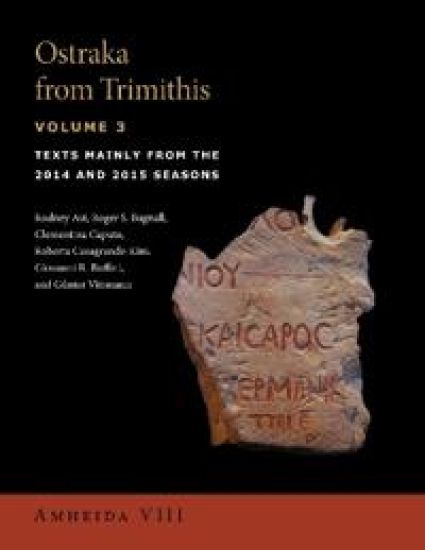
Ostraka from Trimithis, Volume 3

Ostraka from Trimithis, Volume 3

Rodney Ast; Roger S. Bagnall; Clementina Caputo; Roberta Casagrande-Kim; Giovanni R. Ruffini; Günter Vittmann

NEW YORK UNIVERSITY PRESS
2025
sidottu
Ostraka from Trimithis, Volume 3 presents 232 new or re-edited texts from the excavations conducted at the site of Amheida (Trimithis in the Roman period and Setwah in earlier times). In addition to the Greek texts, which are predominantly from the 2014 and 2015 field seasons, this volume also includes editions of Demotic and Hieratic ostraka found between 2004 and 2015, as well as miscellaneous inscriptions and graffiti and the first detailed presentation of all ostraka that contain drawings.
Reading Papyri, Writing Ancient History

Reading Papyri, Writing Ancient History

Roger S. Bagnall

CRC Press Inc
2019
nidottu
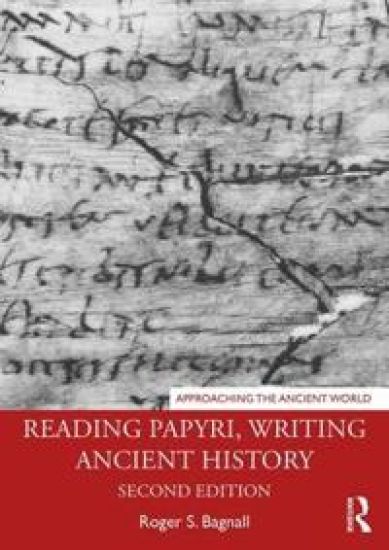
Since its first publication in 1995, Reading Papyri, Writing Ancient History has proved to be an invaluable resource for students of the ancient world looking to integrate papyrological evidence into their research. In the quarter century since its publication, changes in the research environment have affected papyrology like other fields. Although the core philological methods of the field remain in place, the field has increasingly embraced languages other than Greek and Latin, with considerable impact on the Hellenistic and Late Antique periods. Digital tools have increased the ease and speed of access, with profound effects on research choices, and digital imaging and materiality studies have brought questions about the physical form of written materials to the fore. In this fully revised new edition, Bagnall adds to the previous analysis a portrait of how the use of papyri for historical research has developed during recent decades. Updated with the latest research and insights from the author, the volume guides historians in how to use these scattered and often badly damaged documents, and to interpret them in order to create a full and diverse picture of ancient society and culture. This second edition of Reading Papyri, Writing Ancient History continues to offer students and researchers of the ancient world a critical resource in navigating how to use these ancient texts in their research.
Reading Papyri, Writing Ancient History

Reading Papyri, Writing Ancient History

Roger S. Bagnall

CRC Press Inc
2019
sidottu
Since its first publication in 1995, Reading Papyri, Writing Ancient History has proved to be an invaluable resource for students of the ancient world looking to integrate papyrological evidence into their research. In the quarter century since its publication, changes in the research environment have affected papyrology like other fields. Although the core philological methods of the field remain in place, the field has increasingly embraced languages other than Greek and Latin, with considerable impact on the Hellenistic and Late Antique periods. Digital tools have increased the ease and speed of access, with profound effects on research choices, and digital imaging and materiality studies have brought questions about the physical form of written materials to the fore. In this fully revised new edition, Bagnall adds to the previous analysis a portrait of how the use of papyri for historical research has developed during recent decades. Updated with the latest research and insights from the author, the volume guides historians in how to use these scattered and often badly damaged documents, and to interpret them in order to create a full and diverse picture of ancient society and culture. This second edition of Reading Papyri, Writing Ancient History continues to offer students and researchers of the ancient world a critical resource in navigating how to use these ancient texts in their research.
Amheida III

Amheida III

Roger S. Bagnall; Rodney Ast

New York University Press
2017
sidottu
This archaeological report provides a comprehensive study of the excavations carried out at Amheida House B2 in Egypt's Dakhleh Oasis between 2005 and 2007, followed by three study seasons between 2008 and 2010. The excavations at Amheida in Egypt's western desert, begun in 2001 under the aegis of Columbia University and sponsored by NYU since 2008, are investigating all aspects of social life and material culture at the administrative center of ancient Trimithis. The excavations so far have focused on three areas of this very large site: a centrally located upper-class fourth-century AD house with wall paintings, an adjoining school, and underlying remains of a Roman bath complex; a more modest house of the third century; and the temple hill, with remains of the Temple of Thoth built in the first century AD and of earlier structures. Architectural conservation has protected and partly restored two standing funerary monuments, a mud-brick pyramid and a tower tomb, both of the Roman period. This is the second volume of ostraka from the excavations Amheida (ancient Trimithis) in Egypt. It adds 491 items to the growing corpus of primary texts from the site. In addition to the catalog, the introductory sections make important contributions to understanding the role of textual practice in the life of a pre-modern small town. Issues addressed include tenancy, the administration of water, governance, the identification of individuals in the archaeological record, the management of estates, personal handwriting, and the uses of personal names. Additionally, the chapter "Ceramic Fabrics and Shapes" by Clementina Caputo breaks new ground in the treatment of these inscribed shards as both written text and physical object. This volume will be of interest to specialists in Roman-period Egypt as well as to scholars of literacy and writing in the ancient world and elsewhere.
An Oasis City

An Oasis City

Roger S. Bagnall; Nicola Aravecchia; Raffaella Cribiore; Paola Davoli; Olaf E. Kaper; Susanna McFadden

New York University Press
2016
sidottu
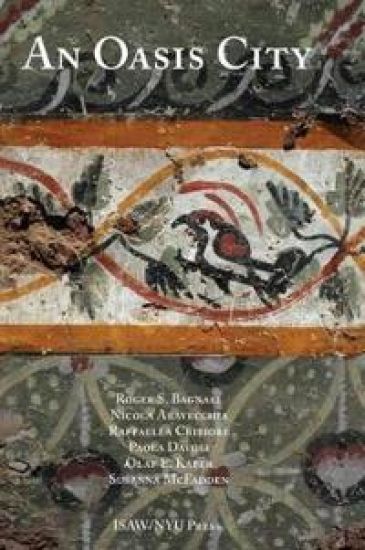
Scattered through the vast expanse of stone and sand that makes up Egypt's Western Desert are several oases. These islands of green in the midst of the Sahara owe their existence to springs and wells drawing on ancient aquifers. In antiquity, as today, they supported agricultural communities, going back to Neolithic times but expanding greatly in the millennium from the Saite pharaohs to the Roman emperors. New technologies of irrigation and transportation made the oases integral parts of an imperial economy. Amheida, ancient Trimithis, was one of those oasis communities. Located in the western part of the Dakhla Oasis, it was an important regional center, reaching a peak in the Roman period before being abandoned. Over the past decade, excavations at this well-preserved site have revealed its urban layout and brought to light houses, streets, a bath, a school, and a church. The only standing brick pyramid of the Roman period in Egypt has been restored. Wall-paintings, temple reliefs, pottery, and texts all contribute to give a lively sense of its political, religious, economic, and cultural life. This book presents these aspects of the city's existence and its close ties to the Nile valley, by way of long desert roads, in an accessible and richly illustrated fashion.
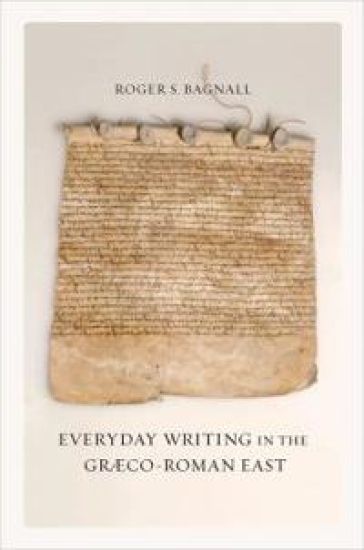
Everyday Writing in the Graeco-Roman East

Everyday Writing in the Graeco-Roman East

Roger S. Bagnall

University of California Press
2012
pokkari
Most of the everyday writing from the ancient world - that is, informal writing not intended for a long life or wide public distribution - has perished. Reinterpreting the silences and blanks of the historical record, leading papyrologist Roger S. Bagnall convincingly argues that ordinary people - from Britain to Egypt to Afghanistan - used writing in their daily lives far more extensively than has been recognized. Marshalling new and little-known evidence, including remarkable graffiti recently discovered in Smyrna, Bagnall presents a fascinating analysis of writing in different segments of society. His book offers a new picture of literacy in the ancient world in which Aramaic rivals Greek and Latin as a great international language, and in which many other local languages develop means of written expression alongside these metropolitan tongues.
Amheida I

Amheida I

Roger S. Bagnall; Giovanni R. Ruffini

New York University Press
2012
sidottu
This volume presents 455 inscribed pottery fragments, or ostraka, found during NYU's excavations at Amheida in the western desert of Egypt. The majority date to the Late Roman period (3rd to 4th century AD), a time of rapid social change in Egypt and the ancient Mediterranean generally. Amheida was a small administrative center, and the full publication of these brief texts illuminates the role of writing in the daily lives of its inhabitants. The subjects covered by the Amheida ostraka include the distribution of food, the administration of wells, the commercial lives of inhabitants, their education, and other aspects of life neglected in literary sources. The authors provide a full introduction to the technical aspects of terminology and chronology, while also situating this important evidence in its historical, social and regional context. Online edition available as part of the NYU Library's Ancient World Digital Library and in partnership with the Institute for the Study of the Ancient World (ISAW).
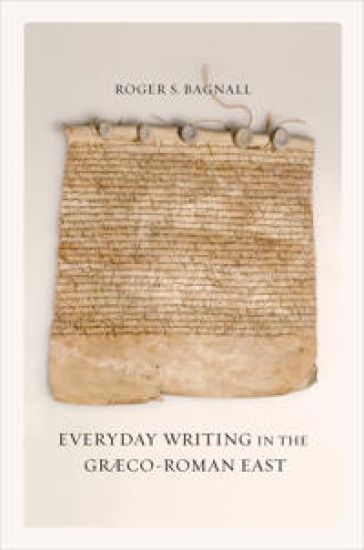
Everyday Writing in the Graeco-Roman East

Everyday Writing in the Graeco-Roman East

Roger S. Bagnall

University of California Press
2011
sidottu
Most of the everyday writing from the ancient world - that is, informal writing not intended for a long life or wide public distribution - has perished. Reinterpreting the silences and blanks of the historical record, leading papyrologist Roger S. Bagnall convincingly argues that ordinary people - from Britain to Egypt to Afghanistan - used writing in their daily lives far more extensively than has been recognized. Marshalling new and little-known evidence, including remarkable graffiti recently discovered in Smyrna, Bagnall presents a fascinating analysis of writing in different segments of society. His book offers a new picture of literacy in the ancient world in which Aramaic rivals Greek and Latin as a great international language, and in which many other local languages develop means of written expression alongside these metropolitan tongues.
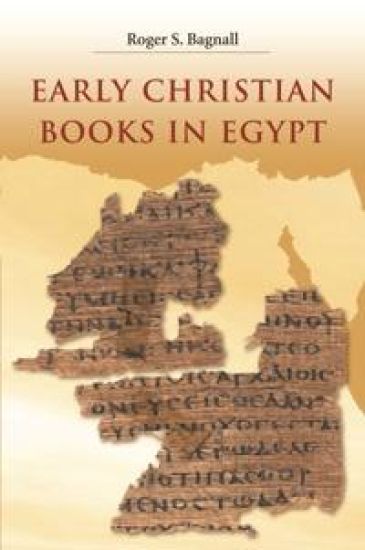
Early Christian Books in Egypt

Early Christian Books in Egypt

Roger S. Bagnall

PRINCETON UNIVERSITY PRESS
2009
sidottu
For the past hundred years, much has been written about the early editions of Christian texts discovered in the region that was once Roman Egypt. Scholars have cited these papyrus manuscripts--containing the Bible and other Christian works--as evidence of Christianity's presence in that historic area during the first three centuries AD. In Early Christian Books in Egypt, distinguished papyrologist Roger Bagnall shows that a great deal of this discussion and scholarship has been misdirected, biased, and at odds with the realities of the ancient world. Providing a detailed picture of the social, economic, and intellectual climate in which these manuscripts were written and circulated, he reveals that the number of Christian books from this period is likely fewer than previously believed. Bagnall explains why papyrus manuscripts have routinely been dated too early, how the role of Christians in the history of the codex has been misrepresented, and how the place of books in ancient society has been misunderstood. The author offers a realistic reappraisal of the number of Christians in Egypt during early Christianity, and provides a thorough picture of the economics of book production during the period in order to determine the number of Christian papyri likely to have existed. Supporting a more conservative approach to dating surviving papyri, Bagnall examines the dramatic consequences of these findings for the historical understanding of the Christian church in Egypt.
Hellenistic and Roman Egypt

Hellenistic and Roman Egypt

Roger S. Bagnall

Ashgate Publishing Limited
2006
sidottu
This second collection by Roger Bagnall brings together a further two dozen of his studies, this time covering Hellenistic, Roman, and Byzantine Egypt, published over the last thirty years. Many of the articles deal with issues of historical and papyrological method: the restoration of papyrus texts, the direction of archaeological work in Egypt, economic models for Roman Egypt, the usefulness of postcolonial theory, and approaches to the defective literary tradition for the Library of Alexandria. Others concentrate on particular bodies of evidence, ranging from inscriptions to ascetic literature, from registers to women's letters.
The Demography of Roman Egypt

The Demography of Roman Egypt

Roger S. Bagnall; Bruce W. Frier; Ansley J. Coale

Cambridge University Press
2006
pokkari

Halvin toimitettuna 38,90 €

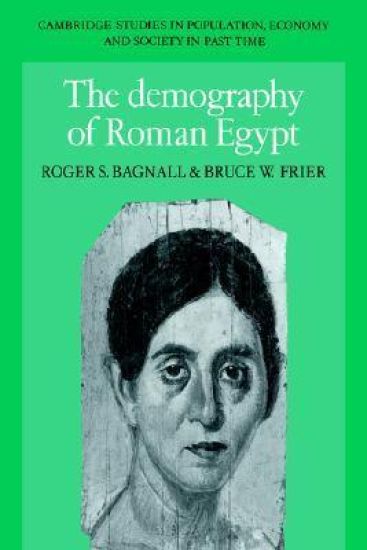
The traditional demographic regime of ancient Greece and Rome is almost entirely unknown; but our best chance for understanding its characteristics is provided by the three hundred census returns that survive on papyri from Roman Egypt. These returns, which date from the first three centuries AD, list the members of ordinary households living in the Nile valley: not only family members, but lodgers and slaves. The Demography of Roman Egypt has a complete and accurate catalogue of all demographically relevant information contained in the returns. On the basis of this catalogue, the authors use modern demographic methods and models to reconstruct the patterns of mortality, marriage, fertility and migration that are likely to have prevailed in Roman Egypt. They recreate a more or less typical Mediterranean population as it survived and prospered nearly two millennia ago.
Later Roman Egypt: Society, Religion, Economy and Administration
Egypt, with its ever-growing wealth of evidence from the papyri, has in recent decades been one of the liveliest areas of scholarship on the later Roman Empire. This volume collects two dozen articles on the social, economic, and administrative history of Egypt by Roger Bagnall, whose book 'Egypt in Late Antiquity' has helped to bring this region and this evidence into the mainstream of historical debate. In these studies some of the main themes of his work are visible, in particular attempts to explore the possibilities for quantifying not only questions like the burden of taxation or the distribution of land-ownership, but more tantalizing and controversial matters like the rate at which the population of Egypt was Christianized.
Egypt in Late Antiquity

Egypt in Late Antiquity

Roger S. Bagnall

Princeton University Press
1995
pokkari
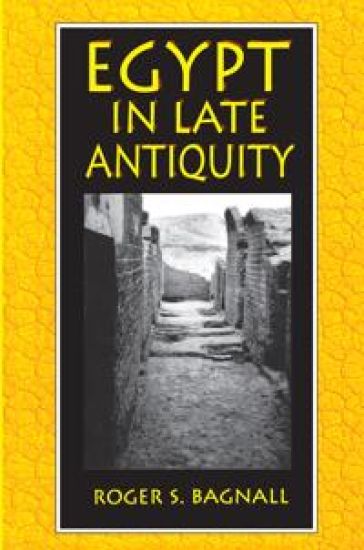
This book brings together a vast amount of information pertaining to the society, economy, and culture of a province important to understanding the entire eastern part of the later Roman Empire. Focusing on Egypt from the accession of Diocletian in 284 to the middle of the fifth century, Roger Bagnall draws his evidence mainly from documentary and archaeological sources, including the papyri that have been published over the last thirty years.
Columbia Papyri VIII

Columbia Papyri VIII

Roger S. Bagnall; Timothy T. Renner; K. A. Worp

Scholars Press
1990
sidottu
This volume of selected papyri from the Columbia collection looks at both literary and documentary texts. Papyri originally published before 1980 have been reedited, while others appear here for the first time. Unlike prior volumes publishing Columbia papyri, which focused on one significant document, this volume presents a veritable cornucopia of texts, hands, dates, and provenances.