Kirjojen hintavertailu – 12 903 725 kirjaa ja 27 kauppaa

Kirjailija

Roger S. Durham

Kirjat ja teokset yhdessä paikassa: 9 kirjaa, julkaisuja vuosilta 1978–2024, suosituimpiin kuuluu Fort McAllister. Vertaile teosten hintoja ja tarkista saatavuus suomalaisista kirjakaupoista.

Nimi esiintyy myös muodoissa: Roger S Durham

9 kirjaa

Kirjojen julkaisuvuodet: 1978–2024.

Guardian of Savannah

Guardian of Savannah

Roger S. Durham

UNIVERSITY OF SOUTH CAROLINA PRESS
2024
pokkari
The remarkable story of how an earthen fort defense shielded a Southern city from the ironclad monitors of the U. S. NavyBuilt out of sand and mud, Fort McAllister was designed to serve as the southern anchor of the coastal defenses of Savannah, Georgia. Hastily constructed near the beginning of the Civil War, the fort was situated on the Great Ogeechee River, twelve miles south of the Savannah River. During the war, Fort McAllister withstood devasting naval assaults and served well the aims of Confederate strategists. When the city fell to Union troops, it was General William T. Sherman's overland attack and not an assault from the sea that subdued Savannah. Roger S. Durham offers a comprehensive history of the Fort McAllister's construction and its use during the Civil War, as well as its post-war restoration. Durham intertwines historical narrative with first-person accounts and personal stories through the judicious use of primary sources. By letting the fort's Confederate defenders and Union attackers speak for themselves, Durham offers a compelling account of one of the most hotly contested sites in the naval struggle between Union and Confederate forces.
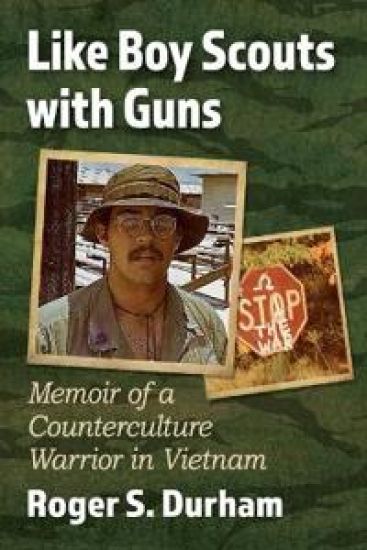
Like Boy Scouts with Guns

Like Boy Scouts with Guns

Roger S. Durham

McFarland Co Inc
2021
pokkari
Facing the possibility of being drafted and sent to Vietnam, Roger Durham secured a deferment when he enrolled in college. Devoting more time to anti-war protests than to studies, he became immersed in the late 1960s counterculture, flunked out and was drafted anyway. Deployed to Vietnam with the U. S. Army's 18th Engineer Brigade Headquarters, he was assigned to a helicopter base "behind the wire," far from the action. Or so he thought--the action came to him as the base drew mortar, rocket and sapper attacks. Durham's clear-eyed memoir relates an often untold experience of the Vietnam War--that of the counterculture soldier whose opposition to war did not end when he was inducted. Adjusting to life in-country, he finds a thriving drug culture and a brotherhood of like-minded warriors, who resist both the enemy and the culture of zealous militarism that prosecutes what they see as an immoral war, against American national interests. Durham undergoes changes in perspective, extending his tour of duty when the thought of going home fills him with anxiety and anticipation.
Carlisle Barracks

Carlisle Barracks

Roger S. Durham

Arcadia Publishing (SC)
2009
nidottu
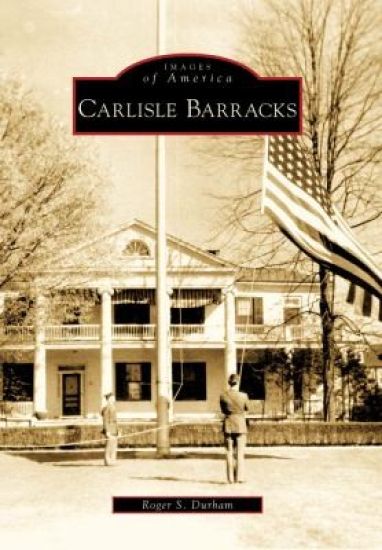
Carlisle Barracks was established by the British Army in 1757 to support operations against the French during the French and Indian War. During the Revolutionary War, the post supported Washington's army against the British. After the post was burned by Confederate forces during the Civil War, it was rebuilt and served as the U. S. Army's Cavalry School until 1871, when the post was closed. In 1879, the Carlisle Indian Industrial School opened at the post to educate Native American children. This school operated until 1918, when the U. S. Army resumed control of the post and opened a hospital to care for wounded World War I soldiers. The U. S. Army Field Medical School opened there in 1920 and remained until that function was relocated in 1946. In 1951, the U. S. Army War College moved to Carlisle Barracks, where it remains. Using vintage photographs, Carlisle Barracks chronicles how for more than 250 years this post has supported military operations and training and continues to do so today.
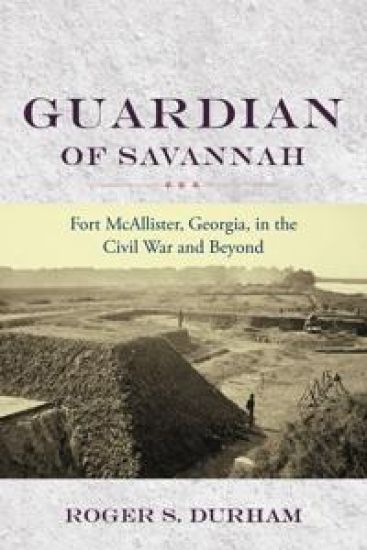
Guardian of Savannah

Guardian of Savannah

Roger S. Durham

University of South Carolina Press
2008
sidottu
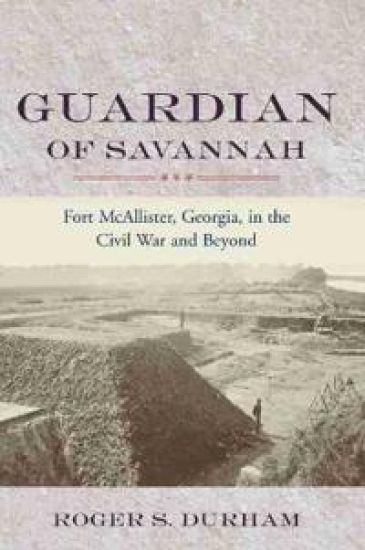
This book tells the dramatic story of how an earthen fort defended a southern city against ironclad monitors. The southern anchor in the coastal defenses of Savannah, Georgia, Fort McAllister was constructed of sand and mud in April 1863 on the Great Ogeechee River, twelve miles south of the Savannah River. Durham offers a comprehensive history of the fort's construction, strategic importance during the Civil War, and postwar neglect and restoration in this vivid account of how an earthen defense withstood not only devastating naval assaults but also the effects of time. In re-creating the story, Durham intertwines historical facts with human fates through frequent use of primary sources, letting the fort's defenders speak for themselves. Over the course of the war, McAllister's original four-battery design was augmented to include twenty-two guns, making the fort a more important target and a much more difficult challenge to Union assaults. The monitor U. S. S. Montauk was twice summoned to take Fort McAllister and twice failed. In a third Union attempt, three ironclads and a supporting fleet of wooden gunboats bombarded the fort for seven hours, though the defenders suffered no casualties and the fort withstood the blasts. In all, seven unsuccessful attacks were made against the fort. Fort McAllister's final threat did not come from the water but from the western reaches of the state. In December 1864 General William T. Sherman's famed March to Sea negated the viability of coastal defenses and Fort McAllister, like Savannah itself, fell at last. In the 1930s the site was owned by the industrialist Henry Ford, who was instrumental in the initial preservation efforts to restore the fort as a historical monument for future generations. Ownership of the fort later passed to the International Paper Company, which in turn deeded the land to the State of Georgia. The historical site was opened to the public in 1963, on the centennial of the bombardment by the Union ironclads.
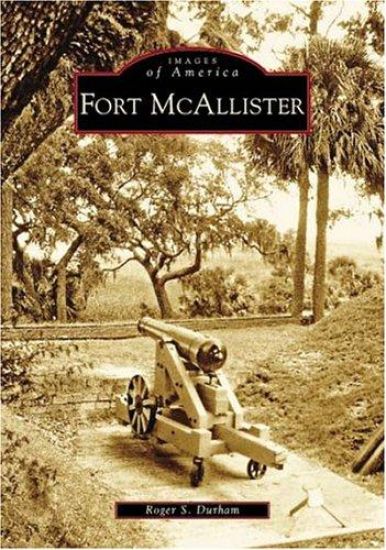
Fort McAllister

Fort McAllister

Roger S. Durham

Arcadia Publishing (SC)
2004
nidottu
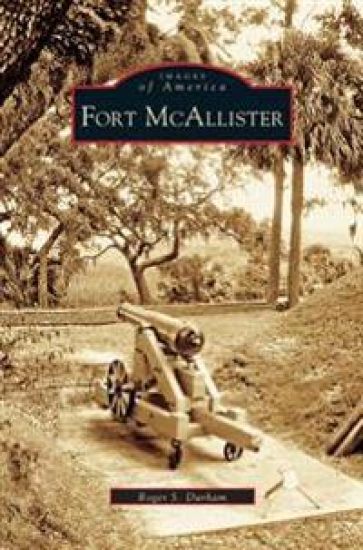
Many earthen fortifications defended the city of Savannah and its numerous water approaches after the Civil War broke out. One of these defenses, Fort McAllister, protected the entrance to the Ogeechee River and the strategic railroad and highway bridges upstream. From November 1862 to March 1863 the U. S. Navy bombarded the fort seven different times without success. The fort finally fell to General Sherman in December 1864; ironically, the final threat the fort faced was not from an enemy trying to get up the river, but from one trying to get down the river to the sea. In the 1920s auto magnate Henry Ford renovated the fort and focused new attention on its history. In 1960 the State of Georgia built on Ford's work and opened the fort as a State Historic Site to mark the centennial of the Civil War. Today visitors can quietly wander the massive, earthen walls and gun positions, gaze across the wide river and expansive marshes, and ponder the thundering, blazing reality that once played on this ground.
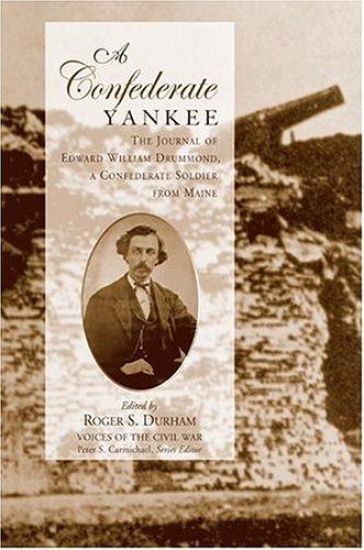
A Confederate Yankee

A Confederate Yankee

Roger S. Durham

University of Tennessee Press
2004
sidottu
Praise for The Blues in Gray, edited by Roger S. Durham“Lending additional value to the book is Roger S. Durham’s talent as an editor and historian.” —W. Todd Groce, Civil War Book Review“Roger S. Durham has provided us a book that stands out from many of the other edited collections of soldiers’ wartime letters and diaries. . . . Durham succeeds . . . in presenting a remarkably vivid picture of the wartime experiences of Dixon and his comrades.” —Christian B. Keller, Military History of the West“Skillful editing . . . ample and abundant explanatory notes, identifying people, places, and events.” —Choice“Brother against brother”: this clichÉ of the Civil War experience is brought to life in A Confederate Yankee. Edward William Drummond served in the Confederate army while his brother Clark served for the Union. Yet these brothers came not from Kentucky, Maryland, or Missouri, border states where such conflicts were relatively common. Instead, Ned Drummond came from an abolitionist family in Maine. In1859, at the age of twenty-one, Drummond moved to Savannah, Georgia, and married a local girl; he joined the local Confederate forces shortly after the war began. His journal follows his experiences as a commissary sergeant at Fort Pulaski, Georgia, prior to, during, and following the attack on that post in April 1862. After the fall of Fort Pulaski, he was imprisoned with other Southern troops—first at Governors Island in New York Harbor and later at Johnson’s Island, Ohio, where captivity intensified his loyalty to the Confederacy. Later released in a prisoner-of-war exchange, he returned to Savannah, served in the Confederate army to the end of the war, and eventually reconciled with his Northern family members. Roger S. Durham is director of the Army Heritage Museum at Carlisle Barracks, Pennsylvania. He is the editor of The Blues in Gray: The Civil War Journal of William Daniel Dixon and the Republican Blues Daybook. His articles have appeared in Civil War Times Illustrated and Blue and Gray.