Kirjojen hintavertailu – 12 903 725 kirjaa ja 27 kauppaa

Kirjailija

Roger Soder

Kirjat ja teokset yhdessä paikassa: 7 kirjaa, julkaisuja vuosilta 1990–2021, suosituimpiin kuuluu Sustaining a Free Society. Vertaile teosten hintoja ja tarkista saatavuus suomalaisista kirjakaupoista.

7 kirjaa

Kirjojen julkaisuvuodet: 1990–2021.

Sustaining a Free Society

Sustaining a Free Society

Roger Soder

Rowman Littlefield
2021
sidottu
It is difficult to create a free society but even more difficult to sustain that free society over time. We want to sustain the esssential elements of a free society, but at the same time, we must recognize that the world is always changing. How, then, to adjust to changes and to improve what we have, without loosing sight of core values, is our focus in Sustaining A Free Society. The book first outlines in practical real-world terms fifteen conditions that must be in place to sustain a free society. One critical condition given extended consideration is the need for a long-term time perspective. Conditions do not exist in the abstract: they are created by people and the choices we make. Thus we need to consider the roles and responsibilities of those involved in a free a society: citizens and those they choose as leaders. We are not born knowing our responsibilities as citizens and leaders: these matters have to be learned. Sustaining a Free Society moves to a consideration of the role schools must play in ensuring that future generations know and value a free society and are prepared to in turn assume their responsibilities.
Sustaining a Free Society

Sustaining a Free Society

Roger Soder

Rowman Littlefield
2021
nidottu
It is difficult to create a free society but even more difficult to sustain that free society over time. We want to sustain the esssential elements of a free society, but at the same time, we must recognize that the world is always changing. How, then, to adjust to changes and to improve what we have, without loosing sight of core values, is our focus in Sustaining A Free Society. The book first outlines in practical real-world terms fifteen conditions that must be in place to sustain a free society. One critical condition given extended consideration is the need for a long-term time perspective. Conditions do not exist in the abstract: they are created by people and the choices we make. Thus we need to consider the roles and responsibilities of those involved in a free a society: citizens and those they choose as leaders. We are not born knowing our responsibilities as citizens and leaders: these matters have to be learned. Sustaining a Free Society moves to a consideration of the role schools must play in ensuring that future generations know and value a free society and are prepared to in turn assume their responsibilities.
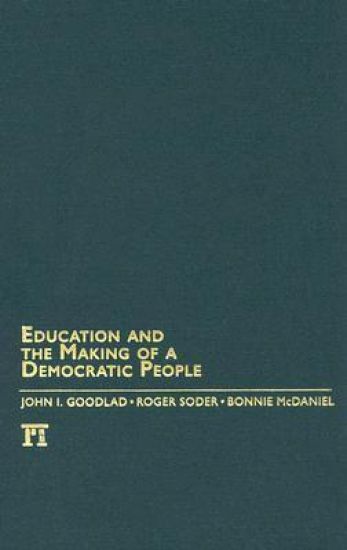
Education and the Making of a Democratic People

Education and the Making of a Democratic People

John I. Goodlad; Roger Soder; Bonnie McDaniel

Paradigm
2008
nidottu
Unfortunately, civic values such as equity and justice that constitute the moral grounding of American democracy are losing their place in public affairs. The promise of this democracy is inclusive: no one is to be left out. Yet many people are. Education and the Making of a Democratic People regards the challenge of inclusiveness as a fundamental and non-negotiable educational agenda. America's public schools are a main public forum in which people can learn to preserve and actively protect our democratic process. The value of our schools as a democratic forum extends beyond the classroom to parents and other members of local communities. By engaging in conversations and actions that support the democratic purpose of schools, local communities can ensure that the United States will become a healthy, robust democracy that represents all of its citizens.
Education and the Making of a Democratic People

Education and the Making of a Democratic People

John I. Goodlad; Roger Soder; Bonnie McDaniel

Paradigm
2008
sidottu
Unfortunately, civic values such as equity and justice that constitute the moral grounding of American democracy are losing their place in public affairs. The promise of this democracy is inclusive: no one is to be left out. Yet many people are. Education and the Making of a Democratic People regards the challenge of inclusiveness as a fundamental and non-negotiable educational agenda. America's public schools are a main public forum in which people can learn to preserve and actively protect our democratic process. The value of our schools as a democratic forum extends beyond the classroom to parents and other members of local communities. By engaging in conversations and actions that support the democratic purpose of schools, local communities can ensure that the United States will become a healthy, robust democracy that represents all of its citizens.
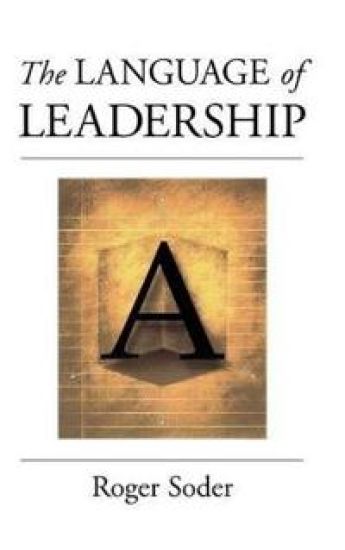
The Language of Leadership

The Language of Leadership

Roger Soder

Jossey-Bass Inc.,U.S.
2001
sidottu
"When we all think we understand leadership, Soder, with quotations from the ages, shows us new, fascinating, and immensely important elements. A stimulating adventure."--Fisher Howe, author, The Board Member's Guide to Strategic Planning and Welcome to the Board With The Language of Leadership you'll explore the powerful role that language plays in helping leaders, no matter what their field, support their position and create a climate of credibility and legitimacy. Written for leaders in the education, business, and nonprofit sectors, The Language of Leadership offers you the information and practical guidance you need to understand the crucial impact of words on the ability to lead, heal, motivate, and chart a path to the future.
Democracy, Education, and the Schools

Democracy, Education, and the Schools

Roger Soder

Jossey-Bass Inc.,U.S.
1995
sidottu
Scores of democracy books have appeared in the last few years, but none so illuminating of the essential connections between democracy and education as this one. In a set of remarkably coherent and helpful essays, the authors offer powerful ideas and practical suggestions to theorists, practitioners, and policy makers alike. ? Gary D Fenstermacher, professor of education, University of Arizona