Kirjojen hintavertailu – 12 903 724 kirjaa ja 27 kauppaa

Kirjailija

Roger T. Ames

Kirjat ja teokset yhdessä paikassa: 21 kirjaa, julkaisuja vuosilta 1987–2025, suosituimpiin kuuluu The Chinese Classic of Family Reverence. Vertaile teosten hintoja ja tarkista saatavuus suomalaisista kirjakaupoista.

21 kirjaa

Kirjojen julkaisuvuodet: 1987–2025.

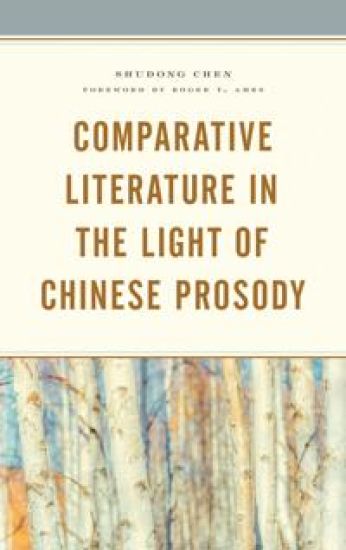
Comparative Literature in the Light of Chinese Prosody

Comparative Literature in the Light of Chinese Prosody

Shudong Chen; Roger T. Ames

Lexington Books
2018
sidottu
In the light of Chinese prosody and various mutually illuminating major cases from the original English, Chinese, French, Japanese and German classical literary texts, the book explores the possibility of discovering “a road not taken” within the road well-trodden in literature. In an approach of “what Wittgenstein calls criss-crossing,” this monographic study, the first ever of this nature, as Roger T. Ames points out in the Foreword, also emphasizes a pivotal “recognition that these Chinese values [revealed in the book] are immediately relevant to the Western narrative as well”; the book demonstrates, in other words, how such a “criss-crossing” approach would be unequivocally possible as long as our critical attention be adequately turned to or pivoted upon the “trivial” matters, a posteriori, in accordance with the live syntactic-prosodic context, such as pauses, stresses, phonemes, function words, or the at once text-enlivened and text-enlivening ambiguity of “parts of speech,” which often vary or alter simultaneously according to and against any definitive definition or set category a priori. This issue pertains to any literary text across cultures because no literary text would ever be possible if it were not, for instance, literally enlivened by the otherwise overlooked “meaningless” function words or phonemes; the texts simultaneously also enliven these “meaningless” elements and often turn them surreptitiously into sometimes serendipitously meaningful and beautiful sea-change-effecting “les mots justes.” Through the immeasurable and yet often imperceptible influences of these exactly “right words,” our literary texts, such as a poem, could thus not simply “be” but subtly “mean” as if by mere means of its simple, rich, and naturally worded being, truly a special “word picture” of das Ding an sich. Describable metaphorically as “museum effect” and “symphonic tapestry,” a special synaesthetic impact could also likely result from such les-mots-justes-facilitated subtle and yet phenomenal sea changes in the texts.
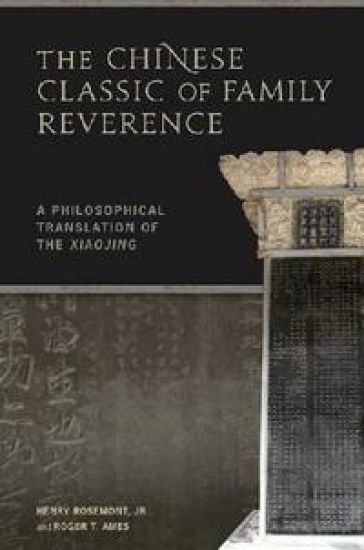
The Chinese Classic of Family Reverence

The Chinese Classic of Family Reverence

Henry Rosemont; Roger T. Ames

University of Hawai'i Press
2008
nidottu
For China, one may go so far as to say that family reverence was a necessary condition for developing any of the other human qualities of excellence. On the basis of the present translation of the ""Xiaojing"" (Classic of Family Reverence) and supplemental passages found in other early philosophical writings, Professors Rosemont and Ames articulate a specifically Confucian conception of 'role ethics' that, in its emphasis on a relational conception of the person, is markedly different from most early and contemporary dominant Western moral theories. This Confucian role ethics takes as its inspiration the perceived necessity of family feeling as the entry point in the development of moral competence and as a guide to the religious life as well. In the lengthy introduction, the two senior scholars offer their perspective on the historical, philosophical, and religious dimensions of the ""Xiaojing"". Together with this introduction, a lexicon of key terms presents a context for the ""Xiaojing"" and provides guidelines for interpreting the text historically in China as well as suggesting its contemporary significance for all societies. The inclusion of the Chinese text adds yet another dimension to this important study.
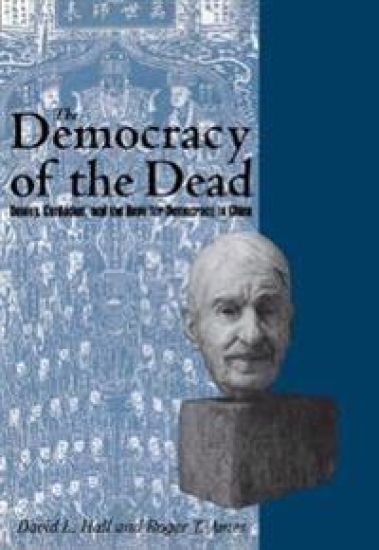
The Democracy of the Dead

The Democracy of the Dead

Roger T. Ames; David L. Hall

Open Court Publishing Co ,U.S.
1999
sidottu
Will democracy figure prominently in China's future? If so, what kind of democracy? In this insightful and thought-provoking book, David Hall and Roger Ames explore such questions and, in the course of answering them, look to the ideas of John Dewey and Confucius.
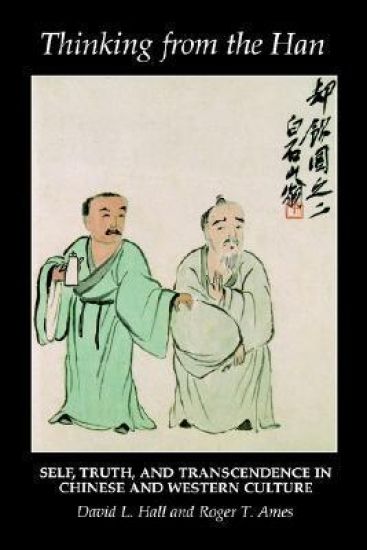
Thinking from the Han

Thinking from the Han

David L. Hall; Roger T. Ames

State University of New York Press
1997
pokkari
This book continues a comparative project begun with the authors' Thinking Through Confucius and Anticipating China. It continues the comparative discussions by focusing upon three concepts--self, truth, transcendence--which best illuminate the distinctive characters of the two cultures. "Self" specifies the meaning of the human subject, "truth" considers that subject's manner of relating to the world of which it is a part, and "transcendence" raises the issue as to whether the self/world relationship is grounded in something other than the elements resourced immediately in self and world. Considered together, the discussions of these concepts advertise in a most dramatic fashion the intellectual barriers currently existing between Chinese and Western thinkers. More importantly, these discussions reformulate Chinese and Western vocabularies in a manner that will enhance the possibilities of intercultural communication.
Anticipating China

Anticipating China

David L. Hall; Roger T. Ames

State University of New York Press
1995
pokkari
By providing parallel accounts of the contrasting developments of classical Chinese and Western traditions, Anticipating China offers a means of avoiding the implicit cultural biases which so often distort Western understanding of Chinese intellectual culture. The book shows that failure to assess the significant cultural differences between China and the West has seriously affected our understanding of both classical and contemporary China, and makes the translation of attitudes, concepts, and issues extremely problematic.
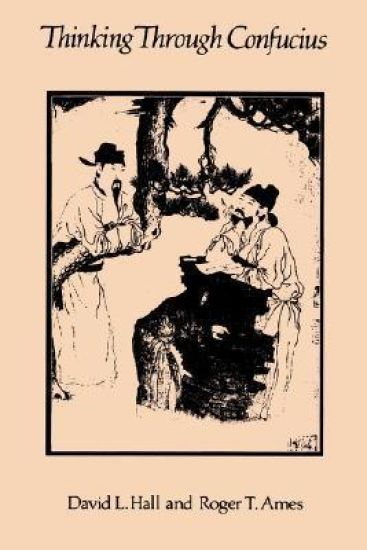
Thinking Through Confucius

Thinking Through Confucius

David L. Hall; Roger T. Ames

State University of New York Press
1987
pokkari
Thinking Through Confucius critically interprets the conceptual structure underlying Confucius' philosophical reflections. It also investigates "thinking," or "philosophy" from the perspective of Confucius. Perhaps the philosophical question of our time is "what is philosophy". The authors suggest that an examination of the Chinese philosophy may provide an alternative definition of philosophy that can be used to address some of the pressing issues of the Western cultural tradition. This book finds an appropriate language for the interpretation of traditional Chinese philosophical thought - a language which is relatively free from the bias and presuppositions of Western philosophy.
Living Chinese Philosophy

Living Chinese Philosophy

Roger T. Ames

STATE UNIVERSITY OF NEW YORK PRESS
2025
pokkari

Halvin toimitettuna 41,70 €

Contrasts classical Greek ontology ("the science of being in itself") with Confucian "zoetology" ("the art of living"). In Living Chinese Philosophy, Roger T. Ames uses comparative cultural hermeneutics as a method for contrasting classical Greek ontology ("the science of being in itself") with classical Chinese "zoetology" ("the art of living"), which is made explicit in the Yijing??or Book of Changes. Parmenides, Plato, and Aristotle give us a substance ontology grounded in "being qua being" or "being per se" (to on he on) that guarantees a permanent and unchanging subject as the substratum for the human experience. This substratum or essence includes its purpose for being (telos) and defines the "what-it-means-to-be-a-thing-of-this-kind" (eidos) of any particular thing, thus setting a closed, exclusive boundary and the strict identity necessary for a particular thing to be "this" and not "that." In the Book of Changes, we find a vocabulary that makes explicit cosmological assumptions that are a stark alternative to this substance ontology. It also provides the interpretive context for the canonical texts by locating them within a holistic, organic, and ecological worldview. To provide a meaningful contrast with this fundamental assumption of on or "being," we might borrow the Greek notion of zoe or "life" and create the neologism "zoe-tology" as "the art of living" (shengshenglun???). This cosmology begins from "living" (sheng?) itself as the motive force behind change and gives us a world of boundless "becomings": not "things" that are but "events" that are happening, a contrast between an ontological conception of human "beings" and a process conception of what the author calls human "becomings."
Living Chinese Philosophy

Living Chinese Philosophy

Roger T. Ames

STATE UNIVERSITY OF NEW YORK PRESS
2024
sidottu
Contrasts classical Greek ontology ("the science of being in itself") with Confucian "zoetology" ("the art of living"). In Living Chinese Philosophy, Roger T. Ames uses comparative cultural hermeneutics as a method for contrasting classical Greek ontology ("the science of being in itself") with classical Chinese "zoetology" ("the art of living"), which is made explicit in the Yijing??or Book of Changes. Parmenides, Plato, and Aristotle give us a substance ontology grounded in "being qua being" or "being per se" (to on he on) that guarantees a permanent and unchanging subject as the substratum for the human experience. This substratum or essence includes its purpose for being (telos) and defines the "what-it-means-to-be-a-thing-of-this-kind" (eidos) of any particular thing, thus setting a closed, exclusive boundary and the strict identity necessary for a particular thing to be "this" and not "that." In the Book of Changes, we find a vocabulary that makes explicit cosmological assumptions that are a stark alternative to this substance ontology. It also provides the interpretive context for the canonical texts by locating them within a holistic, organic, and ecological worldview. To provide a meaningful contrast with this fundamental assumption of on or "being," we might borrow the Greek notion of zoe or "life" and create the neologism "zoe-tology" as "the art of living" (shengshenglun???). This cosmology begins from "living" (sheng?) itself as the motive force behind change and gives us a world of boundless "becomings": not "things" that are but "events" that are happening, a contrast between an ontological conception of human "beings" and a process conception of what the author calls human "becomings."
A Sourcebook in Classical Confucian Philosophy

A Sourcebook in Classical Confucian Philosophy

Roger T. Ames

STATE UNIVERSITY OF NEW YORK PRESS
2024
pokkari
Applies a method of comparative cultural hermeneutics to let the tradition speak on its own terms. Roger T. Ames's A Sourcebook in Classical Confucian Philosophy is a companion volume to his Conceptual Lexicon for Classical Confucian Philosophy. It includes texts in the original classical Chinese along with their translations, allowing experts and novices alike to make whatever comparisons they choose. In applying a method of comparative cultural hermeneutics, Ames has tried to let the tradition speak on its own terms. The goal is to encourage readers to move between the translated text and commentary, the philosophical introduction that attempts to sensitize them to the interpretative context, and the companion Lexicon of key philosophical terms, with the expectation that in the fullness of time they will be able to appropriate the original Chinese terminologies themselves. Armed with their own increasingly robust insight into these philosophical terms, readers will be able to carry this nuanced understanding over into their critical reading of other available translations. Ultimately, for students who would understand Chinese philosophy, tian?must be understood as tian?, and dao?must be dao?.
A Sourcebook in Classical Confucian Philosophy

A Sourcebook in Classical Confucian Philosophy

Roger T. Ames

STATE UNIVERSITY OF NEW YORK PRESS
2023
sidottu

Halvin toimitettuna 104,20 €

Applies a method of comparative cultural hermeneutics to let the tradition speak on its own terms. Roger T. Ames's A Sourcebook in Classical Confucian Philosophy is a companion volume to his Conceptual Lexicon for Classical Confucian Philosophy. It includes texts in the original classical Chinese along with their translations, allowing experts and novices alike to make whatever comparisons they choose. In applying a method of comparative cultural hermeneutics, Ames has tried to let the tradition speak on its own terms. The goal is to encourage readers to move between the translated text and commentary, the philosophical introduction that attempts to sensitize them to the interpretative context, and the companion Lexicon of key philosophical terms, with the expectation that in the fullness of time they will be able to appropriate the original Chinese terminologies themselves. Armed with their own increasingly robust insight into these philosophical terms, readers will be able to carry this nuanced understanding over into their critical reading of other available translations. Ultimately, for students who would understand Chinese philosophy, tian?must be understood as tian?, and dao?must be dao?.
A Conceptual Lexicon for Classical Confucian Philosophy

A Conceptual Lexicon for Classical Confucian Philosophy

Roger T. Ames

STATE UNIVERSITY OF NEW YORK PRESS
2023
pokkari
Uses a comparative hermeneutical method to explain the most important terms in the classical Confucian philosophical texts, in an effort to allow the tradition to speak on its own terms. Over the years, Roger T. Ames and his collaborators have consistently argued for a processual understanding of Chinese natural cosmology made explicit in the Book of Changes. It is this way of thinking, captured in its own interpretive context with the expression "continuities in change" (biantong) that has shaped the grammar of the Chinese language and informs the key philosophical vocabulary of Confucian philosophy. Over the past several centuries of cultural encounter, the formula established by the early missionaries for the translation of classical Chinese texts into Western languages has resulted in a Christian conversion of Confucian texts that is still very much with us today. And more recently, the invention of a new Chinese language to synchronize East Asian cultures with Western modernity has become another obstacle in our reading of the Confucian canons. This volume, a companion volume to A Sourcebook in Classical Confucian Philosophy, employs a comparative hermeneutical method in an attempt to explain the Confucian terms of art and to take the Confucian tradition on its own terms.
A Conceptual Lexicon for Classical Confucian Philosophy

A Conceptual Lexicon for Classical Confucian Philosophy

Roger T. Ames

STATE UNIVERSITY OF NEW YORK PRESS
2022
sidottu
Uses a comparative hermeneutical method to explain the most important terms in the classical Confucian philosophical texts, in an effort to allow the tradition to speak on its own terms. Over the years, Roger T. Ames and his collaborators have consistently argued for a processual understanding of Chinese natural cosmology made explicit in the Book of Changes. It is this way of thinking, captured in its own interpretive context with the expression "continuities in change" (biantong) that has shaped the grammar of the Chinese language and informs the key philosophical vocabulary of Confucian philosophy. Over the past several centuries of cultural encounter, the formula established by the early missionaries for the translation of classical Chinese texts into Western languages has resulted in a Christian conversion of Confucian texts that is still very much with us today. And more recently, the invention of a new Chinese language to synchronize East Asian cultures with Western modernity has become another obstacle in our reading of the Confucian canons. This volume, a companion volume to A Sourcebook in Classical Confucian Philosophy, employs a comparative hermeneutical method in an attempt to explain the Confucian terms of art and to take the Confucian tradition on its own terms.
Human Becomings

Human Becomings

Roger T. Ames

State University of New York Press
2021
pokkari
Offers an in-depth exposition of the Confucian conception of persons as the starting point of Confucian ethics.2021 CHOICE Outstanding Academic Title In Human Becomings, Roger T. Ames argues that the appropriateness of categorizing Confucian ethics as role ethics turns largely on the conception of person that is presupposed within the interpretive context of classical Chinese philosophy. By beginning with first self-consciously and critically theorizing the Confucian conception of persons as the starting point of Confucian ethics, Ames posits that the ultimate goal will be to take the Confucian tradition on its own terms and to let it speak with its own voice without overwriting it with cultural importances not its own. He argues that perhaps the most important contribution Confucian philosophy can make to contemporary ethical, social, and political discourse is the conception of focus-field, relationally constituted persons as a robust alternative to the ideology of individualism with single actors playing to win.
Human Becomings

Human Becomings

Roger T. Ames

State University of New York Press
2020
sidottu
Offers an in-depth exposition of the Confucian conception of persons as the starting point of Confucian ethics.2021 CHOICE Outstanding Academic Title In Human Becomings, Roger T. Ames argues that the appropriateness of categorizing Confucian ethics as role ethics turns largely on the conception of person that is presupposed within the interpretive context of classical Chinese philosophy. By beginning with first self-consciously and critically theorizing the Confucian conception of persons as the starting point of Confucian ethics, Ames posits that the ultimate goal will be to take the Confucian tradition on its own terms and to let it speak with its own voice without overwriting it with cultural importances not its own. He argues that perhaps the most important contribution Confucian philosophy can make to contemporary ethical, social, and political discourse is the conception of focus-field, relationally constituted persons as a robust alternative to the ideology of individualism with single actors playing to win.
Confucian Role Ethics

Confucian Role Ethics

Roger T. Ames

State University of New York Press
2020
pokkari
Argues that the only way to understand the Confucian vision of the consummate moral life is to take the tradition on its own terms. In this landmark book, Roger T. Ames examines how the classics of the Confucian canon portray the authentic, ethical human being. He argues that many distinguished commentators on Confucian ethics have explained the fundamental ideas and terms of this distinctively Chinese philosophy by superimposing Western concepts and categories, effectively collapsing this rich tradition into a subcategory of "virtue ethics." Beginning by addressing the problem of responsible cultural comparisons, Ames then formulates the interpretive context necessary to locate the texts within their own cultural ambiance. Exploring the relational notion of "person" that grounds Confucian philosophy, he pursues a nuanced understanding of the cluster of terms through which Confucian role ethics is expressed. Drawing from Western and Chinese sources, Ames makes a compelling argument that the only way to understand the Confucian vision of the consummate life is to take the tradition on its own terms.
Confucian Role Ethics

Confucian Role Ethics

Roger T. Ames

The Chinese University Press
2011
sidottu
In this landmark work, noted comparative philosopher Roger T. Ames interprets how the classics of the Confucian canon portray the authentic, ethical human being. He argues that many distinguished commentators on Confucian ethics have explained the fundamental ideas and terms of this distinctively Chinese philosophy by superimposing Western concepts and categories, effectively collapsing this rich tradition into a subcategory of "virtue ethics." Beginning by addressing the problem of responsible cultural comparisons, Ames then formulates the interpretive context necessary to locate the texts within their own cultural ambiance. Exploring the relational notion of "person" that grounds Confucian philosophy, he pursues a nuanced understanding of the cluster of terms through which Confucian role ethics is expressed. Drawing on Western and Chinese sources, Ames provides a convincing argument that the only way to understand the Confucian vision of the consummate life is to take the tradition on its own terms.
John Dewey, Confucius, and Global Philosophy

John Dewey, Confucius, and Global Philosophy

Joseph Grange; Roger T. Ames

State University of New York Press
2006
pokkari
Bringing together the philosophies of John Dewey and Confucius, this work illustrates a means for cultural interaction and provides a model of global philosophy. Joseph Grange's beautifully written book provides a unique synthesis of two major figures of world philosophy, John Dewey and Confucius, and points the way to a global philosophy based on American and Confucian values. Grange concentrates on the major themes of experience, felt intelligence, and culture to make the connections between these two giants of Western and Eastern thought. He explains why the Chinese called Dewey "A Second Confucius," and deepens our understanding of Confucius's concepts of the way (dao) of human excellence (ren). The important dimensions of American and Chinese cultural philosophy are welded into an argument that calls for the liberation of what is finest in both traditions. The work gives a new appreciation of fundamental issues facing Chinese and American relations and brings the opportunities and dangers of globalization into focus.
John Dewey, Confucius, and Global Philosophy

John Dewey, Confucius, and Global Philosophy

Joseph Grange; Roger T. Ames

State University of New York Press
2004
sidottu
Bringing together the philosophies of John Dewey and Confucius, this work illustrates a means for cultural interaction and provides a model of global philosophy. Joseph Grange's beautifully written book provides a unique synthesis of two major figures of world philosophy, John Dewey and Confucius, and points the way to a global philosophy based on American and Confucian values. Grange concentrates on the major themes of experience, felt intelligence, and culture to make the connections between these two giants of Western and Eastern thought. He explains why the Chinese called Dewey "A Second Confucius," and deepens our understanding of Confucius's concepts of the way (dao) of human excellence (ren). The important dimensions of American and Chinese cultural philosophy are welded into an argument that calls for the liberation of what is finest in both traditions. The work gives a new appreciation of fundamental issues facing Chinese and American relations and brings the opportunities and dangers of globalization into focus.
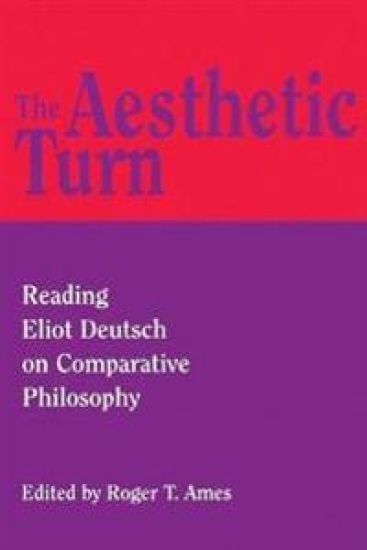
The Aesthetic Turn

The Aesthetic Turn

Roger T. Ames

Open Court Publishing Co ,U.S.
1999
sidottu
It was the editorial eye of Eliot Deutsch that made the journal Philosophy East and West the voice of comparative philosophy within the Western academy, challenging the entrenched provincialism of Anglo-American philosophy. In these essays, Deutsch's critics both praise and attack him, and he offers his thoughtful responses.
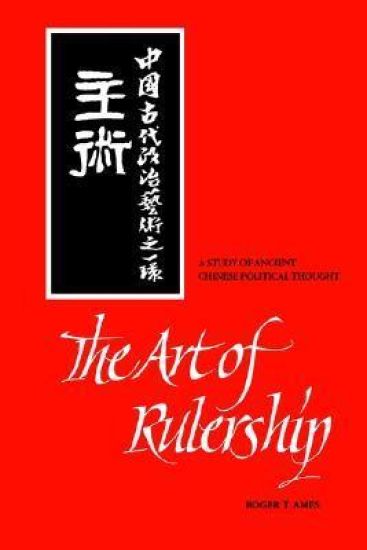
The Art of Rulership

The Art of Rulership

Roger T. Ames

State University of New York Press
1994
pokkari
Roger Ames first traces the evolution of five key concepts in early Chinese political philosophy and then analyzes these concepts as they are developed in The Art of Rulership. The Art of Rulership is Book Nine of the Huai Nan Tzu, an anthology of diverse and far-ranging contents compiled under the patronage of Liu An (prince of Huai Nan) and presented to the court of Wu Ti during the first century of the Former Han (perhaps as early as 140 B. C.). Ames demonstrates that the political theory contained in The Art of Rulership shares an underlying sympathy with precepts of Taoist and Confucian origin, and contains a systematic political philosophy that is not only unique but compelling. The book presents a political theory that tempers lofty ideals with functional practicability. While the spirit of the work is strongly Taoist and Confucian, this spirit is provided with a Legalist political framework in which it can be implemented, nurtured, and cultivated.