Kirjojen hintavertailu – 12 859 826 kirjaa ja 27 kauppaa

Kirjailija

Roger Wood

Kirjat ja teokset yhdessä paikassa: 10 kirjaa, julkaisuja vuosilta 1998–2025, suosituimpiin kuuluu The Best of All Appointments?. Vertaile teosten hintoja ja tarkista saatavuus suomalaisista kirjakaupoista.

10 kirjaa

Kirjojen julkaisuvuodet: 1998–2025.

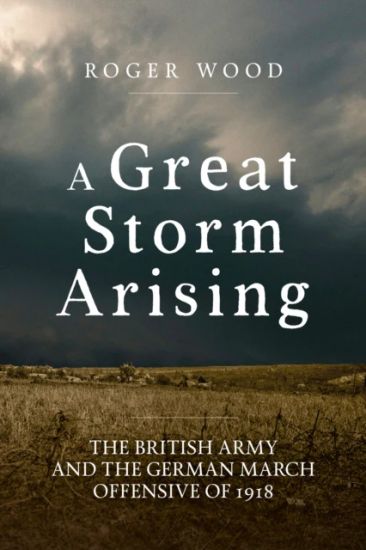
A Great Storm Arising

A Great Storm Arising

Roger Wood

HELION COMPANY
2025
sidottu
On 21 March 1918, for the first time since August 1914, Germany launched Operation Michael a major attack against the combined Anglo-French armies on the Western Front. For both of the adversaries the offensive proved a watershed moment in their fortunes and in the outcome of the First World War. For the Germans, the cumulative effect of consecutive attacks, and excessive casualties crippled its capacity to withstand the Allied counterattack of August. For the British, the offence constituted a period of extreme crisis as the BEF came perilously close to collapse. In terms of scale, the retreat of the British armies dwarfed that of the First Army's retreat from Mons in 1914. Equally, the number of casualties on both sides testified to the ferocity of the fighting. However, notwithstanding its losses and the withdrawal of eight army corps, the British army remained remarkably resolute and eventually, having stabilised the situation with the assistance of sufficient reserves, was able to wrest the initiative back from the enemy. A Great Storm Arising first addresses the broad context in which the offensive took place in terms of political, economic, diplomatic and militaristic considerations. The issues of manpower and defence in depth that served to shape Britain's response to the attack are examined in detail. One chapter is devoted to the morale of the British armies during the retreat, whilst another considers the means by which news of the offensive was conveyed to the British public. This book does not claim to be a complete chronological account of the German offensive. Rather, by focusing upon selected case studies it examines the British army's response to the transition from static to mobile/defensive warfare, given that its tactical and organisational development was inconsistent and occasionally regressive. The case studies are drawn from both Operation Michael and the Battles of the Lys and are based upon specific army corps. This approach provides a basis for comparative study. Considering its significance in determining the outcome of the First World War, the British army's retreat and subsequent recovery were marginalised in the early historiography of the conflict. However, since John Terraine first recognised its status as one of the great dramas of the war, the German offensive has attracted the attention of a fresh generation of historians whose work is reflected in a range of literature, analysis and debate. A Great Storm Arising seeks to enhance this scholarship.

The Best of All Appointments?

The Best of All Appointments?

Roger Wood

HELION COMPANY
2024
sidottu
The Best of All Appointments? examines the evolution of infantry brigade command in the British Army during the First World War. Through a series of case studies, the author demonstrates that the response of brigade staff to the challenges of the Western Front reflected the army's capacity for organizational and tactical change. The Best of All Appointments? illustrates how the influence of the corps or division under which a brigade served was fundamental to its battlefield performance and success. In constituting a key component in the chain of command, the infantry brigade's role was subject to a progressive but irregular transformation in responding to the challenges of static warfare. The author first examines the identity, structure and principal roles of the brigadier general and his staff as it existed in 1914. The profiles of a new generation of brigade staff are then established to illustrate how an increased demand for tactically proficient commanders generated a process of renewal based on merit and experience. The author demonstrates that the reasons behind this process were varied, deliberate and otherwise. Two avenues of research were adopted in the writing of the book, reflecting the varied interrelated dimensions and conceptual planes within which brigade command operated. On a macro level, brigade operations were shaped by political, economic, topographical and technological factors. On a micro level, the influence of the brigade staff was largely determined by the irregularities of their brigade sector and its configuration with the enemy lines. In order to challenge the orthodox interpretation that the role of the brigadier and his staff was unduly narrow, the scope of the book addresses two fundamental questions. First, the author focuses on the extent to which brigade command's response to trench warfare reflected the British Army's capability for flexibility and innovation is assessed. Through an in depth analysis of brigade operations conducted during 1915-1918, it becomes evident that the measures implemented by brigade staff substantiated their role as agents of organizational and tactical change. These measures were manifested through various spheres of activity, the benefits of which were manifold. Fundamental to the army's learning effectiveness, was the influence of its pre-war ethos, which provided an enduring framework throughout the First World War. This ethos provided flexibility and enabled the army to recalibrate its approach to learning in response to its increasingly civilian soldier composition. The army displayed a willingness to reach and interact with those with expertise and as a result individuals were able to influence institutional behavior. The book illustrates the role played by brigade staff in the capture, dissemination and codification of knowledge and experience as an integral part of the army's operational and tactical learning process. The second question addresses the extent to which the organizational and tactical evolution of brigade command was shaped by the corps or division under which it served. Three key elements that influenced brigade battlefield performance are examined: unit cohesion as embodied within a stable staff structure, the scale of offensive action as governed by the pre-conditions for operational success and the degree of flexibility devolved to subordinate levels of command. Using comparative case studies, the author establishes the pre-conditions for operational success: appropriate training, time for preparation, realistic objectives, accurate reconnaissance, logistic support, sufficient artillery resources and good communications. Within a command culture where these conditions were sufficiently met, the prominent role of the brigade staff helped to ensure that preparations were thorough and training appropriate. By these means, the tactical initiative and managerial skills of the brigade staff were fully exploited. Where a command culture proved counterproductive, with woefully inadequate arrangements, poor communications and unrealistic objectives, the tactical influence of the brigadier general was diminished. Although brigade command had little control over the broad parameters in which they operated, given the establishment of the organizational and logistic pre-conditions for success, officers were able and willing to respond to the challenges of static warfare and the eventual transition to mobile operations. This process reflected the ethos of the pre-war British army officer class and its capacity for learning and adaptation. These values were sustained and applied to effect through the creation of new generation of brigade officers who possessed the intellectual capacity to control large -scale operations. This book is a lasting testament to their professionalism and courage.
CBAC TGAU Gwyddoniaeth Llyfr Labordy i Ddisgyblion ar gyfer Gwaith Ymarferol Penodol

CBAC TGAU Gwyddoniaeth Llyfr Labordy i Ddisgyblion ar gyfer Gwaith Ymarferol Penodol

David Johnston; Adrian Schmit; Matt Shooter; Roger Wood

Hodder Education
2020
nidottu
Welsh Language Edition. Suitable for Biology, Chemistry, Physics and Double Award. Provide full coverage of the specified practicals and build students' working scientifically skills with questions that enable them to apply their knowledge to new contexts.- Help guide students through the practical, the analysis of results, and generating a reasoned conclusion with scaffolded questions.- Get exam ready with exam-style questions, guidance on how practicals are assessed, a list of useful equations, and a checklist to monitor progress.- Cover all the specified practicals with methods provided, complete with safety notes and guidance on equipment.
WJEC GCSE Science Student Lab Book

WJEC GCSE Science Student Lab Book

David Johnston; Adrian Schmit; Matt Shooter; Roger Wood

Hodder Education
2019
nidottu
Provide full coverage of the required practicals and build students' working scientifically skills with questions that enable them to apply their knowledge to new contexts. - Help guide students through the practical, the analysis of results, and generating a reasoned conclusion with scaffolded questions. - Get exam ready with exam-style questions, guidance on how practicals are assessed, a list of useful equations, and a checklist to monitor progress. - Cover all the required practicals with methods provided, complete with safety notes and guidance on equipment.
WJEC GCSE Science Teacher Lab Book: Teacher and technician information

WJEC GCSE Science Teacher Lab Book: Teacher and technician information

David Johnston; Matt Shooter; Adrian Schmit; Roger Wood

Hodder Education
2019
nidottu
All the support you need to teach the WJEC GCSE Science required practicals (covers separate sciences and Double Award) with technician notes, model results, advice on common student mistakes and additional experiments to extend knowledge. - Provides full coverage with technician notes for every core practical, complete with equipment lists and safety notes. - Offers guidance around possible causes for different kinds of anomalous results for each experiment. - Highlights common student mistakes with explanations on how to address them. - Helps provide a holistic approach to teaching practicals with suggested variations on the core practicals, linked experiments and extension experiments. The Teacher Books include answers to all of the questions in the accompanying Lab Workbooks, complete with mark schemes and with extension and maths questions flagged.
House of Hits

House of Hits

Andy Bradley; Roger Wood

University of Texas Press
2010
pokkari
Founded in a working-class neighborhood in southeast Houston in 1941, Gold Star/SugarHill Recording Studios is a major independent studio that has produced a multitude of influential hit records in an astonishingly diverse range of genres. Its roster of recorded musicians includes Lightnin' Hopkins, George Jones, Willie Nelson, Bobby "Blue" Bland, Junior Parker, Clifton Chenier, Sir Douglas Quintet, 13th Floor Elevators, Freddy Fender, Kinky Friedman, Ray Benson, Guy Clark, Lucinda Williams, Beyoncé and Destiny's Child, and many, many more. In House of Hits, Andy Bradley and Roger Wood chronicle the fascinating history of Gold Star/SugarHill, telling a story that effectively covers the postwar popular music industry. They describe how Houston's lack of zoning ordinances allowed founder Bill Quinn's house studio to grow into a large studio complex, just as SugarHill's willingness to transcend musical boundaries transformed it into of one of the most storied recording enterprises in America. The authors offer behind-the-scenes accounts of numerous hit recordings, spiced with anecdotes from studio insiders and musicians who recorded at SugarHill. Bradley and Wood also place significant emphasis on the role of technology in shaping the music and the evolution of the music business. They include in-depth biographies of regional stars and analysis of the various styles of music they represent, as well as a list of all of Gold Star/SugarHill's recordings that made the Billboard charts and extensive selected historical discographies of the studio's recordings.
Texas Zydeco

Texas Zydeco

Roger Wood

University of Texas Press
2006
sidottu
To most people, zydeco appears as quintessentially Louisiana as gumbo. Certainly, the music originated among black Creoles of southwest Louisiana. But the swamps of southwest Louisiana spill across the Sabine River into southeast Texas, and the music originally known as "la-la" quickly trickled west, too. There it fused with blues to create a new sound that came to be known, spelled, and recorded as "zydeco." Black Creoles from Louisiana began moving into southeast Texas in search of better jobs during the first half of the twentieth century. As they resettled, so did their music. Texas Zydeco describes how many of the most formative players and moments in modern zydeco history developed in Texas, especially Houston. As the new players traveled back and forth between Houston and Lafayette, Louisiana, they spread the new sound along a "zydeco corridor" that is the musical axis around which zydeco revolves to this day. Roger Wood and James Fraher spent years traveling this corridor, interviewing and photographing hundreds of authentic musicians, dancers, club owners, and fans. As their words and images make clear, zydeco, both historically and today, belongs not to a state but to all the people of the upper Gulf Coast.
Genetic Prehistory in Selective Breeding

Genetic Prehistory in Selective Breeding

Roger Wood; Vitezslav Orel

Oxford University Press
2001
sidottu
Before Mendel, who came closest to the truth about heredity? This book examines the activities of sheep breeders able to transform the appearance and qualities of their stock by combining different traits of body or wool into new patterns. Exploiting what were then untried procedures - individual trait selection, very close inbreeding and progeny testing - they demonstrated inheritance from both sexes and showed how it could be stabilised. Major advances in breeding are associated with the English farmer Robert Bakewell (1725-1795). By the following century, when the same procedures had been established at breeding centres in central Europe, theory as well as practice became the subject of wider attention. In the Brno Sheep Breeders' Society, discussions of patterns of heredity finally gave way to the physiological question, 'What is inherited and how?' The question was posed by Cyrill Napp, abbot of the monastery to which Mendel was admitted six years later.
Quality in the Food Analysis Laboratory

Quality in the Food Analysis Laboratory

Roger Wood; Harriet Wallin; Anders Nilsson

Royal Society of Chemistry
1998
sidottu
Fit-for-purpose is a phrase familiar to all users of analytical data, who need to be assured that data provided by laboratories is both appropriate and of the required quality. Quality in the Food Analysis Laboratory surveys the procedures that a food analysis laboratory must consider to meet such requirements. The need to introduce quality assurance, the different quality models that are available and the legislative requirements are considered. Specific aspects of laboratory practice and particular areas of accreditation which may cause problems for analytical laboratories are also discussed. Covering for the first time those areas of direct importance to food analysis laboratories, this unique book will serve as an aid to those laboratories when introducing new measures and justifying those chosen.