Kirjojen hintavertailu – 12 903 725 kirjaa ja 27 kauppaa

Kirjailija

Roland H Wauer

Kirjat ja teokset yhdessä paikassa: 33 kirjaa, julkaisuja vuosilta 1996–2024, suosituimpiin kuuluu Native Host Plants for Texas Butterflies. Vertaile teosten hintoja ja tarkista saatavuus suomalaisista kirjakaupoista.

Nimi esiintyy myös muodoissa: Roland H. Wauer

33 kirjaa

Kirjojen julkaisuvuodet: 1996–2024.

Natural Inclinations

Natural Inclinations

Roland H Wauer

Ideopage Press Solutions
2018
sidottu
American Museum of Natural History where he becomes a member of a scientific expedition to Panama. That experience confirms his love for adventure and desire for more new and exotic places and wildlife. He then joins other scientific expeditions to such distant places as the Galapagos, Easter Island, the Societies, and the Marquesas Islands. On Greg's return to the Virgin Islands, he realizes that adventure is in his blood and he soon joins another expedition to see new places and peoples. His additional adventures include a severe storm at sea and even more wonders around the world. He eventually returned home to the Virgin Islands where he is offered a job to study wildlife and write about those species. He also writes the Conservation Plan for the US. Virgin Islands. But few of his efforts are appreciated by government. After 22 years working for the Virgin Islands Government, he retires with his wife, Betty, to a place on St. Croix he has long loved.

Natural Inclinations

Natural Inclinations

Roland H Wauer

Xlibris
2017
pokkari
Born in the Virgin Islands, educated in New York, Greg was an adventurer who took every opportunity available to travel the world. He joined several expeditions to such distant places as Panama, Easter Island, Galapagos, and the Marquesas Islands. In each place he visited, he found unusual wildlife and friendships.
Natural Inclinations

Natural Inclinations

Roland H Wauer

Xlibris
2017
sidottu
Born in the Virgin Islands, educated in New York, Greg was an adventurer who took every opportunity available to travel the world. He joined several expeditions to such distant places as Panama, Easter Island, Galapagos, and the Marquesas Islands. In each place he visited, he found unusual wildlife and friendships.
My Wild Life

My Wild Life

Roland H. Wauer

Texas Tech Press,U.S.
2014
nidottu
Few people have the opportunity to live and work in America's magnificent national parks, let alone in a wide diversity of those great parks. For thirty-two years, beginning when he was hired as a seasonal ranger until he retired in 1989, Roland H. Wauer's career took him to eight national parks, a regional office in Santa Fe, New Mexico, and Chief of the Division of Natural Resources in Washington, DC. In an “inside-out” look at his career, Wauer takes the reader on a wildlife adventure through a number of those parks, documenting his experiences with the birds and other animals in each one. An avid birder, he made significant contributions to what was known about the bird population, and avian habitats and worked on a number of research projects involving mammals, reptiles and amphibians, fishes, invertebrates, and other wildlife species. Follow along with Wauer as he recalls flying squirrels, great gray owls, and Clark's nutcrakers at Crater Lake; Nelson's bighorns, prairie falcons, LeConte's thrashers, and sidewinders at Death Valley; flammulated and spotted owls at Zion; and mountain lions, jevalinas, pergergine falcons, cave swallows, and Colima warblers at Big Bend.
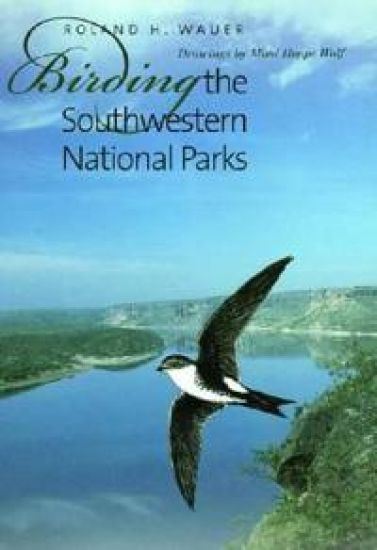
Birding the Southwestern National Parks

Birding the Southwestern National Parks

Roland H. Wauer

Texas A M University Press
2004
nidottu
At the end of the twentieth century roughly 265 million people visited the 374 sites in the American National Park System. These places, designated and protected because of their significance to our nation's historical and natural heritage, contain some of the most beautiful landscapes in the United States - landscapes that naturally lend themselves to outdoor recreation. In this book, veteran parks interpreter Roland H. Wauer introduces the pleasures of birding in the national parks of the American Southwest. From California to Texas, from hugely popular destinations such as Arizona's Grand Canyon to the mostly undiscovered shores of Amistad National Recreation Area, Wauer visits fourteen sites and gives us his advice on what birds to expect and where and how to find them.
Birding the Southwestern National Parks

Birding the Southwestern National Parks

Roland H. Wauer

Texas A M University Press
2004
sidottu
Here, parks interpreter Roland H. Wauer introduces birdwatching in the national parks of the American Southwest. From California to Texas, from popular destinations such as Arizona's Grand Canyon to the undiscovered shores of Amistad National Recreation Area, Wauer visits 14 sites and gives his advice on what birds to expect and how to find them.
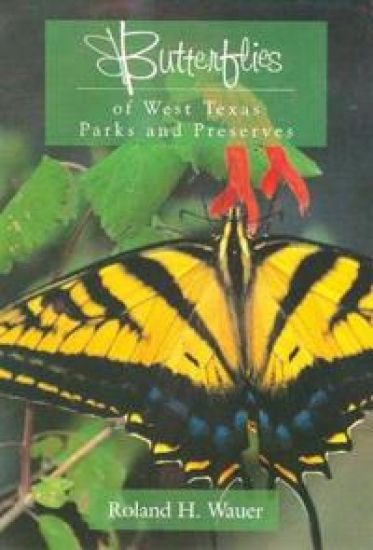
Butterflies of West Texas Parks and Preserves

Butterflies of West Texas Parks and Preserves

Roland H. Wauer

Texas Tech Press,U.S.
2002
nidottu
Butterflies are found almost the year around in the relatively warm region of far West Texas. In the parks and preserves of the Big Bend and the Davis and Guadalupe Mountains, and in the arid flat lands between mountain ranges, these flying gems flit from flower to flower in the driest deserts and along the highest mountainsides. Most commonly found along water courses such as the Rio Grande or where flowers are abundant after rain, they can be found somewhere at any time in the vast, varied land west of the Pecos. This book describes and illustrates the fifty most common butterflies to be found in the region, along with eleven additional specialties unique to the far western part of the state. In his introduction to the book, noted naturalist Ro Wauer describes the general feeding habits of the butterflies of the region. He then provides details on each species, including how to distinguish it from similar species, when and where to find it, and other facts about its habits and appearance. Full-color photographs show each of the fifty common species and six of the specialties. Butterfly watching is growing more and more popular in the United States. This book includes a checklist for hobbyists and encourages butterfly watchers to view the colorful creatures in life rather than collect specimens. For that reason it is endorsed by the North American Butterfly Association, the largest organization working to save butterfly species throughout the continent. This book will join bird and wildflower field guides in the backpacks of nature lovers who plan to explore West Texas to the fullest extent and who want an accurate, fully illustrated guide to the butterflies of the region.
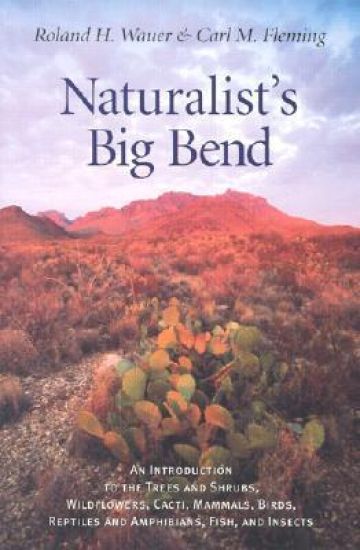
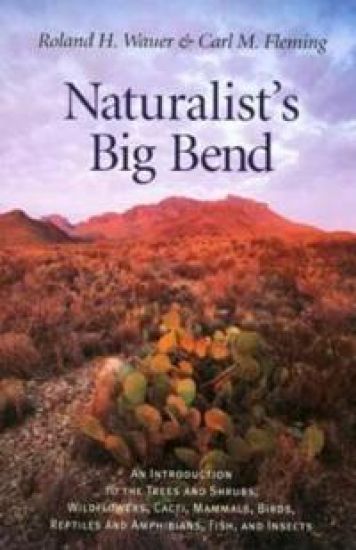
Naturalist's Big Bend

Naturalist's Big Bend

Roland H. Wauer; Carl M. Fleming

Texas A M University Press
2001
nidottu
In southwest Texas, where the Rio Grande arcs southward into Mexico, lies Big Bend National Park - 708,221 acres of river floodplain, desert, grasslands, and majestic mountains. The wealth of the Big Bend is in its dramatic landscape, which provides natural habitats ranging from desert to alpine, and its consequently impressive variety of flora and fauna. Naturalist's Big Bend highlights the distinctive plants and animals of the region, such as the century plant, which grows twenty-five to fifty-five years, blooms magnificently, then dies; candelilla, from which wax is made; the giant dagger yucca; the javelina, North America's only native pig; the rare Texas lyre snake; the tarantula; and the Big Bend quonker katydid. This comprehensive field guide, revised and completely updated in a new edition, recounts the area's archaeology and history, describes the characteristics and habitats of Big Bend's remarkable variety of plants and animals, and outlines walking and driving tours of the most likely spots for sighting these natural wonders.
Naturalist's Big Bend

Naturalist's Big Bend

Roland H. Wauer; Carl M. Fleming

Texas A M University Press
2001
sidottu
In southwest Texas, where the Rio Grande arcs southward into Mexico, lies Big Bend National Park - 708,221 acres of river floodplain, desert, grasslands, and majestic mountains. The wealth of the Big Bend is in its dramatic landscape, which provides natural habitats ranging from desert to alpine, and its consequently impressive variety of flora and fauna. Naturalist's Big Bend highlights the distinctive plants and animals of the region, such as the century plant, which grows twenty-five to fifty-five years, blooms magnificently, then dies; candelilla, from which wax is made; the giant dagger yucca; the javelina, North America's only native pig; the rare Texas lyre snake; the tarantula; and the Big Bend quonker katydid. This comprehensive field guide, revised and completely updated in a new edition, recounts the area's archaeology and history, describes the characteristics and habitats of Big Bend's remarkable variety of plants and animals, and outlines walking and driving tours of the most likely spots for sighting these natural wonders.
Naturally . . . South Texas

Naturally . . . South Texas

Roland H. Wauer

University of Texas Press
2001
pokkari
The Golden Crescent of South Texas, a fifteen-county region along and inland from the middle Gulf Coast, is often called "the Crossroads" because of its natural diversity. Located in the heart of the Gulf Coast Prairie and Marshes, the area also encompasses the trailing edges of the South Texas Plains, Post Oak Savannah, and Blackland Prairie. This confluence of ecological zones makes it a wonderful place for birding and for observing the changing face of nature, especially during seasonal transitions. In this book, Ro Wauer describes a typical year in the natural life of South Texas. Using selected entries from his weekly column in the Victoria Advocate newspaper, he discusses numerous topics for each month, from the first appearance of butterflies in January, to alligators making a comeback in July, to the Christmas bird count in December. His observations are filled with intriguing natural history lore, from what sounds mockingbirds will imitate (almost any noise in their neighborhood) to how armadillos swim (by inflating themselves to increase their buoyancy).
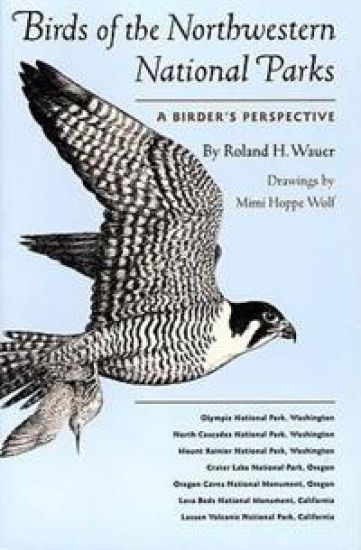
Birds of the Northwestern National Parks

Birds of the Northwestern National Parks

Roland H. Wauer

University of Texas Press
2000
pokkari
From the bald eagle to the pileolated woodpecker, the varied and abundant birdlife of the northwestern national parks is as impressive as the parks' dramatic scenery. To help both beginning and advanced birders make the most of their visits to these parks, Roland Wauer has written this finding guide, which introduces the most common birds and the most likely places to see them. The book opens with practical advice on getting started in birding-choosing binoculars, bird identification, proper field techniques, etc. Then after a concise discussion of the national parks as "islands" of bird habitat, the succeeding chapters fully describe each park, including its plant and animal communities and the facilities and interpretive activities available to visitors. Wauer takes readers on "walks" through each park's most popular and accessible places, where he explains the identification and behavior of the birds that visitors are most likely to see. He closes each account with a review of the park's bird life and a list of key species. Pen-and-ink drawings illustrate many of the birds.
For All Seasons

For All Seasons

Roland H. Wauer

University of Texas Press
1997
pokkari
Something about Big Bend National Park draws visitors again and again. Maybe it's the spare beauty of the mountains and desert, the dawn chorus of birds, or the vivid stars in the velvet night. All of these things have made it Roland Wauer's favorite place. In this book, he shares his love of the Big Bend through journal entries that chronicle a year in the life of the park. Wauer worked as Chief Park Naturalist from 1966 to 1972 and has visited the park frequently ever since. His journal entries span these thirty years, providing not only a composite portrait of a typical year but also a clear sense of how the park's natural history has changed over three decades. He spices his account with anecdotes, often humorous, ranging from stumbling across a herd of javelinas to being trailed by a mountain lion in the dark to discovering new species of plants and animals. Few authors know the Big Bend as Roland Wauer does or have written about it in a more engaging way. This beautifully illustrated book is the perfect companion for a visit to the park, whether in person or by armchair.
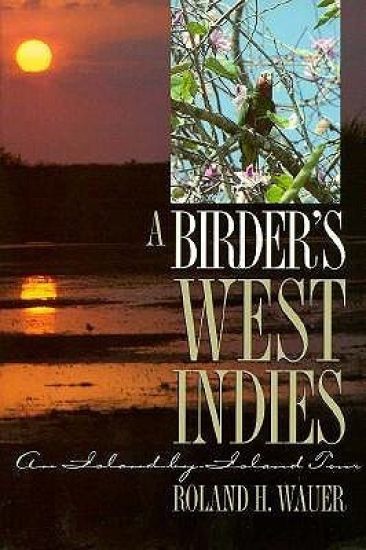
A Birder’s West Indies

A Birder’s West Indies

Roland H. Wauer; Paul Butler

University of Texas Press
1996
pokkari
The West Indies offer so much more than sun, sand, and shopping. This sweeping arc of islands, which runs from Cuba to Grenada and includes the Virgin Islands, teems with a rich diversity of plant and animal life. Up to 40 percent of the plants in some forests are found nowhere else on earth, while the West Indian flyway is a critical link in the migratory routes of many birds. In A Birder's West Indies, Roland Wauer takes you on an island-by-island journey of discovery. He describes the unique natural features of each island and recounts his often fascinating experiences in seeking out the nearly 400 species of birds known in the West Indies. His accounts give insight into the birds' habitats, status, and ecology and record some of the threats posed by human activities. For readers planning trips to the West Indies, Wauer also includes helpful, up-to-date facts about the best times to travel, the kinds of entry and customs systems to expect, the money exchange services available, and general information about weather, food, and accommodations. Filling a unique niche among current guides, A Birder's West Indies offers both professional ornithologists and avocational bird watchers a chance to compare notes and experiences with an expert observer. And for readers who haven't yet visited the islands, Wauer's fluid prose and lovely color photographs will be the next-best thing to being there—and an irresistible invitation to go.