
Kirjailija
Roland Oliver
Kirjat ja teokset yhdessä paikassa: 13 kirjaa, julkaisuja vuosilta 1975–2026, suosituimpiin kuuluu Fast Workers. Vertaile teosten hintoja ja tarkista saatavuus suomalaisista kirjakaupoista.
13 kirjaa
Kirjojen julkaisuvuodet: 1975–2026.
This masterpiece of scholarship and compression, the second edition of The African Experience, covers the entire span of human history across the African continent, from the earliest emergence of hominids in eastern and southern Africa up to the present day. Drawing on more than forty years of teaching and research, Professor Oliver arranges the bo
This book begins by looking at the peoples of Africa at the turn of the eighteenth and nineteenth centuries, and goes on to study the commercial and ideological penetration of Africa by the outside world. The partition and colonisation of Africa by the European powers are discussed, and there is comprehensive discussion of the colonial rule between 1885 and 1960. The last third of the book is concerned with the history of independent Africa during the last years of the twentieth century. The new edition covers events up to the middle of 2003, and takes account of the fresh perspectives brought about by the end of the Cold War and the new global situation following the events of September 11, 2001. It is also concerned with the demographic trends, with the ravages of diseases such as AIDS and malaria, and with the conflicts waged by warlords.
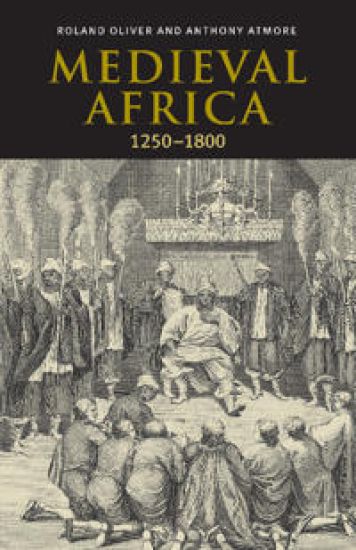
This is a radically revised version of The African Middle Ages 1400–1800, and the companion volume to the authors’ well-known Africa since 1800. It follows the overall plan of the original, but now begins 150 years earlier, and considers recent literature in African historical studies. The earlier starting date enables a more distinctly African viewpoint. By about 1250 AD African societies were greatly expanding their political and economic scope. Islam was spreading south across the Sahara from Mediterranean Africa, and down the Indian Ocean coast. Medieval Africa continues into the period of European contacts from the 15th century onwards, with some emphasis on the growth of the trans-Saharan, Atlantic and Indian Ocean slave trade. The book stresses both the strengths and weaknesses of African societies as the eighteenth century drew to a close. This volume will be an essential introduction to African history for students, as well as for the general reader. It is illustrated with a wealth of maps.
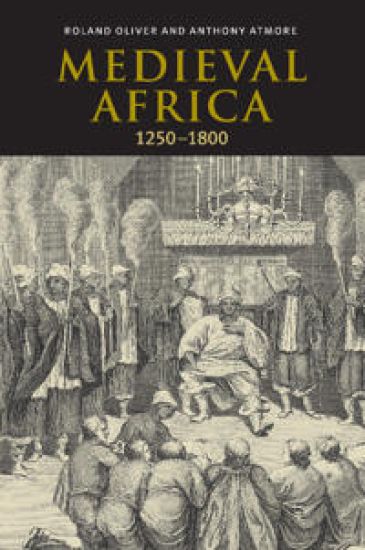
This is a radically revised version of The African Middle Ages 1400–1800, and the companion volume to the authors' well-known Africa since 1800. It follows the overall plan of the original, but now begins 150 years earlier, and considers recent literature in African historical studies. The earlier starting date enables a more distinctly African viewpoint. By about 1250 AD African societies were greatly expanding their political and economic scope. Islam was spreading south across the Sahara from Mediterranean Africa, and down the Indian Ocean coast. Medieval Africa continues into the period of European contacts from the 15th century onwards, with some emphasis on the growth of the trans-Saharan, Atlantic and Indian Ocean slave trade. The book stresses both the strengths and weaknesses of African societies as the eighteenth century drew to a close. This volume will be an essential introduction to African history for students, as well as for the general reader. It is illustrated with a wealth of maps.
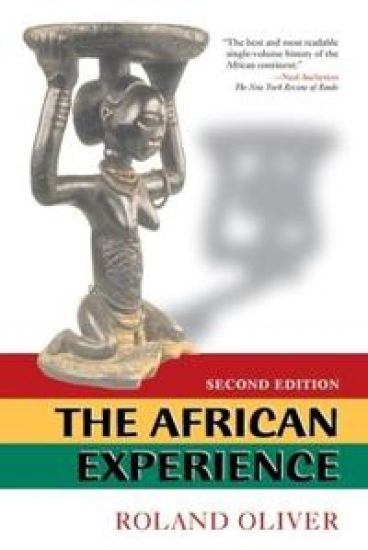
This masterpiece of scholarship and compression, the second edition of The African Experience , covers the entire span of human history across the African continent, from the earliest emergence of hominids in eastern and southern Africa up to the present day. Drawing on more than forty years of teaching and research, Professor Oliver arranges the book thematically, beginning with the human colonization of the different regions of Africa, the origins of food production, and the formation of African languages. The achievements of Ancient Egypt are placed in context with the developments in the rest of the continent, and the spread of Judaism, Christianity, and Islam - "peoples of the book." The tradition of urban settlement is traced, especially in western Africa, as well as the emergence of large and complex societies formed by the interaction of pastoralists and cultivators in eastern and southern Africa. The extent and nature of slavery in Africa is fully discussed, together with the external slave trade and the caravan trade in precolonial times. This leads to an analysis of the strengths and weaknesses of African political systems and why, from the early nineteenth century onwards, these systems were unable to withstand political pressure from abroad and the ensuing colonization. The colonial partition of Africa saw the rapid amalgamation of small units, through which considerable modernization was achieved at the expense of the indigenous structures and through the exploitation of the African peoples. Later chapters describe the birth of modern African nation-states, at a time of widespread belief in state planning - now being questioned as the political elites of black Africa begin to review their single-party systems. This new edition sees a number of revisions, including a new chapter on the 1990s, when the end of the Cold War left Africa free at last to try to solve its own problems.
The core of the book is Oliver's account of his research travels throughout tropical Africa from the 1940s to the 1980s; his efforts to train and foster African graduate students to teach in African universities; his role in establishing conferences and journals to bring together the work of historians and archaeologists from Europe and Africa; his encounters with political and religious leaders, scholars, soldiers, and storytellers; and the political and economic upheavals of the continent that he witnessed.
The core of the book is Oliver's account of his research travels throughout tropical Africa from the 1940s to the 1980s; his efforts to train and foster African graduate students to teach in African universities; his role in establishing conferences and journals to bring together the work of historians and archaeologists from Europe and Africa; his encounters with political and religious leaders, scholars, soldiers, and storytellers; and the political and economic upheavals of the continent that he witnessed.
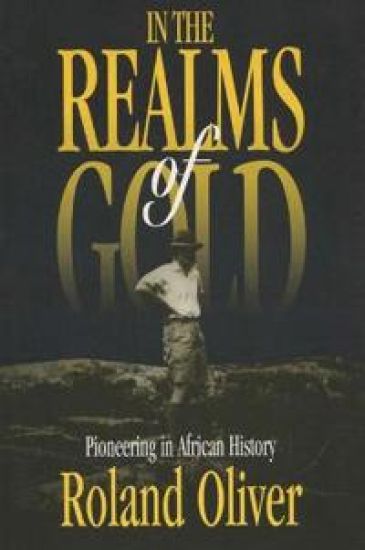
Over the last fifty years, Roland Oliver has been both a witness to the post-colonial history of Africa and a preeminent scholar of the continent’s pre-colonial history. Oliver was a young Cambridge graduate in 1947 when he took a newly created position at the University of London to research, and eventually teach, the pre-colonial history of Africa. Seeking from the outset to establish a unified conception of African history free from European frameworks, Oliver and his colleague John Fage went on to write the influential A Short History of Africa, found the Journal of African History, and co-edit the eight-volume Cambridge History of Africa. In the Realms of Gold is Oliver’s account of his life and work. He writes in a deft and lively style about the circumstances of his early life that shaped his education and outlook: his childhood on a river houseboat in Kashmir, the influential teachers and friends met at Stowe and Cambridge, and his service in World War II as a cryptographer in British intelligence, where he met his first wife, Caroline Linehan. His interest in church history while at Cambridge led him to study the historical effects of Christian missionaries in Africa, and thus his career began. The core of the book is Oliver’s account of his research travels throughout tropical Africa from the 1940s to the 1980s; his efforts to train and foster African graduate students to teach in African universities; his role in establishing conferences and journals to bring together the work of historians and archaeologists from Europe and Africa; his encounters with political and religious leaders, scholars, soldiers, and storytellers; and the political and economic upheavals of the continent that he witnessed.
In the Realms of Gold: Pioneering in African History
Roland Oliver
UNIVERSITY OF WISCONSIN PRESS
1997
sidottu
Over the last fifty years, Roland Oliver has been both a witness to the post-colonial history of Africa and a preeminent scholar of the continent's pre-colonial history. Oliver was a young Cambridge graduate in 1947 when he took a newly created position at the University of London to research, and eventually teach, the pre-colonial history of Africa. Seeking from the outset to establish a unified conception of African history free from European frameworks, Oliver and his colleague John Fage went on to write the influential A Short History of Africa, found the Journal of African History, and co-edit the eight-volume Cambridge History of Africa. In the Realms of Gold is Oliver's account of his life and work. He writes in a deft and lively style about the circumstances of his early life that shaped his education and outlook: his childhood on a river houseboat in Kashmir, the influential teachers and friends met at Stowe and Cambridge, and his service in World War II as a cryptographer in British intelligence, where he met his first wife, Caroline Linehan. His interest in church history while at Cambridge led him to study the historical effects of Christian missionaries in Africa, and thus his career began. The core of the book is Oliver's account of his research travels throughout tropical Africa from the 1940s to the 1980s; his efforts to train and foster African graduate students to teach in African universities; his role in establishing conferences and journals to bring together the work of historians and archaeologists from Europe and Africa; his encounters with political and religious leaders, scholars, soldiers, and storytellers; and the political and economic upheavals of the continent that he witnessed.
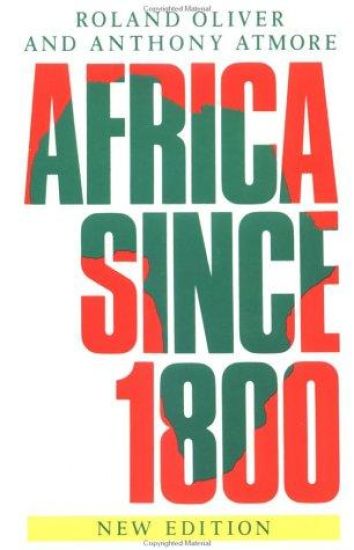
This history of modern Africa takes as its starting-point the year l800, because, although by that time the greater part of the interior of Africa had become known to the outside world, most of the initiatives for political and economic change still remained in the hands African rulers and their peoples. The book falls into three parts. The first describes the precolonial history of Africa, while the middle section deals thematically with partition and colonial rule. The third part deals with the emergence of the modern nation states of Africa and their history. Throughout the l90 years covered by the book, the authors are as concerned with the continuity of African history as with the changes which have taken place during this period. The new edition covers events up to the end of l99l and discusses the fresh perspectives brought about by the end of the Cold War.
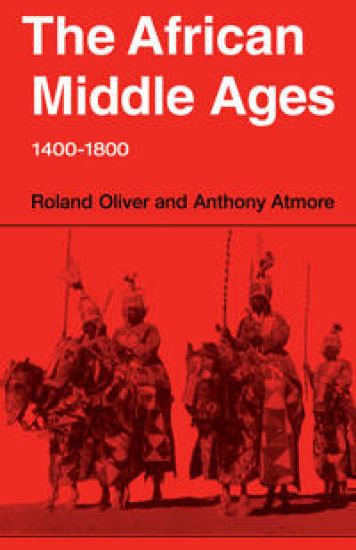
The African Middle Ages, 1400–1800
Roland Oliver; Anthony Atmore
Cambridge University Press
1981
pokkari
The African Middle Ages covers the period of African history from 1400 to 1800. During this period Africa was influenced by external forces as the Islamic states of the north extended their sway and as maritime trade with Europe and Asia increased. The notorious slave-trade created the black population of North and South America, the Caribbean and the Indian Ocean islands. The authors, however, emphasize the extent to which Africans dealt with outsiders on equal terms. The peoples of Africa were coalescing into tribal states rather like those of early medieval Europe. These states were often capable of providing a high degree of law and order, of exploiting resources and organising trade; of redistributing the products of local industries, and of defending themselves against outside attack. Though eventually subordinated by the colonial conquests of the late nineteenth and early twentieth centuries, the tribal states of pre-colonial Africa continue to exert a powerful residual influence upon the post-colonial states of modern Africa.
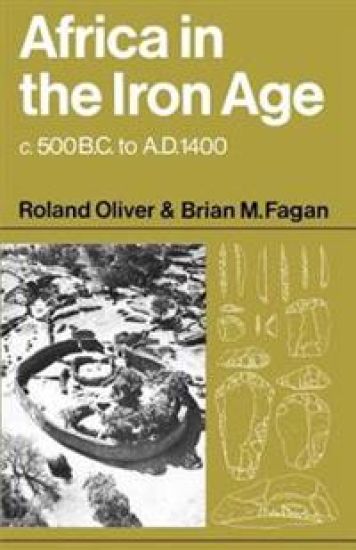
Africa in the Iron Age is a comprehensive and authoritative introduction to African history between about 500 B. C. and A. D. 1400. The authors are not so much concerned with a particular technological revolution as the enormous changes - political, social and economic - that took place during the period 500 B. C.-A. D. 1400 all over the African continent. The book falls into three parts. Early chapters describe conditions about 500 B. C. when North Africa is already in the Bronze Age, Middle Africa is engaged in Stone Age farming and south of the Sahara most men live by hunting and gathering food. Between 500 B. C. and A. D. 1000 life in settled communities becomes normal throughout the continent. Finally, the Iron Age sees the rise of state systems, the development of long-distance trade and the spread of Islam and Monophysite Christianity. Any study of this period has to combine historical and archaeological methods in the search for evidence and in the subsequent interpretation of data. While literary evidence does exist for the period, Iron Age archaeology necessarily supplies most of the evidence examined. Roland Oliver is a leading African historian and the author of several standard books on the subject. Brian Fagan is an acknowledged expert on African Iron Age archaeology.