Kirjojen hintavertailu – 12 903 725 kirjaa ja 27 kauppaa
Kirjailija
Rolf-Dieter Müller
Kirjat ja teokset yhdessä paikassa: 13 kirjaa, julkaisuja vuosilta 1998–2017, suosituimpiin kuuluu Reinhard Gehlen. Geheimdienstchef im Hintergrund der Bonner Republik. Vertaile teosten hintoja ja tarkista saatavuus suomalaisista kirjakaupoista.
Nimi esiintyy myös muodoissa: Rolf-Dieter Muller, Rolf-Dieter. Müller
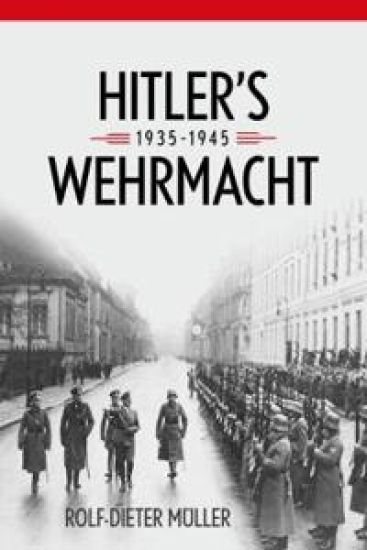
Since the end of World War II, Germans have struggled with the legacy of the Wehrmacht -- the unified armed forces mobilized by Adolf Hitler in 1935 to ensure the domination of the Third Reich in perpetuity. Historians have vigorously debated whether the Wehrmacht's atrocities represented a break with the past or a continuation of Germany's military traditions. Now available for the first time in English, this meticulously researched yet accessible overview by eminent historian Rolf-Dieter Müller provides the most comprehensive analysis of the organization to date, illuminating its role in a complex, horrific era. Müller examines the Wehrmacht's leadership principles, organization, equipment, and training, as well as the front-line experiences of soldiers, airmen, Waffen SS, foreign legionnaires, and volunteers. He skillfully demonstrates how state-directed propaganda and terror influenced the extent to which the militarized Volksgemeinschaft (national community) was transformed under the pressure of total mobilization. Finally, he evaluates the army's conduct of the war, from blitzkrieg to the final surrender and charges of war crimes. Brief acts of resistance, such as an officers' "rebellion of conscience" in July 1944, embody the repressed, principled humanity of Germany's soldiers, but ultimately, Müller concludes, the Wehrmacht became the "steel guarantor" of the criminal Nazi regime.
This volume is concerned with developments in wartime administration, economy, and manpower resources in Germany and its occupied territories from 1939-1941. It examines the mobilization of material and personnel resources in the German sphere of power for an industrialized conduct of the war. Indissolubly linked with this issue is the question of the way in which the regime's ideology affected that mobilization process, and why the 'opportunity' which the war offered for an organizational restructuring of this sector was not taken. The authors have produced a problem-oriented account, providing - by a detailed presentation of government practice - a multitude of insights into the regime's governmental structures.
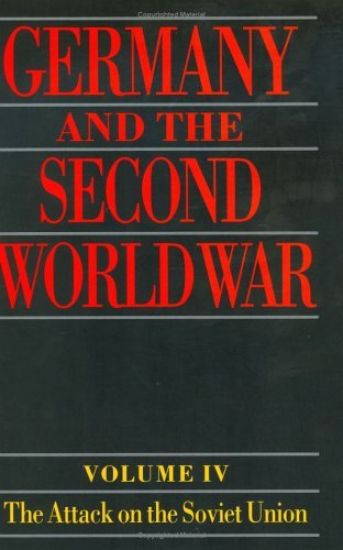
Nine months after the beginning of the Second World War, German dominance over much of Europe seemed assured. Hitler not only stood on the pinnacle of his popularity in Germany but more than ever his ideological fixations and political calculations determined German war policy. This volume, the fourth in the acclaimed Germany and the Second World War series, examines the thinking behind the decision to go to war with the Soviet Union which was to prove the undoing of the German war effort. The authors examine in revealing detail the military and political policies behind the attack on the Soviet Union and the strategic conduct of the war. They explore not only the command principles and practices, but also the expenditure and attrition of the forces, and show that by the end of 1941 it was clear that it was in the eastern theatre that the Second World War would be decided and the map of Europe redrawn.
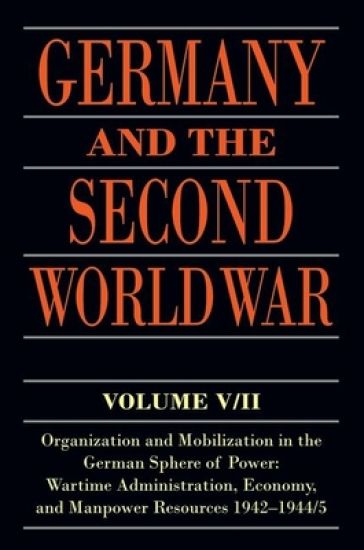
Volume V Part II of the comprehensive and authoritative Germany and the Second World War series spans the years 1942 to 1945, and looks in closely researched detail, and against a background of growing military setbacks and disasters leading to final defeat, at the administration and ruthless exploitation of the occupied countries and of Germany's own allies, and the effect on their populations (in particular their Jews, Roma, and Sinti) and national economies. This comprehensive study of the meteoric rise to prominence of Hitler's crown prince Albert Speer, and his struggle to implement a 'total war' armaments policy in the face of opposition from the Party's Gauleiters and political rivals in the Nazi leadership, documents with a wealth of maps, diagrams, and tables the achievements of the arms drive he masterminded; a large part of this success is shown to have relied on the forced or slave labour of those under German domination. The conflicting claims of industry and the Wehrmacht for dwindling manpower resources are also considered.
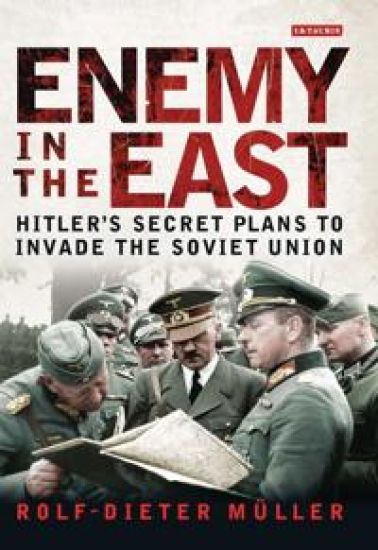
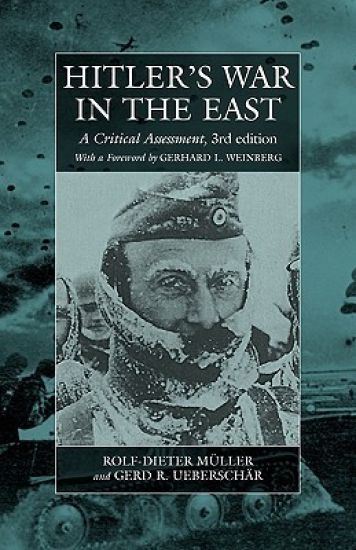
Operation Barbarossa, Hitler's invasion of the Soviet Union in 1941, led to one of the most brutal campaigns of World War II: of the estimated 70 million people who died in World War II, over 30 million died on the Eastern Front. Although it has previously been argued that the campaign was a pre-emptive strike, in fact, Hitler had been planning a war of intervention against the USSR ever since he came to power in 1933. Using previously unseen sources, acclaimed military historian Rolf-Dieter Muller shows that Hitler and the Wehrmacht had begun to negotiate with Poland and had even considered an alliance with Japan soon after taking power. Despite the signing of the Molotov-Ribbentrop Pact, at the declaration of war in September 1939, military engagement with the Red Army was still a very real and imminent possibility. In this book, Muller takes us behind the scenes of the Wehrmacht High Command, providing a fascinating insight into an unknown story of World War II.
Die kurze Episode der "Wehrmacht" hat zu einer ungeheuren milit rischen Kraftentfaltung des Deutschen Reiches gef hrt, zu berw ltigenden Siegen und katastrophalen Niederlagen, zugleich zur Mitverantwortung f r eine verbrecherische Kriegf hrung, wie sie in der deutschen Geschichte ohne Beispiel ist. Der Band bietet zun chst einen berblick ber die Wehrmacht im Dritten Reich, ihre F hrungsprinzipien, Gliederung, Ausr stung, Ausbildung und Fronterfahrung. Im zweiten Teil wird erkennbar, wie sich die militarisierte "Volksgemeinschaft" der Deutschen im Zweiten Weltkrieg unter dem Druck der totalen Mobilmachung ver nderte. Der dritte Teil analysiert die milit rische Kriegf hrung vom "Blitzkrieg" bis zum Untergang von Reich und Wehrmacht. Der Ausblick auf den Umgang mit diesem schwierigen Erbe in der Bundesrepublik zeigt, wie tief der Bruch in der deutschen Milit rgeschichte gewesen ist.
This volume provides a guide to the extensive literature on the war in the East, including largely unknown Soviet writing on the subject. Indispensable for military historians, but also for all scholars who approach this crucial period in world history from a socio-economic or cultural perspective.
From the outbreak of war to the end of 1941, Germany was riding high over much of Europe; then it all began to go wrong. Volume V Part II of the comprehensive and authoritative Germany and the Second World War series spans the years 1942 to 1945, and looks in closely researched detail, and against a background of growing military setbacks and disasters leading to final defeat, at the administration and ruthless exploitation of the occupied countries and of Germany's own allies, and the effect on their populations (in particular their Jews, Roma, and Sinti) and national economies. This comprehensive study of the meteoric rise to prominence of Hitler's crown prince Albert Speer, and his struggle to implement a 'total war' armaments policy in the face of opposition from the Party's Gauleiters and political rivals in the Nazi leadership, documents with a wealth of maps, diagrams, and tables the achievements of the arms drive he masterminded; a large part of this success is shown to have relied on the forced or slave labour of those under German domination. The conflicting claims of industry and the Wehrmacht for dwindling manpower resources are also considered. Series description: The volumes so far published in the magisterial ten-volume Germany and the Second World War series have attracted international acclaim as a major contribution to historical study. Under the auspices of the Militärgeschichtliches Forschungsamt [Research Institute for Military History] at Potsdam, a team of renowned historians has combined a full synthesis of existing material with the latest research to produce what will be the definitive history of the Second World War from the German point of view. The comprehensive analysis, based on detailed scholarly research, is underpinned by a full apparatus of maps, diagrams, and tables.
Nine months after the beginning of the Second World War, German dominance over much of Europe seemed assured. Hitler not only stood on the pinnacle of his popularity in Germany but more than ever his ideological fixations and political calculations determined German war policy. This volume, the fourth in the acclaimed Germany and the Second World War series, examines the thinking behind the decision to go to war with the Soviet Union which was to prove the undoing of the German war effort. The authors examine in revealing detail the military and political policies behind the attack on the Soviet Union and the strategic conduct of the war. They explore not only the command principles and practices, but also the expenditure and attrition of the forces, and show that by the end of 1941 it was clear that it was in the eastern theatre that the Second World War would be decided and the map of Europe redrawn. This is the fourth in the magisterial ten-volume Germany and the Second World War. The six volumes so far published in German take the story to 1943, and have achieved international acclaim as a major contribution to historical study. Under the auspices of the Militärgeschichtlichtes Forschungsamt [Research Institute for Military History], a team of renowned historians has combined a full synthesis of existing material with the latest research to produce what will be the definitive history of the Second World War from the German point of view. The comprehensive analysis, based on detailed scholarly research, is underpinned by a full apparatus of maps, diagrams, and tables. Intensively researched and documented, Germany and the Second World War is an undertaking of unparalleled scope and authority. It will prove indispensable to all historians of the twentieth century.