Kirjailija
Rollo May
Kirjat ja teokset yhdessä paikassa: 21 kirjaa, julkaisuja vuosilta 1988–2025, suosituimpiin kuuluu Kendini Arayan Insan. Vertaile teosten hintoja ja tarkista saatavuus suomalaisista kirjakaupoista.
21 kirjaa
Kirjojen julkaisuvuodet: 1988–2025.
'An innovator in psychology' The New York Times A timeless, accessible guide to giving good counsel at work. Whatever you do at work, if you interact with people - either as colleagues or clients - you will need the skills to have sensitive conversations. We cannot all be trained psychotherapists, but we can learn how to effectively listen, support and advise others in need. In The Art of Counselling, leading psychologist and psychotherapist Rollo May gives you to tools to interact compassionately and productively, helping you to: - Appear approachable and build empathy from the outset - Tailor your approach according to personality types - Listen with purpose in order to give meaningful advice A pioneer in the field of existential psychology, Rollo May recognised that many people who are not counsellors by profession are often required to act as such at work. The Art of Counselling has since become a classic of the genre and is more relevant than ever to the modern workplace.
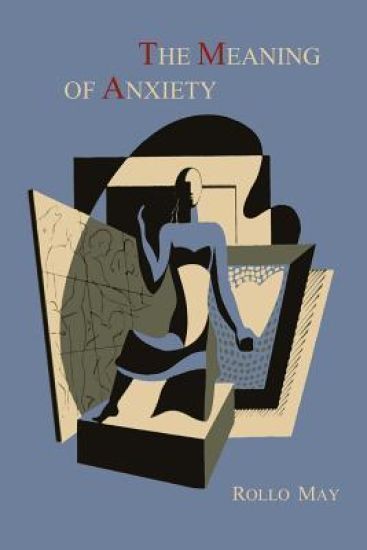
The Meaning of Anxiety is as relevant and illuminating now as when it was first published in 1950. Challenging the idea that mental health means living without anxiety, it explores anxiety’s potential for self-realisation and explores ways to avoid its destructive aspects.
Rollo May brings together the ideas of Kierkegaard, Nietzsche and other great thinkers to offer insight into the ideas and techniques of existential psychotherapy, of which he was a major force. He pays particular attention to the causes of loneliness and isolation and to our search for stability in order to move towards a future where responsibility, creativity and love can play a role.
When this important work was originally published in 1950-the first book in this country on anxiety-it was hailed as a work ahead of its time. In the revised edition of this now-classic study, the distinguished author of Love and Will deepens his exploration into anxiety theory. Dr. May challenges the idea that mental health means living without anxiety, and he explores anxiety's potential for self-realization as well as ways to avoid its destructive aspects.
""The Meaning of Anxiety"" by Rollo May is a psychological exploration of the nature of anxiety and its impact on human existence. May argues that anxiety is not simply a negative emotion to be avoided or suppressed, but rather a necessary and vital aspect of human experience. Drawing on insights from existentialism, psychology, and philosophy, May examines the various ways in which anxiety manifests itself in our lives, from the fear of death and the unknown to the anxiety of freedom and responsibility. He also explores the role of anxiety in creativity, relationships, and personal growth, arguing that it can be a powerful force for positive change if we learn to embrace it rather than avoid it. Ultimately, ""The Meaning of Anxiety"" offers a profound and insightful perspective on the human condition, and provides readers with a new understanding of how to navigate the challenges of life with courage, clarity, and purpose. This scarce antiquarian book is a facsimile reprint of the old original and may contain some imperfections such as library marks and notations. Because we believe this work is culturally important, we have made it available as part of our commitment for protecting, preserving, and promoting the world's literature in affordable, high quality, modern editions, that are true to their original work.
The Meaning of Anxiety [1950 First Edition]
Rollo May
Martino Fine Books
2011
pokkari
Halvin toimitettuna 32,10 €
Symbolism in Religion and Literature is a comprehensive exploration of the use of symbols in both religious and literary contexts. Written by Rollo May, a renowned psychologist and philosopher, the book delves into the ways in which symbols have been used throughout history to convey meaning and create a sense of shared understanding among communities. May draws on a wide range of examples, from ancient myths and religious texts to modern literature and art, to illustrate the power of symbols to evoke emotion, inspire action, and connect individuals to each other and to the larger world around them. He also explores the psychological and philosophical implications of symbolism, examining how it shapes our perceptions of reality and influences our behavior. Whether you are interested in the role of symbols in religion, literature, psychology, or philosophy, Symbolism in Religion and Literature offers a thought-provoking and insightful exploration of this fascinating topic. This scarce antiquarian book is a facsimile reprint of the old original and may contain some imperfections such as library marks and notations. Because we believe this work is culturally important, we have made it available as part of our commitment for protecting, preserving, and promoting the world's literature in affordable, high quality, modern editions, that are true to their original work.
Loneliness, boredom, emptiness: These are the complaints that Rollo May encountered over and over from his patients. In response, he probes the hidden layers of personality to reveal the core of man's integration--a basic and inborn sense of value. Man's Search for Himself is an illuminating view of our predicament in an age of overwhelming anxieties and gives guidance on how to choose, judge, and act during such times.
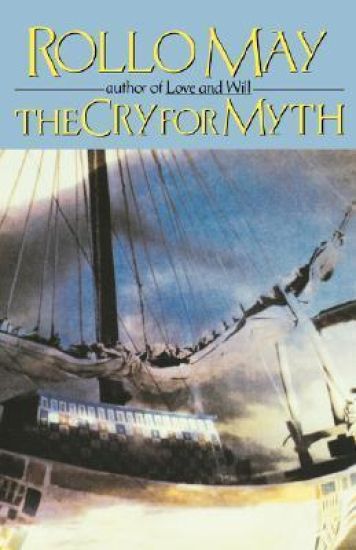
It happens almost daily in a therapist's office. A patient, recalling a person, an event, an emotion, quite unexpectedly supplies a link from a life in the present to one of the durable myths of our culture. In this moment, the myth becomes a mirror, revealing to the patient the source of disturbance and pain in a pattern of behavior that often stretches a year or longer. The healing process begins. The myth, "eternity breaking into time" in Rollo Mays's words, becomes the focal point of recovery. Through tracing myths – whether from classical Greece and Dante's Middle Ages, European legend (Faust and the prototype of Sleeping Beauty), or contemporary American life (Jay Gatsby) -- and relating them to the dreams and associations he encounters in his own practice, Dr. May provides meaning and structure for all who seek direction in a morally confusing world. In this, perhaps the finest achievement of a great therapist, Rollo May writes with "the grace, wit, and style: for which he recently received the Gold Medal of the American Psychological Society.
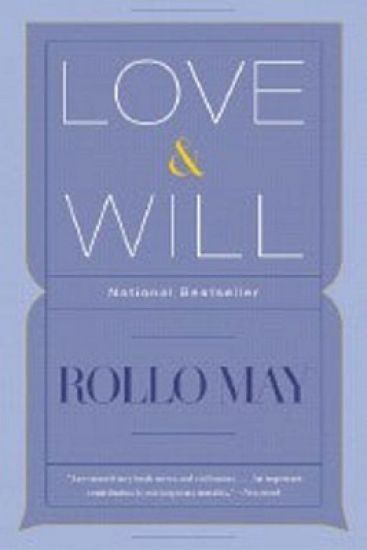
The heart of man's dilemma, according to Rollo May, is the failure to understand the real meaning of love and will, their source and interrelation. Bringing fresh insight to these concepts, May shows how we can attain a deeper consciousness.
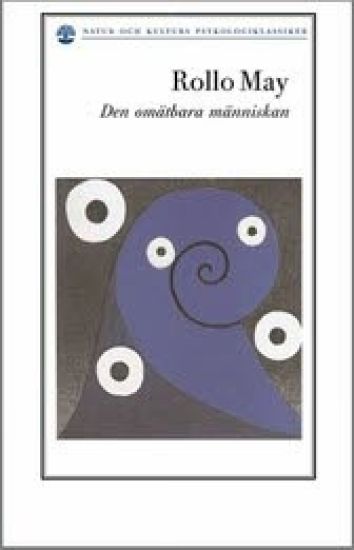
Den omätbara människan : om människosynen i existentiell psykologi och terapi
Rollo May
Natur Kultur Läromedel och Akademi
2005
nidottu
Personligheten är inte objektivt mätbar, hon kan inte helt fångas in i ett vetenskapligt system. Bakom varje teori upptäcker vi individen, den människa som allt detta händer med. Här finner vi de djupaste och mest fundamentala frågorna – om kärleken, meningen med livet, individens frihet, ansvar, lidande och död. Utan att förkasta behaviorism eller psykoanalys vill May tillföra ytterligare en dimension i vetenskapen om människan, nämligen existentialismens människosyn. Influerad av bland andra Kierkegaard, Heidegger och Jung förordar May en existentialistisk psykoterapi där det förbehållslösa mötet mellan verkliga, medkännande människor är det väsentliga. Terapeuten bör, liksom varje medmänniska, lyssna till den andre och hjälpa honom att upptäcka sina möjligheter och komma i kontakt med sin sanna existens. Översättning Margareta Wentz Edgardh
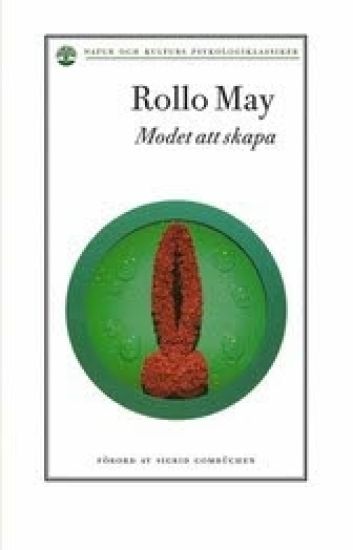
Rollo May framhåller i denna klassiker från 1975 att all verklig kreativitet innebär ett hot mot konformiteten. Den skapande människan går in i ett intensivt möte med något bortom sitt eget subjekt, och i detta möte måste hon satsa allt och riskera att misslyckas. Skapandet kräver mod och är inte en syssla bland andra. Det är emotionell hälsa i dess högsta form. Översättning Margareta Wentz Edgardh
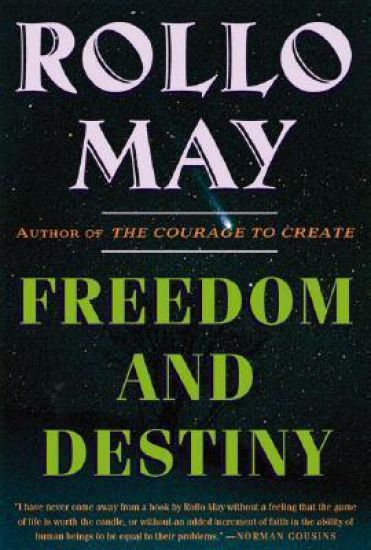
"May is an existential analyst who deservedly enjoys a reputation among both general and critical readers as an accessible and insightful social and psychological theorist. . . . Freedom's characteristics, fruits, and problems; destiny's reality; death; and therapy's place in the confrontation between freedom and destiny are examined. . . . Poets, social critics, artists, and other thinkers are invoked appropriately to support May's theory of freedom and destiny's interdependence."—Library Journal "Especially instructive, even stunning, is Dr. May's willingness to respect mystery. . . . There is, too, at work throughout the book a disciplined yet relaxed clinical mind, inclined to celebrate . . . what Flannery O'Connor called 'mystery and manners,' and to do so in a tactful, meditative manner."—Robert Coles, America
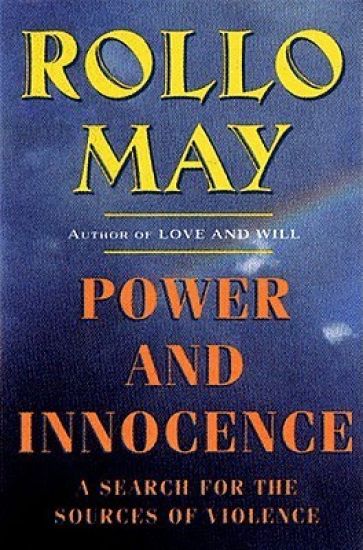
Rollo May defines power as the ability to cause or prevent change; innocence, on the other hand, is the conscious divesting of one's power to make it seem a virtuea form of powerlessness that Dr. May sees as particularly American in nature. From these basic concepts he suggests a new ethic that sees power as the basis for both human goodness and evil. Dr. May discusses five levels of power's potential in each of us: the infant's power to be; self-affirmation, the ability to survive with self-esteem; self-assertion, which develops when self-affirmation is blocked; aggression, a reaction to thwarted assertion; and, finally, violence, when reason and persuasion are ineffective.
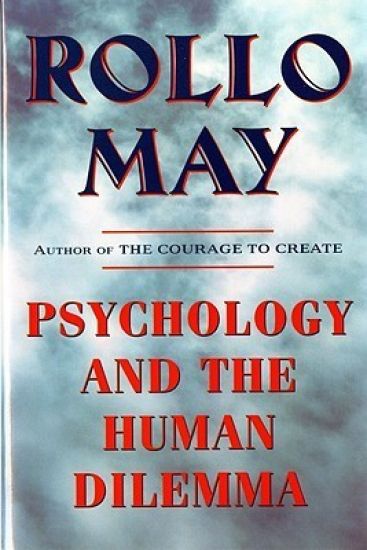
Whether reflecting on war, psychology, or the ideas of existentialist thinkers such as Sartre and Kierkegaard, Dr. May everywhere enlarges our outlook on how people can develop creatively within the human predicament.
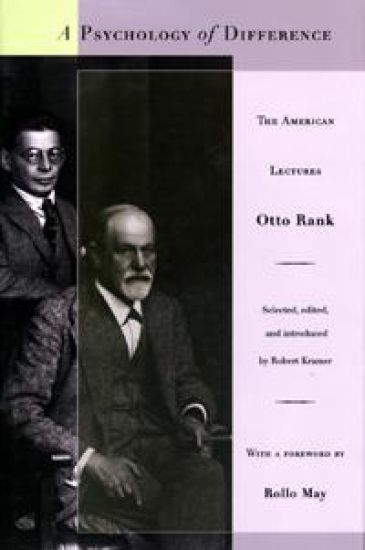
A leading disciple and confidant of Freud, Otto Rank revolutionized the field of psychoanalytic theory in The Trauma of Birth (1924). In this book, Rank proposed that the child's pre-Oedipal relationship to the mother was the prototype of the therapeutic relationship between analyst and patient. Although Rank is now widely acknowledged as the most important precursor of humanistic and existential psychotherapy--influencing such well-known writers as Carl Rogers, Rollo May, and Ernest Becker--Rank's knotty prose has long frustrated readers. In this volume of Rank's lectures, Robert Kramer has brought together for the first time the innovator's clearest explanations of his most influential theories. The lectures were delivered in English to receptive audiences of social workers, therapists, and clinical psychologists throughout the United States from 1924 to 1938, the year before Rank's untimely death. The topics covered include separation and individuation, projection and identification, love and will, relationship therapy, and neurosis as a failure in creativity. The lectures reveal that Rank, much maligned by orthodox analysts, invented the modern object-relations approach to psychotherapy in the 1920s. In his introduction, based on private correspondence between Rank, Freud, and others in the inner circle, Robert Kramer tells the full story of why Rank parted ways with Freud. The collection of lectures constitutes a "readable Rank," filled with insights still relevant today, for those interested in the humanistic, existential, or object- relational aspects of psychotherapy, or in the development of the psychoanalytic movement.
He pays particular attention to the causes of loneliness and isolation, and to our search for stability in an age of anxiety.
What if imagination and art are not, as many of us might think, the frosting on life but the fountainhead of human experience? What if our logic and science derive from art forms, rather than the other way around? In this trenchant volume, Rollo May helps all of us find those creative impulses that, once liberated, offer new possibilities for achievement. A renowned therapist and inspiring guide, Dr. May draws on his experience to show how we can break out of old patterns in our lives. His insightful book offers us a way through our fears into a fully realized self.