Kirjojen hintavertailu – 12 903 725 kirjaa ja 27 kauppaa

Kirjailija

Roman Koropeckyj

Kirjat ja teokset yhdessä paikassa: 3 kirjaa, julkaisuja vuosilta 2008–2017, suosituimpiin kuuluu Challenging the Code – Essays on Ukrainian Literature and Culture. Vertaile teosten hintoja ja tarkista saatavuus suomalaisista kirjakaupoista.

3 kirjaa

Kirjojen julkaisuvuodet: 2008–2017.

Challenging the Code – Essays on Ukrainian Literature and Culture

Challenging the Code – Essays on Ukrainian Literature and Culture

Halyna Hryn; Roman Koropeckyj

Harvard Ukrainian Research Institute,U.S.
2017
nidottu
Drawn from a Festschrift honoring George G. Grabowicz, the essays in this collection examine central issues in Ukrainian literature and culture with special attention to the comparative and deconstructive approaches that reflect the honoree’s own work. All major time periods are covered: the onset of literacy in Kyivan Rus´; the cultural intersections of the early modern period; the gradual but persistent articulation of a national discourse in the new imperial reality (culminating with the defining figure of Taras Shevchenko); the vagaries of the long nineteenth century; twentieth-century modernism, ideology, and scholarship; and Ukraine’s intellectual position today. The essays also variously explore the interface of literature, language, theater, and film, and touch upon the strictures and distortions imposed by censorship and ideology, uncharted currents of reception, and the interpretation of key texts, particularly the light they shed on the “political unconscious.” Special attention is devoted to the transnational functions of Ukrainian literature in the modern period. A full bibliography of Grabowicz’s foundational contribution to the field completes the collection.

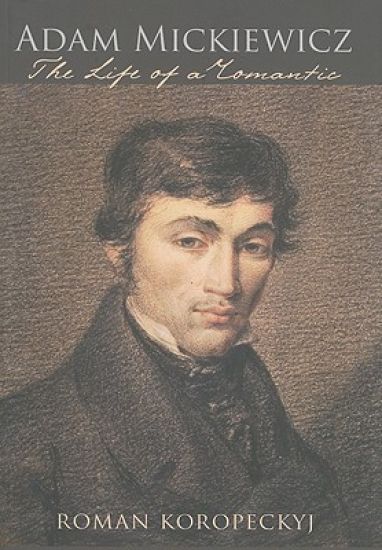
Adam Mickiewicz

Adam Mickiewicz

Roman Koropeckyj

CORNELL UNIVERSITY PRESS
2011
muu
Adam Mickiewicz (1798-1855), Poland's national poet, was one of the extraordinary personalities of the age. In chronicling the events of his life-his travels, numerous loves, a troubled marriage, years spent as a member of a heterodox religious sect...
Adam Mickiewicz

Adam Mickiewicz

Roman Koropeckyj

Cornell University Press
2008
sidottu
Adam Mickiewicz (1798–1855), Poland's national poet, was one of the extraordinary personalities of the age. In chronicling the events of his life-his travels, numerous loves, a troubled marriage, years spent as a member of a heterodox religious sect, and friendships with such luminaries of the time as Aleksandr Pushkin, James Fenimore Cooper, George Sand, Giuseppe Mazzini, Margaret Fuller, and Aleksandr Herzen-Roman Koropeckyj draws a portrait of the Polish poet as a quintessential European Romantic. Spanning five decades of one of the most turbulent periods in modern European history, Mickiewicz's life and works at once reflected and articulated the cultural and political upheavals marking post-Napoleonic Europe. After a poetic debut in his native Lithuania that transformed the face of Polish literature, he spent five years of exile in Russia for engaging in Polish "patriotic" activity. Subsequently, his grand tour of Europe was interrupted by his country's 1830 uprising against Russia; his failure to take part in it would haunt him for the rest of his life. For the next twenty years Mickiewicz shared the fate of other Polish émigrés in the West. It was here that he wrote Forefathers' Eve, part 3 (1832) and Pan Tadeusz (1834), arguably the two most influential works of modern Polish literature. His reputation as his country's most prominent poet secured him a position teaching Latin literature at the Academy of Lausanne and then the first chair of Slavic Literature at the Collége de France. In 1848 he organized a Polish legion in Italy and upon his return to Paris founded a radical French-language newspaper. His final days were devoted to forming a Polish legion in Istanbul. This richly illustrated biography-the first scholarly biography of the poet to be published in English since 1911-draws extensively on diaries, memoirs, correspondence, and the poet's literary texts to make sense of a life as sublime as it was tragic. It concludes with a description of the solemn transfer of Mickiewicz's remains in 1890 from Paris to Cracow, where he was interred in the Royal Cathedral alongside Poland's kings and military heroes.