

Kirjailija
Romeo Dallaire
Kirjat ja teokset yhdessä paikassa: 10 kirjaa, julkaisuja vuosilta 2004–2026, suosituimpiin kuuluu The Peace. Vertaile teosten hintoja ja tarkista saatavuus suomalaisista kirjakaupoista.
Nimi esiintyy myös muodoissa: Roméo Dallaire
10 kirjaa
Kirjojen julkaisuvuodet: 2004–2026.
Collapse of a Country
Nicholas Coghlan; Roméo Dallaire; Shelly Whitman
MCGILL-QUEEN'S UNIVERSITY PRESS
2026
nidottu
The first Canadian diplomat to be posted to war-torn Sudan, Nicholas Coghlan was a natural choice to lead Canada’s representation in the new Republic of South Sudan soon after the country was founded in 2011. In late 2013 Coghlan and his wife Jenny were in the capital, Juba, when it erupted in gunfire and civil war pitted one half of the army against the other, Vice-President Machar against President Kiir, and the Nuer tribe against the Dinka. This action-focused narrative, grounded by accounts of meetings with key leaders and travels throughout the dangerous, impoverished hinterland of South Sudan, explains what happened in December 2013 and why. In harrowing terms, Collapse of a Country describes the ebb and flow of the war and the humanitarian tragedy that followed, the Coghlans’ scramble to evacuate South-Sudanese Canadians from Juba, and the well-meant but often ill-conceived attempts of the international community to mitigate the misery and bring peace back to a land that has rarely known it. Coghlan’s stark narrative serves as a lesson to politicians, diplomats, aid workers, and practitioners on the breakdown of governance and relationships between ethnic groups, and the often decisive role of international development representatives. Fast-paced and poignant, Collapse of a Country gives an insider’s glimpse into the chaos, violence, and ethnic conflicts that emerged out of a civil war that has been largely ignored by the West.


Waiting for First Light: My Ongoing Battle with PTSD
Romeo Dallaire
Random House of Canada
2019
nidottu
In this piercing memoir, Rom o Dallaire, retired general and former senator, bestselling author and one of the world's leading humanitarians, delves deep into his life since the Rwandan genocide. At the heart of Waiting for First Light is a no-holds-barred self-portrait of a top political and military figure whose nights are invaded by despair, but who at first light faces the day with the renewed desire to make a difference in the world. Rom o Dallaire, traumatized by witnessing genocide on an imponderable scale in Rwanda, reflects in these pages on the nature of PTSD and the impact of that deep wound on his life since 1994, and on how he motivates himself and others to humanitarian work despite his constant struggle. Though he had been a leader in peace and in war at all levels up to deputy commander of the Canadian Army, his PTSD led to his medical dismissal from the Canadian Forces in April 2000, a blow that almost killed him. But he crawled out of the hole he fell into after he had to take off the uniform, and he has been inspiring people to give their all to multiple missions ever since, from ending genocide to eradicating the use of child soldiers to revolutionizing officer training so that our soldiers can better deal with the muddy reality of modern conflict zones and to revolutionizing our thinking about the changing nature of conflict itself. Compelling and original, Waiting for First Light is an emotional account of suffering, endurance, and the fight for a better world.

Between 15,000 and 20,000 underage youths, some as young as ten, signed up to fight in Canada's armed forces in the First World War. They served in the trenches alongside their elders, and fought in all the major battles: Ypres, the Somme, Passchendaele, Vimy Ridge, and the rest. Many were injured or suffered psychological wounds. Many died. This is the first book to tell their story. Some boys joined up to escape unhappy homes and workplaces. Others went with their parents' blessing, carrying letters from fathers and mothers asking the recruiters to take their eager sons. The romantic notion of a short, victorious campaign was wiped out the second these boys arrived on the Western Front. The authors, who narrate the fighting with both military professionalism and humanity, portray many boys who, in the heat of battle, made a seamless transition from follower to leader to hero. Authors Dan Black and John Boileau combed the archives and collections to bring these stories to life. Passages from letters the boy soldiers wrote home reveal the range of emotions and experiences they underwent, from the humorous to the unspeakably horrible. Their parents' letters touch us with their concern, love, uncertainty, and often, grief. Meticulously researched and abundantly illustrated with photographs, paintings, and a collection of specially commissioned maps, Old Enough to Fight is military and social history at its most fascinating.
In conflicts around the world, there is an increasingly popular weapon system that needs negligible technology. What are these cheap, renewable, plentiful, sophisticated, and expendable weapons? Children. This book provides an introduction to the child soldier phenomenon, as well as concrete solutions for its total eradication.
Religion in the Ranks
Joanne Benham Rennick; Romeo Dallaire
University of Toronto Press
2011
sidottu
What role does religion play in the Canadian Forces today? Examining the changing functions of the official religious leaders in the chaplaincy as well as the place and purpose of religion in the lives of regular military personnel, Religion in the Ranks explores this question in the context of late modernity and the Canadian secular state. In-depth interviews with chaplains and with personnel of differing spiritual beliefs offer insight into how religion affects the real life experiences of those who have endured difficult assignments, witnessed atrocities, and struggled to overcome post-traumatic stress disorder. While identifying the historic function of religion in the Canadian Forces, Joanne Benham Rennick demonstrates that spiritual interests remain important, even to those who do not consider themselves to be religious. Arguing that the leadership, practices, and beliefs rooted in religious affiliations create essential support systems for individuals, both at home and on assignment, Benham Rennick shows that there is still a place for religion in Canada's military.
Sticks and Stones
J. Brian Atwood; Susan J. Atwood; John Cooley; Romeo Dallaire; Ramu Damodaran; Valerie Epps; Michael Glennon
University of Massachusetts Press
2006
nidottu
Albert Einstein famously remarked that he did not know what weapons would be used in World War III, but World War IV would be fought with sticks and stones. In this volume, a distinguished group of scholars, government officials, politicians, journalists, and statesmen examine what can be learned from the wars of the twentieth century, and how that knowledge might help us as we step ever so perilously into the twenty-first. Following an introduction by Padraig O'Malley, the book is divided into four sections: Understanding the World as We Have Known It; Global Uncertainties; Whose Values? Whose Justice?; and Shaping a New World. The first section reviews what we have learned about war and establishes benchmarks for judging whether that knowledge is being translated into changes in the behaviour of our political cultures. It suggests that the world's premier superpower, in its effort to promote Western-style democracy, has taken steps that have inhibited rather than facilitated democratization. The second section examines the war on terror and the concept of global war. From the essays in this section emerges a consensus that democracy as practiced in the West cannot be exported to countries with radically different cultures, traditions, and values. The third section visits the question of means and ends in the context of varying value systems and of theocracy, democracy, and culture. In the final section, the focus shifts to our need for global institutions to maintain order and assist change in the twenty-first century. Although each contributor comes from a different starting point, speaks with a different voice, and has a different ideological perspective, the essays reach startlingly similar conclusions. In sum, they find that the West has not absorbed the lessons from the wars of the last century, and is inadequately prepared to meet the new challenges that now confront us.
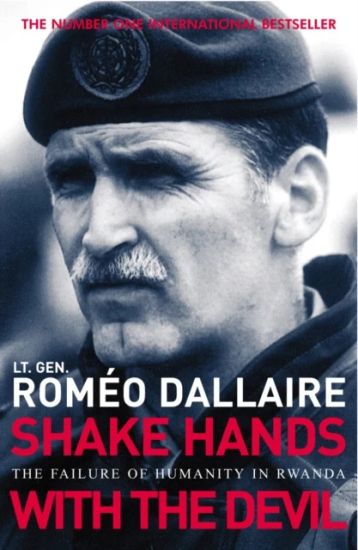
Thirteen months after Lt-Gen Romeo went to serve as force commander of the UN intervention in Rwanda in 1993, he flew home broken, disillusioned and suicidal, having witnessed the slaughter of 800,000 Rwandans. This book takes us on a return voyage into the hell of Rwanda, recreating the events the international community turned its back on.
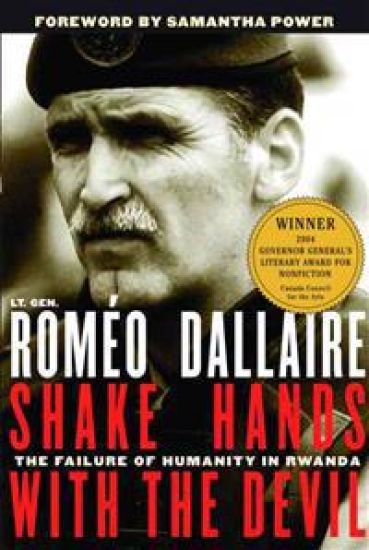
For the first time in the United States comes the tragic and profoundly important story of the legendary Canadian general who "watched as the devil took control of paradise on earth and fed on the blood of the people we were supposed to protect." When Roméo Dallaire was called on to serve as force commander of the UN Assistance Mission for Rwanda, he believed that his assignment was to help two warring parties achieve the peace they both wanted. Instead, he was exposed to the most barbarous and chaotic display of civil war and genocide in the past decade, observing in just one hundred days the killings of more than eight hundred thousand Rwandans. With only a few troops, his own ingenuity and courage to direct his efforts, Dallaire rescued thousands, but his call for more support from the world body fell on deaf ears. In Shake Hands with the Devil, General Dallaire recreates the awful history the world community chose to ignore. He also chronicles his own progression from confident Cold Warrior to devastated UN commander, and finally to retired general struggling painfully, and publicly, to overcome posttraumatic stress disorder-the highest-ranking officer ever to share such experiences with readers.