Kirjojen hintavertailu – 12 875 326 kirjaa ja 26 kauppaa

Kirjailija

Ron Simon

Kirjat ja teokset yhdessä paikassa: 6 kirjaa, julkaisuja vuosilta 2010–2021, suosituimpiin kuuluu Tell Me Why I Can't. Vertaile teosten hintoja ja tarkista saatavuus suomalaisista kirjakaupoista.

6 kirjaa

Kirjojen julkaisuvuodet: 2010–2021.

Tell Me Why I Can't

Tell Me Why I Can't

Ron Simon

Book House Publishing
2021
pokkari
The United States is at a critical point. Our jobs, the prices we pay for products, and the heart of American entrepreneurship itself are at stake. Those betting against us say that China is outcompeting us, out-innovating us, and not playing by the rules and that, under these circumstances, our defeat is inevitable. In Tell Me Why I Can't, Ron Simon describes how victory competing in the global market is not just possible but also intrinsic to America's capitalist DNA. Both moving memoir and captivating case study, Tell Me Why I Can't explores the limitless potential of US entrepreneurism and its unparalleled ability to reward innovation, creativity, and positive disruption. Simon's rise to business greatness is a testament to the power and possibility of the American Dream.

Tell Me Why I Can't

Tell Me Why I Can't

Ron Simon

Book House Publishing
2021
sidottu
The United States is at a critical point. Our jobs, the prices we pay for products, and the heart of American entrepreneurship itself are at stake. Those betting against us say that China is outcompeting us, out-innovating us, and not playing by the rules and that, under these circumstances, our defeat is inevitable. In Tell Me Why I Can't, Ron Simon describes how victory competing in the global market is not just possible but also intrinsic to America's capitalist DNA. Both moving memoir and captivating case study, Tell Me Why I Can't explores the limitless potential of US entrepreneurism and its unparalleled ability to reward innovation, creativity, and positive disruption. Simon's rise to business greatness is a testament to the power and possibility of the American Dream.

Retro Radio

Retro Radio

Mike Tauber; Ron Simon

Schiffer Publishing Ltd
2015
sidottu
Before television and MTV, the radio was central in the home, a way for the family to gather to hear the news or listen to music. Over 175 images provide an impressive visual journey through the radio’s aesthetic history, reflecting all the major design changes across the years. The images also reveal the diversity of materials, textures, colors, shapes, and sizes of radios of earlier ages. RETRO RADIO ranges from the 1920s tabletop wooden console models in the classic bread box, cathedral, and tombstone styles, to the wooden and early Bakelite and Catalin plastic art deco models of the 1930s to the 1950s, on to the thermoplastic models' cutting-edge styling, and the transistors that ascended to prominence in the 1950s and beyond. Reintroducing machines that few people see anymore and perhaps hardly know existed, this fascinating book restores the once state-of-the-art machines' aesthetic glory.
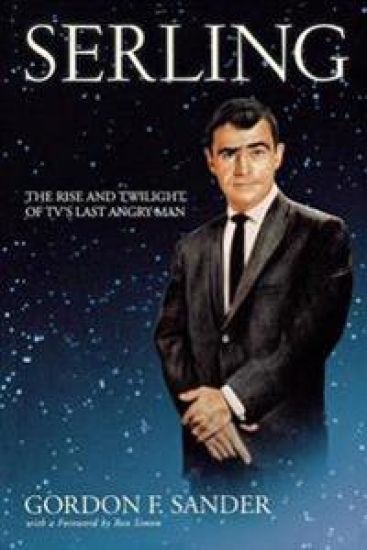
Serling

Serling

Gordon F. Sander; Ron Simon

Cornell University Press
2012
pokkari
"Serling's complex life was very like an extended episode of The Twilight Zone, and Gordon F. Sander uniquely captures all the twists and ironies of a talented man struggling against the conventions of society and the insecurities of self. Sander's haunting portrait is of a writer indeed caught between light and shadow."—from the Foreword by Ron Simon "Sander has fashioned a vivid and fascinating portrait of this complex innovator from television's Golden Age."—Library Journal "The story of Serling's career doubles as a history of the television industry itself, and Sander vividly depicts the heady early days of live TV, when the highest artistic achievement seemed attainable. Highly recommended."—Booklist "Sander's strong, straightforward portrait of Serling as an industry goad who confronted his corporate bosses forms the most unexpected and powerful part of the book. Rod Serling merited this fine book."—Philadelphia Inquirer Gordon F. Sander's acclaimed biography of Rod Serling is at once a portrait of a prodigiously talented writer and a history of the first-quarter century of television. A former paratrooper in World War II, Serling rose to fame in the 1950s with his hard-hitting plays Patterns and Requiem for a Heavyweight during the "golden age" of live television in New York City. In 1959, excited by the prospect of writing and producing his own dramatic anthology show, the angry young man of television followed his fortune—and the burgeoning video medium—to Hollywood. Serling's anthology show, of course, was the landmark The Twilight Zone. Still considered one of the greatest television shows ever produced, Serling's surreal video showcase ran for five seasons, adding to Serling's record clutch of Emmys, and continues to be a cult favorite today. Meanwhile Serling also tried his hand at writing for movies, turning out the screenplays for Seven Days in May and Planet of the Apes before his death in 1975 at age fifty. Sander's historical biography—for which he interviewed more than two hundred of Serling's friends, family members, and colleagues, including Robert Redford, Sydney Pollack, Kim Hunter, and William Shatner—follows the video bard's odyssey from Binghamton, the small upstate city that served as the template for some of the best-remembered episodes of The Twilight Zone to his searing and equally influential wartime experiences in the South Pacific; from his apprenticeship as a Midwestern radio and television writer to his successes in New York and Hollywood, before he himself was consumed by the commercialism of the medium he had helped create.
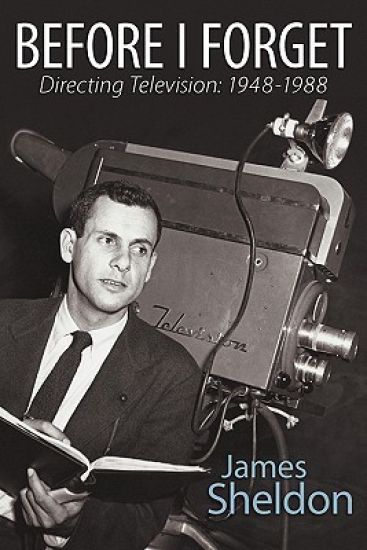
Before I Forget - Directing Television

Before I Forget - Directing Television

James Sheldon; Ron Simon

BearManor Media
2011
pokkari
JAMES SHELDON was directing the radio show We, The People when it became the first commercial CBS network program to telecast nationally on June 1, 1948. Since then he has experienced the technological changes from live to electronic tape to film, from black and white to color, and from a few hundred thousand to the multi-millions of television sets in use today. His early live credits include dramatic series like Robert Montgomery Presents and Studio One, comedies like Mister Peepers and musicals like Don Ameche's Holiday Hotel. He was part of the move from New York to Los Angeles as television production shifted west in the mid 50's. Credits during that period: The Johnny Carson Show, West Point Story, Harbor Command and Dick Powell's Zane Grey Theater. In the 60's, he directed many episodes of 87th Precinct, Naked City, Route 66, The Millionaire, My Three Sons, The Twilight Zone, Walt Disney's Wonderful World of Color and Gunsmoke. In the '70's, M*A*S*H, The Virginian, Sanford & Son, Rock Hudson's McMillan & Wife and Raymond Burr's Ironsides. In the '80's, Seven Brides for Seven Brothers, Cagney & Lacey, and The Equalizer. Included in the list of the many actors whose careers he helped start are: James Dean, Paul Newman, Dustin Hoffman, Gene Hackman, Carroll O'Connor, Clint Eastwood, Burt Reynolds, Lee Remick, Tony Randall and Tyne Daly.
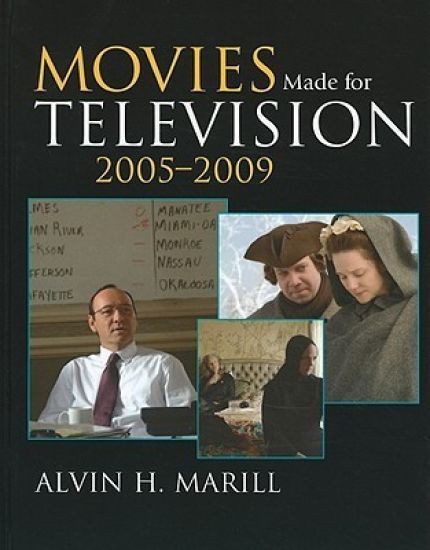
Movies Made for Television

Movies Made for Television

Alvin H. Marill; Ron Simon

Scarecrow Press
2010
sidottu
In 2005, Scarecrow published Movies Made for Television, 1964-2004, a five-volume reference set commemorating 40 years of every made for TV film since See How They Run debuted in 1964. These books provided a comprehensive listing of every television film and mini-series, detailing each film's original network, airdate, and length of broadcast. In this latest volume, Marill adds another five years of television films, providing information for an additional 400 works produced between 2005 and 2009. Along with a brief summary, entries also include extensive production credits (director, writer, producer, composer, director of photography, and editor) and a complete cast and character listing. With a chronology of the films, an appendix of movies adapted from other sources, and separate indexes for actors and directors, Movies Made for Television, 2005-2009 is a welcome addition to a resource highly regarded by scholars and historians of television and popular culture.