
Kirjailija
Ron Thompson
Kirjat ja teokset yhdessä paikassa: 12 kirjaa, julkaisuja vuosilta 2007–2026, suosituimpiin kuuluu Mon Amérique. Vertaile teosten hintoja ja tarkista saatavuus suomalaisista kirjakaupoista.
12 kirjaa
Kirjojen julkaisuvuodet: 2007–2026.




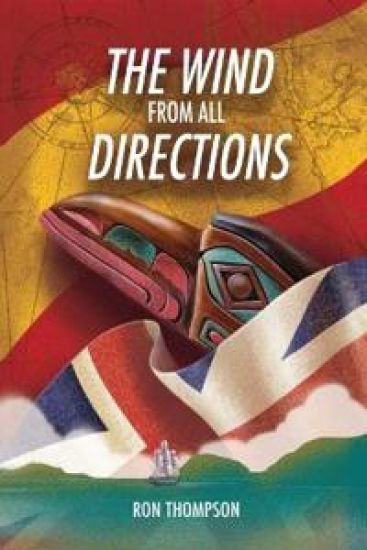
In 1792, British naval lieutenant George Vancouver arrived in the Pacific northwest on a mission of exploration. He has orders to take possession of Nootka Sound, but finds the Spanish, led by Juan Francisco de la Bodega y Quadra, already there and unwilling to leave. Quadra and Vancouver negotiate their countries' claims, manoeuvring for advantage and seeking the support of Maquinna, chief of the Mowachaht, who recognizes the threat posed by all the newcomers to his territory. Their fate lay in the hands of their commanders. How they respond could pitch Spain and Britain into outright war.
Education, Inequality and Social Class provides a comprehensive discussion of the empirical evidence for persistent inequality in educational attainment. It explores the most important theoretical perspectives that have been developed to understand class-based inequality and frame further research. With clear explanations of essential concepts, this book draws on empirical data from the UK and other countries to illustrate the nature and scale of inequalities according to social background, discussing the interactions of class-based inequalities with those according to race and gender. The book relates aspects of inequality to the features of educational systems, showing how policy choices impact on the life chances of children from different class backgrounds. The relationship between education and social mobility is also explored, using the concepts of social closure, positionality and social congestion. The book also provides detailed discussions of the work of Pierre Bourdieu and Basil Bernstein, two important theorists whose contributions have generated thriving research traditions much used in contemporary educational research. Education, Inequality and Social Class will be essential reading for postgraduate and advanced undergraduate students engaged in the study of education, childhood studies and sociology. It will also be of great interest to academics, researchers and teachers in training.
Education, Inequality and Social Class provides a comprehensive discussion of the empirical evidence for persistent inequality in educational attainment. It explores the most important theoretical perspectives that have been developed to understand class-based inequality and frame further research. With clear explanations of essential concepts, this book draws on empirical data from the UK and other countries to illustrate the nature and scale of inequalities according to social background, discussing the interactions of class-based inequalities with those according to race and gender. The book relates aspects of inequality to the features of educational systems, showing how policy choices impact on the life chances of children from different class backgrounds. The relationship between education and social mobility is also explored, using the concepts of social closure, positionality and social congestion. The book also provides detailed discussions of the work of Pierre Bourdieu and Basil Bernstein, two important theorists whose contributions have generated thriving research traditions much used in contemporary educational research. Education, Inequality and Social Class will be essential reading for postgraduate and advanced undergraduate students engaged in the study of education, childhood studies and sociology. It will also be of great interest to academics, researchers and teachers in training.
Teaching in Lifelong Learning 3e A guide to theory and practice
James Avis; Roy Fisher; Ron Thompson
Open University Press
2018
nidottu
Addressing the Professional Standards for Teachers and Trainers, this bestselling textbook helpfully balances theory and practice, introducing key theories and concepts relating to learning and assessment as well as providing practical advice on teaching. Extensively revised and updated to reflect the current educational policy environment, this textbook for teaching provides thorough and extensive coverage of the topics for higher-level awards in Education and Training. The textbook provides a logical progression through the essential aspects of teaching, such as planning and assessment; it considers key related areas including teacher professionalism, equality and diversity, and mentoring and coaching; and it presents this invaluable guidance in an accessible and readable format. In outlining the challenges, opportunities, and debates in and around lifelong learning, the editors and contributing authors draw on their extensive teaching experience, as well as offering an evidence-based approach with a wide range of research. Teaching in Lifelong Learning: A Guide to Theory and Practice is core reading for those teaching or preparing to teach in further, higher and community education as well as in public sector contexts and in private training organisations, including those studying for CertEd/PGCE and related awards, such as the Level 4 Certificate and Level 5 Diploma in Education and Training.'Teacher education in FE continues to be an important and unresolved issue, and this book is a great asset in supporting individuals in understanding and developing their practices. With a focus on developing critical, inquiring practitioners, the text reads like an experienced mentor sharing pointers, questions, and useful readings over a collegial cup of coffee'. Dr Tim Herrick, Senior University Teacher, University of Sheffield, UK
There is something odd about him. He's a genius with numbers, and he's fascinated by words, but he just doesn't get people. With all their coded talk and body language they are a lifelong mystery, a black box without a key. That's why he gravitated years ago to the backrooms of finance; he was comfortable there, calculating risk and designing derivatives. Credit default swaps and mortgage-backed securities were far less complicated than other human beings. Now it's 2008, and global markets are melting down, but the guy who just may be responsible for the crisis is no longer thinking up derivatives. He's written a book, an historical epic-the long-awaited Great Canadian Novel, if only he could get it published. He's struck out at every turn, and the uncertainty is eating him up. He is beset by doubt, unsure about his talent and the choices he has made. What's more, he's got a horrendous case of writer's block. He can't seem to get going on his next great epic. "You're a writer," his friend counsels. "Write your way out of it." And so he does, beginning with his own story, reflecting on his choices and where they have led, his obsessions, his writing quest; and Genny, the great love of his life. His is a rollercoaster journey that wends from the western prairie through the halls of Oxford, to London, the Kalahari, and Wall Street on 911; and finally to Toronto's Little Poland where he's gone off-grid and possibly off the rails. How does a man with no name become a person of letters? Is he na ve, crazy, or just over-medicated? A Person of Letters is a rollicking riff on creativity and idealism, a deliciously icy snowball aimed at writing and publishing in the digital age.
Healthy exercise means finding a balance between overtraining and inactivity. By using a combination of clinical studies and real-life examples, this book shows readers how to develop their own personal prescription for discovering that balance. Written by two specialists in the field of eating disorders, it details both ends of the exercise continuum, from compulsive exercisers who push their bodies to the limit to people with little or no physical activity in their daily lives. The authors explain the psychological and health issues that can result from compulsive exercise ? including bone loss, fractures, amenorrhea, and unhealthy eating. They also cover the problems arising from inadequate exercise and provide ways that ill people can safely implement fitness programs. The book is not a weight-loss guide; instead, it emphasizes the importance of proper exercise, offering readers of all sizes, ages, and health levels practical solutions for changing their routines and finding a healthy exercise balance.