Kirjojen hintavertailu – 12 859 828 kirjaa ja 27 kauppaa

Kirjailija

Ron Tyler

Kirjat ja teokset yhdessä paikassa: 8 kirjaa, julkaisuja vuosilta 1990–2025, suosituimpiin kuuluu You Want Me to Do What!?!. Vertaile teosten hintoja ja tarkista saatavuus suomalaisista kirjakaupoista.

8 kirjaa

Kirjojen julkaisuvuodet: 1990–2025.

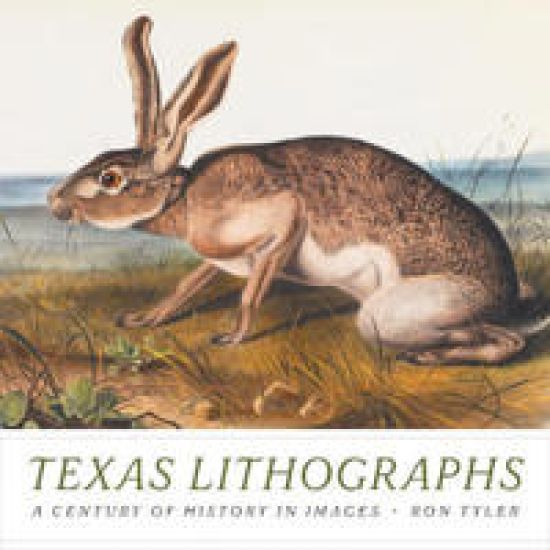
Texas Lithographs

Texas Lithographs

Ron Tyler

UNIVERSITY OF TEXAS PRESS
2023
sidottu
2024 Ewell L. Newman Book Award, American Historical Print Collectors Society 2024 Kate Broocks Bates Award for Historical Research, Texas State Historical Association? 2024 TCU Texas Book Prize, Friends of the TCU Library and the TCU Press 2024 Kempner Family Book Prize-Nonfiction,The Philosophical Society of TexasA stunning and comprehensive collection of lithographs from 1818 to 1900 Texas. Westward expansion in the United States was deeply intertwined with the technological revolutions of the nineteenth century, from telegraphy to railroads. Among the most important of these, if often forgotten, was the lithograph. Before photography became a dominant medium, lithography-and later, chromolithography-enabled inexpensive reproduction of color illustrations, transforming journalism and marketing and nurturing, for the first time, a global visual culture. One of the great subjects of the lithography boom was an emerging Euro-American colony in the Americas: Texas. The most complete collection of its kind-and quite possibly the most complete visual record of nineteenth-century Texas, period-Texas Lithographs is a gateway to the history of the Lone Star State in its most formative period. Ron Tyler assembles works from 1818 to 1900, many created by outsiders and newcomers promoting investment and settlement in Texas. Whether they depict the early French colony of Champ d’Asile, the Republic of Texas, and the war with Mexico, or urban growth, frontier exploration, and the key figures of a nascent Euro-American empire, the images collected here reflect an Eden of opportunity-a fairy-tale dream that remains foundational to Texans’ sense of self and to the world’s sense of Texas.

You Want Me to Do What!?!

You Want Me to Do What!?!

Ron Tyler; Kay Arthur

Called Writers Christian Publishing, LLC
2023
pokkari
In July of 1975, shortly after coming to a personal relationship with Jesus Christ, Ron Tyler prayed, "Lord, I will be anything You want me to be I will go anywhere You want me to go I will do anything You want me to do "In that moment, Ron heard God respond, "I am going to use you to reach hundreds of thousands of people for Me." The next 13 years saw Ron leave the corporate world and enter the pastorate, having his faith and obedience tested and refined, sometimes in very extreme circumstances. In 1988, Ron and his family got a different calling from the Lord. They were given the opportunity to head up an effort by Evangelism Explosion International to spread the gospel across the entire continent of Africa. In his heart, Ron knew that this was it Again, faith and extreme obedience were required, but while there, Ron and his family helped pioneer a new method of evangelism that ultimately resulted in 25 million people saved across the African continent. This is their story-a story which clearly displays the truth that there is no limit to what God can do through surrendered and obedient hearts
The Art of Texas

The Art of Texas

Ron Tyler

Texas Christian University Press,U.S.
2019
sidottu
More than a quarter of a century ago, critic and author Michael Ennis observed that “There is no comprehensive work on Texas art; there has never been an exhibition offering more than a cursory overview of Texas art from the nineteenth century to the present.” But appreciation for Texas art has undergone a genuine renaissance, with collectors, museums, and the public paying more attention to it than ever before. The Art of Texas: 250 Years tells this story, beginning with key Spanish colonial paintings related to Texas and moving through two and a half centuries of art in Texas. By the twentieth century, most Texas artists had received formal training and produced work in styles similar to European and other American artists. The aesthetic scene changed abruptly as the Great Depression swept across the country: A group of Dallas artists agreed with artist and museum director Jerry Bywaters that “the artist is unbent, willing to be a human worker and not a luxury vendor.” They introduced a gritty regionalism in their Texas subjects, while the artists of the Fort Worth Circle developed their own brand of surrealism, and Houston artists looked to Europe for inspiration. The relief that followed World War II brought a new exuberance to the Texas scene, for the first time a majority-urban state. Artists responded with modernist styles rather than the sweeping landscapes and farm scenes of previous generations. The Art of Texas: 250 Years accompanies an exhibition of the same title at the Witte Museum in San Antonio. Written by noted scholars, art historians, and curators, it is the first attempt to analyze and characterize Texas art on such a grand scale.
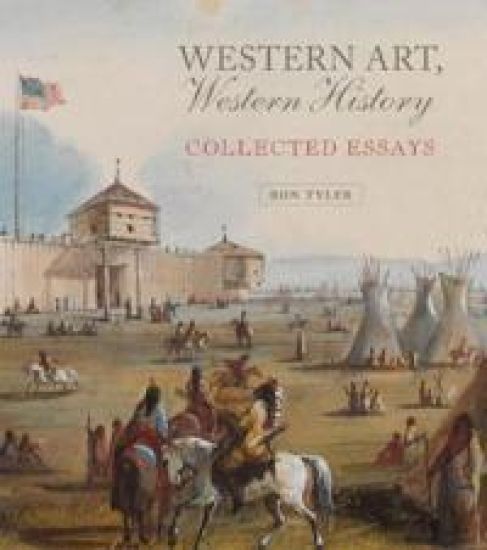
Western Art, Western History

Western Art, Western History

Ron Tyler

University of Oklahoma Press
2019
sidottu
For nearly half a century, celebrated historian Ron Tyler has researched, interpreted, and exhibited western American art. This splendid volume, gleaned from Tyler's extensive career of connoisseurship, brings together eight of the author's most notable essays, reworked especially for this volume. Beautifully illustrated with more than 150 images, Western Art, Western History tells the stories of key artists, both famous and obscure, whose provocative pictures document the people and places of the nineteenth-century American West. The artists depicted in these pages represent a variety of personalities and artistic styles. According to Tyler, each of them responded in unique ways to the compelling and exotic drama that unfolded in the West during the nineteenth century - an age of exploration, surveying, pleasure travel, and scientific discovery. In eloquent and engaging prose, Tyler unveils a fascinating cast of characters, including the little-known German-Russian artist Louis Choris, who served as a draftsman on the second Russian circumnavigation of the globe; the exacting and precise Swiss artist Karl Bodmer, who accompanied Prince Maximilian of Wied on his sojourn up the Missouri River; and the young American Alfred Jacob Miller, whose seemingly frivolous and romantic depictions of western mountain men and American Indians remained largely unknown until the mid-twentieth century. Other artists showcased in this volume are John James Audubon, George Caleb Bingham, Alfred E. Mathews, and, finally, Frederic Remington, who famously sought to capture the last glimmers of the ""old frontier."" A common thread throughout Western Art, Western History is the important role that technology - especially the development of lithography - played in the dissemination of images. As the author emphasizes, many works by western artists are valuable not only as illustrations but as scientific documents, imbued with cultural meaning. By placing works of western art within these broader contexts, Tyler enhances our understanding of their history and significance.
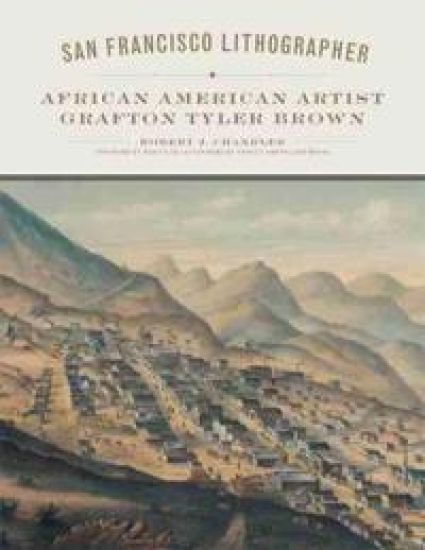
San Francisco Lithographer

San Francisco Lithographer

Robert J. Chandler; Ron Tyler; Shirley Ann Wilson Moore

University of Oklahoma Press
2014
sidottu
Grafton Tyler Brown - whose heritage was likely one-eighth African American - finessed his way through San Francisco society by passing for white. Working in an environment hostile to African American achievement, Brown became a successful commercial artist and businessman in the rough-and-tumble gold rush era and the years after the Civil War. Best known for his bird's-eye cityscapes, he also produced and published maps, charts, and business documents, and he illustrated books, sheet music, advertisements, and labels for cans and other packaging. This biography by a distinguished California historian gives an underappreciated artist and his work recognition long overdue. Focusing on Grafton Tyler Brown's lithography and his life in nineteenth-century San Francisco, Robert J. Chandler offers a study equally fascinating as a business and cultural history and as an introduction to Brown the artist. Chandler's contextualization of Brown's career goes beyond the issue of race. Showing how Brown survived and flourished as a businessman, Chandler offers unique insight into the growth of printing and publishing in California and the West. He examines the rise of lithography, its commercial and cultural importance, and the competition among lithographic companies. He also analyzes Brown's work and style, comparing it to the products of rival firms. Brown was not respected as a fine artist until after his death. Collectors of western art and Americana now recognize the importance of Californiana and of Brown's work, some of which depicts Portland and the Pacific Northwest, and they will find Chandler's checklist, descriptions, and reproductions of Brown's ephemera - including billheads and maps - as uniquely valuable as Chandler's contribution to the cultural and commercial history of California. In an afterword, historian Shirley Ann Wilson Moore discusses the circumstances and significance of passing in nineteenth-century America.
Wanderings in the Southwest in 1855

Wanderings in the Southwest in 1855

J.D.B. Stillman; Ron Tyler

Arthur H. Clark Company
1990
sidottu
Virtually unknown today, Stillman's observations have eluded even historians who have sought nineteenth-century travel accounts of Texas and the South. Stillman was a full-fledged member of a generation that had fallen completely in love with America's natural beauty, represented in the works of Emerson and Thoreau. His letters reflect that sensitivity and gift for description. Nowhere have I seen nature display so much of the chastened beauty, or rugged grandeur . . .; nowhere have I seen realized, in so high a degree, the charms of the classical. Arcadis as in the rolling grassy regions of West Texas. From Port Lavaca Stillman traveled alone by horse through Anaqua, Goliad and Helena, much the same route that his friend and fellow diarist, Frederick Law Olmsted, had followed just a few months before. Upon arrival in San Antonio he tarred, visiting with Adolph Douai, editor of the San Antonio Zeitung. From San Antonio, Stillman ventured west as far as the Pecos River in the company of an army wagon train along the newly-opened road from San Antonio to El Paso. He penetrated unsettled areas, risking Indian attack to see first-hand the "wilds" of Texas.. . .the water was now over the whole ground, and by floundering and swimming we reached the margin of the first slough. Here the flood had taken a shortcut . . . Shouts of distress were heard in the rear, when presently Antonio's mule came swimming past without his rider. Wilderness flash floods, rough rides over long and muddy roads, and periodic residences in poorly-constructed log houses did not deter his romantic spirit. He carefully recorded his observations regarding the settlers and their surroundings, the botanical wonders and curiosities, and Indian conflicts. Stillman wrote extensively concerning his travels, both in Texas and California during the gold rush period. He published essays in The Overland Monthly, and in 1877 published his memoirs, Seeking the Golden Fleece, a Record of Pioneer Life in California. Three books were published in the 1960s and 1970s containing his diaries and letters concerning his California experiences.