Kirjojen hintavertailu – 12 903 724 kirjaa ja 27 kauppaa

Kirjailija

Ronald A. Beghetto

Kirjat ja teokset yhdessä paikassa: 14 kirjaa, julkaisuja vuosilta 2013–2025, suosituimpiin kuuluu Agents of Impact: How Education Can Empower Students to Change Themselves, Their Communities, and Their World. Vertaile teosten hintoja ja tarkista saatavuus suomalaisista kirjakaupoista.

14 kirjaa

Kirjojen julkaisuvuodet: 2013–2025.

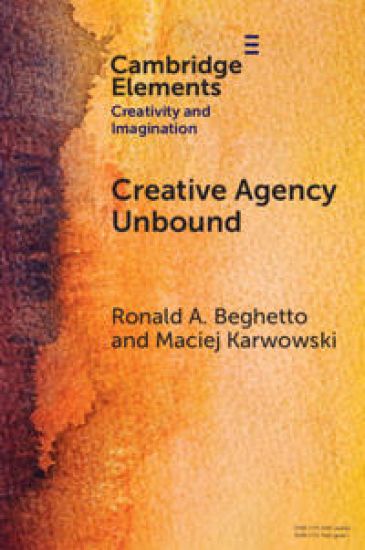
Creative Agency Unbound

Creative Agency Unbound

Ronald A. Beghetto; Maciej Karwowski

Cambridge University Press
2025
pokkari
Creative Agency Unbound explores how individuals transform creative potential into creative actions. Creative agency refers to the self-directed capacity to envision and enact meaningful changes within contextual constraints. This Element introduces the updated Creative Behavior as Agentic Action (CBAA) model, explaining four key decision points that shape creative engagement: Can I do this creatively? (creative confidence), Should I do this creatively? (creative centrality), Will I do this creatively? (creative risk-taking), and How will I do this creatively? (creative self-regulation). Each decision and its related self-belief is discussed in successive sections, integrating theory, research, and practical applications to illustrate how creative self-beliefs motivate creative behaviors. This Element serves as a foundational resource for those seeking to understand, study, and foster the transformation of creative potential into creative action.
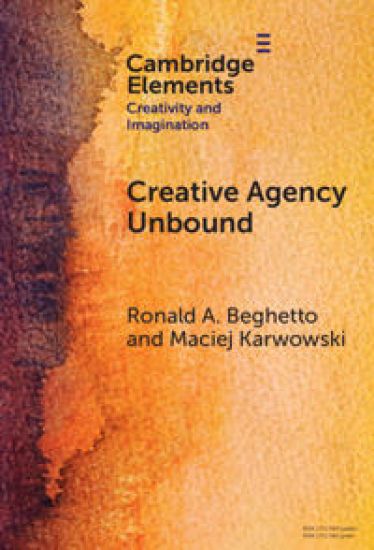
Creative Agency Unbound

Creative Agency Unbound

Ronald A. Beghetto; Maciej Karwowski

Cambridge University Press
2025
sidottu
Creative Agency Unbound explores how individuals transform creative potential into creative actions. Creative agency refers to the self-directed capacity to envision and enact meaningful changes within contextual constraints. This Element introduces the updated Creative Behavior as Agentic Action (CBAA) model, explaining four key decision points that shape creative engagement: Can I do this creatively? (creative confidence), Should I do this creatively? (creative centrality), Will I do this creatively? (creative risk-taking), and How will I do this creatively? (creative self-regulation). Each decision and its related self-belief is discussed in successive sections, integrating theory, research, and practical applications to illustrate how creative self-beliefs motivate creative behaviors. This Element serves as a foundational resource for those seeking to understand, study, and foster the transformation of creative potential into creative action.

Uncertainty x Design

Uncertainty x Design

Ronald A. Beghetto

Cambridge University Press
2024
pokkari
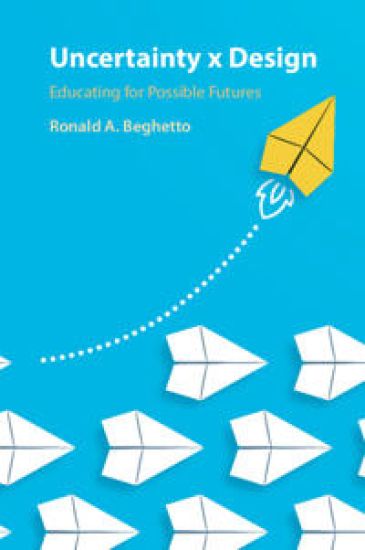
Realizing more promising futures starts in the here and now. This book seeks to help young people learn how to become the creative authors of their own lives by approaching current and future uncertainties with an unshakeable sense of possibility. It describes how students can benefit from opportunities to develop their confidence and competence in taking creative action in the face of uncertainty by design. It introduces a framework for educators, researchers, and parents to understand, design, and examine efforts aimed at helping young people learn how and when to unleash their creative potential, now and into the future.
Uncertainty x Design

Uncertainty x Design

Ronald A. Beghetto

Cambridge University Press
2023
sidottu
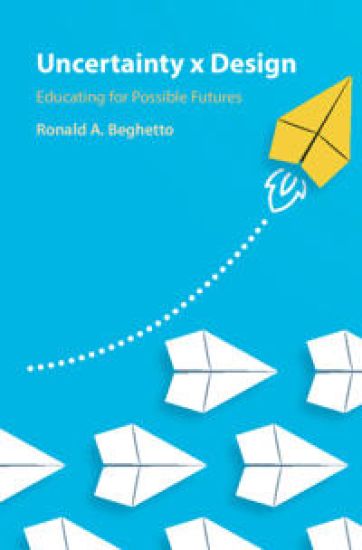
Realizing more promising futures starts in the here and now. This book seeks to help young people learn how to become the creative authors of their own lives by approaching current and future uncertainties with an unshakeable sense of possibility. It describes how students can benefit from opportunities to develop their confidence and competence in taking creative action in the face of uncertainty by design. It introduces a framework for educators, researchers, and parents to understand, design, and examine efforts aimed at helping young people learn how and when to unleash their creative potential, now and into the future.
My Favorite Failure

My Favorite Failure

Ronald A. Beghetto; Laura McBain

BLOOMSBURY PUBLISHING PLC
2022
nidottu
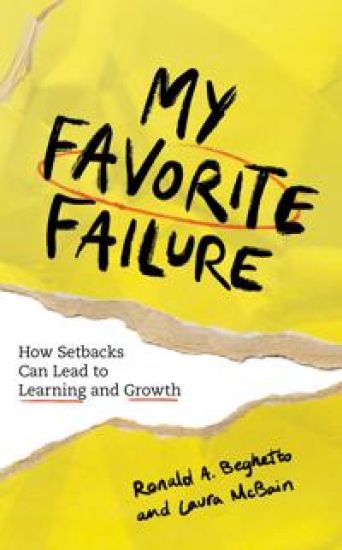
The stories in the book are stitched together like a quilt giving you an overview of the mosaic of failure but also shining a light on the components of failure. The stories provide an insight into how you can create the conditions where you're going to take risks together and then experience failure together. The narratives are from people who examined their favorite failures, pulled the stories apart and provided us with an opportunity to understand how failure is not just one moment or one set of emotions. These stories provide us with a glimpse into how we can approach teaching, learning and setbacks with more humility and more humanity. It’s more than just about getting unstuck, because failure has its own shape, it’s own momentum, and shapes who we are all trying to become.
My Favorite Failure

My Favorite Failure

Ronald A. Beghetto; Laura McBain

BLOOMSBURY PUBLISHING PLC
2022
sidottu
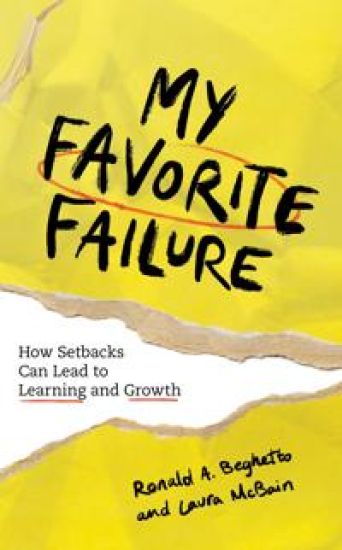
The stories in the book are stitched together like a quilt giving you an overview of the mosaic of failure but also shining a light on the components of failure. The stories provide an insight into how you can create the conditions where you're going to take risks together and then experience failure together. The narratives are from people who examined their favorite failures, pulled the stories apart and provided us with an opportunity to understand how failure is not just one moment or one set of emotions. These stories provide us with a glimpse into how we can approach teaching, learning and setbacks with more humility and more humanity. It’s more than just about getting unstuck, because failure has its own shape, it’s own momentum, and shapes who we are all trying to become.
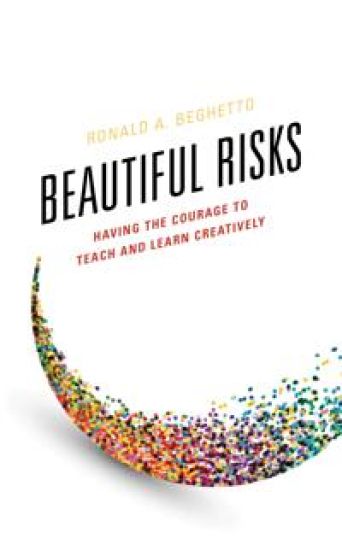
Beautiful Risks

Beautiful Risks

Ronald A. Beghetto

Rowman Littlefield
2018
sidottu
This book is about knowing when creative action is worth the risk and when it is not. This includes developing the awareness, courage, and confidence to support and take risks when it is beneficial to do so in the classroom. It also includes being able to recognize when certain risks should be avoided. The key is knowing when and how to take creative action in a way that not only makes sense for the situation at hand, but also stands to make a positive contribution to others. The aim of this book is to help you and your students identify the kinds of risks that are worth taking, better anticipate and navigate potential hazards associated with those risks, and maximize the potential benefits.
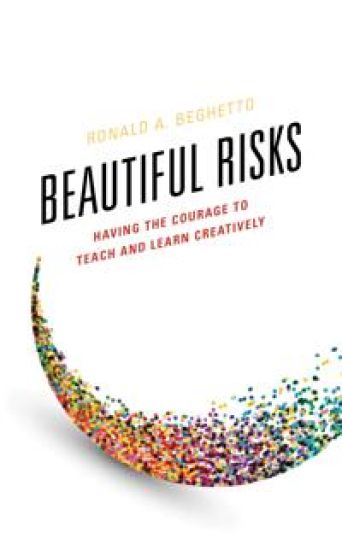
Beautiful Risks

Beautiful Risks

Ronald A. Beghetto

Rowman Littlefield
2018
nidottu
This book is about knowing when creative action is worth the risk and when it is not. This includes developing the awareness, courage, and confidence to support and take risks when it is beneficial to do so in the classroom. It also includes being able to recognize when certain risks should be avoided. The key is knowing when and how to take creative action in a way that not only makes sense for the situation at hand, but also stands to make a positive contribution to others. The aim of this book is to help you and your students identify the kinds of risks that are worth taking, better anticipate and navigate potential hazards associated with those risks, and maximize the potential benefits.
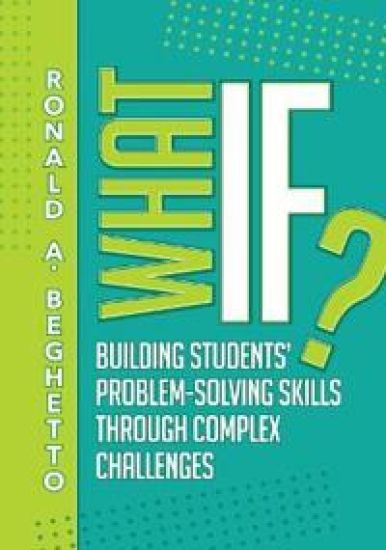
What If?

What If?

Ronald A. Beghetto

Association for Supervision Curriculum Development
2018
nidottu
If a fundamental goal of schooling is to prepare young people for the unknowable future, why do we assign students so many clearly defined tasks with predetermined solutions? According to educator and creativity expert Ronald A. Beghetto, the best way to unleash students' problem solving and creativity—and thus prepare them to face real-world problems—is to incorporate complex challenges that teach students to respond productively to uncertainty. In this thought-provoking book, Beghetto explains:How to foster ""possibility thinking"" to help students open up their thinking in creative, sometimes counterintuitive ways. The process of lesson unplanning, a way of transforming existing lessons, activities, and assignments into more complex classroom challenges. Four basic action principles that teachers and students can use to design and solve complex challenges both inside and outside the classroom. The steps for creating legacy challenges, which require students to identify a problem, develop a solution, and ensure that their work makes a lasting contribution. With planning forms and detailed sample activities, this practical guide will enable teachers at every grade level to design a full range of challenges in any subject area. Invite uncertainty into your classroom—and discover what your students are capable of.
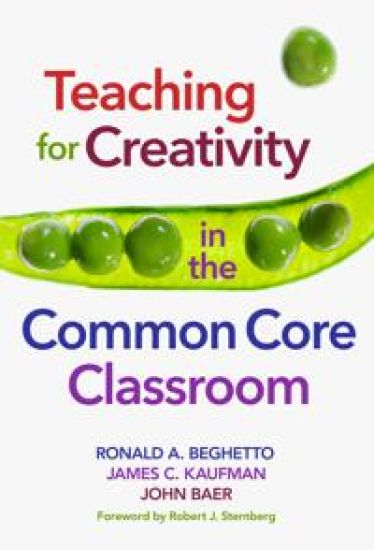
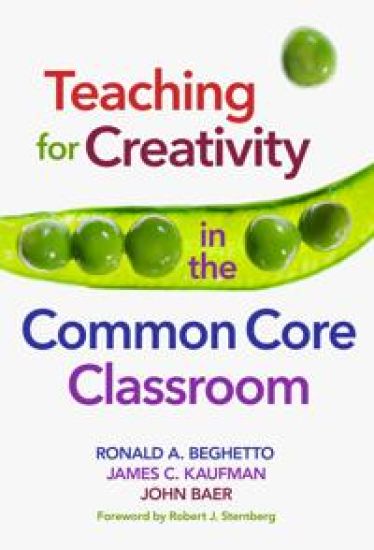
Teaching for Creativity in the Common Core Classroom

Teaching for Creativity in the Common Core Classroom

Ronald A. Beghetto; James C. Kaufman; John Baer

Teachers' College Press
2015
nidottu
Creativity and the Common Core State Standards are both important to today’s teachers. Yet, for many educators, nurturing students’ creativity seems to conflict with ensuring that they learn specific skills and content. In this book, the authors outline ways to adapt existing lessons and mandated curricula to encourage the development of student creativity alongside more traditional academic skills. Based on cutting-edge psychological research on creativity, the text debunks common misconceptions about creativity and describes how learning environments can support both creativity and the Common Core; offers creative lessons and insights for teaching English language arts and mathematics; and includes assessments for creativity and Common Core learning. Featuring numerous classroom examples, this practical resource will empower teachers to think of the Common Core and creativity as encompassing complementary, rather than mutually exclusive, goals.
Teaching for Creativity in the Common Core Classroom

Teaching for Creativity in the Common Core Classroom

Ronald A. Beghetto; James C. Kaufman; John Baer

Teachers' College Press
2015
sidottu
Creativity and the Common Core State Standards are both important to today’s teachers. Yet, for many educators, nurturing students’ creativity seems to conflict with ensuring that they learn specific skills and content. In this book, the authors outline ways to adapt existing lessons and mandated curricula to encourage the development of student creativity alongside more traditional academic skills. Based on cutting-edge psychological research on creativity, the text debunks common misconceptions about creativity and describes how learning environments can support both creativity and the Common Core; offers creative lessons and insights for teaching English language arts and mathematics; and includes assessments for creativity and Common Core learning. Featuring numerous classroom examples, this practical resource will empower teachers to think of the Common Core and creativity as encompassing complementary, rather than mutually exclusive, goals.
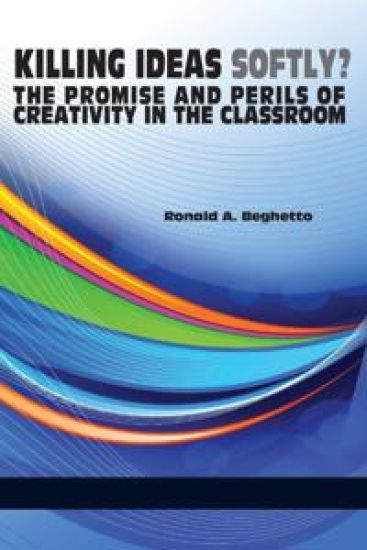
Killing Ideas Softly? the Promise and Perils of Creativity in the Classroom
Creativity is a hot topic in education. As such, there is no shortage of insights or suggestions for how teachers might incorporate creativity into their curriculum. Wading through these suggestions can, however, be quite daunting. This is because many of these suggestions imply that teachers need to somehow radically change their approach to teaching, adopt a new curriculum, or add-on to their existing curriculum. Consequently, many teachers feel that such changes are not feasible and may even come at the cost of supporting students’ academic learning. This book provides an alternative. Teachers need not adopt a new curriculum, radically change what they are already doing, or attempt to add more to their already overflowing plate of curricular responsibilities. Rather, teaching for and with creativity is often more about doing what one is already doing, only slightly better. The aim of this book is to help teachers understand how they can make slight changes to their own teaching, which can substantially support the development of students’ creative potential and result in a more creative approach to teaching. The insights and practical suggestions presented in this book represent some of the newest and most promising work being done in the field of creativity studies. This book is unique in that it presents teachers with concrete ideas for how to simultaneously support creativity and learning. A particularly novel feature of this book is that it offers a blend of theoretical insights and vivid classroom examples to illustrate the kinds of opportunities and challenges that teachers face when they attempt to teach for and with creativity. As such, this book will provide teachers, scholars, researchers, and anyone interested in classroom creativity with new directions for future research and educational practice.
Killing Ideas Softly? the Promise and Perils of Creativity in the Classroom
Creativity is a hot topic in education. As such, there is no shortage of insights or suggestions for how teachers might incorporate creativity into their curriculum. Wading through these suggestions can, however, be quite daunting. This is because many of these suggestions imply that teachers need to somehow radically change their approach to teaching, adopt a new curriculum, or add-on to their existing curriculum. Consequently, many teachers feel that such changes are not feasible and may even come at the cost of supporting students’ academic learning. This book provides an alternative. Teachers need not adopt a new curriculum, radically change what they are already doing, or attempt to add more to their already overflowing plate of curricular responsibilities. Rather, teaching for and with creativity is often more about doing what one is already doing, only slightly better. The aim of this book is to help teachers understand how they can make slight changes to their own teaching, which can substantially support the development of students’ creative potential and result in a more creative approach to teaching. The insights and practical suggestions presented in this book represent some of the newest and most promising work being done in the field of creativity studies. This book is unique in that it presents teachers with concrete ideas for how to simultaneously support creativity and learning. A particularly novel feature of this book is that it offers a blend of theoretical insights and vivid classroom examples to illustrate the kinds of opportunities and challenges that teachers face when they attempt to teach for and with creativity. As such, this book will provide teachers, scholars, researchers, and anyone interested in classroom creativity with new directions for future research and educational practice.