Kirjojen hintavertailu – 12 903 725 kirjaa ja 27 kauppaa

Kirjailija

Ronald Beiner

Kirjat ja teokset yhdessä paikassa: 16 kirjaa, julkaisuja vuosilta 1988–2025, suosituimpiin kuuluu Radical Right Ideologues in the Age of Trump. Vertaile teosten hintoja ja tarkista saatavuus suomalaisista kirjakaupoista.

16 kirjaa

Kirjojen julkaisuvuodet: 1988–2025.

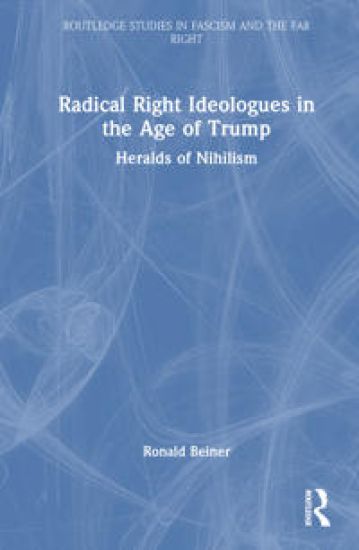
Radical Right Ideologues in the Age of Trump

Radical Right Ideologues in the Age of Trump

Ronald Beiner

TAYLOR FRANCIS LTD
2025
sidottu
Radical Right Ideologues in the Age of Trump offers a series of sketches of what it means to live within a new Zeitgeist where ideas of the radical right are once again attractive to young minds. The book first zeroes in on Nietzsche as a privileged philosophical source for the contemporary radical right – as a kind of prophet of the ferocious rebellion against liberal democracy evident today. It then explores this in more detail with a series of case studies of contemporary far-right ideologues and activists including Steve Bannon, Bronze Age Pervert, Alexander Dugin, Jason Jorjani, and others. This book will appeal to activists, researchers, and scholars with an interest in the contemporary radical right, fascist intellectualism, and anti-democratic ideologies.
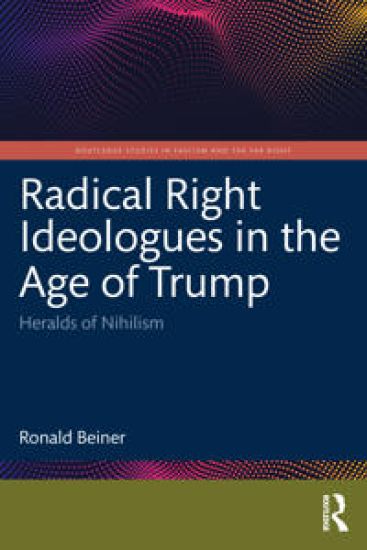
Radical Right Ideologues in the Age of Trump

Radical Right Ideologues in the Age of Trump

Ronald Beiner

TAYLOR FRANCIS LTD
2025
nidottu
Radical Right Ideologues in the Age of Trump offers a series of sketches of what it means to live within a new Zeitgeist where ideas of the radical right are once again attractive to young minds. The book first zeroes in on Nietzsche as a privileged philosophical source for the contemporary radical right – as a kind of prophet of the ferocious rebellion against liberal democracy evident today. It then explores this in more detail with a series of case studies of contemporary far-right ideologues and activists including Steve Bannon, Bronze Age Pervert, Alexander Dugin, Jason Jorjani, and others. This book will appeal to activists, researchers, and scholars with an interest in the contemporary radical right, fascist intellectualism, and anti-democratic ideologies.
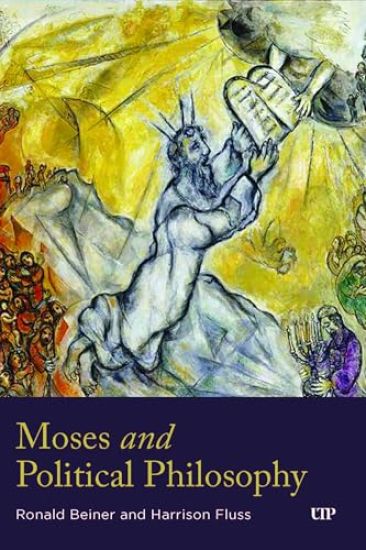
Moses and Political Philosophy

Moses and Political Philosophy

Ronald Beiner; Harrison Fluss

UNIVERSITY OF TORONTO PRESS
2025
sidottu
Representations of the figure of Moses are both central and pervasive in the history of Western political thought. The story of Moses, as depicted in the Books of Exodus, Numbers, and Deuteronomy in the Hebrew Bible, has generated an immensely powerful set of images that have left a lasting mark on both Western and global culture. Moses and Political Philosophy explores the enduring tropes drawn from this narrative, which continue to shape political discourse up to the present. The book examines why these interpretations retain such a lasting relevance in contemporary debates and explores how an appreciation of them can enrich our engagement with the centuries-long dialogue that has shaped the tradition of Western political theory. Offering a comprehensive analysis of the Moses story, the book investigates various appropriations of the tale, the characterization of the Mosaic regime, the politically charged implications of Moses’s authority, and the most intriguing puzzles and paradoxes within the narrative. In doing so, Moses and Political Philosophy sheds new light on the profound and lasting influence of the Moses story on the evolution of political thought.
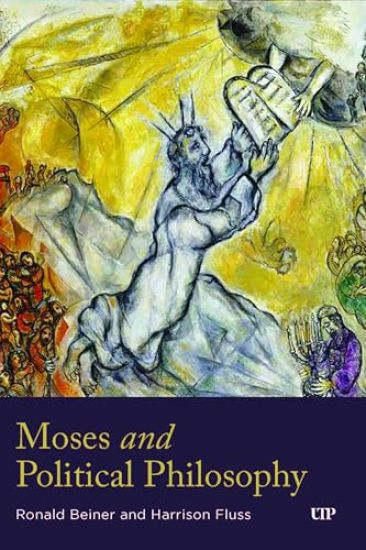
Moses and Political Philosophy

Moses and Political Philosophy

Ronald Beiner; Harrison Fluss

UNIVERSITY OF TORONTO PRESS
2025
pokkari
Representations of the figure of Moses are both central and pervasive in the history of Western political thought. The story of Moses, as depicted in the Books of Exodus, Numbers, and Deuteronomy in the Hebrew Bible, has generated an immensely powerful set of images that have left a lasting mark on both Western and global culture. Moses and Political Philosophy explores the enduring tropes drawn from this narrative, which continue to shape political discourse up to the present. The book examines why these interpretations retain such a lasting relevance in contemporary debates and explores how an appreciation of them can enrich our engagement with the centuries-long dialogue that has shaped the tradition of Western political theory. Offering a comprehensive analysis of the Moses story, the book investigates various appropriations of the tale, the characterization of the Mosaic regime, the politically charged implications of Moses’s authority, and the most intriguing puzzles and paradoxes within the narrative. In doing so, Moses and Political Philosophy sheds new light on the profound and lasting influence of the Moses story on the evolution of political thought.
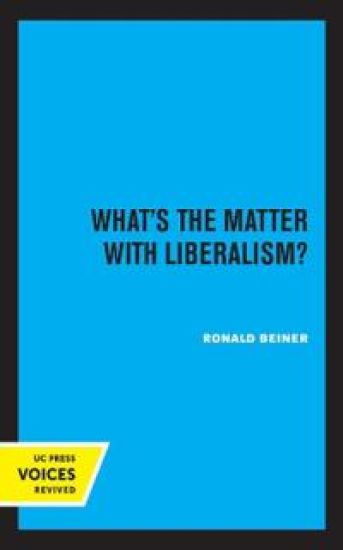
What's the Matter with Liberalism?

What's the Matter with Liberalism?

Ronald Beiner

University of California Press
2021
sidottu
This title is part of UC Press's Voices Revived program, which commemorates University of California Press’s mission to seek out and cultivate the brightest minds and give them voice, reach, and impact. Drawing on a backlist dating to 1893, Voices Revived makes high-quality, peer-reviewed scholarship accessible once again using print-on-demand technology. This title was originally published in 1992.
What's the Matter with Liberalism?

What's the Matter with Liberalism?

Ronald Beiner

University of California Press
2020
pokkari
This title is part of UC Press's Voices Revived program, which commemorates University of California Press’s mission to seek out and cultivate the brightest minds and give them voice, reach, and impact. Drawing on a backlist dating to 1893, Voices Revived makes high-quality, peer-reviewed scholarship accessible once again using print-on-demand technology. This title was originally published in 1992.
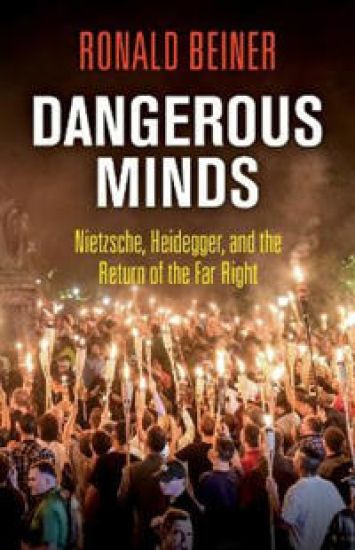
Dangerous Minds

Dangerous Minds

Ronald Beiner

University of Pennsylvania Press
2018
sidottu

Halvin toimitettuna 34,60 €

Following the fall of the Berlin Wall and demise of the Soviet Union, prominent Western thinkers began to suggest that liberal democracy had triumphed decisively on the world stage. Having banished fascism in World War II, liberalism had now buried communism, and the result would be an end of major ideological conflicts, as liberal norms and institutions spread to every corner of the globe. With the Brexit vote in Great Britain, the resurgence of right-wing populist parties across the European continent, and the surprising ascent of Donald Trump to the American presidency, such hopes have begun to seem hopelessly naÏve. The far right is back, and serious rethinking is in order. In Dangerous Minds, Ronald Beiner traces the deepest philosophical roots of such right-wing ideologues as Richard Spencer, Aleksandr Dugin, and Steve Bannon to the writings of Nietzsche and Heidegger-and specifically to the aspects of their thought that express revulsion for the liberal-democratic view of life. Beiner contends that Nietzsche's hatred and critique of bourgeois, egalitarian societies has engendered new disciples on the populist right who threaten to overturn the modern liberal consensus. Heidegger, no less than Nietzsche, thoroughly rejected the moral and political values that arose during the Enlightenment and came to power in the wake of the French Revolution. Understanding Heideggerian dissatisfaction with modernity, and how it functions as a philosophical magnet for those most profoundly alienated from the reigning liberal-democratic order, Beiner argues, will give us insight into the recent and unexpected return of the far right. Beiner does not deny that Nietzsche and Heidegger are important thinkers; nor does he seek to expel them from the history of philosophy. But he does advocate that we rigorously engage with their influential thought in light of current events-and he suggests that we place their severe critique of modern liberal ideals at the center of this engagement.
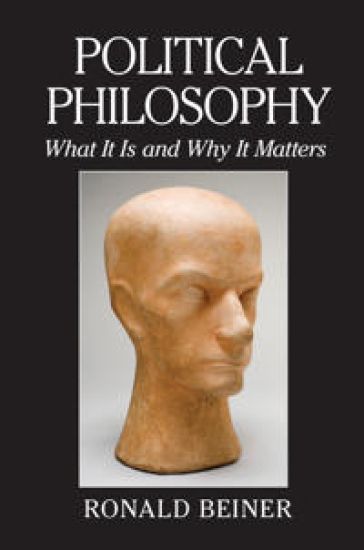
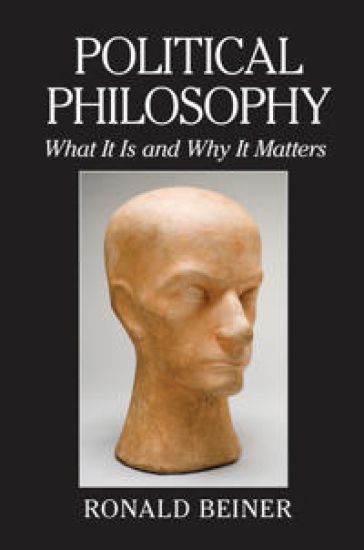
Political Philosophy

Political Philosophy

Ronald Beiner

Cambridge University Press
2014
pokkari
What is political philosophy? Ronald Beiner makes the case that it is centrally defined by supremely ambitious reflection on the ends of life. We pursue this reflection by exposing ourselves to, and participating in, a perennial dialogue among epic theorists who articulate grand visions of what constitutes the authentic good for human beings. Who are these epic theorists, and what are their strengths and weaknesses? Beiner selects a dozen leading candidates: Arendt, Oakeshott, Strauss, Löwith, Voegelin, Weil, Gadamer, Habermas, Foucault, MacIntyre, Rawls, and Rorty. In each case, he shows both why the political philosophies continue to be intellectually compelling and why they are problematic or can be challenged in various ways. In this sense, Political Philosophy attempts to draw up a balance sheet for political philosophy in the twentieth century, by identifying a canon of towering contributions and reviewing the extent to which they fulfil their intellectual aspirations.
Political Philosophy

Political Philosophy

Ronald Beiner

Cambridge University Press
2014
sidottu
What is political philosophy? Ronald Beiner makes the case that it is centrally defined by supremely ambitious reflection on the ends of life. We pursue this reflection by exposing ourselves to, and participating in, a perennial dialogue among epic theorists who articulate grand visions of what constitutes the authentic good for human beings. Who are these epic theorists, and what are their strengths and weaknesses? Beiner selects a dozen leading candidates: Arendt, Oakeshott, Strauss, Löwith, Voegelin, Weil, Gadamer, Habermas, Foucault, MacIntyre, Rawls, and Rorty. In each case, he shows both why the political philosophies continue to be intellectually compelling and why they are problematic or can be challenged in various ways. In this sense, Political Philosophy attempts to draw up a balance sheet for political philosophy in the twentieth century, by identifying a canon of towering contributions and reviewing the extent to which they fulfil their intellectual aspirations.
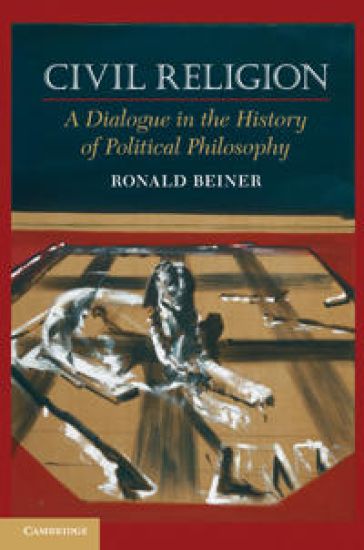
Civil Religion

Civil Religion

Ronald Beiner

Cambridge University Press
2010
pokkari
Civil Religion offers philosophical commentaries on more than twenty thinkers stretching from the sixteenth to the twentieth century. It examines four important traditions within the history of modern political philosophy. The civil religion tradition, principally defined by Machiavelli, Hobbes and Rousseau, seeks to domesticate religion by putting it solidly in the service of politics. The liberal tradition pursues an alternative strategy of domestication by seeking to put as much distance as possible between religion and politics. Modern theocracy is a militant reaction against liberalism, reversing the relationship of subordination asserted by civil religion. Finally, a fourth tradition is defined by Nietzsche and Heidegger. Aspects of their thought are not just modern, but hyper-modern, yet they manifest an often-hysterical reaction against liberalism that is fundamentally shared with the theocratic tradition. Together, these four traditions compose a vital dialogue that carries us to the heart of political philosophy itself.
Civil Religion

Civil Religion

Ronald Beiner

Cambridge University Press
2010
sidottu
Civil Religion offers philosophical commentaries on more than twenty thinkers stretching from the sixteenth to the twentieth century. It examines four important traditions within the history of modern political philosophy. The civil religion tradition, principally defined by Machiavelli, Hobbes and Rousseau, seeks to domesticate religion by putting it solidly in the service of politics. The liberal tradition pursues an alternative strategy of domestication by seeking to put as much distance as possible between religion and politics. Modern theocracy is a militant reaction against liberalism, reversing the relationship of subordination asserted by civil religion. Finally, a fourth tradition is defined by Nietzsche and Heidegger. Aspects of their thought are not just modern, but hyper-modern, yet they manifest an often-hysterical reaction against liberalism that is fundamentally shared with the theocratic tradition. Together, these four traditions compose a vital dialogue that carries us to the heart of political philosophy itself.
Political Judgement (Routledge Library Editions: Political Science Volume 20)
Originally published in 1983. One of the basic capacities of man as a political being is his faculty of judgement. Yet for all the books on concepts like freedom, equality and authority, surprisingly little attention has been given to this topic in the tradition of Western political thought. What is the nature of political judgement? What endows us, as human beings, with the ability to make reasonable judgements about human affairs and to judge the common world we share with others? By what means to we secure validity for our judgements? What are the underlying conditions of this human capacity, and what implications does it have the understanding of politics? These questions, central as they are to any reflection on politics have rarely been addressed in a systematic way. This book examines Kant’s concept of taste and Aristotle’s concept of prudence, as well as recent works of political philosophy by Arendt, Gadamer and Habermas, all crucially influenced by Kant and Aristotle.
Liberalism, Nationalism, Citizenship

Liberalism, Nationalism, Citizenship

Ronald Beiner

University of British Columbia Press
2003
pokkari
Liberals believe that the purpose of politics is to guarantee that individuals do not face unfair impediments in pursuing the lives they choose for themselves. Nationalists believe that the purpose of politics is to ensure that a people's sense of authentic nationhood wins full expression in powers of collective sovereignty or self-rule. Both of these forms of political commitment yield world-transforming political philosophies, but do either of these visions do adequate justice to a philosophically robust ideal of shared citizenship and civic membership? In Liberalism, Nationalism, Citizenship, Ronald Beiner engages critically with a wide range of important political thinkers and current debates in light of the Aristotelian idea that shared citizenship is an essential human calling. Virtually every aspect of contemporary political experience – globalization, international migration, secessionist movements, the politics of multiculturalism – pose urgent challenges to modern citizenship. Beiner's work on the philosophy of citizenship is essential reading not just for students of politics and political philosophy, but for all those who rightly sense that these kinds of recent challenges demand an ambitious rethinking of the nature of political community.
Liberalism, Nationalism, Citizenship

Liberalism, Nationalism, Citizenship

Ronald Beiner

University of British Columbia Press
2002
sidottu
Liberals believe that the purpose of politics is to guarantee that individuals do not face unfair impediments in pursuing the lives they choose for themselves. Nationalists believe that the purpose of politics is to ensure that a people's sense of authentic nationhood wins full expression in powers of collective sovereignty or self-rule. Both of these forms of political commitment yield world-transforming political philosophies, but do either of these visions do adequate justice to a philosophically robust ideal of shared citizenship and civic membership? In Liberalism, Nationalism, Citizenship, Ronald Beiner engages critically with a wide range of important political thinkers and current debates in light of the Aristotelian idea that shared citizenship is an essential human calling. Virtually every aspect of contemporary political experience – globalization, international migration, secessionist movements, the politics of multiculturalism – pose urgent challenges to modern citizenship. Beiner's work on the philosophy of citizenship is essential reading not just for students of politics and political philosophy, but for all those who rightly sense that these kinds of recent challenges demand an ambitious rethinking of the nature of political community.
Philosophy in a Time of Lost Spirit

Philosophy in a Time of Lost Spirit

Ronald Beiner

University of Toronto Press
1997
pokkari
In the last two centuries, our world would have been a safer place if philosophers such as Rousseau, Marx, and Nietzsche had not given intellectual encouragement to the radical ideologies of Jacobins, Stalinists, and fascists. Maybe the world would have been better off, from the standpoint of sound practice, if philosophers had engaged in only modest, decent theory, as did John Stuart Mill. Yet, as Ronald Beiner contends, the point of theory is not to think safe thoughts; the point is to open intellectual horizons. In Philosophy in a Time of Lost Spirit, Beiner reflects on the dualism of theory and practice. The purpose of the theorist is not to offer sensible guidance on the conduct of social life but to test the boundaries of our vision of social order. Whereas the liberal citizen should embody the practical virtues of prudence and moderation, the theorist should be radical, probing, and immoderate. Looking back at the liberal-communitarian debate of the 1980s, Beiner recognizes that the antidote to our spiritless times lies neither in the embrace of community over individualism nor of individualism over community: both individual and community need to be submitted to radical questioning. It is by exposing ourselves to the challenge of fearless thinking encountered at the philosophical extremities that we are most likely to understand our own world at a deeper level. In this collection of essays and reviews, Ronald Beiner helps us to think critically about the thought-worlds of our foremost contemporary thinkers, including Hannah Arendt, Allan Bloom, Michel Foucault, Hans-Georg Gadamer, Jürgen Habermas, Will Kymlicka, Christopher Lasch, Richard Rorty, Judith Shklar, Leo Strauss, Charles Taylor, and Michael Walzer.

Democratic Theory and Technological Society

Democratic Theory and Technological Society

Richard B. Day; Ronald Beiner; Joseph Masciulli

M.E. Sharpe
1988
nidottu
What are the chief challenges posed to contemporary democracy by modern technology, and how can democratic theory best respond to, or at least reflect on, those challenges? Inhabiting the kind of technologically advanced era in which we live, what sources are available within political theory for theoretical insight concerning the problem of democratic engagement with technology? The purpose of this volume is to canvas a broad range of theorists and theoretical traditions in order to address these questions, including Hegel and Marx, Rousseau and John Dewey, Heidegger and Simone Weil, Habermas and Walter Benjamin, Hannah Arendt and Hans Jonas. Commentaries on all these important thinkers -- focused on the issue of contemporary technology as posing unique social and political challenges for democratic political life -- yields rich and ambitious resources for theoretical reflection.