Kirjojen hintavertailu – 12 859 828 kirjaa ja 27 kauppaa

Kirjailija

Ronald J. Burke

Kirjat ja teokset yhdessä paikassa: 7 kirjaa, julkaisuja vuosilta 2010–2018, suosituimpiin kuuluu Crime and Corruption in Organizations. Vertaile teosten hintoja ja tarkista saatavuus suomalaisista kirjakaupoista.

7 kirjaa

Kirjojen julkaisuvuodet: 2010–2018.

Crime and Corruption in Organizations

Crime and Corruption in Organizations

Ronald J. Burke; Edward C. Tomlinson

Routledge
2018
nidottu
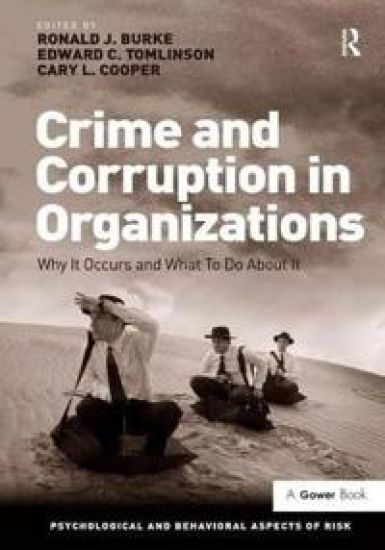
Although increasing attention has been paid to it, there are no signs that crime and corruption in organizations is decreasing, so if you're a manager or government policy maker, and your mandate is to reduce crime and corruption, where do you start? The international authors of this book fill a critical need to address such a prevalent and costly topic with a detailed analysis of the risks associated with crime and corruption in organizations. They examine the causes and consequences, and the choices we face in our efforts to eradicate these social maladies. They focus on the risks to individuals and organizations surrounding criminal and corrupt acts, with an emphasis on the psychological, behavioral and organizational factors supporting such behaviors. Finally, they explore the phenomenon of crime and corruption across a diverse array of organizational settings (ranging from public to private, for-profit to non-profit) and occupational categories (e.g., police officers, physicians, accountants, and academicians). The constant barrage of scandals publicized by the media demands 'front burner' attention dedicated to stemming this tide. Accordingly, this book turns to prominent researchers employing their talents to produce more ethical organizations. The result is the most up-to-date thinking on both classic (e.g., cognitive moral development) and novel (e.g., moral attentiveness) approaches to crime and corruption, as well as scientifically-grounded approaches to reducing illicit behavior in organizations.
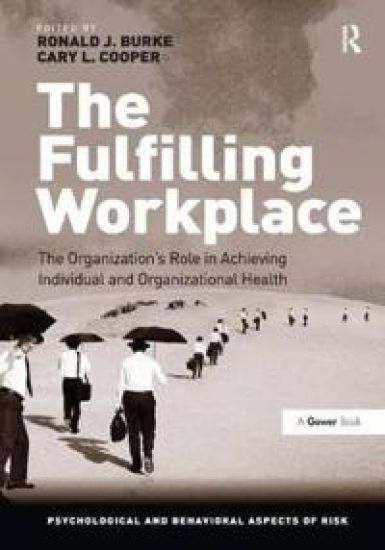
The Fulfilling Workplace

The Fulfilling Workplace

Ronald J. Burke

Routledge
2016
nidottu
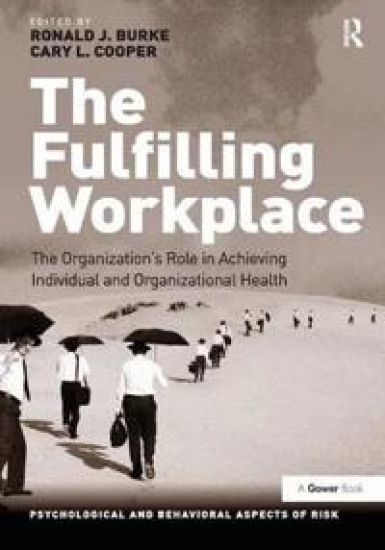
It is very easy for organizations to ignore or overlook the impact of social and commercial change-of increased pressure to deliver profit (above all else) and of transformation in the ways in which we are now working-on the mental health and, consequently, the performance of their employees. And yet there is plenty of evidence that in many workplaces, performance is down, stress is up and professional employees are struggling to balance their home and work lives. This collection, while looking at individuals, places the spotlight on organizational initiatives to support the development of attitudes, values, character and behaviors in employees. The aim of these initiatives is to increase our resilience to those experiences and events which impact on performance. There is a particular focus on managerial and professional jobs where employee discretion and commitment are critical. The Fulfilling Workplace extends the themes developed in early titles in the Psychological and Behavioral Aspects of Risk Series deeper into organizations; to explore the organization's role in coming to grips both with human frailties and toxic workplaces-both destructive to individual and organizational health.
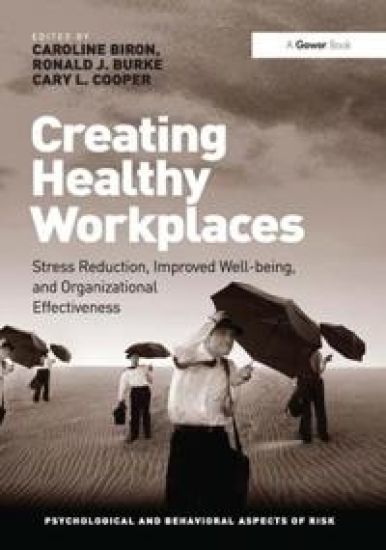
Creating Healthy Workplaces

Creating Healthy Workplaces

Caroline Biron; Ronald J. Burke

Ashgate Publishing Limited
2014
sidottu
The contributions in Creating Healthy Workplaces include a number of interventions that relate the efforts undertaken by researchers and organizations together, to reduce stress and improve the mental and physical health of employees through positive change initiatives. Those working in the field of occupational stress have received criticism that too much emphasis has been placed on negative issues and that positive initiatives have been largely ignored. With the growing influence of the positive movement, this book explores the implications of using a positive approach as opposed to a stress management one and compares the types of interventions they each require. From a positive perspective, there is a need to understand the characteristics of healthy, thriving, and flourishing people and organizations. This book explores the implications of using a positive approach as opposed to a stress management one. Some of the interventions described in Creating Healthy Workplaces target individuals and their attitudes and behaviours, others target workplace relationships, work units and the wider organization. Outcomes such as reduced occurrences of smoking, obesity, depression, elevated blood pressure, accidents and workplace injuries, presenteeism, absence and staff turnover are reported. The factors associated with the success of these interventions are identified and advice is given as to how interested individuals and organizations might proceed to develop worksite interventions on their own.
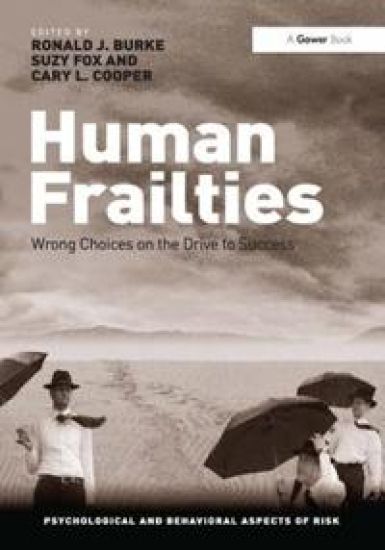
Human Frailties

Human Frailties

Ronald J. Burke; Suzy Fox

Ashgate Publishing Limited
2013
sidottu
Every day we hear stories about the consequences of human frailties for individuals, their families and friends, and their organizations. Some of these stories are about alcohol and drug addiction and other harmful lifestyle choices, but human frailty also leads to all kinds of unethical and illegal behaviour. Individuals are convicted of bribery and corruption, price fixing, theft and fraud, sexual harassment and abuse of authority. Politicians fiddle their expenses, sports people cheat and fix matches and school and university students and teachers cheat to enhance exam results. Studies have shown that business students cheat more than others and efforts to teach ethical behaviour in business schools make little difference. The media who bring us stories of others' frailties themselves engage in unethical and illegal conduct in pursuit of an edge over their rivals. The contributions to this latest addition to Gower's Psychological and Behavioural Aspects of Risk Series place the spotlight on individuals, their behavioural choices and the consequences that follow for theirs and others' lives and careers. The conclusion is that people do have choices and options and that, whilst there are no easy or quick fixes in addressing self-limiting behaviours, successful avoidance of the worst outcomes can been achieved. This book provides guidance on the practical steps that need to be taken in order to gain a sense of proportion of what is important and of how we are doing, if we are to address our frailties and stop making unethical choices.
The Fulfilling Workplace

The Fulfilling Workplace

Ronald J. Burke

Ashgate Publishing Limited
2013
sidottu
It is very easy for organizations to ignore or overlook the impact of social and commercial change-of increased pressure to deliver profit (above all else) and of transformation in the ways in which we are now working-on the mental health and, consequently, the performance of their employees. And yet there is plenty of evidence that in many workplaces, performance is down, stress is up and professional employees are struggling to balance their home and work lives. This collection, while looking at individuals, places the spotlight on organizational initiatives to support the development of attitudes, values, character and behaviors in employees. The aim of these initiatives is to increase our resilience to those experiences and events which impact on performance. There is a particular focus on managerial and professional jobs where employee discretion and commitment are critical. The Fulfilling Workplace extends the themes developed in early titles in the Psychological and Behavioral Aspects of Risk Series deeper into organizations; to explore the organization's role in coming to grips both with human frailties and toxic workplaces-both destructive to individual and organizational health.
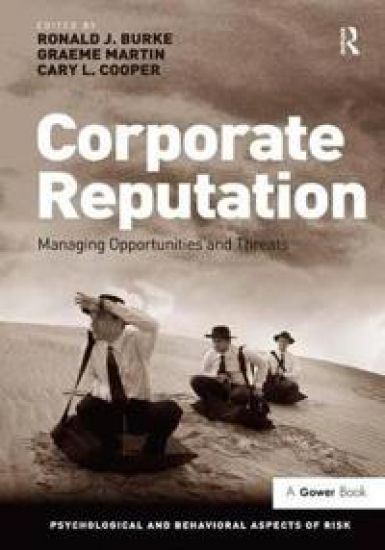
Corporate Reputation

Corporate Reputation

Ronald J. Burke; Graeme Martin

Ashgate Publishing Limited
2011
sidottu
Increasing media scrutiny, global coverage and communication via the internet means corporate reputation can be damaged quickly, and failing to successfully address challenges to corporate reputation has consequences. Companies generally suffer almost ten times the financial loss from damaged reputations than from whatever fines may be imposed. According to Ernst & Young, the investment community believes up to 50 per cent of a company's value is intangible - based mostly on corporate reputation. So recognizing potential threats, or anticipating risks, emerges as a critical organizational competence. Organizations can regain lost reputations, but recovery takes a long time. Corporate Reputation contains both academic content along with practical contributions, developed by those serving as consultants or working in organizations in the area of corporate reputation and its management or recovery. It covers: why corporate reputation matters, the increase in reputation loss, threats to corporate reputation, monitoring reputation threats online and offline, the key role of leadership in reputation recovery, and making corporate reputation immune from threats. Any book that is going to do justice to a subject that is so complex and intangible needs imagination, depth and range, and this is exactly what the contributors bring with them.
Crime and Corruption in Organizations

Crime and Corruption in Organizations

Ronald J. Burke; Edward C. Tomlinson

Gower Publishing Ltd
2010
sidottu
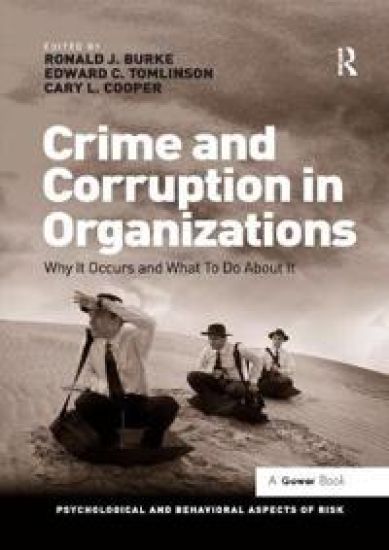
Although increasing attention has been paid to it, there are no signs that crime and corruption in organizations is decreasing, so if you're a manager or government policy maker, and your mandate is to reduce crime and corruption, where do you start? The international authors of this book fill a critical need to address such a prevalent and costly topic with a detailed analysis of the risks associated with crime and corruption in organizations. They examine the causes and consequences, and the choices we face in our efforts to eradicate these social maladies. They focus on the risks to individuals and organizations surrounding criminal and corrupt acts, with an emphasis on the psychological, behavioral and organizational factors supporting such behaviors. Finally, they explore the phenomenon of crime and corruption across a diverse array of organizational settings (ranging from public to private, for-profit to non-profit) and occupational categories (e.g., police officers, physicians, accountants, and academicians). The constant barrage of scandals publicized by the media demands 'front burner' attention dedicated to stemming this tide. Accordingly, this book turns to prominent researchers employing their talents to produce more ethical organizations. The result is the most up-to-date thinking on both classic (e.g., cognitive moral development) and novel (e.g., moral attentiveness) approaches to crime and corruption, as well as scientifically-grounded approaches to reducing illicit behavior in organizations.