Kirjojen hintavertailu – 12 875 485 kirjaa ja 26 kauppaa

Kirjailija

Ronald S. Laura

Kirjat ja teokset yhdessä paikassa: 6 kirjaa, julkaisuja vuosilta 1998–2024, suosituimpiin kuuluu Philosophical Foundations of Health Education. Vertaile teosten hintoja ja tarkista saatavuus suomalaisista kirjakaupoista.

6 kirjaa

Kirjojen julkaisuvuodet: 1998–2024.

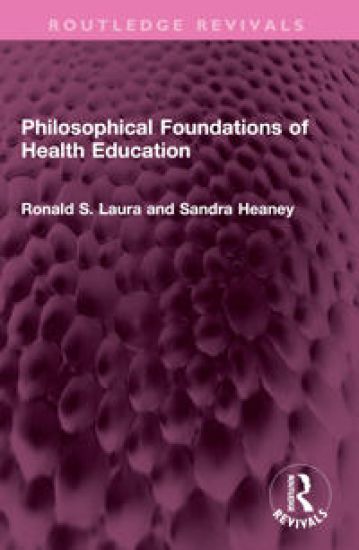
Philosophical Foundations of Health Education

Philosophical Foundations of Health Education

Ronald S. Laura; Sandra Heaney

TAYLOR FRANCIS LTD
2024
nidottu
First published in 1990 Philosophical Foundations of Health Education analyses the dogmatism of conventional medicine as a form of scientism and tries to determine the extent to which the state of health education has been perverted by an uncritical acceptance of these dogmas. It discusses themes like the genesis of reductionist medical science; scientism in medicine and the crisis in health care; integrating the philosophical foundations of holistic health education; holistic understanding of health and disease; evolution of primary health care; the demystification of medicine; and conscientization and health for all, to suggest that holism is an integral part of the philosophy of health which allows personal and societal needs to be realized in a global context. This book is a must read for students and scholars of philosophy of medicine, medical sociology, and philosophy of education.

Philosophical Foundations of Health Education

Philosophical Foundations of Health Education

Ronald S. Laura; Sandra Heaney

TAYLOR FRANCIS LTD
2022
sidottu
First published in 1990 Philosophical Foundations of Health Education analyses the dogmatism of conventional medicine as a form of scientism and tries to determine the extent to which the state of health education has been perverted by an uncritical acceptance of these dogmas. It discusses themes like the genesis of reductionist medical science; scientism in medicine and the crisis in health care; integrating the philosophical foundations of holistic health education; holistic understanding of health and disease; evolution of primary health care; the demystification of medicine; and conscientization and health for all, to suggest that holism is an integral part of the philosophy of health which allows personal and societal needs to be realized in a global context. This book is a must read for students and scholars of philosophy of medicine, medical sociology, and philosophy of education.

Secularizing the Sacred

Secularizing the Sacred

John E. Webster; Ronald S. Laura

University Press of America
2016
nidottu
This book explores one of the great paradoxes of our era. Western culture has almost imperceptibly come to secularize the sacred, while at the same time sacralizing the secular. The authors endeavor to show the debilitating effects that this paradox has had on the foundations of Christian worship with special reference to the history of worship and in particular the Presbyterian Church in Australia. The authors show how the theological predilection for ‘minimization’ has become inextricably woven into the fabric of what we call ‘the theory of transformative subjugation’ which drives the rationale for religious secularization. The book argues that it is necessary to consider a serious reconstruction of theological education in which its framework is located in a specific Christian theory of knowledge which engenders the Lordship of Christ and encourages a spirit of transformative love and connectedness. It is only in this context that the theology of worship and the beauty and usefulness of liturgical forms can be appreciated.
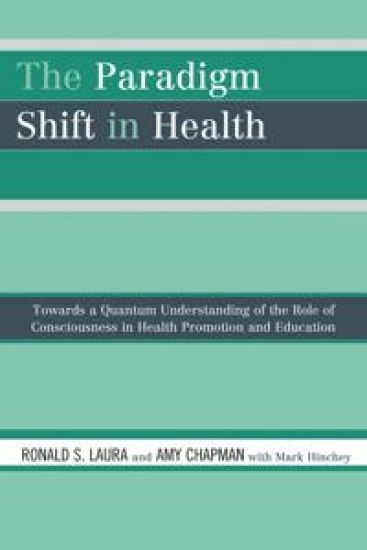
The Paradigm Shift in Health

The Paradigm Shift in Health

Ronald S. Laura; Amy Chapman

University Press of America
2009
nidottu
In this book, the authors show that the failure of public health arises, not from a failure of contemporary medicine, but from a failure of the philosophical assumptions upon which it rests. By exposing the limits of this philosophical framework, the authors suggest an alternative approach to health care, one that derives from a profoundly ecological and holistic philosophy of nature. They conclude that the advancement of community health depends on a comprehensive program of health education in which the responsibility for health is inextricably knit with a new consciousness of ecological stewardship. The authors postulate a holistic epistemology in which knowing is directed towards participation with nature rather than separation from it.
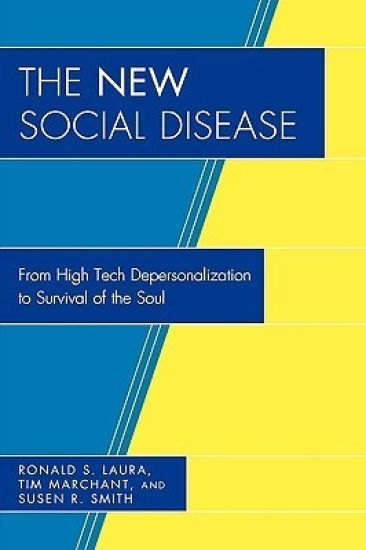
The New Social Disease

The New Social Disease

Ronald S. Laura; Tim Marchant; Susen R. Smith

University Press of America
2008
nidottu
Highly technological machines are invading our lives and separating us from personal relationships. The balance between the use of technology for human advantage and developing valued human relationships has yet to equal, and we continue to subject ourselves to a rapidly growing sense of depersonalization. The New Social Disease is about how we personalize our computers and associated technologies while depersonalizing others and ourselves. The well-researched content will provide readers with insights into how the increased use of technology-mediated communications has affected the way in which we live our lives, resulting in loneliness, depression, social isolation, and ultimately a rise in uncivil behaviors based upon frustration hopelessness and the devaluation of human life. Authors Laura, Marchant, and Smith explore the prevalence of uncivil behaviors in the world and in our schools, combined with increased physical and mental health problems, in an aim to explore the depersonalization of the school curriculum and provide ways to repersonalize education contexts.
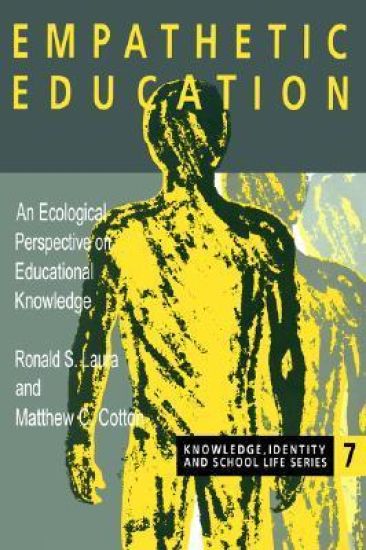
Empathetic Education

Empathetic Education

Mathew C. Cotton; Ronald S. Laura

Routledge Falmer
1998
nidottu
The health of our global environment is increasingly affected by our technological advance - rain, rivers, lakes, forests, soil, climate all suffer at human hands. Laura and Cotton suggest that the society committed to the technological transformation of the natural environment into an artificial one, is also, paradoxically, a society committed to its own destruction. Currently, one of the major concerns of environmental education is to address this problem more concertedly than hitherto. This book represents a radical departure from the traditional approach to environmental education. It argues that the knowledge base behind current teaching is flawed, and the resulting mind-sets and attitudes are often counterproductive to the aims of environmental education.