Kirjojen hintavertailu – 12 859 829 kirjaa ja 27 kauppaa

Kirjailija

Ronald V. Clarke

Kirjat ja teokset yhdessä paikassa: 8 kirjaa, julkaisuja vuosilta 1997–2020, suosituimpiin kuuluu Rational Choice and Situational Crime Prevention. Vertaile teosten hintoja ja tarkista saatavuus suomalaisista kirjakaupoista.

Nimi esiintyy myös muodoissa: Ronald V Clarke

8 kirjaa

Kirjojen julkaisuvuodet: 1997–2020.

Chapter 5

Chapter 5

Ronald V Clarke; Graham Farrell; Nick Tilley

Saint Philip Street Press
2020
sidottu
This chapter is open access under a CC BY license. It is from The Criminal Act: The Role and Influence of Routine Activity Theory, edited by Martin A. Andresen and Graham Farrell. The full volume provides a unique collection of essays in honour of the work of Marcus Felson and his notable contribution to routine activity theory, environmental criminology and the discipline more broadly. This work was published by Saint Philip Street Press pursuant to a Creative Commons license permitting commercial use. All rights not granted by the work's license are retained by the author or authors.
The Reasoning Criminal

The Reasoning Criminal

Ronald V. Clarke

Routledge
2017
sidottu
The assumption that rewards and punishments influence our choices between different courses of action underlies economic, sociological, psychological, and legal thinking about human action. Hence, the notion of a reasoning criminal one who employs the same sorts of cognitive strategies when contemplating offending as they and the rest of us use when making other decisions might seem a small contribution to crime control. This conclusion would be mistaken. This volume develops an alternative approach, termed the "rational choice perspective," to explain criminal behaviour. Instead of emphasizing the differences between criminals and non-criminals, it stresses some of the similarities. In particular, while the contributors do not deny the existence of irrational and pathological components in crimes, they suggest that the rational aspects of offending should be explored. An international group of researchers in criminology, psychology, and economics provide a comprehensive review of original research on the criminal offender as a reasoning decision maker. While recognizing the crucial influence of situational factors, the rational choice perspective provides a framework within which to incorporate and locate existing theories about crime. In doing so it also provides both a new agenda for research and sheds a fresh light on deterrent and prevention policies.
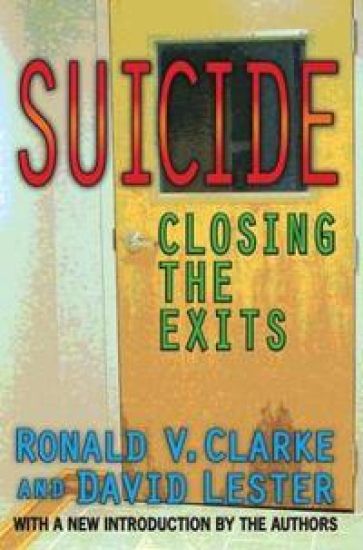
Suicide

Suicide

Ronald V. Clarke

Routledge
2017
sidottu
Suicide prevention is a major goal of the Public Health Service of the US government. This has been the case since the 1960s when the National Institute of Mental Health established a center for the study and prevention of suicide. Since then, however, the knowledge and research gathered has not bought about the reduction of suicide. Suicide: Closing the Exits was written to change this trend. This book reports a program of research concerned with preventing suicide by restricting access to lethal agents, such as guns, drugs, and carbon monoxide. It may seem implausible that deeply unhappy people could be prevented from killing themselves by "closing the exits," but the idea is not a new one and has been discussed widely in the literature. The authors argue that restricting access to lethal agents should be considered a major preventive strategy, along with the psychiatric treatment of depressed and suicidal individuals and the establishment of suicide prevention centers to counsel those in crisis. Suicide represents a major contribution to the literature. As such, it should be read by all medical practitioners, policy makers, and psychologists.
The Reasoning Criminal

The Reasoning Criminal

Ronald V. Clarke

AldineTransaction
2014
nidottu
The assumption that rewards and punishments influence our choices between different courses of action underlies economic, sociological, psychological, and legal thinking about human action. Hence, the notion of a reasoning criminal—one who employs the same sorts of cognitive strategies when contemplating offending as they and the rest of us use when making other decisions—might seem a small contribution to crime control. This conclusion would be mistaken. This volume develops an alternative approach, termed the "rational choice perspective," to explain criminal behaviour. Instead of emphasizing the differences between criminals and non-criminals, it stresses some of the similarities. In particular, while the contributors do not deny the existence of irrational and pathological components in crimes, they suggest that the rational aspects of offending should be explored. An international group of researchers in criminology, psychology, and economics provide a comprehensive review of original research on the criminal offender as a reasoning decision maker. While recognizing the crucial influence of situational factors, the rational choice perspective provides a framework within which to incorporate and locate existing theories about crime. In doing so it also provides both a new agenda for research and sheds a fresh light on deterrent and prevention policies.
Suicide

Suicide

Ronald V. Clarke

AldineTransaction
2013
nidottu
Suicide prevention is a major goal of the Public Health Service of the US government. This has been the case since the 1960s when the National Institute of Mental Health established a center for the study and prevention of suicide. Since then, however, the knowledge and research gathered has not bought about the reduction of suicide. Suicide: Closing the Exits was written to change this trend. This book reports a program of research concerned with preventing suicide by restricting access to lethal agents, such as guns, drugs, and carbon monoxide. It may seem implausible that deeply unhappy people could be prevented from killing themselves by "closing the exits," but the idea is not a new one and has been discussed widely in the literature. The authors argue that restricting access to lethal agents should be considered a major preventive strategy, along with the psychiatric treatment of depressed and suicidal individuals and the establishment of suicide prevention centers to counsel those in crisis. Suicide represents a major contribution to the literature. As such, it should be read by all medical practitioners, policy makers, and psychologists.
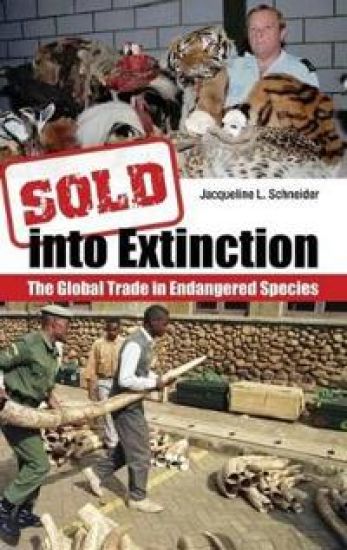
Sold into Extinction

Sold into Extinction

Ronald V. Clarke; Jacqueline L. Schneider

Praeger Publishers Inc
2012
sidottu
This revealing and compelling title analyzes the illegal trade in endangered species from a criminological viewpoint and presents specific crime reduction techniques that could help save thousands of species from extinction. The illegal trade in endangered species is a worldwide problem that involves not only animals but also plants, and it contributes to troubling factors such as organized crime as well as the further decline of the earth's natural climate. This book explores the extensive endangered species illegal market, spotlighting the worldwide nature and extent of the problem, and presents revealing case studies of terrestrial, marine, plant, and avian species. Sold into Extinction: The Global Trade in Endangered Species focuses attention on the plight of endangered wild flora and fauna as well as the specific illegal acts committed against them that have long and largely been ignored by criminology. The author provides a fresh look at the topic by presenting it within a crime reduction framework, an approach rarely taken by those with traditional criminological or conservation backgrounds, demonstrating how an innovative strategy to reduce illegal market activities can simultaneously further the conservation of these endangered species. International treaties, national and domestic laws, and international policing efforts pertaining to crimes involving endangered species are also examined.
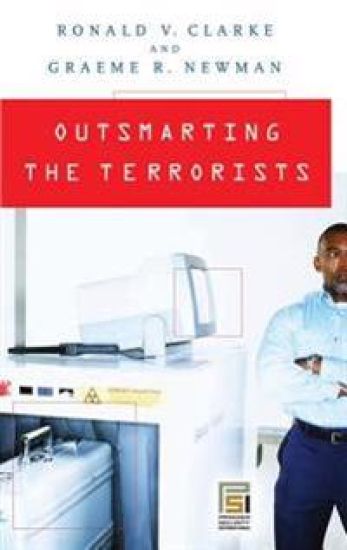
Outsmarting the Terrorists

Outsmarting the Terrorists

Ronald V. Clarke

Praeger Publishers Inc
2006
sidottu
Given that the war on terror is currently being fought the way crime typically is—after the fact—this country cannot protect its citizens from future terrorist events solely in this way. Instead, measures must be taken to actually stop terrorists before they can attack. Here, the authors argue that government anti-terrorism policy must pay much more attention to reducing opportunities for terrorist attacks by protecting vulnerable targets, controlling the tools and weapons used by terrorists, and removing the conditions of everyday life that make these attacks possible. While some of this work is being done on an ad hoc basis, there are no recognized methods to guide the work, there is limited experience on which to draw, and the government has no trained professionals to oversee the work. In this book, the authors address these deficiencies, and lay out a systematic approach for reducing opportunities for terrorism. The current take-them-out mindset may be the main reason why reducing opportunities for terrorism has been so neglected by governments, but another important reason is that the task seems so overwhelmingly difficult. How can we possibly protect every vulnerable target or person? How can we control all the everyday tools that terrorists must use in carrying out their attacks? How can we control their weapons when we cannot even keep guns out the hands of ordinary criminals? In this book, the authors show that these tasks are indeed manageable. They take readers through the methods for preventing terrorism and the policies that will assist in this important work. They show that in order to protect the country from terrorists, security forces must do what the terrorists do: identify vulnerable targets, analyze their specific weaknesses, consider the tools and weapons needed to attack, and assess access to the targets. Once these steps are taken, security agencies can then provide appropriate protection, limit accessibility, anticipate the forces needed to combat a potential attack, and plan carefully for an attack if it does occur. By outsmarting the terrorists security forces undertake the same analysis of vulnerabilities and opportunities that terrorists themselves undertake in planning their operations, and can more effectively defeat them before they strike. This books shows how this approach works and can succeed.

Rational Choice and Situational Crime Prevention

Rational Choice and Situational Crime Prevention

Graeme Newman; Ronald V. Clarke

Ashgate Publishing Limited
1997
sidottu
A collection of original papers examining the theoretical and philosophical bases of the perspective of situational crime prevention. Among issues examined are: the status of situational crime prevention as a theory; the theoretical traditions and context of SCP; the relationship of rational choice to SCP; utilitarianism and SCP; and the ethical./policy implications of SCP.