Kirjojen hintavertailu – 12 859 829 kirjaa ja 27 kauppaa

Kirjailija

Rory Loughnane

Kirjat ja teokset yhdessä paikassa: 5 kirjaa, julkaisuja vuosilta 2013–2027, suosituimpiin kuuluu The Ends of Shakespeare. Vertaile teosten hintoja ja tarkista saatavuus suomalaisista kirjakaupoista.

5 kirjaa

Kirjojen julkaisuvuodet: 2013–2027.

The Ends of Shakespeare

The Ends of Shakespeare

Rory Loughnane

Oxford University Press
2027
sidottu
The Ends of Shakespeare investigates the provenance and transmission of the play-texts of Shakespeare we read, analyse, perform, and teach today. Divided into two parts, the book first assesses the evidence for the production, circulation, and publication of Shakespeare's works in his own lifetime, and, by focusing on the latter half of the poet-dramatist's career, offers an original account of the factors affecting the demand for, and supply of, Shakespeare's creative labour during this period. The second part offers the first study of the other 'lost years' in Shakespeare studies: the ten years that passed between Shakespeare's retirement from writing plays, c. 1613–14, and the publication of the First Folio collection in late 1623 that preserved so many of his plays. This part is ordered chronologically, with the study tracing and tracking what happens to Shakespeare's scripts from 1613/14 to late 1623 and situating such activities in the context of an evolving theatrical scene left behind in Shakespeare's wake. The Ends of Shakespeare seeks to reassess, in a comprehensive way, the versions of Shakespeare's plays preserved through print by analysing the contexts and conditions in which such acts of preservation occurred. More broadly, the book aims to shift how readers of Shakespeare think about issues related to textual authenticity, authority, and the formation of the Shakespearean canon.
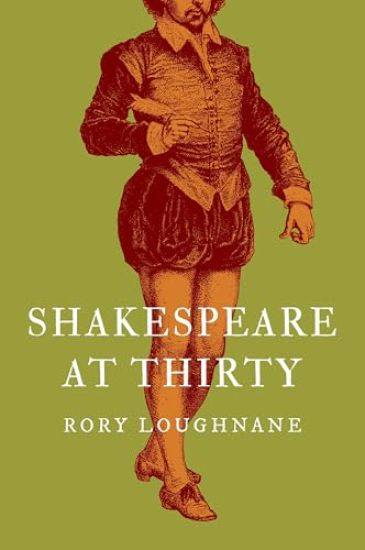
Shakespeare at Thirty

Shakespeare at Thirty

Rory Loughnane

PRINCETON UNIVERSITY PRESS
2026
sidottu
A revelatory portrait of Shakespeare’s life before he achieved fame Shakespeare at Thirty offers an original account of Shakespeare’s early career by returning to a moment before his fame was assured: the spring of 1594, when he turned thirty amid plague closures, censorship, social upheaval, financial insecurity, and professional uncertainty. Instead of reading Shakespeare’s beginnings through the lens of later achievement, Rory Loughnane reconstructs the precarious world in which a young actor-writer learned his craft and forged a path through a rapidly developing theatre scene. Drawing on recent advances in textual scholarship, biography, and theatre history, the book sets Shakespeare’s early plays and poems within the collaborative literary networks and volatile theatre world of late-Elizabethan London. It examines the forms of co-authorship underlying many of Shakespeare’s early works; the pressures that plague, censorship, and the authorities put on those working in the theatre; the economics of patronage; and the emerging commercial structures that enabled the repertory system. Above all, it describes a young author who was talented but far from secure, shaped by peers, circumstance, and contingency as much as by innate genius. By offering a rare biographical and critical portrait of the dramatist before he became a cultural icon, Shakespeare at Thirty restores uncertainty to Shakespeare’s twenties, revealing how he had to grapple with questions of direction, opportunity, and ambition that confront all young artists, and challenging the narratives of inevitability that dominate many Shakespeare biographies. The result sheds new light on his early career—and reminds us that Shakespeare, too, had to become himself.
Editing Archipelagic Shakespeare

Editing Archipelagic Shakespeare

Rory Loughnane; Willy Maley

Cambridge University Press
2025
pokkari
Editing Archipelagic Shakespeare is a study of the power of names; more specifically, it is about the power of naming, asking who gets to choose names, for what reason, and to what effect. Shakespeare assigns names to over 1,200 characters and countless more sites and places, and these names, or versions of these names, have become familiar to generations of playgoers and play-readers. And because of their familiarity, Shakespeare's names, most frequently anglicized versions of non-English names, have been accepted and repeated without further consideration. Approaching names from an archipelagic perspective, and focusing upon how Irish, Scottish, and Welsh characters and places are written by Shakespeare and treated by editors, this Element offers an expansive, and far-reaching, case study for non-anglophone and global studies of Shakespeare, textual scholarship, and early modern drama.
Celtic Shakespeare

Celtic Shakespeare

Rory Loughnane

Routledge
2016
nidottu
Drawing together some of the leading academics in the field of Shakespeare studies, this volume examines the commonalities and differences in addressing a notionally 'Celtic' Shakespeare. Celtic contexts have been established for many of Shakespeare's plays, and there has been interest too in the ways in which Irish, Scottish and Welsh critics, editors and translators have reimagined Shakespeare, claiming, connecting with and correcting him. This collection fills a major gap in literary criticism by bringing together the best scholarship on the individual nations of Ireland, Scotland and Wales in a way that emphasizes cultural crossovers and crucibles of conflict. The volume is divided into three chronologically ordered sections: Tudor Reflections, Stuart Revisions and Celtic Afterlives. This division of essays directs attention to Shakespeare's transformed treatment of national identity in plays written respectively in the reigns of Elizabeth and James, but also takes account of later regional receptions and the cultural impact of the playwright's dramatic works. The first two sections contain fresh readings of a number of the individual plays, and pay particular attention to the ways in which Shakespeare attends to contemporary understandings of national identity in the light of recent history. Juxtaposing this material with subsequent critical receptions of Shakespeare's works, from Milton to Shaw, this volume addresses a significant critical lacuna in Shakespearean criticism. Rather than reading these plays from a solitary national perspective, the essays in this volume cohere in a wide-ranging treatment of Shakespeare's direct and oblique references to the archipelago, and the problematic issue of national identity.
Celtic Shakespeare

Celtic Shakespeare

Rory Loughnane

Ashgate Publishing Limited
2013
sidottu
Drawing together some of the leading academics in the field of Shakespeare studies, this volume examines the commonalities and differences in addressing a notionally 'Celtic' Shakespeare. Celtic contexts have been established for many of Shakespeare's plays, and there has been interest too in the ways in which Irish, Scottish and Welsh critics, editors and translators have reimagined Shakespeare, claiming, connecting with and correcting him. This collection fills a major gap in literary criticism by bringing together the best scholarship on the individual nations of Ireland, Scotland and Wales in a way that emphasizes cultural crossovers and crucibles of conflict. The volume is divided into three chronologically ordered sections: Tudor Reflections, Stuart Revisions and Celtic Afterlives. This division of essays directs attention to Shakespeare's transformed treatment of national identity in plays written respectively in the reigns of Elizabeth and James, but also takes account of later regional receptions and the cultural impact of the playwright's dramatic works. The first two sections contain fresh readings of a number of the individual plays, and pay particular attention to the ways in which Shakespeare attends to contemporary understandings of national identity in the light of recent history. Juxtaposing this material with subsequent critical receptions of Shakespeare's works, from Milton to Shaw, this volume addresses a significant critical lacuna in Shakespearean criticism. Rather than reading these plays from a solitary national perspective, the essays in this volume cohere in a wide-ranging treatment of Shakespeare's direct and oblique references to the archipelago, and the problematic issue of national identity.