Kirjojen hintavertailu – 12 903 724 kirjaa ja 27 kauppaa

Kirjailija

Rosalind Dixon

Kirjat ja teokset yhdessä paikassa: 7 kirjaa, julkaisuja vuosilta 2021–2026, suosituimpiin kuuluu Comparative Constitutional Law. Vertaile teosten hintoja ja tarkista saatavuus suomalaisista kirjakaupoista.

7 kirjaa

Kirjojen julkaisuvuodet: 2021–2026.

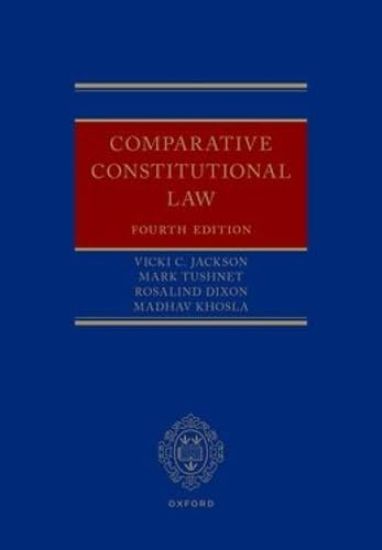
Comparative Constitutional Law

Comparative Constitutional Law

Mark Tushnet; Vicki C. Jackson; Rosalind Dixon; Madhav Khosla

OXFORD UNIVERSITY PRESS INC
2026
sidottu
Designed for use in law school courses, Comparative Constitutional Law introduces fundamental debates on the nature of constitutions, constitutional comparison, and the relationships between constitutions and constitutionalism in its various forms. The book explores how constitutions are made and changed, including recent applications of "unconstitutional constitutional amendment" doctrines, and the role of different institutions - legislatures, executives, publics, as well as courts - in constitutional interpretation and constitutional change. Following a detailed study of the structure and interpretive approaches of national apex courts that decide constitutional questions, the book goes on to consider six subject areas of importance in contemporary constitutionalism: separation of powers and emergencies; federalism and related consociational constitutional arrangements; equality and pluralism; religion; free expression; and positive rights or duties. Including excerpts of cases and scholarly material from the Global South, Europe, and North America, this volume emphasizes the need to understand the broader sociolegal contexts in which constitutional design and decisions occur. In response to growing trends of democratic retrogression in courts around the world, this new edition provides expanded coverage of abusive constitutionalism, authoritarianism, and illiberalism. It additionally offers insightful discussions on constitutional actors' responses to the COVID-19 pandemic; gender and LGBTQ+ equality issues; and indigenous peoples' rights and environmental rights. Providing an overview of constitutional law that is both comprehensive and accessible, the fourth edition of Comparative Constitutional Law is an invaluable resource for law students and academics.
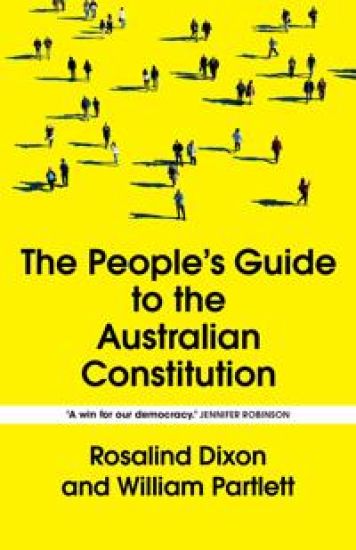
The People's Guide to the Australian Constitution

The People's Guide to the Australian Constitution

Rosalind Dixon; William Partlett

NewSouth Publishing
2026
nidottu
Everything you need to know about the Australian constitution – its past, present and future. Far from being an unchangeable, technical legal contract, The People’s Guide to the Australian Constitution illustrates how the Australian Constitution gives people the power to participate in and decide the shape of government and the policies it adopts. Leading legal academics Rosalind Dixon and William Partlett shed light on what Governor General John Kerr didn’t acknowledge about the Constitution when he dismissed the Whitlam Government, the tension between Australia’s Christian settler colonial constitutional identity and the recognition of First Nations peoples, the advantages and risks of constitutional change and much more. At almost 125 years old, Australia’s constitution is one of the oldest in the world, and while this has brought stability, it also enables the people to participate in adapting it to changing times.
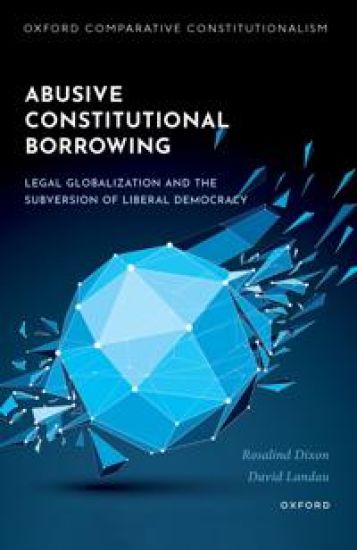
Abusive Constitutional Borrowing

Abusive Constitutional Borrowing

Rosalind Dixon; David Landau

Oxford University Press
2025
nidottu
Law is a fast globalizing field and many lawyers, judges, and political leaders are engaged in a process of comparative 'borrowing'. But this new form of legal globalization has dark sides. It is not just a source of inspiration for those seeking to strengthen and improve democratic institutions and policies, it is increasingly an inspiration - and legitimation device - for those seeking to erode democracy by stealth under the guise of faux liberal democratic cover. Abusive Constitutional Borrowing: Legal Globalization and the Subversion of Liberal Democracy outlines this phenomenon, how it succeeds, and what we can do to prevent it. It addresses current patterns of democratic retrenchment and explores its multiple variants and technologies, considering the role of legitimating ideologies that help support different modes of abusive constitutionalism. An important contribution to both legal and political scholarship, this book will be of interest to those working in the legal and political disciplines of public law, constitutional theory, political theory, and political science.
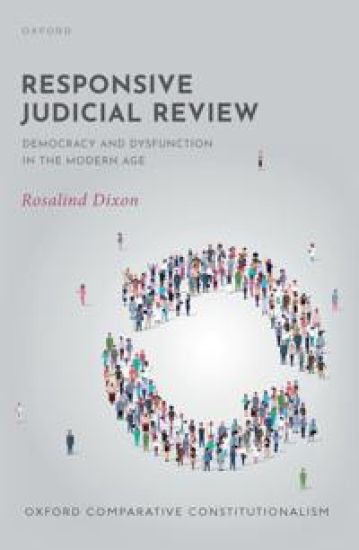
Responsive Judicial Review

Responsive Judicial Review

Rosalind Dixon

Oxford University Press
2025
nidottu
Democratic dysfunction can arise in both 'at risk' and well-functioning constitutional systems. It can threaten a system's responsiveness to both minority rights claims and majoritarian constitutional understandings. Responsive Judicial Review aims to counter this dysfunction-by encouraging courts to orient choices about constitutional construction toward promoting democratic responsiveness, or countering forms of democratic monopoly, blind spots, and burdens of inertia. At the same time, the idea of 'responsive' judicial review encourages courts to engage with their own distinct institutional position and potential limits on their own capacity and legitimacy. This translates into courts embracing a 'weakened' approach to judicial finality, or 'weak-strong' judicial review and remedies, as well as a nuanced approach to the making of judicial implications, a 'calibrated' approach to judicial scrutiny or judgments about proportionality. Dixon further argues that courts should look for ways to increase the legitimacy of their decisions-through careful choices about their framing, and the timing and selection of cases. Nevertheless, the idea of responsive judicial review is explicitly normative and aspirational: it aims to provide a blueprint for how courts should think about the practice of judicial review as they strive to promote and protect democratic constitutional values.
Responsive Judicial Review

Responsive Judicial Review

Rosalind Dixon

Oxford University Press
2023
sidottu
Democratic dysfunction can arise in both 'at risk' and well-functioning constitutional systems. It can threaten a system's responsiveness to both minority rights claims and majoritarian constitutional understandings. Responsive Judicial Review aims to counter this dysfunction using examples from both the global north and global south, including leading constitutional courts in the US, UK, Canada, India, South Africa, and Colombia, as well as select aspects of the constitutional jurisprudence of courts in Australia, Fiji, Hong Kong, and Korea. In this book, Dixon argues that courts should adopt a sufficiently 'dialogic' approach to countering relevant democratic blockages and look for ways to increase the actual and perceived legitimacy of their decisions—through careful choices about their framing, and the timing and selection of cases. By orienting judicial choices about constitutional construction toward promoting democratic responsiveness, or toward countering forms of democratic monopoly, blind spots, and burdens of inertia, judicial review helps safeguard a constitutional system's responsiveness to democratic majority understandings. The idea of 'responsive' judicial review encourages courts to engage with their own distinct institutional position, and potential limits on their own capacity and legitimacy. Dixon further explores the ways that this translates into the embracing of a 'weakened' approach to judicial finality, compared to the traditional US-model of judicial supremacy, as well as a nuanced approach to the making of judicial implications, a 'calibrated' approach to judicial scrutiny or judgments about proportionality, and an embrace of 'weak – strong' rather than wholly weak or strong judicial remedies. Not all courts will be equally well-placed to engage in review of this kind, or successful at doing so. For responsive judicial review to succeed, it must be sensitive to context-specific limitations of this kind. Nevertheless, the idea of responsive judicial review is explicitly normative and aspirational: it aims to provide a blueprint for how courts should think about the practice of judicial review as they strive to promote and protect democratic constitutional values.
From Free to Fair Markets

From Free to Fair Markets

Richard Holden; Rosalind Dixon

OXFORD UNIVERSITY PRESS INC
2022
nidottu
A new vision of liberalism that is fair and capable of responding to the challenges of a post-COVID world Liberalism--and its promise of market-led prosperity--was in crisis well before COVID-19. Recent decades have seen a rise in concentrated unemployment and long-term stagnation in real wages in many of the world's leading economies. At the same time, the world has witnessed a dramatic rise of corporate power, concentration of wealth. and the failure of liberal societies to address some of the most pressing challenges of our time. To survive, liberalism will need a radical reboot-to find new ways of tackling the current challenges posed by corporate power, inequality, and climate change. In this book, Rosalind Dixon and Richard Holden argue this reboot means moving beyond recent neo-liberal versions of liberalism toward a more truly democratic form-from the idea of free markets to a vision of fair markets. The book offers a new vision of fair markets as well as the concrete policies and practical steps to make this ideal a reality. It proposes a universal green jobs-guarantee, a significant increase in the minimum wage and government support for wages, universal healthcare based on a two-track model of public and private provision, a new critical infrastructure policy for nation states to sit alongside a commitment to global free trade, and universal pollution taxes, with all proceeds returned directly to citizens by way of a green dividend. All of these policies combine a commitment to markets with democratic commitments to dignity for all citizens, and the regulation of markets in line with majority interests. By addressing underlying systemic problems of liberal societies and simultaneously emphasizing the importance of markets in ensuring the efficiency and sustainability of these policy solutions, Dixon and Holden present a vision of markets that are free, fair, and well-functioning, not simply free. With clear-headed analysis of how to pay for these ideas and the kind of democratic politics needed to make them a reality, From Free to Fair Markets is an accessible articulation of a new economic path for liberal societies coming out of the COVID-19 pandemic.
Abusive Constitutional Borrowing

Abusive Constitutional Borrowing

Rosalind Dixon; David Landau

Oxford University Press
2021
sidottu
Law is fast globalizing as a field, and many lawyers, judges and political leaders are engaged in a process of comparative "borrowing". But this new form of legal globalization has darksides: it is not just a source of inspiration for those seeking to strengthen and improve democratic institutions and policies. It is increasingly an inspiration - and legitimation device - for those seeking to erode democracy by stealth, under the guise of a form of faux liberal democratic cover. Abusive Constitutional Borrowing: Legal globalization and the subversion of liberal democracy outlines this phenomenon, how it succeeds, and what we can do to prevent it. This book address current patterns of democratic retrenchment and explores its multiple variants and technologies, considering the role of legitimating ideologies that help support different modes of abusive constitutionalism. An important contribution to both legal and political scholarship, this book will of interest to all those working in the legal and political disciplines of public law, constitutional theory, political theory, and political science.